Fiaz Ahmed Brohi
Bio
I am a passionate writer with a love for exploring and creating content on trending topics. Always curious, always sharing stories that engage and inspire.
Stories (627)
Filter by community
Zelensky Declares Energy Emergency as Biting Cold Persists. AI-Generated.
As winter tightens its grip across Eastern Europe, Ukraine is facing one of its most severe seasonal challenges yet. President Volodymyr Zelensky has officially declared an energy emergency, warning that prolonged freezing temperatures combined with ongoing Russian attacks on infrastructure have pushed the country’s power system to a critical breaking point. With temperatures plunging well below zero and millions of Ukrainians struggling to stay warm, the crisis underscores how modern warfare increasingly targets civilian survival. A Winter of Unrelenting Pressure Ukraine is no stranger to harsh winters, but this season has proven particularly unforgiving. Temperatures in several regions have dropped to dangerous lows, intensifying demand for electricity and heating at a time when supply is under constant threat. Power stations, substations, and transmission lines have been repeatedly damaged by missile and drone strikes, leaving large parts of the country vulnerable to outages. In a televised address, President Zelensky described the situation as a “battle for warmth and light”, emphasizing that energy security has become as vital as military defense. According to government officials, emergency power cuts have been introduced in multiple cities to prevent a total grid collapse, forcing households and businesses to ration electricity during the coldest nights. Energy as a Weapon of War Since the start of the conflict, Russia has systematically targeted Ukraine’s energy infrastructure, particularly during winter months when damage has the greatest humanitarian impact. These strikes are widely seen as an attempt to weaken civilian morale by turning basic necessities—heat, light, and water—into scarce resources. The latest wave of attacks has hit thermal power plants and hydroelectric facilities, reducing national energy capacity at the very moment demand is peaking. Experts say that while Ukraine’s energy workers have shown remarkable resilience, repairing facilities under constant threat is becoming increasingly difficult. Zelensky praised engineers and emergency crews who often work through the night in freezing conditions, restoring power within hours of strikes. “They are heroes on an invisible front,” he said, acknowledging the human effort behind keeping the lights on. Impact on Daily Life For ordinary Ukrainians, the emergency is deeply personal. In cities like Kyiv, Kharkiv, and Dnipro, residents are adapting to rolling blackouts, wearing layers indoors, and relying on backup generators. Schools have shifted to hybrid or remote learning in some areas, while hospitals are prioritizing fuel supplies to keep life-saving equipment running. Small businesses are also feeling the strain. Cafés close early to conserve power, factories reduce production hours, and farmers worry about frozen storage facilities affecting food supplies. The energy emergency has become an economic challenge as much as a humanitarian one. Despite these hardships, stories of solidarity continue to emerge. Community “warming points” equipped with generators, hot drinks, and charging stations have been set up across the country, offering temporary relief to those without power. International Support and Urgent Appeals Ukraine’s leadership has once again turned to international partners for help. Zelensky has called for accelerated deliveries of air defense systems to protect energy sites, as well as emergency energy equipment such as transformers, generators, and fuel supplies. European Union officials have acknowledged the severity of the situation, with several countries pledging additional support. Aid packages include mobile power units, insulation materials, and funding for rapid repairs. However, Ukrainian officials warn that assistance must arrive quickly to prevent further humanitarian fallout as winter deepens. Energy analysts note that Ukraine’s grid, though damaged, has avoided total collapse thanks to diversification and rapid response strategies learned over previous winters. Still, they caution that prolonged attacks combined with extreme cold could overwhelm even the most prepared systems. A Test of National Resilience The declaration of an energy emergency is not just a technical measure—it is a reflection of Ukraine’s broader struggle to protect civilian life amid ongoing conflict. Zelensky has framed the crisis as another test of national resilience, urging citizens to conserve energy and support one another. “This winter is difficult,” he said, “but we have faced difficult moments before—and we endured.” His message echoes a broader sentiment within Ukraine: that survival itself has become an act of resistance. Looking Ahead As freezing temperatures persist, the coming weeks will be critical. Much depends on the success of emergency repairs, the effectiveness of air defenses, and the speed of international assistance. While the energy emergency highlights Ukraine’s vulnerabilities, it also showcases its adaptability and determination. For the global community, Ukraine’s struggle serves as a stark reminder that modern conflicts extend far beyond the battlefield. When energy systems are targeted, civilians become the frontline—and warmth, light, and power become symbols of resilience. In the depths of winter, Ukraine’s fight is not only for territory or sovereignty, but for the simple right to endure the cold with dignity.
By Fiaz Ahmed Brohiabout a month ago in The Swamp
Saudi Arabia’s Maaden Uncovers 7.8 Million Ounces of New Gold — A Major Boost for the Kingdom’s Economy. AI-Generated.
In a landmark discovery that reinforces Saudi Arabia’s rising profile as a global mineral powerhouse, the Saudi Arabian Mining Company (Ma’aden) has announced the uncovering of 7.8 million ounces of new gold resources. This significant find not only highlights the Kingdom’s geological potential but also marks a defining moment in the nation’s economic diversification strategy under Vision 2030. This discovery is set to reshape local mining prospects, strengthen Saudi Arabia’s position in global gold markets, and further diversify an economy long dependent on oil revenues. A Golden Find in the Heart of the Desert Ma’aden’s new gold resource estimate comes from exploration activities in the Kingdom’s northern and central regions — areas long suspected to hold rich mineral deposits. The discovery is a result of extensive geological surveys, advanced exploration technologies, and years of persistent investment in local expertise. While 7.8 million ounces may sound like an abstract figure, its economic significance is immense. At current global gold prices — which hover above $2,000 per ounce — this discovery could represent billions of dollars in potential value. More importantly, it signals a shift in how Saudi Arabia approaches its natural resource wealth beyond hydrocarbons. Strengthening Vision 2030 Goals Saudi Arabia’s Vision 2030 blueprint aims to reduce the Kingdom’s reliance on oil by fostering sectors such as tourism, renewable energy, manufacturing, and mining. Gold — one of the most enduring and universally valued commodities — plays a central role in strengthening economic resilience. Ma’aden’s discovery supports several strategic goals: Economic Diversification: Adding high-value mining output to the GDP mix Job Creation: Stimulating employment in engineering, geology, logistics, and processing Technological Advancement: Encouraging innovation in exploration and mining technologies Foreign Investment: Attracting international partners into Saudi mining projects The gold find aligns perfectly with these ambitions, demonstrating that Saudi Arabia’s vast terrain holds more than just oil — it harbors minerals capable of securing long-term economic growth. Ma’aden: From Promising Prospect to Mining Powerhouse Ma’aden is no newcomer to mining success. Since its establishment in 1997, the company has expanded rapidly, partnering with major global firms to develop projects involving gold, phosphate, aluminum, and industrial minerals. The company’s progress reflects strategic planning and an increasing willingness by the Saudi government to open mining ventures to international collaboration. Through technology transfer, joint ventures, and export partnerships, Ma’aden has steadily built a reputation as a reliable and innovative mining operator. With this latest gold discovery, Ma’aden not only enhances its resource base but also reinforces investor confidence in the Kingdom’s mining sector. What the Discovery Means for the Saudi Economy 1. Economic Resilience Gold is traditionally viewed as a safe-haven asset, with demand often rising during global economic uncertainty. Increased domestic gold production gives Saudi Arabia greater leverage in international markets and adds a hedge against oil market volatility. A robust mining sector can also cushion the economy against global downturns — an increasingly valuable advantage in an interconnected world. 2. Job Creation and Skills Development Developing gold resources requires a broad range of skills in mining engineering, geology, environmental science, and project management. This creates opportunities for Saudi nationals and positions the Kingdom as a regional hub for mining talent. The demand for skilled professionals may also nurture educational programs in geosciences and mining technologies — a long-term investment in human capital. 3. Export Potential and Foreign Partnerships Saudi gold does not have to remain domestic. With global gold demand consistently strong — spanning jewelry, electronics, and investment markets — Saudi Arabia has the potential to become a significant gold exporter. International partnerships could accelerate infrastructure development and improve extraction efficiency, while revenue from exports could help fund other national initiatives under Vision 2030. Mining With Environmental Responsibility Saudi authorities and Ma’aden have emphasized that mining operations will incorporate modern environmental standards aimed at minimizing ecological impact. Responsible mining practices include water recycling, land rehabilitation, and protecting biodiversity near mining sites. Environmental stewardship is not only ethical but essential for long-term sustainability — particularly in harsh desert environments where natural systems are fragile. A Model for Regional Growth Saudi Arabia’s gold discovery may inspire other Gulf nations to explore their untapped mineral potential. Countries like Oman, Jordan, and the United Arab Emirates also possess geological terrains with promising mineral resources, and Saudi success could catalyze broader regional cooperation and investment in mining exploration. Looking Ahead: A Golden Future? While the 7.8 million ounces of newly uncovered gold will require years of exploration, development, and extraction before it becomes revenue, the significance of the discovery is already clear. It represents not only a treasure beneath the desert sands but a strategic asset for national growth and economic transformation. For Saudi Arabia, this gold find is more than a mineral discovery: it’s proof that the Kingdom’s future — long linked to black gold — now shines with golden potential in a broader economic landscape.
By Fiaz Ahmed Brohiabout a month ago in The Swamp
Iran–US Live: Tension Lingers Amid Trump’s Threats, Tehran Reopens Airspace. AI-Generated.
Tension between Iran and the United States continued to dominate global headlines this week as fears of military escalation softened just enough for commercial flights to resume—but not enough to settle international anxieties. The situation underscores a volatile mix of domestic unrest, geopolitical brinkmanship, and diplomatic maneuvering in the Middle East. �
By Fiaz Ahmed Brohiabout a month ago in The Swamp
How to Read More: 12 Book-ish Things to Help Clear Your To-Read List. AI-Generated.
If your to-read list keeps growing faster than you can turn pages, you’re not alone. Many book lovers dream of reading more, yet struggle to find the time, focus, or momentum to actually do it. Between busy schedules, digital distractions, and reading slumps, even the most enthusiastic readers can feel stuck. The good news? Reading more isn’t about speed or pressure—it’s about building habits that fit naturally into your life. Here are 12 book-ish, practical ways to finally start clearing that to-read list and rediscover the joy of reading. 1. Ditch the Guilt Around Unfinished Books Not every book is meant for you at this moment. If a title isn’t clicking after a fair try, give yourself permission to stop. Letting go of unread or half-read books creates mental space—and motivation—for books you’ll truly enjoy. 2. Read Multiple Books at Once Contrary to popular belief, reading several books simultaneously can boost your reading life. A novel for bedtime, a non-fiction book for mornings, and a short story collection for quick breaks allow you to read according to your mood and energy level. 3. Always Carry a Book (or E-Reader) Idle moments add up. Waiting in lines, commuting, or sitting between appointments can become reading time if you always have a book handy. Even 10 minutes a day can translate into dozens of finished books over a year. 4. Set a Daily Page Goal—Not a Time Goal Instead of saying “I’ll read for 30 minutes,” try “I’ll read 10 pages.” Page goals feel more achievable and measurable, helping you maintain consistency without feeling overwhelmed. 5. Replace Doom-Scrolling With Page-Turning Social media often steals reading time without us realizing it. Try a simple rule: read for 10 minutes before opening any social app. This small habit shift can dramatically increase your reading hours. 6. Create a Reading Ritual Rituals train your brain to associate reading with comfort. Whether it’s reading with morning tea, before bed, or during lunch breaks, attaching books to a routine makes reading automatic rather than optional. 7. Make Your To-Read List Work for You An endless list can feel intimidating. Break it into smaller categories like “Read This Month,” “Quick Reads,” or “Comfort Books.” Prioritizing makes the list motivating instead of stressful. 8. Embrace Audiobooks Without Shame Audiobooks count. Whether you’re driving, cooking, or exercising, listening to books keeps stories flowing through your life. Many readers find audiobooks help them finish more titles than print alone. 9. Read What Excites You—Not What You “Should” Read Reading isn’t a competition. If thrillers, romance, or fantasy excite you, read them proudly. Enjoyment is the strongest motivator for consistency, not literary prestige. 10. Join a Reading Community Book clubs, reading challenges, or online communities create accountability and excitement. Discussing books with others can reignite enthusiasm and introduce you to titles you might never pick up otherwise. 11. Track Your Reading Progress Seeing progress is powerful. Whether through a reading journal, app, or simple checklist, tracking books read reinforces your habit and gives a sense of accomplishment that fuels momentum. 12. Reread Old Favorites When motivation is low, return to a beloved book. Rereading reminds you why you fell in love with reading in the first place and often acts as a gateway back to new books. Reading More Is About Kindness, Not Discipline Clearing your to-read list doesn’t require superhuman focus or massive lifestyle changes. It’s about removing pressure, choosing joy, and building small habits that last. When reading becomes something you look forward to—rather than another task—it naturally finds its place in your day. Books aren’t meant to be conquered; they’re meant to be experienced. Start small, stay curious, and let stories meet you where you are. Your to-read list will shrink—not through force, but through love.
By Fiaz Ahmed Brohiabout a month ago in Longevity
How Local Startups Are Quietly Arming the Pakistan Navy With New Drones. AI-Generated.
Start writing...In an era where maritime challenges are rapidly evolving, Pakistan’s defense ecosystem is embracing a new frontier: indigenous unmanned aerial systems (UAS). While headlines often spotlight big-ticket defense acquisitions and international collaborations, a quieter yet powerful revolution is underway at home. Local startups—driven by engineering talent, innovation, and a deep understanding of strategic needs—are developing drones to support the Pakistan Navy, marking a significant shift in how defense technologies are sourced and deployed.
By Fiaz Ahmed Brohiabout a month ago in The Swamp
Woman Pulled Out of UK Ultramarathon After Death Threats Over Afghanistan Fundraising. AI-Generated.
What began as an inspiring act of endurance and compassion turned into a disturbing reminder of the hostility that can surround humanitarian causes in today’s polarized world. A female runner participating in a major UK ultramarathon was forced to withdraw from the event after receiving death threats linked to her fundraising efforts for Afghanistan. The incident has sparked widespread debate about online abuse, freedom of expression, and the risks faced by individuals who publicly support controversial or misunderstood causes. A Race Meant to Raise Hope Ultramarathons are among the most physically demanding sporting events, often covering distances far beyond the traditional 42-kilometer marathon. For many participants, these races are not only athletic challenges but also platforms to raise awareness and funds for charitable causes. In this case, the runner had pledged to donate money raised during the event to humanitarian organizations supporting civilians in Afghanistan—particularly women and children affected by years of conflict, economic collapse, and restrictions on basic rights. Her goal, according to supporters, was to use her physical challenge as a way to highlight human suffering and encourage empathy. Instead, her campaign became the target of intense backlash. From Criticism to Threats While public criticism of charitable causes is not uncommon, the situation escalated rapidly when the runner began receiving explicit death threats online. Messages reportedly accused her of supporting extremism, misusing funds, or promoting political agendas—claims that humanitarian groups strongly deny. Race organizers and security officials assessed the threats and concluded that allowing her to continue would pose a serious safety risk. As a result, she was withdrawn from the event against her wishes, a decision that underscored the severity of the situation. The runner later expressed heartbreak over being unable to complete the race, stating that her intentions were purely humanitarian and that she never expected such extreme hostility. The Broader Issue of Online Abuse This incident highlights a growing problem faced by athletes, activists, and public figures: online abuse that spills into real-world danger. Social media platforms have made it easier than ever to mobilize support for causes—but they have also amplified harassment, misinformation, and threats. Experts warn that women, in particular, are disproportionately targeted when they speak out or engage in advocacy. When charitable efforts intersect with geopolitics, the risk often increases, as complex global issues are reduced to polarized narratives. The case has reignited calls for stronger moderation policies on social media platforms and more robust legal consequences for individuals who issue credible threats. Afghanistan and the Politics of Compassion Afghanistan remains one of the most sensitive humanitarian topics globally. Since the Taliban’s return to power, international aid has been politicized, misunderstood, or deliberately misrepresented. Many humanitarian organizations operate under strict oversight to ensure funds are used for civilian relief, not political or militant purposes. Despite this, public discourse around Afghanistan has become deeply polarized. Supporting Afghan civilians is sometimes falsely framed as endorsing political regimes, creating a dangerous environment for advocates and donors alike. Human rights groups argue that such misconceptions discourage public engagement and ultimately harm the very people most in need of assistance. Reaction From the Running Community The ultrarunning community in the UK and beyond responded with outrage and solidarity. Fellow athletes, race organizers, and charities condemned the threats and expressed concern about the precedent such incidents set. Many runners emphasized that endurance sports have long been tied to fundraising and social causes, from cancer research to refugee aid. Allowing intimidation to silence participants, they argue, undermines the spirit of both sport and charity. Several organizations have since pledged to strengthen safety protocols for athletes involved in fundraising, particularly those supporting international causes. A Chilling Effect on Activism Perhaps the most troubling aspect of the incident is its potential chilling effect. When individuals face serious threats for supporting humanitarian causes, others may choose silence over action. Activists warn that this dynamic benefits those who thrive on fear and misinformation. If compassion becomes risky, public engagement shrinks—and humanitarian crises deepen. At the same time, supporters stress that the overwhelming response of solidarity shows intimidation does not go unchallenged. Moving Forward The runner’s withdrawal from the ultramarathon is not just a story about sport—it is a reflection of the tensions shaping modern activism, where goodwill can collide with hostility in unexpected ways. As investigations into the threats continue, the incident serves as a stark reminder: supporting humanitarian causes should never come at the cost of personal safety. Ensuring that activists, athletes, and donors can act without fear will require cooperation from event organizers, law enforcement, and digital platforms alike. In the end, the endurance shown may not have been measured in miles run—but in the courage to stand for compassion in the face of intimidation.
By Fiaz Ahmed Brohiabout a month ago in The Swamp
UK Ready to 'Tighten Chokehold' on Russia's Shadow Fleet: What It Means for Global Shipping and Geopolitics. AI-Generated.
The United Kingdom has signaled its intent to tighten its grip on Russia’s so-called “shadow fleet”, a network of tankers and cargo ships that have continued operating despite sanctions imposed in response to the ongoing conflict in Ukraine. The move reflects the UK’s broader strategy to limit Moscow’s ability to profit from global trade while sending a strong signal to allies and adversaries alike: international maritime law and sanctions will be enforced. Understanding the shadow fleet The term “shadow fleet” refers to vessels that circumvent sanctions through tactics such as renaming ships, changing flags, or engaging in “ship-to-ship” transfers at sea. These vessels have become a lifeline for Russia, particularly in the energy sector, enabling Moscow to export oil and gas even as traditional buyers face restrictions. Analysts estimate that the shadow fleet is worth billions of dollars in annual revenue, making it a key component of Russia’s economic resilience in the face of Western sanctions. The UK’s tightening measures UK officials have made it clear that existing sanctions enforcement will be strengthened, with a focus on monitoring and intercepting shadow fleet operations. Measures may include: Enhanced surveillance of shipping lanes used by sanctioned vessels. Closer coordination with international partners, including NATO allies and EU members, to track ship movements and prevent sanctions evasion. Legal tools to seize ships or freeze assets connected to the shadow fleet. A senior UK minister commented, “We are determined to ensure that Russia cannot evade accountability. Our chokehold is set to tighten, and we will take action against any vessel attempting to flout international rules.” Implications for global shipping The UK’s move will inevitably have ripple effects across global trade. Major shipping hubs and ports are already under pressure to scrutinize incoming vessels, which could slow down maritime traffic. Shipping companies, particularly those operating in energy logistics, may need to reassess routes and compliance procedures to avoid inadvertently violating sanctions. Experts warn that while the shadow fleet represents a small fraction of global shipping tonnage, its strategic importance makes it a geopolitical flashpoint. The UK’s actions may push Russia to adopt more covert methods, increasing the risk of maritime disputes or confrontations in busy shipping lanes. Russia’s response and potential escalation Moscow has historically dismissed sanctions as illegitimate and may respond to tighter restrictions with countermeasures. This could include: Deploying naval escorts for its commercial vessels, particularly tankers transporting oil. Increasing the use of third-party intermediaries, such as non-Russian companies or neutral-flagged ships, to maintain exports. Engaging in cyber or hybrid tactics targeting tracking systems used by Western enforcement agencies. While a direct naval confrontation remains unlikely, analysts caution that the shadow fleet issue could spark localized tensions, especially in strategic waterways like the English Channel, the North Sea, and the Mediterranean. A message to the international community Beyond its immediate economic impact, the UK’s strategy sends a broader diplomatic message. It demonstrates that the enforcement of sanctions is not optional and underscores the importance of multilateral cooperation in holding states accountable for aggressive or unlawful actions. Other countries may be encouraged to adopt similar measures, creating a more unified front against sanction evasion. At the same time, critics argue that overzealous enforcement could disrupt legitimate trade, harm global energy markets, and increase shipping insurance costs. Balancing enforcement with economic stability will be key to avoiding unintended consequences. Looking ahead The UK’s efforts to tighten its chokehold on Russia’s shadow fleet mark the next phase of sanctions enforcement in the Ukraine conflict. By tracking, intercepting, and legally challenging these vessels, the UK aims to curtail Moscow’s financial lifelines and assert its influence in international maritime security. For global observers, the situation highlights a critical lesson: maritime law and global trade are inseparable from geopolitics. As nations leverage shipping regulations to enforce sanctions, the stakes for compliance, monitoring, and diplomacy are higher than ever. The shadow fleet saga is far from over, and its outcome will shape not only the economic future of Russia but also the operational landscape for international shipping. With the UK leading efforts to clamp down, the world is watching closely, aware that the oceans are no longer just trade routes—they are arenas of strategic power and political contestation.
By Fiaz Ahmed Brohiabout a month ago in The Swamp
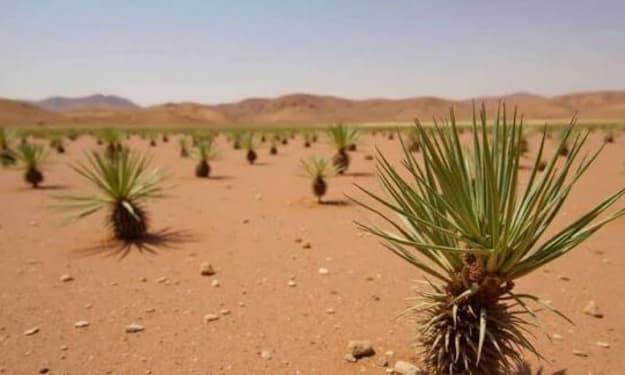
More Than 5 Million Native Plants Reintroduced in Deserts Are Slowing Land Degradation and Rebooting Arid Ecosystems. AI-Generated.
Deserts are often seen as barren, unforgiving landscapes, but they are far from lifeless. These ecosystems, while harsh, support unique biodiversity and provide critical environmental services, from carbon sequestration to regulating local climates. Yet, decades of overgrazing, unsustainable land use, and climate change have taken their toll, leaving many arid regions struggling with soil erosion, loss of native vegetation, and diminished ecological resilience. Now, a bold rewilding effort is turning the tide: over five million native plants have been reintroduced into deserts worldwide, and the early results are promising. The scale of the initiative Across regions from the deserts of the Middle East and North Africa to the arid plains of Australia and North America, conservation organizations, local communities, and governments have collaborated to replant native species that were once nearly wiped out. These plants range from hardy shrubs and grasses to iconic desert flowers, all carefully selected for their ability to survive in extreme conditions and restore ecological balance. The numbers are staggering: more than 5 million individual plants have been transplanted over the last five years, covering thousands of hectares. While this effort is labor-intensive, involving soil preparation, irrigation during establishment phases, and ongoing monitoring, the environmental payoff has been remarkable. Slowing land degradation One of the primary goals of these reintroductions is to combat land degradation, a process that affects over 40% of the planet’s land surface. In deserts, degradation is particularly acute because soil erosion occurs rapidly in the absence of stabilizing vegetation. Without plants to anchor the soil, wind and water can strip away fertile topsoil, creating a feedback loop of declining vegetation and worsening erosion. Early monitoring reports suggest that reintroduced native plants are helping to stabilize sandy soils and reduce the spread of desertification. In some areas of the Middle East, for instance, wind erosion rates have decreased by up to 30% in regions where shrubs and grasses were replanted. This stabilization not only benefits the environment but also local communities that rely on the land for grazing, agriculture, and other livelihoods. Rebooting arid ecosystems Beyond slowing soil loss, these plant reintroductions are rebooting entire desert ecosystems. Deserts are home to a diverse array of wildlife, including insects, birds, and mammals that rely on native plants for food and shelter. By re-establishing vegetation cover, these efforts have triggered a cascade of ecological benefits. In parts of the Sonoran Desert in North America, researchers observed a noticeable increase in pollinator populations, such as bees and butterflies, following the reintroduction of native flowering plants. Similarly, small mammals and reptiles that had disappeared from degraded areas are gradually returning, attracted by improved habitat structure and food availability. Climate resilience Another key advantage of reintroducing native plants is enhancing climate resilience. Many desert plants are adapted to survive extreme heat, drought, and poor soils. By re-establishing these species, ecosystems can better withstand climate-related stresses, such as prolonged droughts or extreme heatwaves. Additionally, some species improve soil moisture retention and reduce surface temperatures, creating microclimates that further support biodiversity. Community engagement and knowledge transfer What makes these rewilding efforts particularly successful is the integration of local communities. Indigenous knowledge about native species, planting techniques, and seasonal cycles has been invaluable. In some regions, schools and community groups participate in planting days, turning conservation into a source of pride and education. This engagement ensures that restored areas are maintained, monitored, and valued over the long term. Looking ahead While the reintroduction of five million native plants is a significant achievement, experts caution that long-term success requires continued investment, monitoring, and protection from overgrazing, development, and climate pressures. However, the initiative provides a compelling example of how targeted, science-backed restoration can reverse environmental damage. For arid ecosystems, these efforts are more than just planting trees and shrubs—they represent hope. They demonstrate that even the most fragile landscapes can recover when humans actively collaborate with nature, restoring not only plants but the entire web of life that depends on them. As the world grapples with climate change and land degradation, the lessons from these desert rewilding projects offer a blueprint for action: by investing in native biodiversity, we can slow degradation, rebuild ecosystems, and create landscapes that are resilient, productive, and teeming with life once again.
By Fiaz Ahmed Brohiabout a month ago in Longevity
From Ralph Fiennes to Jeffrey Wright: The Most Overlooked Performances This Awards Season. AI-Generated.
Awards season is always a whirlwind of glittering premieres, red carpets, and the inevitable debates over who deserves recognition. While the spotlight tends to shine on familiar faces and blockbuster roles, each year a set of performances quietly steals the show without earning the accolades they truly deserve. This season, several actors have delivered compelling, nuanced, and emotionally resonant performances that somehow flew under the radar. From veterans like Ralph Fiennes to the consistently brilliant Jeffrey Wright, here’s a look at some of the most overlooked performances this awards season. Ralph Fiennes – Subtlety at Its Finest Ralph Fiennes has long been celebrated for his versatility, from chilling villains to vulnerable characters, but this season his performance in a quietly powerful drama deserves more attention. Fiennes brought a rare restraint to his role, portraying a character navigating personal grief and moral dilemmas with understated intensity. While the film itself didn’t dominate box office headlines, his ability to convey complex emotions through small gestures and fleeting glances is a masterclass in acting subtlety. Fiennes reminds us that not every award-worthy performance needs loud monologues or bombastic scenes; sometimes, it’s the quiet ones that linger. Jeffrey Wright – Commanding Presence and Emotional Depth Jeffrey Wright, known for his commanding presence, delivered a performance that was both riveting and heartbreakingly human. Playing a figure caught in a web of political intrigue and personal loss, Wright’s portrayal balanced authority and vulnerability seamlessly. Every scene he occupies feels fully realized, yet he remains overshadowed by flashier co-stars. Critics have praised his consistency across the decades, but this season, his work deserved the top-tier attention that often goes to leads in more commercial films. Wright proves once again that great acting often hides in plain sight. Jessica Chastain – Emotion Without Excess Jessica Chastain has built a career on delivering raw, emotionally rich performances, and this season is no exception. In a film exploring the complexities of family and trauma, Chastain’s subtle shifts in tone and posture convey a depth of experience that is both believable and moving. The lack of mainstream recognition for her work this year is surprising, given her ability to inhabit her characters so completely. Chastain reminds audiences that understated performances, when executed with precision, often have a lasting impact long after the credits roll. John Boyega – Breaking Away From Typecasting John Boyega, widely known for his action-packed roles, surprised viewers this season by delivering a nuanced, emotionally grounded performance in a small indie film. His character grapples with issues of identity, loyalty, and moral compromise, all of which Boyega conveys with authenticity and depth. This turn showcases his range as an actor, defying the typecasting that often accompanies young, rising stars. It’s a testament to Boyega’s craft that he can command attention without relying on spectacle or action sequences. Octavia Spencer – Masterful Understatement Octavia Spencer continues to demonstrate why she is one of Hollywood’s most reliable and emotionally intelligent actors. In a role exploring the quiet struggles of everyday life, Spencer imbues her character with warmth, resilience, and dignity. The performance is not showy, but it resonates deeply, a reminder that awards buzz often overlooks subtlety in favor of theatrics. Spencer’s work this season proves that true talent shines through even without flashiness or over-the-top scenes. Why These Performances Matter What unites these overlooked performances is the actors’ commitment to truthfulness and nuance. While awards often favor spectacle or highly dramatized portrayals, these performances show that subtlety, emotional honesty, and consistency can be equally compelling. They challenge the notion that recognition always equates to quality, highlighting how industry buzz, marketing, and star power sometimes overshadow genuine craft. The Broader Implications Recognizing overlooked performances is more than a matter of fairness—it’s a celebration of the artistry that sustains the film industry. These actors contribute layers of depth, empathy, and realism that enrich storytelling in ways that blockbuster moments cannot replicate. When overlooked performances receive attention, it encourages filmmakers and audiences alike to appreciate the quieter, more intricate aspects of cinema. Conclusion From Ralph Fiennes’ quietly devastating performance to Jeffrey Wright’s commanding subtlety, this awards season has offered more than its fair share of underappreciated brilliance. Jessica Chastain, John Boyega, and Octavia Spencer also remind us that true talent often operates below the radar, leaving a profound impact on those who pay attention. While awards are meaningful, the ultimate recognition comes from audiences who notice the nuance, the restraint, and the craft. These performances may not dominate headlines, but they are what make cinema truly unforgettable.
By Fiaz Ahmed Brohiabout a month ago in Journal
Trump Feels Obligated to Take Action on Iran as Administration Weighs Risks of Retaliation. AI-Generated.
As tensions with Iran continue to simmer, former U.S. President Donald Trump finds himself facing a complex calculus: balancing the perceived need to act decisively against Tehran with the very real risks of triggering a wider regional conflict. Sources within the administration suggest that Trump feels a strong obligation to respond to Iran’s escalating provocations, but policymakers are acutely aware that any action could carry significant consequences for both U.S. interests and global stability.
By Fiaz Ahmed Brohiabout a month ago in Journal
Danish Minister Says ‘Fundamental Disagreement’ Remains After ‘Frank’ Greenland Talks With US. AI-Generated.
Tensions between Denmark and the United States over Greenland have once again surfaced, after a Danish minister confirmed that “fundamental disagreements” remain following what were described as “frank and direct” talks with American officials. The remarks underline how Greenland—an icy, sparsely populated island in the Arctic—has become one of the most strategically sensitive regions in modern geopolitics. While the talks were not hostile, they revealed just how far apart the two allies still are when it comes to security, sovereignty, and influence in the Arctic. Greenland: Small Population, Massive Importance Greenland may have fewer than 60,000 residents, but its strategic value far outweighs its size. Located between North America and Europe, the island sits at the heart of Arctic shipping routes, military monitoring zones, and untapped natural resources. As climate change melts Arctic ice, Greenland’s importance has surged dramatically. The United States views Greenland as a critical security asset, particularly as competition with Russia and China intensifies in the Arctic. Denmark, which governs Greenland’s foreign and defense policy while allowing the territory broad self-rule, sees the issue through the lens of sovereignty, partnership, and respect for Greenlandic autonomy. These competing perspectives lie at the center of the current disagreement. ‘Frank Talks’ Reveal Persistent Gaps According to Danish officials, the recent discussions with US representatives were open and honest, but they did not bridge the core divide. The Danish minister emphasized that while both sides value cooperation, they do not agree on the framework or tone of US involvement in Greenland. Denmark insists that any expansion of American military presence or influence must occur in full coordination with Copenhagen and Greenland’s elected leaders. The US, on the other hand, has been pushing for faster, more assertive steps to strengthen its Arctic posture—sometimes testing diplomatic boundaries in the process. The phrase “fundamental disagreement” suggests that this is not a minor policy difference, but a structural clash over authority and approach. A Shadow Cast by Past Controversies Relations over Greenland have been strained before. In 2019, then-President Donald Trump publicly suggested buying Greenland—an idea swiftly rejected by Denmark and Greenlandic leaders alike. Though that episode has passed, it left lingering sensitivities. More recently, US military interest in expanding facilities and surveillance capabilities on the island has raised concerns in Denmark about overreach and unilateral decision-making. Danish leaders are wary of Greenland becoming a pawn in a larger great-power rivalry. For Greenland itself, the issue is deeply personal. Many Greenlanders support cooperation with the US for economic and security benefits, but strongly oppose being treated as a strategic object rather than a political actor. NATO Allies, Different Priorities Denmark and the United States are both NATO allies, and both agree that Arctic security is increasingly important. However, agreement on goals does not always mean agreement on methods. Denmark prioritizes diplomacy, multilateralism, and gradual engagement. The US emphasizes speed, deterrence, and military readiness. As Russia expands Arctic bases and China declares itself a “near-Arctic state,” Washington feels pressure to act decisively. Danish officials argue that ignoring local consent could destabilize the region rather than protect it. Greenland’s Voice Growing Louder One of the most significant shifts in recent years is the growing assertiveness of Greenland’s own government. With increased self-rule and a strong independence movement, Greenland’s leaders are demanding a seat at the table in all major decisions. The Danish minister stressed that Greenland is not merely a territory to be discussed between capitals. Any future security arrangement, investment, or military expansion must reflect Greenlandic priorities, culture, and consent. This insistence complicates negotiations but also reflects a changing political reality. What Happens Next? Despite the disagreements, both sides have signaled that dialogue will continue. Neither Denmark nor the United States wants the issue to escalate into a diplomatic rift. However, the underlying tensions are unlikely to disappear anytime soon. As Arctic ice continues to retreat and global competition intensifies, Greenland will remain a focal point of strategic interest. Whether Denmark and the US can align their approaches—or continue managing disagreement through diplomacy—will shape the future of Arctic cooperation. A Test of Alliance and Respect At its core, the Greenland dispute is about more than military bases or geopolitics. It is a test of how powerful allies balance security interests with sovereignty, respect, and local self-determination. The Danish minister’s candid assessment makes one thing clear: the conversation is far from over, and the Arctic’s political temperature may be rising faster than its melting ice.
By Fiaz Ahmed Brohiabout a month ago in The Swamp
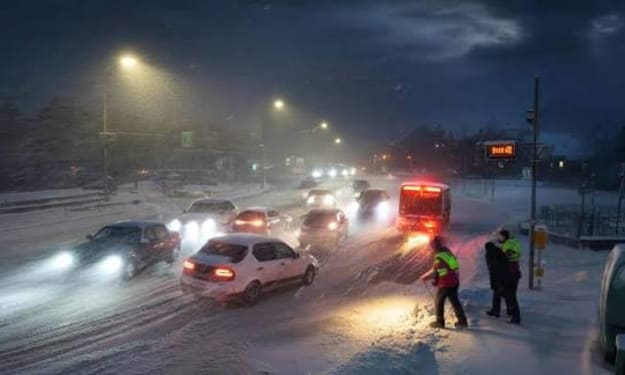
Official and Confirmed: Heavy Snow Set to Begin Late Tonight, Raising Fears of Major Disruptions and Travel Chaos. AI-Generated.
Meteorological agencies have officially confirmed that heavy snowfall will begin late tonight, triggering widespread weather alerts and raising serious concerns about travel chaos, power outages, and daily life disruptions. Authorities are urging people to prepare now, as conditions are expected to deteriorate rapidly once snowfall intensifies. Unlike brief winter flurries, this weather system is being described as severe, prolonged, and disruptive, with the potential to paralyze transport networks and strain emergency services. What’s Driving This Major Snow Event? The incoming storm is the result of a powerful collision between Arctic air and moisture-rich weather systems, creating ideal conditions for intense snowfall. Forecasters warn that once the cold front fully settles, snow could fall relentlessly for several hours, with accumulation accelerating overnight. In many regions, temperatures are expected to remain well below freezing, meaning snow will stick immediately, increasing the risk of icy roads and frozen infrastructure. Travel Chaos Almost Inevitable Transport authorities have already issued alerts warning that road, rail, and air travel will be severely affected. Snowfall during overnight and early morning hours poses particular risks, as commuters may wake up to impassable roads and delayed services. Motorways and rural routes are expected to be the hardest hit, with drifting snow and black ice creating dangerous driving conditions. Rail operators are preparing for speed restrictions, delays, and possible cancellations, while airports have activated snow-clearing protocols in anticipation of runway closures. Officials are strongly advising people to avoid non-essential travel, especially during peak morning hours. Schools, Businesses, and Public Services at Risk Local authorities are closely monitoring conditions, with the possibility of school closures increasing if snowfall intensifies as predicted. In previous events of similar magnitude, hundreds of schools were forced to shut with little notice. Businesses are also preparing contingency plans, including remote work arrangements where possible. Emergency services have warned that response times may be slower due to blocked roads and hazardous conditions. Hospitals and care facilities are prioritizing staff accommodation and transport to ensure essential workers can reach their posts safely. Power Outages and Infrastructure Concerns Heavy snow combined with strong winds can place enormous pressure on power lines, trees, and communication networks. Energy providers have placed repair crews on standby, warning that localized power outages are possible if lines are damaged by falling branches or ice buildup. Water systems and exposed pipes are also vulnerable in prolonged freezing conditions. Residents are being encouraged to insulate pipes, check heating systems, and prepare emergency supplies, including torches, batteries, and blankets. Advice for Staying Safe Authorities and weather experts have shared practical advice to help people stay safe during the storm: Keep mobile phones fully charged Stock up on essential food and medication Avoid driving unless absolutely necessary Check on elderly or vulnerable neighbors Dress in layers and wear proper winter footwear Drivers who must travel are advised to carry emergency kits, including warm clothing, food, water, and a shovel. Why This Snowfall Is Different What makes this event particularly concerning is not just the volume of snow, but its timing and persistence. Falling overnight and continuing into the morning rush, it has the potential to catch people off guard, leaving little time for road crews to clear major routes. Meteorologists also warn that after snowfall ends, plummeting temperatures could turn melting snow into dangerous ice, prolonging disruption well beyond the storm itself. Climate Patterns and Extreme Winters While winter snow is not unusual, scientists note that extreme and unpredictable weather events are becoming more frequent. Shifts in global climate patterns can lead to colder air plunging south more often, producing intense snowfall even in areas unaccustomed to it. This event serves as another reminder that infrastructure and emergency planning must adapt to a changing climate reality. Authorities Urge Caution as Overnight Snowfall Threatens Roads, Power Supplies, and Daily Life Weather Alerts Issued Nationwide as Arctic Air Brings Dangerous Winter Conditions From Travel Chaos to Power Outages: How the Snowstorm Could Disrupt Millions Emergency Services on High Alert as Heavy Snow and Ice Move In Why This Storm Is Different and What Residents Should Do Now Schools, Transport, and Businesses Brace for Severe Winter Disruptions Meteorologists Warn of Prolonged Snowfall and Icy Conditions After the Storm
By Fiaz Ahmed Brohiabout a month ago in Geeks