Fiaz Ahmed Brohi
Bio
I am a passionate writer with a love for exploring and creating content on trending topics. Always curious, always sharing stories that engage and inspire.
Stories (627)
Filter by community
Why The Ikkis Team “Had a Bit of a Debate” About Casting Dharmendra, Reveals Writer. AI-Generated.
Start writing...Casting a legend is never a simple decision. When the makers of The Ikkis began shaping their story, one name naturally surfaced early in discussions: Dharmendra. Revered across generations, the veteran actor has been a towering presence in Indian cinema for over six decades. Yet, as the film’s writer recently revealed, bringing Dharmendra on board was not an automatic choice. In fact, it sparked what he described as “a bit of a debate” within the creative team—a debate that ultimately speaks volumes about changing storytelling priorities in contemporary Indian cinema. At the heart of the discussion was not Dharmendra’s talent or legacy. Those, the writer stressed, were never in doubt. Instead, the debate centered on tone, authenticity, and audience perception. The Ikkis is not a nostalgia-driven project designed to celebrate cinematic icons for their own sake. It is a story rooted in character nuance, emotional realism, and a very specific worldview. The team was concerned that casting a superstar of Dharmendra’s stature might unintentionally overshadow the character he was meant to portray. “In today’s cinema, audiences are extremely aware,” the writer explained. “When a legend like Dharmendra walks on screen, viewers don’t just see the character—they see Dharmendra.” This star-text effect, while powerful, can be a double-edged sword. For a film that relies on immersion and subtlety, the risk was that the audience’s emotional response might be shaped more by reverence than by narrative logic. Another point of debate involved generational expectations. Dharmendra’s fan base spans decades, from those who grew up watching his action-packed roles in the 1970s to younger viewers who know him through selective appearances and public persona. The writers questioned whether these expectations would align with the restrained, layered role envisioned in The Ikkis. Would audiences accept Dharmendra in a quieter, more introspective part, or would they unconsciously wait for echoes of his larger-than-life past? There were also internal creative considerations. The team reportedly explored alternative casting options, including lesser-known actors who could “disappear” more easily into the role. This approach reflects a broader trend in modern Indian cinema, where realism often takes precedence over star power. Films and series today increasingly favor actors who serve the story rather than dominate it. However, as discussions evolved, so did the team’s perspective. What began as skepticism gradually turned into curiosity. The question shifted from “Will Dharmendra overpower the role?” to “What if he redefines it?” The writer admitted that the turning point came during deeper character analysis. The role demanded not just performance skill, but lived experience—someone who could convey emotional weight with minimal dialogue, using silence, posture, and presence. “That’s when we realized Dharmendra might actually be perfect,” the writer said. Age, often viewed as a limitation in casting, became an asset. His life experience, cinematic journey, and natural gravitas aligned organically with the character’s inner world. Rather than distracting from realism, his presence could enhance it—if handled carefully. Crucially, Dharmendra himself played a role in resolving the debate. According to the writer, the actor approached the project without ego or demands. He was open to discussions, receptive to the director’s vision, and willing to shed his superstar image in service of the story. This humility reassured the team that he would not impose himself on the narrative, but blend into it. The final decision to cast Dharmendra was not a compromise, but a creative leap of faith. It reflected confidence not only in the actor, but in the audience’s ability to evolve. The makers trusted that viewers today are ready to see legends in new lights—less as icons, more as human beings. The writer emphasized that this debate was healthy, not divisive. It represented a maturing industry where casting choices are scrutinized as carefully as scripts. “Ten years ago, this wouldn’t even have been a discussion,” he noted. “You’d cast a legend and move on. Now, every choice is about storytelling integrity.” As The Ikkis moves closer to release, the casting of Dharmendra stands as one of its most intriguing aspects. Whether audiences will see the legend first or the character first remains to be seen. But the very fact that the team questioned, debated, and ultimately chose with intention suggests a film deeply aware of its creative responsibility. In the end, the debate about Dharmendra was not about doubt—it was about respect. Respect for the story, for the audience, and for a legendary actor whose greatest strength may now lie in reinvention rather than nostalgia
By Fiaz Ahmed Brohiabout a month ago in Geeks
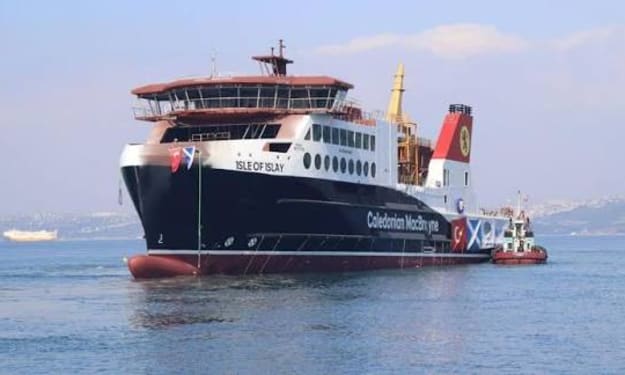
First New CalMac Ferry Handed Over by Turkish Shipyard: A Long-Awaited Milestone for Scotland’s Lifeline Fleet. AI-Generated.
After years of delays, cost overruns, and mounting public frustration, a significant milestone has finally been reached for Scotland’s ferry network. The first new Caledonian Maritime Assets Limited (CalMac) ferry to be built in Turkey has officially been handed over by the shipyard, marking a crucial step toward strengthening transport links for Scotland’s island communities. While the handover is being welcomed as a positive breakthrough, it also reopens debate about ferry procurement, resilience of public infrastructure, and lessons learned from past missteps.
By Fiaz Ahmed Brohiabout a month ago in The Swamp
Airspace Closure in Iran Disrupts International Flights From India — What Travelers Should Know. AI-Generated.
In mid-January 2026, travelers and airlines alike faced significant disruption after Iran temporarily closed its airspace, affecting several international flights originating from India and bound for Europe and the United States. The sudden move, linked to rising geopolitical tensions and internal unrest in Iran, forced reroutes, cancellations, delays, and a wave of uncertainty among passengers and carriers. �
By Fiaz Ahmed Brohiabout a month ago in The Swamp
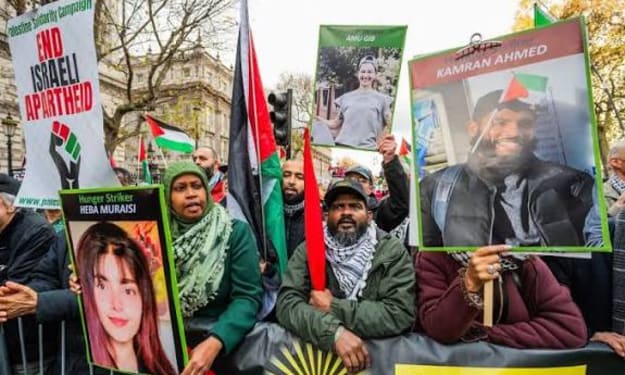
Palestine Action-Linked Protesters End Their Weeks-Long UK Hunger Strike. AI-Generated.
After weeks of physical sacrifice and public attention, protesters linked to the pro-Palestinian activist group Palestine Action have officially ended a hunger strike that had been underway across several locations in the United Kingdom. The strike, which drew support from human rights advocates and criticism from government officials, was intended to pressure authorities over arrests, legal actions, and the UK’s relationship with Israel’s defense industry. The Origins of the Hunger Strike The hunger strike began as a response to the detention and prosecution of activists associated with Palestine Action, a direct-action movement that campaigns against companies it says are complicit in Israeli military operations. Protesters argued that legal measures taken against their members were politically motivated and designed to silence dissent. Participants refused food for weeks, some consuming only water or electrolytes, to highlight what they described as systemic repression of pro-Palestinian activism in the UK. Demonstrations, vigils, and solidarity fasts were held outside courts, prisons, and government buildings, amplifying the message beyond the hunger strikers themselves. Health Concerns and Growing Pressure As the strike continued, concerns over the protesters’ health intensified. Medical professionals and family members warned that prolonged starvation posed serious risks, including organ damage and long-term health complications. Several participants reportedly required medical supervision as their physical condition deteriorated. Human rights organizations urged authorities to engage in dialogue rather than allowing the situation to escalate further. Meanwhile, public debate grew sharper, with supporters framing the hunger strike as a nonviolent act of resistance, while critics argued that it was a form of coercion that undermined the rule of law. Why the Protesters Ended the Strike The decision to end the hunger strike followed what organizers described as a reassessment of both health risks and strategic goals. While protesters acknowledged that not all of their demands had been met, they claimed the strike succeeded in drawing attention to their cause and forcing a broader public conversation. In statements released by supporters, activists emphasized that ending the strike did not signal defeat. Instead, they framed it as a tactical shift, arguing that survival and recovery were necessary to continue campaigning through legal challenges, public outreach, and further demonstrations. Palestine Action’s Broader Campaign Palestine Action has become one of the UK’s most controversial protest movements in recent years. Known for targeting arms manufacturers and defense contractors, the group uses direct action—such as building occupations and property damage—to disrupt operations it believes support Israeli military actions in Palestinian territories. Authorities have accused the group of criminal activity and public disorder, while supporters argue that such tactics are justified in the face of what they describe as human rights violations. This tension has placed the movement at the center of a wider debate about the limits of protest, civil disobedience, and state power in democratic societies. Government and Public Response The UK government has maintained that the law applies equally to all activists, regardless of political cause. Officials have stressed that arrests and prosecutions are based on alleged criminal acts rather than political views. However, critics counter that heavy-handed policing and legal measures risk chilling free expression and peaceful protest. Public opinion remains divided. Some view the hunger strikers as courageous individuals willing to risk their lives to spotlight injustice. Others see the protest as extreme and counterproductive, arguing that it alienates potential supporters and complicates legitimate advocacy for Palestinian rights. The Impact and What Comes Next Although the hunger strike has ended, its impact is likely to continue. Media coverage brought renewed focus to Palestine Action’s activities and to the broader issue of how Western governments respond to pro-Palestinian activism. Legal proceedings involving activists are ongoing, ensuring the movement remains in the public eye. Activists have indicated that future efforts will focus on court cases, fundraising for legal defenses, and peaceful demonstrations. The hunger strike, they argue, was one chapter in a longer struggle rather than a final stand. A Symbolic End, Not a Conclusion The conclusion of the weeks-long hunger strike marks a pause rather than an endpoint. For supporters, it stands as a symbol of sacrifice and moral urgency. For critics, it raises questions about protest tactics and responsibility. Either way, the episode underscores how deeply polarizing the Israel-Palestine issue remains—both internationally and within the UK. As debates over activism, free speech, and foreign policy continue, the story of the hunger strike serves as a reminder that protest movements often evolve, adapting their strategies while keeping their core message alive.
By Fiaz Ahmed Brohiabout a month ago in The Swamp
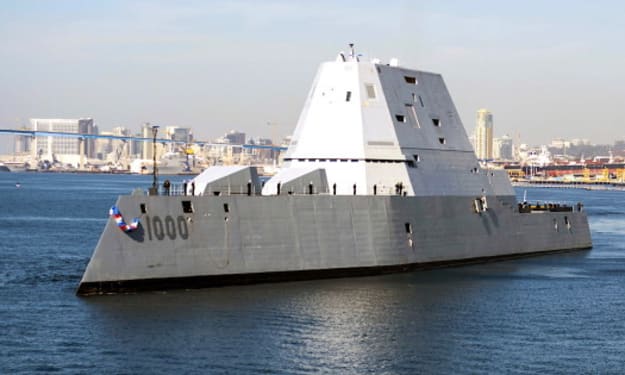
USS Zumwalt to Put to Sea in 2026 Without Main Gun Systems: A Turning Point for Naval Warfare. AI-Generated.
When the USS Zumwalt (DDG-1000) was first unveiled, it was hailed as the future of naval warfare—a stealthy, technologically advanced destroyer designed to dominate coastal combat zones. Yet, as the U.S. Navy prepares to send the ship back to sea in 2026, it will do so without one of its most defining features: its main gun systems. This decision marks not a failure, but a strategic pivot that reflects how modern warfare at sea is rapidly evolving.
By Fiaz Ahmed Brohiabout a month ago in The Swamp
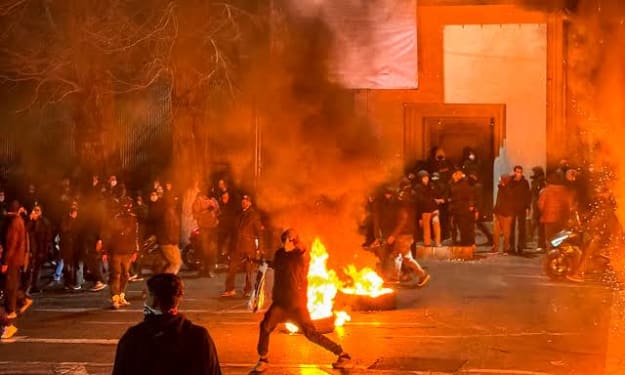
Israel Watches Iran Protests Closely, but Is Wary of Intervening. AI-Generated.
As Iran undergoes one of the most intense waves of civil unrest in decades, neighboring Israel is paying very close attention — but it is cautious about taking direct action. The widespread protests, which began in late December across cities and towns in Iran over economic hardship and political repression, have rapidly evolved into a nationwide movement demanding deep reform of the Islamic Republic’s leadership. Israel’s response reflects a delicate balance between diplomatic restraint, security interests, and humanitarian empathy. �
By Fiaz Ahmed Brohiabout a month ago in The Swamp
First French FDI Frigate Begins Long-Duration Deployment. AI-Generated.
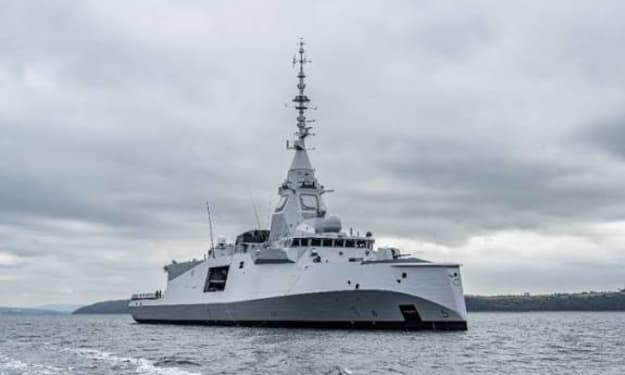
The French Navy has officially commenced the long-duration deployment of its first FDI (Frégate de Défense et d’Intervention) frigate, marking a significant milestone in France’s maritime defense capabilities. Designed for multi-mission roles, the FDI class frigates are intended to replace older vessels in the French fleet while delivering advanced technological capabilities for both national defense and international operations. This deployment signals France’s commitment to maintaining a robust naval presence in strategic waters amid rising global maritime tensions. The FDI frigate, equipped with state-of-the-art sensors, stealth features, and advanced weapons systems, is expected to perform a variety of missions during its deployment. These include maritime surveillance, anti-submarine warfare, protection of sea lanes, and supporting international coalition operations. The ship’s design incorporates modern combat systems, including the Sea Fire 500 radar and Aster missile systems, allowing it to track and neutralize aerial, surface, and underwater threats. French naval officials emphasize that the FDI frigate is capable of operating autonomously or as part of a larger naval task force, enhancing operational flexibility. The deployment represents not only a technological achievement but also a strategic statement. France has been actively expanding its naval influence in key regions, including the Indo-Pacific, the Mediterranean, and the Atlantic. With global security challenges evolving rapidly, particularly in contested maritime zones, the FDI frigate’s extended deployment demonstrates France’s readiness to project power and safeguard maritime interests. Officials have highlighted that this deployment will involve extensive exercises, joint maneuvers with allied navies, and operational patrols in areas critical to international trade and security. The FDI program itself has been a centerpiece of French naval modernization efforts. These frigates are smaller and more cost-effective than larger destroyers, but they do not compromise on firepower or technological sophistication. The construction of the first FDI frigate involved advanced shipbuilding techniques to improve stealth capabilities, reduce maintenance costs, and ensure long-term sustainability. By integrating cutting-edge electronics, propulsion systems, and automated operations, these frigates exemplify a new generation of naval engineering that blends efficiency with combat readiness. French defense experts note that the FDI frigate’s deployment is part of a broader plan to reinforce Europe’s maritime security posture. As geopolitical tensions rise in areas such as the South China Sea, the Eastern Mediterranean, and the North Atlantic, France aims to maintain a credible naval presence that can respond swiftly to emerging threats. The FDI frigate’s ability to integrate with multinational naval forces, including NATO operations, enhances its role as a versatile instrument of both national defense and international cooperation. During the upcoming deployment, the frigate will participate in exercises designed to test its combat systems under realistic conditions. These exercises are expected to include anti-air, anti-ship, and anti-submarine operations, providing valuable operational data and refining crew readiness. Furthermore, the deployment will involve diplomatic visits to friendly ports, reinforcing France’s role as a strategic partner in global maritime affairs. This dual focus on operational capability and international cooperation underscores the strategic importance of the FDI program. The successful launch and deployment of the FDI frigate also have broader implications for France’s domestic defense industry. The program supports high-tech manufacturing jobs, fosters innovation in shipbuilding, and strengthens the country’s strategic independence. The integration of advanced weaponry and electronics demonstrates France’s capability to produce cutting-edge military technology domestically, reducing reliance on foreign suppliers. In conclusion, the long-duration deployment of the first French FDI frigate marks a major milestone in both naval modernization and strategic maritime presence. Its advanced capabilities, versatility, and readiness to operate in diverse scenarios highlight France’s commitment to safeguarding its interests and contributing to international maritime security. As the FDI frigate begins its mission, it not only showcases France’s technological achievements but also signals its enduring commitment to maintaining a credible and agile naval force on the global stage.
By Fiaz Ahmed Brohiabout a month ago in The Swamp
The U-turns Keep Coming – But Starmer’s Allies Insist They’re His Best Hope of Revival. AI-Generated.
Keir Starmer, leader of the UK Labour Party, has become synonymous with political U-turns in recent months. From policy reversals to sudden changes in rhetoric, Starmer’s approach has often been met with both public scrutiny and media criticism. Yet, despite the backlash, his inner circle insists that these recalibrations are precisely what Labour needs to regain momentum and position itself as a credible alternative to the Conservative government.
By Fiaz Ahmed Brohiabout a month ago in The Swamp
From Behind Bars, Aung San Suu Kyi Casts a Long Shadow Over Myanmar. AI-Generated.
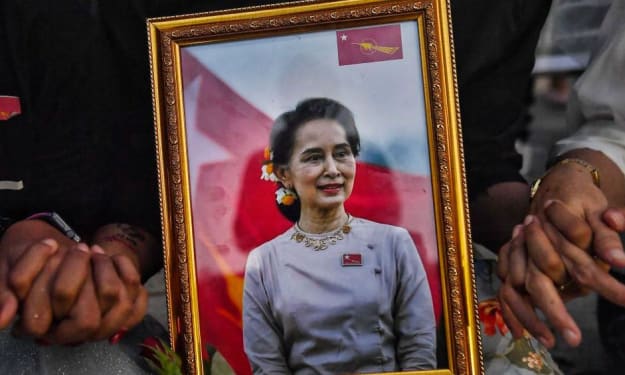
Aung San Suu Kyi, Myanmar’s former civilian leader and Nobel Peace Prize laureate, continues to influence the nation’s political landscape despite being imprisoned since the February 2021 military coup. Her detention has not only intensified global attention on Myanmar’s political crisis but also shaped the country’s ongoing struggle for democracy, human rights, and international recognition.
By Fiaz Ahmed Brohiabout a month ago in The Swamp
Hope it resumes soon’: Pakistan reacts after US pauses visa processing. AI-Generated.
In a move that has sent ripples across Pakistan, the United States announced a temporary pause in visa processing at its consulates and embassies, affecting thousands of Pakistani nationals seeking travel to the US. The suspension, officials say, is linked to administrative adjustments and a review of security protocols. While the US has assured that it is a temporary measure, the pause has sparked concern among students, business professionals, and families planning visits. Pakistani authorities and citizens reacted with a mix of disappointment, apprehension, and hope that the disruption will be short-lived. Social media platforms are abuzz with hashtags expressing frustration and concern over the potential delays in educational pursuits, family reunions, and professional opportunities. Impact on students and academia One of the most affected groups is Pakistani students who plan to pursue higher education in the United States. Universities across the US often require timely visa processing for enrollment, and delays could mean missing critical deadlines for classes, housing, and scholarships. Social media accounts of Pakistani students have flooded with messages such as “Hope it resumes soon” and “Our plans are in limbo,” reflecting the anxiety this pause has generated. Educational experts warn that a prolonged pause could disrupt not only individual aspirations but also academic collaboration between Pakistani and American institutions. “Student mobility is an essential component of bilateral education cooperation. Even temporary halts can have a lasting impact on academic schedules and research projects,” said Dr. Nadia Hussain, a higher education consultant. Business and professional concerns The business community in Pakistan has also expressed concerns. Many professionals travel to the US for conferences, training, and corporate assignments. The sudden pause in visa processing has put several projects and business deals in uncertainty. Small and medium enterprises (SMEs) in particular fear that delayed travel approvals could affect partnerships and investments. “Business travel is crucial for maintaining international relations and exploring market opportunities. Any disruption can ripple through multiple sectors, including trade, technology, and tourism,” said Imran Farooq, a corporate consultant based in Karachi. Government and diplomatic response Pakistan’s Ministry of Foreign Affairs has acknowledged the pause and is in contact with US authorities to understand the scope and expected duration of the suspension. In a statement, the ministry urged Pakistani citizens to remain calm and assured them that efforts are underway to mitigate the impact. The statement read: “We are closely monitoring the situation and are in continuous dialogue with the United States to ensure that visa services resume at the earliest. Citizens are advised to stay updated via official channels.” The US embassy in Pakistan also addressed public concerns, emphasizing that the suspension is temporary and part of routine administrative adjustments. “We understand the inconvenience this may cause and are committed to resuming normal visa operations as soon as possible,” said a spokesperson. Public sentiment and social reactions The pause has sparked a wave of public sentiment online, ranging from concern to frustration. Twitter, Facebook, and other social media platforms are flooded with personal stories of individuals whose plans have been disrupted. Many parents expressed worry over their children studying abroad, while professionals lamented the potential setback in career growth. Despite the anxiety, there is a strong sense of hope and optimism among citizens. Many posts highlight the resilience of the Pakistani community and the expectation that visa services will resume without long-term disruption. The recurring message on social media is a combination of patience and vigilance: “We hope it resumes soon,” reflects the general sentiment. Looking ahead Experts suggest that the current pause is unlikely to last long. Historical patterns indicate that visa processing halts are generally temporary and aimed at streamlining security and administrative procedures. However, the situation underscores the importance of clear communication between governments to prevent public confusion and disruption. “The key is transparency. Citizens need timely information to plan effectively,” said Dr. Hussain. “Delays can be managed, but uncertainty has a greater psychological and economic impact.” In conclusion, while the pause in US visa processing has caused temporary disruption in Pakistan, officials and citizens alike are hoping for a swift resumption. The pause serves as a reminder of the interconnectedness of international mobility, education, and business, and the need for efficient communication during administrative adjustments. For now, the nation watches closely, balancing concern with cautious optimism, and echoing the sentiment expressed by many on social media: “Hope it resumes soon.”
By Fiaz Ahmed Brohiabout a month ago in The Swamp
Wary of Israeli Appropriation, Palestine Lists 14 Sites with UNESCO. AI-Generated.
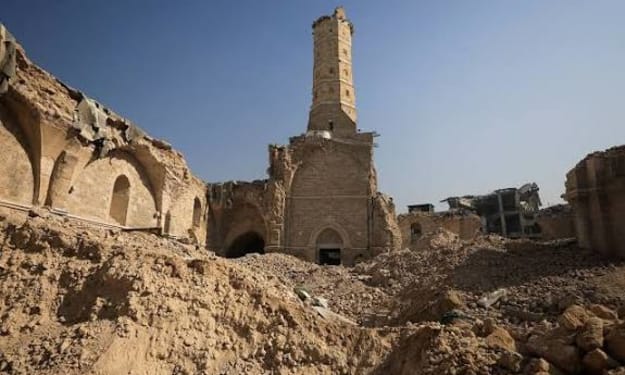
In a significant move aimed at preserving its cultural heritage and asserting historical claims, Palestine has officially listed 14 sites with the United Nations Educational, Scientific and Cultural Organization (UNESCO). This step comes amid growing concerns over Israeli appropriation of Palestinian historical and religious landmarks, and it underscores the deep-seated tensions surrounding heritage, identity, and territorial claims in the region.
By Fiaz Ahmed Brohiabout a month ago in The Swamp
What Is the Old Name of Turkey? A Journey Through History, Empires, and Identity. AI-Generated.
When people hear the name Turkey, they often think of a modern nation bridging Europe and Asia, rich with culture, cuisine, and history. But Turkey’s land has carried many names long before it became the Republic of Türkiye in the 20th century. Understanding the old names of Turkey is more than a geography lesson—it is a journey through ancient civilizations, powerful empires, and shifting identities that shaped the world. Anatolia: The Earliest Known Name The oldest and most widely used historical name for much of modern-day Turkey is Anatolia. Derived from the Greek word Anatolē, meaning “the east” or “sunrise,” Anatolia referred to the lands east of mainland Greece. For ancient Greeks, this region was literally where the sun rose. Anatolia was not a single kingdom but a vast region that hosted some of the world’s earliest civilizations, including the Hittites, Phrygians, Lydians, and Urartians. Archaeological discoveries show that Anatolia was a cradle of early human settlement, agriculture, and trade, making it one of the most historically dense regions on Earth. Even today, historians and scholars frequently use “Anatolia” to describe Turkey’s Asian portion, which makes up about 97% of the country. Asia Minor: A Roman and Byzantine Label Another well-known old name for Turkey is Asia Minor. This term was popularized during the Roman and Byzantine Empires to distinguish the region from the larger continent of Asia. “Asia Minor” literally means “Lesser Asia,” emphasizing its role as a western extension of the Asian landmass. Under Roman and later Byzantine rule, Asia Minor became a hub of administration, commerce, and Christianity. Many early Christian communities, councils, and churches—mentioned in biblical texts—were located in this region. Cities like Ephesus, Smyrna, and Nicaea were central to religious and political life for centuries. Constantinople and the Byzantine Identity While the land itself had regional names, the capital city—Constantinople—often symbolized the entire territory. Founded by Roman Emperor Constantine the Great in 330 AD, Constantinople became the heart of the Byzantine Empire. For over a thousand years, the Byzantine Empire ruled much of what is now Turkey, blending Roman governance, Greek culture, and Christian theology. During this period, the region was not called Turkey at all, as the term “Turk” had not yet become dominant in Anatolia. The Arrival of the Turks and the Name “Turkey” The name Turkey comes from the word “Turk”, referring to the Turkic peoples who migrated from Central Asia. After the Battle of Manzikert in 1071, Seljuk Turks defeated the Byzantine army, opening Anatolia to Turkish settlement. Over time, European sources began referring to the region as “Turcia” or “Turkey,” meaning “the land of the Turks.” This marked a major shift in identity—from a Greco-Roman-Christian region to a predominantly Turkic and Muslim one. The Ottoman Empire: A Global Power Without the Name “Turkey” Interestingly, during the height of Turkish power, the state was not officially called Turkey. Instead, it was known as the Ottoman Empire, named after its founder Osman I. From the late 13th century until the early 20th century, the Ottoman Empire controlled vast territories across Europe, Asia, and Africa. Ottoman rulers referred to their realm as the Devlet-i Aliyye-i Osmaniye (The Sublime Ottoman State). However, European diplomats and writers still casually referred to the empire’s core lands as Turkey, reinforcing the name internationally. From Ottoman Empire to the Republic of Turkey After World War I and the collapse of the Ottoman Empire, Mustafa Kemal Atatürk led a successful independence movement. In 1923, the modern Republic of Turkey was officially established. This marked the first time “Turkey” became the formal name of the state, symbolizing a break from imperial rule and the beginning of a secular, nation-based identity. In recent years, the country has also emphasized the spelling “Türkiye” internationally to reflect its native pronunciation and cultural identity. Why These Old Names Still Matter The old names of Turkey—Anatolia, Asia Minor, Byzantine lands, and Ottoman domains—tell a story of continuity and transformation. They reveal how geography, culture, religion, and power shape national identity over time. Turkey is not just a modern nation-state; it is a living archive of human civilization. Each old name represents a chapter in its long and complex story, making Turkey one of the most historically layered countries in the world. Final Thoughts So, what is the old name of Turkey? The answer depends on the era. From Anatolia and Asia Minor to Byzantine territories and the Ottoman Empire, Turkey has worn many names—each reflecting the people and powers of its time. Understanding these names helps us appreciate Turkey not just as a country, but as a crossroads of civilizations that continues to influence global history today.
By Fiaz Ahmed Brohiabout a month ago in The Swamp