Fiaz Ahmed Brohi
Bio
I am a passionate writer with a love for exploring and creating content on trending topics. Always curious, always sharing stories that engage and inspire.
Stories (627)
Filter by community
Royal and French Navies Train Shipborne Drones in the Mediterranean: A Glimpse into the Future of Naval Warfare. AI-Generated.
The Mediterranean Sea has once again become a proving ground for modern naval innovation as the Royal Navy and the French Navy conduct joint exercises involving shipborne drones. These drills signal a decisive shift in how maritime powers are preparing for future conflicts—where uncrewed systems, artificial intelligence, and networked warfare will play a central role. As geopolitical tensions rise and naval operations become more complex, both nations are investing heavily in remotely piloted and autonomous systems to enhance surveillance, strike capability, and fleet protection. The recent Mediterranean exercise highlights how traditional naval forces are evolving to meet 21st-century threats. Why Shipborne Drones Matter Shipborne drones—whether launched from destroyers, frigates, or aircraft carriers—offer navies a powerful advantage. Unlike crewed aircraft, drones can operate for longer periods, take greater risks, and be deployed rapidly without endangering human life. In the joint drills, British and French warships tested uncrewed aerial vehicles (UAVs) and uncrewed surface systems designed for tasks such as: Maritime surveillance Intelligence, surveillance, and reconnaissance (ISR) Target acquisition Force protection Electronic warfare support By training together, both navies aim to ensure that their drone systems are interoperable, capable of sharing data seamlessly during real-world operations. A Strategic Partnership at Sea The Royal Navy and the French Navy already share one of Europe’s closest defense partnerships. From carrier strike cooperation to nuclear deterrence coordination, the two forces have a long history of working side by side. This latest drone-focused exercise strengthens that partnership by addressing a critical question: how can allied navies integrate uncrewed systems into joint operations without disrupting command structures or safety protocols? During the drills, operators practiced launching and recovering drones from moving ships—one of the most technically challenging aspects of naval drone operations. The exercises also tested how drone data feeds into ship combat management systems, allowing commanders to make faster, better-informed decisions. The Mediterranean: A Testing Ground The Mediterranean is an ideal environment for such trials. It is one of the world’s busiest maritime regions, featuring: Heavy commercial shipping traffic NATO and non-NATO naval presence Proximity to conflict zones in the Middle East and North Africa Operating drones in this complex environment allows navies to test not just technology, but rules of engagement, deconfliction procedures, and cyber resilience. Officials involved in the drills emphasized that the exercises were not aimed at any single adversary. Instead, they are part of a broader effort to ensure maritime security, freedom of navigation, and deterrence in an increasingly contested domain. From Manned Fleets to Hybrid Forces Both the UK and France are transitioning toward hybrid naval fleets, where crewed ships operate alongside autonomous and semi-autonomous systems. This approach allows navies to extend their reach without dramatically increasing fleet size or personnel. For the Royal Navy, shipborne drones are already being tested aboard Type 23 and Type 45 vessels. France, meanwhile, has invested heavily in naval drone programs as part of its future fleet modernization. Training together accelerates learning on both sides, helping commanders understand: What drones can realistically achieve Where human oversight remains essential How to balance autonomy with accountability Implications for NATO and Beyond The success of these exercises has implications far beyond the Mediterranean. As NATO places greater emphasis on multi-domain operations, lessons learned from UK-French cooperation could shape alliance-wide standards for naval drones. Future conflicts are likely to feature swarm tactics, electronic warfare, and contested communications. Practicing now ensures allied navies are not caught unprepared. Moreover, visible cooperation sends a clear message: European naval powers are serious about maintaining technological relevance and collective security in an era of rapid military change. Looking Ahead As shipborne drone technology continues to mature, exercises like this will become more frequent—and more complex. Future drills may involve larger drone swarms, underwater autonomous vehicles, and AI-assisted decision-making tools. For now, the Royal Navy and French Navy have taken an important step forward. By training together in the Mediterranean, they are not just testing machines—they are reshaping the future of naval warfare, one unmanned system at a time
By Fiaz Ahmed Brohi30 days ago in The Swamp
Astonishing Snow Leopard Hunt Filmed in Pakistan’s Remote Mountains. AI-Generated.
High in the jagged peaks of northern Pakistan, where icy winds carve through barren rock and human presence is scarce, a rare and astonishing moment has been captured on camera: a snow leopard executing a powerful hunt in the wild. The footage, filmed in Pakistan’s remote mountainous regions, has stunned wildlife experts, conservationists, and nature lovers around the world. More than just a dramatic spectacle, the video offers a rare window into the secretive life of one of Earth’s most elusive big cats.
By Fiaz Ahmed Brohi30 days ago in Earth
Under Fire from the Sea, Families in Odesa Try to Escape Russian Barrage. AI-Generated.
As dawn breaks over the Black Sea, the port city of Odesa wakes not to the sound of waves, but to sirens. For months, Russian naval and missile attacks have turned Ukraine’s historic coastal hub into a frontline city, forcing families to make impossible choices: stay and endure, or flee under fire. The barrage from the sea has transformed everyday life into a test of survival, reshaping Odesa’s streets, homes, and hopes. Odesa has long been known for its cosmopolitan spirit, grand architecture, and strategic importance as Ukraine’s gateway to global trade. Today, that same geography makes it vulnerable. Russian warships positioned in the Black Sea have launched cruise missiles and drones toward the city, targeting ports, energy infrastructure, and residential neighborhoods. Unlike attacks from land, strikes from the sea arrive with little warning, amplifying fear among civilians who never know when the next explosion will come. For families, the danger is not abstract. It is measured in shattered windows, damaged schools, and nights spent in basements. Parents describe the constant challenge of keeping children calm as air raid sirens interrupt meals, homework, and sleep. “You learn to live with a bag packed,” one mother says, referring to emergency essentials kept by the door. “Documents, water, a few clothes — everything else can be replaced.” Escaping Odesa is no simple task. The city’s roads are congested with civilians trying to leave and military convoys heading toward defensive positions. Train stations, once symbols of travel and leisure, now serve as evacuation points. Families queue for hours, unsure whether trains will run on schedule or be delayed by security threats. Some choose to drive west toward Moldova or deeper into Ukraine, while others head north to stay with relatives in comparatively safer regions. The emotional toll of leaving is profound. Many residents have lived in Odesa for generations, their identities tied to the sea and the city’s unique culture. Abandoning homes, businesses, and memories feels like a second loss on top of the war itself. Elderly residents, in particular, struggle with the idea of starting over elsewhere. As a result, some families split up — women and children leave, while older relatives or men stay behind to guard property or contribute to local defense efforts. Those who remain face daily uncertainty. Coastal defenses and air defense systems intercept many incoming threats, but not all. Each successful interception is celebrated quietly, while each impact deepens anxiety. Schools operate intermittently, often shifting to online classes or shelter-based learning. Hospitals continue to function under strain, adapting emergency rooms to handle potential mass casualty events while dealing with routine medical needs. Humanitarian organizations have stepped in to provide support, offering temporary housing, psychological counseling, and basic supplies for displaced families. Local volunteers play a crucial role, organizing evacuation assistance and checking on vulnerable neighbors. In Odesa, community solidarity has become a lifeline. People share information through messaging apps, warn each other of incoming threats, and help strangers reach shelters during attacks. The Russian barrage has also affected Odesa’s economy. The port, vital for grain exports and trade, has faced repeated strikes, disrupting shipping and threatening global food supply chains. For families, this translates into lost jobs and rising prices. Shop owners close early or operate irregularly, while workers in tourism, shipping, and hospitality face prolonged uncertainty about their livelihoods. Yet even under fire, resilience defines Odesa. Murals appear on damaged walls, musicians perform in shelters, and small acts of normalcy persist. Parents try to preserve routines for their children — reading bedtime stories during blackouts or celebrating birthdays underground. These moments do not erase fear, but they assert humanity in the face of violence. Internationally, Odesa’s plight highlights the broader civilian cost of naval warfare. Attacks launched from the sea blur the line between military targets and civilian spaces, especially in port cities. For residents, the sea — once a source of beauty and economic opportunity — has become a direction of danger. The horizon itself feels threatening. As families continue to flee, return, or endure, Odesa stands as a symbol of civilian resilience amid modern conflict. The city’s future remains uncertain, shaped by diplomatic developments, military outcomes, and the will of its people. For now, every family that escapes safely is a small victory, and every night survived is an act of quiet defiance. Under fire from the sea, Odesa’s families are not just victims of war — they are witnesses to its human cost, carrying their stories with them wherever they find refuge.
By Fiaz Ahmed Brohiabout a month ago in The Swamp
Major Plumbing Headache Haunts $13 Billion U.S. Carrier Off the Coast of Venezuela. AI-Generated.
The USS Gerald R. Ford, the most advanced and expensive aircraft carrier in the United States Navy, has found itself in an unexpected battle — not with missiles or warplanes, but with its own plumbing. While deployed off the coast of Venezuela as part of a U.S. naval buildup in the Caribbean, the carrier’s crew has been grappling with persistent issues in the ship’s toilet and waste management system, highlighting how even cutting-edge warships can be undermined by overlooked engineering flaws. �
By Fiaz Ahmed Brohiabout a month ago in The Swamp
Ex-Air Commodore Explains Why Pakistan’s JF-17 Excels in Today’s Fighter Jet Market. AI-Generated.
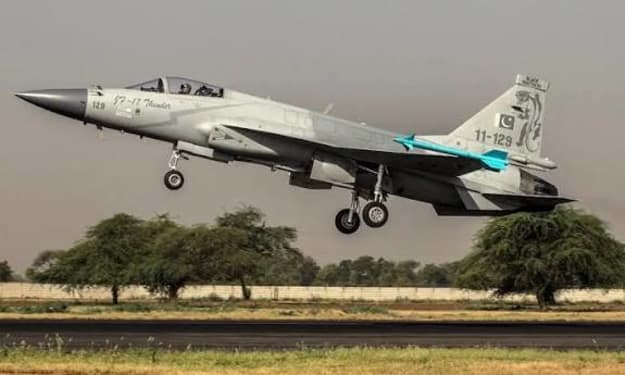
In an era where modern air combat is defined as much by affordability and adaptability as by raw power, Pakistan’s JF-17 Thunder has emerged as one of the most competitive multirole fighter jets in the global market. According to a former Pakistan Air Force (PAF) Air Commodore, the aircraft’s growing appeal lies not in trying to outmatch fifth-generation stealth fighters, but in offering a smart, balanced solution for countries seeking reliable air power without unsustainable costs. Designed for Real-World Needs The JF-17 was conceived with a clear purpose: to meet the operational requirements of air forces that cannot afford expensive Western fighters or are constrained by political and logistical barriers. The ex-Air Commodore explains that many nations do not need ultra-high-end platforms; instead, they require jets that are versatile, easy to maintain, and capable of performing multiple missions effectively. From air defense and ground attack to maritime strike and reconnaissance, the JF-17 is built as a true multirole aircraft. Its design philosophy prioritizes flexibility, allowing air forces to tailor the jet according to their specific security environments. Cost-Effectiveness Without Compromise One of the JF-17’s strongest advantages is its cost-effectiveness. Compared to Western fighters such as the F-16 or Eurofighter Typhoon, the JF-17 costs significantly less to acquire, operate, and maintain. The former Air Commodore highlights that affordability does not mean sacrificing combat capability. Lower lifecycle costs make the JF-17 especially attractive to developing countries that need to modernize their air fleets without placing excessive strain on national budgets. Maintenance requirements are simpler, spare parts are more accessible, and training pipelines are shorter—factors that collectively enhance operational readiness. Modern Avionics and Combat Systems Contrary to outdated perceptions, the JF-17 is far from technologically basic. The latest Block III variant incorporates advanced avionics, including an Active Electronically Scanned Array (AESA) radar, modern electronic warfare systems, and an improved cockpit with a wide-area display and helmet-mounted sight. The ex-Air Commodore notes that these upgrades significantly enhance situational awareness and survivability in contested airspace. AESA radar, in particular, places the JF-17 in a competitive category, enabling better target detection, tracking, and engagement compared to older mechanically scanned systems. Weapons Integration and Operational Flexibility Another key reason for the JF-17’s success is its broad weapons compatibility. The aircraft can carry a wide range of air-to-air, air-to-ground, and anti-ship missiles, including beyond-visual-range (BVR) weapons. This allows operators to adapt the jet for diverse mission profiles without relying on a single supplier. The former Air Commodore emphasizes that this flexibility reduces political dependency. Unlike some Western platforms that come with strict usage and upgrade restrictions, the JF-17 offers greater autonomy in weapons integration, a crucial factor for many countries navigating complex geopolitical realities. Proven in Service, Not Just on Paper Operational credibility is essential in today’s fighter jet market, and the JF-17 has demonstrated its reliability through active service with the Pakistan Air Force. It has participated in numerous exercises and real-world operations, showcasing its effectiveness in both defensive and offensive roles. According to the retired Air Commodore, combat-proven platforms inspire confidence among potential buyers. The JF-17’s consistent performance under demanding conditions reinforces its reputation as a dependable aircraft rather than a purely experimental design. Export Success and Strategic Appeal The JF-17’s export record further underscores its market strength. Countries such as Myanmar and Nigeria have inducted the aircraft, while others have expressed interest. For many air forces, the jet represents a strategic entry point into modern air combat capability without long-term financial or political constraints. The ex-Air Commodore points out that Pakistan’s willingness to offer technology transfer, training, and long-term support makes the JF-17 package even more appealing. This partnership-based approach contrasts with traditional arms deals that often leave buyers dependent and constrained. A Fighter Built for Today’s Realities In a fighter jet market dominated by expensive fifth-generation platforms, the JF-17 occupies a vital middle ground. It does not aim to replace stealth fighters, but it excels as a practical, modern, and affordable solution for nations focused on sovereignty, readiness, and sustainability. As the former Air Commodore concludes, the JF-17’s success lies in understanding what most air forces truly need: a reliable aircraft that delivers modern combat capability without overwhelming costs or political limitations. In today’s complex security environment, that balance makes Pakistan’s JF-17 Thunder not just competitive, but highly relevant.
By Fiaz Ahmed Brohiabout a month ago in The Swamp
What Next for Iran’s Supreme Leader? Navigating Crisis, Protest, and Uncertain Succession. AI-Generated.
Iran’s Supreme Leader Ayatollah Ali Khamenei stands at a crossroads. As one of the longest-serving heads of state in the Middle East, his authority has shaped Tehran’s domestic and foreign policy for decades. But mounting internal unrest, economic collapse, and growing questions about succession are forcing Iran and the world to confront an urgent and complex question: What comes next for Iran’s Supreme Leader? A Leader Under Pressure At age 86, Ayatollah Khamenei’s grip on power faces unprecedented challenges. Since late 2025, Iran has experienced widespread protests rooted in economic hardship, rising inflation, government corruption, and disillusionment with the clerical ruling system. These demonstrations have quickly evolved from localized unrest into nationwide calls for profound political change, including criticism of the highest religious authority in the land. � rtvonline.com +1 In response, state security forces have launched a brutal crackdown on protesters, employing live fire, mass detentions, and severe communication blackouts meant to stifle information and prevent mobilization. Reports indicate that thousands have been arrested and hundreds killed, underscoring the gravity of the crisis. � Wikipedia Khamenei has doubled down in rhetoric, dismissing protesters as “rioters” and insisting that dissent must be suppressed to preserve national stability. But his hardline stance has deepened public frustration and fueled calls for a regime transformation. � Al Jazeera The Question of Succession Unlike many modern leaders, the position of Supreme Leader in Iran is not hereditary, yet succession remains a critical concern. Constitutional mechanisms vest ultimate authority in the Leader of the Islamic Republic, not the president or parliament, and succession is determined by the Assembly of Experts—a clerical body often aligned with conservative elements of the state. Speculation about what happens after Khamenei has intensified due to his age and the turmoil gripping the nation. Within elite political circles, the debate centers on two paths: the continuation of clerical rule under a new hardline figure, or a potential shift toward a more inclusive or even transitional leadership model. � euronews Notably, Tehran Times and other regime-aligned outlets have dismissed rumors that Khamenei would install one of his sons, such as Mojtaba, as his successor, reinforcing that succession decisions will conform to strict constitutional criteria. � euronews Opposition Voices and Alternative Visions While hardliners remain influential, the streets of Iran tell a different story. Protesters have chanted slogans targeting Khamenei and even calling for the nationalist figure Reza Pahlavi—son of the last shah—to return as a symbol of broader political change. Such slogans reflect the diversity of opposition sentiment, which ranges from secular democratic reform to more radical shifts away from the Islamic Republic. � ایندیپندنت فارسی +1 In exile, Pahlavi has positioned himself as a potential transitional leader, advocating for referendums and democratic governance rather than a return to monarchy. His supporters see him as a unifying figure who could guide Iran through a post-regime transition, although his actual influence within Iran remains debated. � theguardian.com Other opposition groups, including reformers, secularists, and even some nationalist factions, offer varying visions for Iran’s future. Some advocate for constitutional reforms within a republican framework, while others push for more grassroots, decentralized governance. The diversity of these voices illustrates that the future leadership landscape is neither singular nor predictable. � Reddit Regional and Global Implications What happens next in Iran is not just a domestic matter. Tehran’s foreign policy under Khamenei has been defined by its regional network of alliances and proxy relationships—often referred to as the “Axis of Resistance”—which has included armed allies in Lebanon, Iraq, Syria, and Yemen. � Foreign Affairs Forum A leadership transition could have significant implications for these networks and for the broader geopolitical balance in the Middle East. A weakened or transitioning leadership might be less able to project power externally, while a resurgence of consolidated clerical authority could mean continued resistance to Western influence and ongoing tensions with neighbors. International pressure, particularly from the United States and Europe, has evolved alongside these internal struggles. In early 2026, Washington imposed new sanctions on Iranian officials and related economic networks while pausing direct military action. These measures aim to increase pressure on the regime without escalating conflict. � wsj.com Paths Forward: Stability, Reform, or Transformation Several scenarios could unfold in the coming months and years: Regime Consolidation: Hardliners could tighten control, suppressing dissent and maintaining the clerical status quo, possibly under new leadership selected by the Assembly of Experts. Internal Reform: The establishment of limited reforms aimed at appeasing public demands without fundamentally altering the system—an approach that may buy time but risks further unrest. Transitional Leadership: A negotiated shift toward a transitional governing body, potentially influenced by figures like Pahlavi or other reformist leaders, leading to constitutional changes. Widespread Upheaval: Continued protests could intensify, leading to unpredictable outcomes ranging from civil conflict to a more rapid regime collapse. The only certainty is that the future of Iran’s Supreme Leader and the system he represents is being questioned like never before. As the internal crisis deepens, the world watches not just who will succeed Khamenei, but what leadership model will emerge from decades of entrenched authoritarian rule.
By Fiaz Ahmed Brohiabout a month ago in The Swamp
More Than 300,000 River Obstacles Removed Worldwide Are Reconnecting Streams, Reviving Fish Migration And Restoring Freshwater Life. AI-Generated.
Freshwater ecosystems around the world are undergoing a quiet revolution. For decades, rivers and streams have been obstructed by dams, weirs, and other barriers, fragmenting habitats and preventing fish from completing essential migrations. Now, a global initiative to remove these obstacles is transforming waterways, reviving fish populations, and restoring the delicate balance of freshwater life. More than 300,000 river barriers have been removed worldwide, and the results are already evident.
By Fiaz Ahmed Brohiabout a month ago in Longevity
Machado Vows to Lead Venezuela ‘When the Right Time Comes’: A Strategic Vision for Change. AI-Generated.
Venezuelan opposition leader María Corina Machado has publicly reiterated her commitment to one day serve as president of Venezuela — but only when conditions are right for a democratic transition. The Nobel Peace Prize‑winning politician’s comments come at a pivotal moment in Venezuela’s political upheaval, as the country navigates a power shift following the ousting of long‑time leader Nicolás Maduro earlier this month. Machado’s stance reflects both optimism and realism about her role in Venezuela’s future political landscape. �
By Fiaz Ahmed Brohiabout a month ago in The Swamp
Azerbaijan Begins Gas Deliveries to Germany and Austria: Strengthening European Energy Security. AI-Generated.
In a significant step for European energy diversification, Azerbaijan has officially begun supplying natural gas to Germany and Austria. This move comes amid ongoing global energy volatility and growing European concerns over dependence on a limited number of suppliers. The deliveries mark a milestone in Azerbaijan’s long-standing efforts to position itself as a reliable energy partner for Europe and reinforce the continent’s energy security.
By Fiaz Ahmed Brohiabout a month ago in The Swamp
Etihad Cancels, Delays Flights to Pakistan Amid Poor Weather. AI-Generated.
Travelers between the United Arab Emirates and Pakistan faced significant disruptions this week as Etihad Airways canceled and delayed multiple flights due to severe weather conditions. The airline, known for its extensive network connecting Abu Dhabi to destinations across the world, cited poor visibility, strong winds, and storm warnings as the primary reasons for the operational setbacks. Passengers reported last-minute cancellations and rescheduling challenges, prompting calls for greater clarity and contingency measures during extreme weather events.
By Fiaz Ahmed Brohiabout a month ago in Longevity
Rightwingers of the World Unite to Endorse Orbán Ahead of Hungary’s Election. AI-Generated.
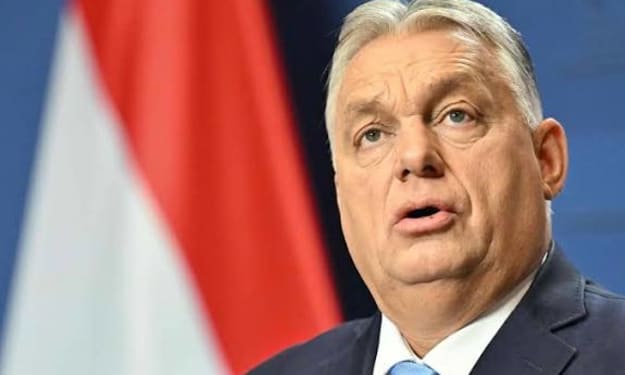
As Hungary gears up for its next parliamentary elections, Prime Minister Viktor Orbán has found support not just at home but across the global right-wing spectrum. From Europe to the Americas, conservative leaders, nationalist movements, and far-right political organizations are openly backing Orbán, citing his policies on national sovereignty, immigration control, and cultural conservatism as a model for their own agendas.
By Fiaz Ahmed Brohiabout a month ago in Journal
Indian weapons must on all 114 Rafale jets, govt tells Dassault . AI-Generated.
India’s defense modernization plans received a strategic boost as the government officially directed Dassault Aviation, the French manufacturer of Rafale fighter jets, to equip all 114 aircraft with Indian-made weapons. This move underlines India’s commitment to self-reliance in defense technology while strengthening the combat readiness of its air force. The Rafale jets, considered among the most advanced multi-role fighters globally, are now set to carry the nation’s indigenous missile systems, bombs, and electronic warfare packages, blending cutting-edge French airframe technology with homegrown armaments. The Rafale Program and Indigenous Weapons India’s Rafale acquisition, initially contracted in 2016, brought 36 jets into the Air Force inventory, with an additional 114 aircraft to be delivered in subsequent batches. While Dassault’s jets are equipped with state-of-the-art French systems, the Indian government has long emphasized the integration of locally produced weapons. These include BrahMos supersonic cruise missiles, Astra beyond-visual-range air-to-air missiles, and indigenous precision-guided bombs. By mandating the use of Indian weapons across all 114 Rafales, the government aims to reduce dependency on foreign arms supplies and ensure that India’s air force maintains operational flexibility in critical combat scenarios. A senior defense official stated, “Our aim is to ensure that the Rafale platform not only brings in technological superiority but also becomes a force multiplier for our indigenous weapons programs.” Strategic Implications The integration of Indian weapons on Rafale jets carries both operational and strategic significance. From an operational perspective, using indigenous weapons allows for standardized maintenance and training protocols across the fleet. It simplifies logistics, reduces costs, and ensures that India is not constrained by export restrictions or supply chain uncertainties from foreign manufacturers. Strategically, the decision sends a strong signal to both allies and adversaries. India demonstrates its growing capability in defense production and its intention to assert technological independence in critical military domains. Given the geopolitical tensions in the Indo-Pacific, particularly with China and Pakistan, equipping the Rafales with locally produced weapons enhances India’s deterrence posture. Challenges in Integration Integrating indigenous weapons with Rafale aircraft, however, is not without technical challenges. Aircraft and weapons systems must be seamlessly compatible, including software integration, aerodynamics, and avionics. The Air Force’s testing and evaluation teams, along with Dassault engineers, will have to ensure that Indian missiles, bombs, and sensors work flawlessly with French-designed flight systems. Past collaborations, such as integrating the BrahMos missile on Su-30MKI aircraft, offer a blueprint for success, but the Rafale’s advanced avionics and fly-by-wire systems necessitate meticulous engineering and rigorous testing. Officials assure that phased testing and gradual integration will ensure minimal disruption to the aircraft’s delivery schedules. Boosting India’s Defense Industry This directive aligns closely with India’s “Make in India” initiative, which aims to build a robust domestic defense manufacturing ecosystem. By mandating the use of Indian weapons, the government hopes to create opportunities for local defense firms, enhance research and development capabilities, and encourage private sector participation in high-tech defense projects. According to industry experts, this approach will provide a significant boost to companies involved in missile development, precision-guided munitions, and electronic warfare systems. It also signals potential for future export opportunities, as Rafale jets equipped with Indian weapons could be offered to other countries, increasing India’s global defense footprint. Diplomatic and Industrial Balance While this move strengthens India’s self-reliance, it also requires careful diplomatic balancing. Dassault Aviation, which must now adapt its jets to accommodate Indian weapons, plays a critical role in maintaining delivery timelines and contractual obligations. Successful collaboration will require constant communication and technical coordination between French and Indian engineers. In the long term, this partnership could evolve into a model for international collaboration, where global platforms are paired with indigenous systems to create hybrid solutions tailored to specific national needs. Looking Ahead India’s decision to equip all Rafale jets with local weapons is a bold step toward achieving strategic autonomy in defense. It demonstrates the country’s commitment to blending cutting-edge technology with self-reliance, ensuring that the Air Force is equipped with a versatile, powerful, and locally sustainable arsenal. As the delivery of Rafale jets continues, the coming years will likely see a seamless integration of India’s missiles, bombs, and electronic warfare systems into the fleet, creating a formidable air power platform that combines the best of French aeronautical engineering with India’s indigenous defense innovation. This initiative not only strengthens India’s air defense capabilities but also reinforces its position as a rising power in global defense technology. It’s a reminder that modern warfare increasingly depends on the ability to combine advanced platforms with locally developed systems—a strategy India is now executing with clarity and purpose.
By Fiaz Ahmed Brohiabout a month ago in Journal