Latest Stories
Most recently published stories on Vocal.
China Is Said to Pause Panama Deals After Ports Operation Nulled. AI-Generated.
China has reportedly suspended a series of commercial and infrastructure negotiations with Panama following the annulment of a major ports operation agreement, a move that underscores growing geopolitical tensions surrounding strategic trade routes and foreign investment in Central America. According to officials familiar with the matter, Chinese state-owned enterprises were instructed to halt discussions on port development, logistics projects, and related infrastructure investments after Panamanian authorities invalidated a long-standing contract involving port operations at key facilities near the Panama Canal. The decision has been interpreted in Beijing as a political signal aligned with increasing U.S. influence in the region. The ports agreement in question had granted a foreign operator control over terminal facilities that serve as vital hubs for cargo transshipment between the Atlantic and Pacific oceans. Its cancellation followed a legal and regulatory review by Panamanian authorities, who cited concerns over transparency, national security, and compliance with concession terms. While Panama has insisted the decision was based on domestic legal considerations, Chinese officials view the move as part of a broader effort by Western powers to curb Beijing’s presence in strategically sensitive locations. Strategic Importance of the Panama Canal The Panama Canal remains one of the most important maritime corridors in the world, handling roughly 5 percent of global trade and serving as a key route for energy shipments, manufactured goods, and agricultural exports. Control over port infrastructure near the canal is seen as economically lucrative and geopolitically sensitive. Over the past decade, China has expanded its footprint in Panama through investments in ports, construction projects, and logistics hubs. This followed Panama’s decision in 2017 to cut diplomatic ties with Taiwan and formally recognize Beijing, a move that opened the door to deeper economic cooperation. However, Chinese involvement in canal-adjacent infrastructure has drawn scrutiny from Washington, which views the waterway as critical to U.S. national security and regional stability. “The canal is not just a commercial artery; it is a strategic asset,” said a regional security analyst. “Any foreign control over nearby ports raises concerns about influence, surveillance, and long-term leverage.” Beijing’s Reaction Sources said Beijing’s decision to pause talks was intended as a signal of dissatisfaction and a warning that trust between the two countries has been damaged. Chinese companies had been negotiating new port upgrades, container terminal expansions, and logistics centers designed to strengthen Panama’s role as a shipping hub for Latin American trade with Asia. “These projects are now effectively frozen,” said one person with knowledge of the discussions. “There is frustration in Beijing that commercial agreements are being overturned for political reasons.” China’s foreign ministry has not formally confirmed the suspension but stated that it expects Panama to “honor its commitments to Chinese enterprises” and provide a fair and predictable environment for foreign investors. Panama’s Position Panamanian officials have defended the annulment of the ports operation contract as a legal necessity rather than a political maneuver. A government spokesperson said the review process revealed irregularities in how the concession had been granted and managed over the years. “Our responsibility is to ensure that strategic infrastructure is operated in accordance with national law and the public interest,” the spokesperson said. “This decision does not target any country specifically.” Nevertheless, Panama faces mounting pressure from competing global powers. The United States has increased diplomatic engagement with the country in recent years, emphasizing the importance of safeguarding the canal from undue foreign influence. U.S. officials have previously warned about the security risks posed by foreign control of port facilities near critical waterways. While they have not commented directly on the annulment, analysts say Washington likely welcomed the move. Economic Consequences The pause in negotiations could have tangible economic effects for Panama, which has relied on foreign investment to modernize its ports and expand logistics capacity. Chinese companies had been expected to finance several billion dollars in upgrades, potentially creating thousands of jobs. Local business leaders expressed concern that prolonged uncertainty could discourage other investors as well. “If contracts can be canceled abruptly, it raises questions about stability,” said a representative of Panama’s shipping industry association. For China, the setback complicates its broader Belt and Road Initiative, which aims to build a global network of ports, railways, and trade corridors linking Asia to Europe, Africa, and the Americas. Panama was seen as a critical node in this network because of its unique geographic position. Broader Geopolitical Context The development reflects a wider trend of countries reassessing Chinese involvement in strategic infrastructure. From ports in Europe to telecommunications networks in Africa, governments have grown more cautious about allowing Chinese state-linked firms to manage assets tied to national security. “This is not just about Panama,” said a Latin America expert. “It is part of a global recalibration of how governments view Chinese investment in sensitive sectors.” China has argued that its overseas projects are purely commercial and mutually beneficial. But critics contend that state-backed firms often serve Beijing’s strategic interests, blurring the line between business and geopolitics. Uncertain Future It remains unclear whether the pause in negotiations will be temporary or lead to a broader cooling of China–Panama relations. Diplomatic channels remain open, and some officials hope a compromise can be reached that allows certain projects to proceed under revised terms. For now, however, the annulled ports deal has become a symbol of Panama’s delicate balancing act between economic opportunity and geopolitical pressure. As global competition for influence over trade routes intensifies, small but strategically located nations like Panama are finding themselves at the center of great-power rivalries. The outcome of this dispute could shape not only Panama’s economic future but also the broader dynamics of Chinese investment in the Western Hemisphere. Whether negotiations resume or tensions deepen will depend on how both sides navigate the intersection of commerce, law, and international politics in the months ahead.
By Fiaz Ahmed Brohi18 days ago in The Swamp
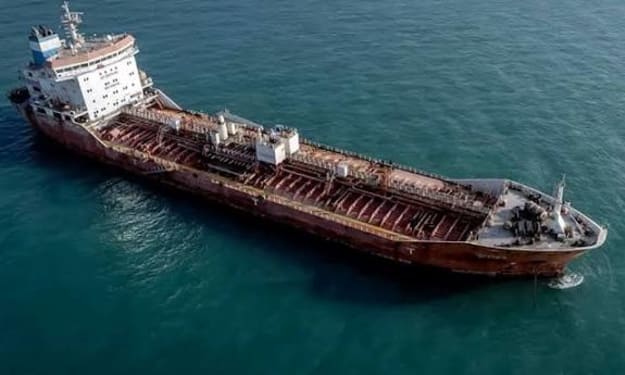
IRGC seizes two foreign-crewed tankers: News agency. AI-Generated.
Iran’s Islamic Revolutionary Guard Corps (IRGC) has seized two foreign-crewed oil tankers in the Persian Gulf, according to reports from Iranian state-linked news agencies, escalating tensions in one of the world’s most strategically vital shipping corridors. The vessels were detained on allegations of smuggling fuel, Iranian officials said, though the identities of the ships and their nationalities were not immediately confirmed. The incident occurred near the Strait of Hormuz, a narrow waterway through which nearly a fifth of the world’s traded oil passes each day. The seizure has heightened concerns among shipping companies and Western governments about the security of maritime traffic in the region, already strained by conflicts in Gaza, Ukraine, and ongoing disputes over Iran’s nuclear program. State media quoted an IRGC naval commander as saying the tankers were carrying “large quantities of smuggled fuel” and were intercepted during a coordinated operation involving patrol boats and helicopters. The crews were reportedly transferred to Iranian custody for questioning, and the ships were escorted to an Iranian port for further investigation. Allegations of Fuel Smuggling Iranian authorities have frequently accused foreign vessels of engaging in fuel smuggling, a charge they say justifies seizures under domestic law. Iran subsidizes fuel heavily, creating incentives for illegal export and resale in neighboring markets at much higher prices. “The two vessels were involved in organized fuel trafficking networks operating in the Gulf,” the commander said in comments carried by Iranian media. “Their cargo and documents are now under judicial review.” However, independent verification of these claims has not been possible, and no evidence has been publicly released to support the allegations. Past incidents suggest that such detentions often carry political as well as legal significance, particularly during periods of heightened confrontation between Iran and Western powers. International Reaction Western officials expressed concern over the seizure and called for the immediate release of the vessels and their crews. A spokesperson for a European foreign ministry described the move as “deeply troubling” and warned that interference with commercial shipping could destabilize global energy markets. The U.S. Navy’s Fifth Fleet, which patrols the region from its base in Bahrain, said it was aware of the reports and was monitoring the situation closely. “We continue to support freedom of navigation and the safe transit of lawful commerce through international waters,” a U.S. defense official said. Shipping companies operating in the Gulf have responded cautiously. Several firms said they were reviewing security procedures and advising crews to remain alert when transiting near Iranian territorial waters. Insurance providers also raised concerns that further incidents could push up premiums for vessels traveling through the Strait of Hormuz, increasing costs for global trade. A Pattern of Maritime Confrontations The seizure fits a broader pattern of maritime confrontations involving Iran in recent years. Tehran has detained foreign vessels on multiple occasions, often citing legal violations such as environmental damage, collisions, or fuel smuggling. Western governments, however, have accused Iran of using such incidents as leverage in diplomatic disputes. In 2023 and 2024, several tankers linked to the United States and its allies were briefly seized or harassed by Iranian forces. Some were later released after negotiations, while others became part of wider political standoffs. Analysts say the timing of the latest incident may be linked to renewed sanctions pressure on Iran’s oil exports and its so-called “shadow fleet” of tankers used to bypass Western restrictions. “Whenever enforcement tightens on Iran’s oil trade, we tend to see more aggressive actions at sea,” said a Middle East security analyst. “Detaining foreign ships sends a signal that Iran can raise the cost of pressure if it chooses to.” Economic and Strategic Stakes The Strait of Hormuz remains one of the world’s most critical chokepoints for energy supplies. Any disruption can have immediate effects on oil prices and global markets. While prices did not spike dramatically following the initial reports, traders said the situation could change quickly if more vessels were targeted. Asian economies, particularly China, Japan, and South Korea, depend heavily on Gulf oil shipments and have called for restraint from all sides. Diplomatic sources said several countries were seeking clarification from Tehran about the fate of the detained crews. For Iran, the seizures may serve both practical and symbolic purposes. Domestically, authorities portray them as law enforcement actions against smugglers. Internationally, they demonstrate Tehran’s ability to challenge Western dominance in the Gulf. The IRGC Navy, which operates independently of Iran’s regular navy, has become a central player in these confrontations. It is tasked with defending Iran’s maritime borders and is known for using fast boats and unconventional tactics. Diplomatic Implications The incident comes at a sensitive moment in regional diplomacy. Talks over Iran’s nuclear program remain stalled, and relations between Tehran and Washington are strained by accusations of proxy involvement in conflicts across the Middle East. Some observers believe the tanker seizures could be aimed at strengthening Iran’s bargaining position in any future negotiations. Others warn that such actions risk miscalculation and escalation. “There is always the danger that a routine interception turns into a larger confrontation,” said a former Western naval officer. “With so many armed actors in a confined space, even small incidents can spiral quickly.” Crews and Human Impact Little information has emerged about the crews aboard the two tankers. Iranian media said they were being treated “in accordance with Islamic and international standards,” but families and employers abroad have expressed concern over their welfare. Human rights groups have previously criticized Iran for detaining foreign sailors without clear legal process, arguing that such cases often lack transparency. Shipping unions called on Iran to allow consular access and ensure the safety of those held. “Seafarers should not be caught in the middle of political disputes,” one union official said. What Comes Next It remains unclear how long the tankers will be held or whether charges will be formally filed. In past cases, vessels have been released after weeks or months following diplomatic engagement. For now, the incident adds another layer of uncertainty to an already volatile region. As Western nations step up pressure on Iran’s oil trade and Iran responds with shows of force, the risk of further maritime confrontations appears to be growing. The seizure of two foreign-crewed tankers underscores how economic sanctions, regional conflicts, and global energy security are increasingly intertwined. Whether this episode leads to quiet negotiations or further escalation will depend on how Tehran and the international community choose to respond in the days ahead.
By Fiaz Ahmed Brohi18 days ago in The Swamp
Concerned that FTA may cut access to medicines in India, rest of the developing world: Médecins Sans Frontières writes to EU. AI-Generated.
Médecins Sans Frontières (MSF), also known as Doctors Without Borders, has formally urged the European Union to reconsider key provisions in its proposed free trade agreement (FTA) with India, warning that stricter intellectual property rules could severely limit access to affordable medicines in India and across much of the developing world. In a letter sent to senior EU trade officials, MSF expressed alarm that negotiations may include clauses that go beyond the requirements of the World Trade Organization’s Agreement on Trade-Related Aspects of Intellectual Property Rights (TRIPS). The humanitarian organization argues that such measures could extend patent protections on medicines, delay the introduction of low-cost generic drugs, and undermine global public health efforts. India is widely regarded as the “pharmacy of the developing world” because of its ability to manufacture and export affordable generic medicines for diseases such as HIV/AIDS, tuberculosis, malaria, and hepatitis C. MSF warned that weakening India’s generic drug industry would have ripple effects far beyond the country’s borders. “Any trade agreement that restricts India’s capacity to produce and export generic medicines will directly threaten the lives of millions of patients who depend on affordable treatment,” MSF said in its letter. Fears Over ‘TRIPS-Plus’ Measures At the heart of MSF’s concern are so-called “TRIPS-plus” provisions that the EU has previously sought in trade agreements with other countries. These measures can include longer patent terms, data exclusivity rules that delay the approval of generics, and limits on compulsory licensing, which allows governments to authorize the production of cheaper versions of patented drugs during public health emergencies. MSF argues that such provisions would make it harder for Indian manufacturers to produce low-cost alternatives to expensive branded medicines. This could raise treatment costs dramatically for patients in low- and middle-income countries. “In many places where MSF operates, generic medicines from India are the only affordable option,” the organization said. “Introducing stronger monopoly protections would slow competition and drive prices up.” Public health advocates have echoed these concerns, noting that similar trade provisions in other regions have led to delays in the availability of life-saving drugs. They point to past experiences in Latin America and Southeast Asia, where stricter intellectual property rules were followed by price increases for cancer drugs and antiviral treatments. India’s Role in Global Health India supplies more than half of the world’s generic medicines used in HIV treatment programs and is a major exporter of vaccines and antibiotics to Africa and parts of Asia. International health agencies and donor-funded programs rely heavily on Indian pharmaceutical companies for affordable supplies. MSF officials said that any disruption to this system would be particularly damaging at a time when many countries are struggling with fragile healthcare systems, rising disease burdens, and limited budgets. “The global health community depends on India’s ability to produce quality medicines at scale,” said a senior MSF policy adviser. “Weakening that capacity would undo decades of progress in expanding access to treatment.” The organization also expressed concern that new patent rules could discourage innovation in neglected diseases, where profits are already low and public funding plays a critical role. EU Response and Trade Negotiations The European Union has defended its trade policy, arguing that intellectual property protections are necessary to encourage pharmaceutical innovation and ensure high safety standards. EU officials have said that any agreement with India would balance commercial interests with public health needs. A spokesperson for the European Commission stated that the EU “remains committed to safeguarding access to medicines” and that negotiations are still ongoing. However, the Commission did not comment directly on whether TRIPS-plus provisions would be included in the final text. Trade talks between India and the EU were revived after several years of stagnation, with both sides seeking to deepen economic ties and expand market access. The agreement is expected to cover a wide range of sectors, including pharmaceuticals, digital trade, agriculture, and services. Indian officials have previously resisted stronger intellectual property rules, citing the country’s constitutional obligation to protect public health. Domestic pharmaceutical companies have also warned that tighter patent protections could harm the industry’s competitiveness. Civil Society Mobilizes MSF’s letter adds to growing pressure from civil society groups, patient organizations, and health activists who fear the FTA could undermine affordable healthcare. Several groups have called for greater transparency in the negotiations and for public health safeguards to be written explicitly into the agreement. “These talks cannot happen behind closed doors when the outcome affects millions of lives,” said a representative of an international access-to-medicines coalition. “Trade rules should not come at the expense of patients.” Activists are urging the EU to exclude pharmaceutical intellectual property from the trade deal or to reaffirm the primacy of public health under international law. Broader Implications Experts say the dispute highlights a long-standing tension between trade policy and global health priorities. While pharmaceutical companies argue that patents are essential for funding research and development, humanitarian groups counter that excessive monopoly protections restrict competition and delay access to treatment in poorer countries. The issue has taken on renewed urgency following the COVID-19 pandemic, which exposed deep inequalities in vaccine and medicine access worldwide. Many countries are now re-examining how trade and patent systems affect health security. “If we learned anything from the pandemic, it is that global cooperation on medicines saves lives,” said a public health economist. “Policies that reduce access are not just ethically questionable; they are strategically short-sighted.” Uncertain Path Ahead As negotiations continue, MSF has urged the EU to ensure that the FTA does not include provisions that would harm India’s generic drug industry or restrict the use of public health safeguards. The organization says it will closely monitor the talks and continue advocating for patient-centered policies. “The EU and India have an opportunity to create a trade agreement that supports innovation while protecting access to medicines,” MSF concluded. “Failing to do so would have consequences far beyond their borders.” With both sides under pressure from industry and civil society, the outcome of the negotiations will likely shape not only trade relations but also the future of global access to essential medicines for years to come.
By Fiaz Ahmed Brohi18 days ago in The Swamp
As West goes after Russia’s oil fleet, Moscow fears for its war funding. AI-Generated.
Western governments have intensified efforts to target Russia’s so-called “shadow fleet” of oil tankers, raising fresh concerns in Moscow that a crucial source of funding for its war effort could be severely disrupted. The campaign, driven by tighter sanctions enforcement and growing international coordination, aims to choke off the revenue Russia earns from exporting crude oil despite existing restrictions. Since the introduction of price caps and shipping sanctions following the invasion of Ukraine, Russia has relied heavily on an informal network of aging tankers operating outside mainstream insurance and regulatory systems. These vessels, often registered under obscure flags and owned through shell companies, have allowed Moscow to continue exporting millions of barrels of oil each day to buyers in Asia, the Middle East, and Africa. Now, Western officials say they are closing loopholes that allowed this fleet to operate with relative impunity. A Critical Revenue Stream Oil and gas sales remain the backbone of Russia’s economy and its largest source of state revenue. According to energy analysts, proceeds from crude exports help finance military operations, weapons procurement, and domestic subsidies designed to cushion the impact of sanctions. “The shadow fleet has been essential to keeping Russia’s oil flowing,” said one European energy policy expert. “If that fleet is significantly disrupted, it will hit Moscow where it hurts most—its ability to fund the war.” Recent measures include stricter monitoring of ship-to-ship transfers, penalties on ports and insurers that assist sanctioned vessels, and expanded blacklists of tanker operators suspected of helping Russia evade the price cap on oil exports. The United States and European Union have also increased intelligence sharing on vessel movements, using satellite tracking and maritime databases to identify suspicious patterns such as tankers switching off transponders or changing flags shortly before entering restricted waters. Moscow’s Growing Anxiety Russian officials have publicly dismissed Western actions as ineffective, but privately there is growing concern that sustained pressure could disrupt export volumes. Several industry insiders say shipping costs have risen sharply in recent months, forcing Russian exporters to offer deeper discounts to buyers willing to accept legal and logistical risks. “This is becoming more expensive and more complicated every month,” said a Moscow-based oil trader. “Insurance is harder to obtain, routes are longer, and vessels are under constant scrutiny.” There are also fears that accidents involving poorly maintained tankers could lead to environmental disasters, prompting international intervention and further restrictions. Many ships in the shadow fleet are more than 20 years old and operate with limited oversight. Russia’s energy ministry has reportedly warned the government that any major interruption in tanker availability could cause bottlenecks at ports and reduce export capacity just as military spending remains high. Western Strategy: Closing the Gaps Western governments say their goal is not to disrupt global oil markets but to limit the revenue Russia earns from each barrel it exports. The price cap mechanism allows Russian oil to be sold only if it remains below a set threshold and uses Western shipping and insurance services. However, Moscow’s workaround—using non-Western tankers and insurers—has blunted the policy’s effectiveness. The latest push seeks to deter companies and countries from facilitating these arrangements. New sanctions have targeted specific shipping firms in the Middle East and Asia accused of enabling Russian exports. Some ports have begun denying entry to tankers suspected of carrying Russian oil in violation of international rules. “This is about enforcement,” a senior Western official said. “The rules already exist. Now we are making sure they are followed.” Impact on Global Markets Analysts warn that overly aggressive action against the shadow fleet could have unintended consequences for global energy prices. If Russia’s exports drop sharply, supply shortages could push prices higher, affecting consumers worldwide. So far, markets have reacted cautiously, with oil prices fluctuating but not surging dramatically. Much depends on whether Russia can find alternative shipping arrangements or whether buyers such as India and China will continue purchasing Russian crude despite increased scrutiny. “These countries are walking a fine line,” said an energy economist. “They want cheap oil, but they don’t want to be caught in the middle of a sanctions enforcement campaign.” Russia’s Countermeasures In response, Moscow has accelerated efforts to build its own maritime insurance systems and expand cooperation with non-Western partners. Officials are also exploring the purchase of additional tankers through intermediaries and strengthening ties with shipping companies in countries that have not joined sanctions. Some Russian lawmakers have called for more state control over oil exports, arguing that national security requires tighter oversight of transport and sales. At the same time, the Kremlin is promoting alternative payment systems and trade in local currencies to reduce reliance on the dollar and euro. These moves are part of a broader strategy to insulate Russia’s economy from Western pressure. A Test of Endurance The battle over Russia’s oil fleet underscores the central role energy plays in the conflict. For Ukraine’s allies, restricting oil revenue is seen as one of the most effective non-military tools to weaken Moscow’s ability to sustain the war. For Russia, maintaining exports is vital not only economically but politically, as domestic stability depends on continued government spending. “This is becoming a war of logistics and finance as much as of weapons,” said a security analyst. “Whoever controls the flow of money and fuel will have a major advantage.” Uncertain Future As Western scrutiny tightens, the future of Russia’s shadow fleet looks increasingly uncertain. More vessels may be seized, denied insurance, or blocked from ports. Accidents or legal challenges could further disrupt operations. Yet Russia has repeatedly shown an ability to adapt to sanctions, finding new routes and partners when old ones are closed. For now, the struggle continues on the high seas, where tankers quietly carry the resources that help sustain a distant battlefield. Whether Western pressure can truly cut off this lifeline remains one of the most important economic questions of the war. What is clear is that the fight over Russia’s oil fleet has become a central front in the broader effort to limit Moscow’s capacity to finance its military campaign—and the outcome will shape not only the conflict but also the future of global energy trade.
By Fiaz Ahmed Brohi18 days ago in The Swamp
Between Two Silences
This ghazal dwells in the space of uncertainty—between leaving and staying, knowing and not knowing. The beloved’s absence suspends time itself, turning silence into the only honest reply. It is a poem of quiet endurance, where love survives not as direction, but as presence.
By Rahatweb Website18 days ago in Poets