entertainment
The very best in geek and comic entertainment.
The Most Romantic Thing about Before Sunrise
A love story is two people meeting and deciding to be together. The film 'Before Sunrise' is a little different. Two people meet on a train and decide to spend the day together. The film was released in 1995 and was directed by Richard Linklater. The film is a series of 3, and the two that follow are Before Sunset and Before Midnight.
By Aashna Woodinabout a month ago in Geeks
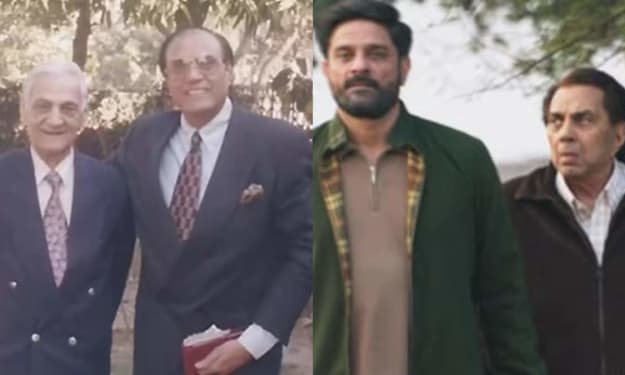
Ikkis': Meet Brigadier Khwaja Mohammed Naseer; Pakistani army officer played by Jaideep Ahlawat in Sriram Raghavan directorial Dharmendra’s last film. AI-Generated.
Sriram Raghavan’s upcoming film Ikkis is already generating conversation, not for spectacle or box-office hype, but for the depth of its characters and the weight of its legacy. Among the most intriguing elements of the film is the portrayal of Brigadier Khwaja Mohammed Naseer, a Pakistani army officer brought to life by Jaideep Ahlawat. In a story that also marks Dharmendra’s last on-screen appearance, Ikkis promises to be a reflective, character-driven cinematic experience that looks beyond borders and binaries. Unlike conventional war films that rely heavily on action and nationalist rhetoric, Ikkis is being positioned as a human story set against the backdrop of conflict. Brigadier Khwaja Mohammed Naseer is not introduced as a stereotypical antagonist. Instead, he is written as a professional soldier shaped by duty, history, and personal conviction. This nuanced approach is very much in line with Sriram Raghavan’s storytelling style, where moral ambiguity often replaces clear-cut heroes and villains. Jaideep Ahlawat’s casting has been widely appreciated, and for good reason. Known for his intense screen presence and ability to convey complexity through subtle expressions, Ahlawat is well-suited to portraying a high-ranking military officer from across the border. His performance reportedly focuses on restraint rather than aggression, making Brigadier Naseer a character defined by internal conflict as much as external circumstance. For audiences used to loud, one-dimensional portrayals of military figures, this represents a refreshing shift. The character of Brigadier Naseer also serves a larger narrative purpose. By presenting a Pakistani officer with depth and dignity, Ikkis challenges the audience to rethink how “the other side” is usually depicted in Indian cinema. The film does not dilute patriotism; instead, it reframes it by acknowledging that soldiers on all sides are shaped by similar values—discipline, sacrifice, and loyalty—while being trapped in opposing national narratives. At the heart of Ikkis is Dharmendra, whose final film adds an emotional layer to the project. A legend whose career spans generations, Dharmendra’s presence gives the film a sense of closure and reverence. His performance is said to be understated, relying more on silence and reflection than dramatic monologues. In this context, characters like Brigadier Naseer become essential mirrors, reflecting the shared humanity that transcends uniforms and flags. Sriram Raghavan’s direction further elevates the material. Known for thrillers with sharp edges, he reportedly adopts a calmer, more contemplative tone in Ikkis. The focus is on conversations, glances, and moments of moral reckoning rather than large-scale set pieces. Brigadier Naseer’s character fits seamlessly into this vision, becoming a symbol of the unspoken cost of decades-long hostility. What makes Ikkis particularly relevant today is its timing. In an era of heightened polarization, films that dare to humanize the “enemy” often face scrutiny. Yet, they are also the ones that leave a lasting impact. By including a character like Brigadier Khwaja Mohammed Naseer, the film invites viewers to engage with discomfort, empathy, and complexity—qualities often missing from mainstream war narratives. For Jaideep Ahlawat, Ikkis represents another milestone in a career defined by unconventional choices. Playing a Pakistani brigadier in a film headlined by Dharmendra is both a challenge and an opportunity. Early reactions suggest that his performance avoids caricature, focusing instead on quiet authority and emotional intelligence. Ultimately, Ikkis is not just about history or conflict; it is about perspective. Brigadier Khwaja Mohammed Naseer stands as a reminder that behind every uniform is a human being shaped by circumstances beyond their control. As Dharmendra bids farewell to cinema, the film leaves audiences with a thoughtful message: understanding does not weaken a nation—it deepens it. For Vocal Media readers, Ikkis offers more than film news. It offers a conversation about storytelling, courage, and the power of cinema to bridge divides, even if only for a few meaningful hours on screen.
By Fiaz Ahmed Brohiabout a month ago in Geeks
Top 10 Lifetime Villainesses of 2025 (Part 1: #10 - #6)
Five years. It's hard to believe that this is my fifth year compiling this list. I love Lifetime films with a passion and have for about a quarter-century now. Those who read my stories wonder when I start really preparing the list. When do I exactly start the process of elimination in my mind as I watch Lifetime's amazing movies? No, the answer's not January or February. It's usually around Stanley Cup Playoff time--late spring/early summer.
By Clyde E. Dawkinsabout a month ago in Geeks
Did Eleven Die in Stranger Things
Did Eleven Die in Stranger Things One of the most common and emotional questions fans ask about the Netflix series Stranger Things is whether Eleven dies. Since her first appearance in season one, Eleven has been at the center of the story, and her life has often been in danger. The confusion around her fate comes from several dramatic moments across different seasons where it appears that she might be gone forever. To fully answer this question, it is important to look at what actually happens to Eleven throughout the series and separate fear, rumor, and speculation from confirmed events in the story.
By America today about a month ago in Geeks
Stranger Things Season 5: The Final Chapter Approaches
Part I: Reviewing Episodes 1-7 After four seasons of supernatural terror, 80s nostalgia, and found family bonds, Stranger Things has entered its endgame. The first seven episodes of Season 5 have delivered on the promise of an epic conclusion while staying true to what made the series special in the first place.
By Parsley Rose about a month ago in Geeks
Recasting The Challenge: Battle of the Era's
The Challenge season 40 recently aired, and we saw Jordan Wiseley, Jenny West, and Rachel Robinson win. There were some questionable casting choices this season, though, and I'd love to fix this iconic season. I know there are going to be some choices that people don't love but after watching Vets and New Threats I think they are all necessary.
By Dylan Deckardabout a month ago in Geeks
From Triumphs to Meh: My 2025 Movie Picks
A Year of Hits and Misses As 2025 draws to a close, it's the perfect time to reflect on the movies that stood out --- and those that fell flat. Some movies thrilled me from start to finish, while others left me disappointed. In this article, I'll share my personal favorites and least favorite movies, analyzing what worked, what didn't, and why. Of course, taste is subjective and readers are always welcome to disagree.
By TheScreenAnalystabout a month ago in Geeks
I Always Had to Work Hard”: Ranbir Kapoor, Privilege, Pressure, and the Quiet Power of Gratitude. AI-Generated.
In a film industry where lineage often opens doors, Ranbir Kapoor’s career has frequently been viewed through the lens of privilege. Born into Bollywood’s most iconic family, he inherited a surname heavy with history, expectations, and scrutiny. Yet, in recent reflections, Ranbir Kapoor has spoken candidly about the pressure he felt to constantly prove himself despite his privileged background. His words open up a deeper conversation—one that resonates far beyond cinema—about how gratitude and the need to earn one’s place can coexist. The Double-Edged Sword of Privilege Privilege is often imagined as a free pass, but for many who grow up within it, the reality is more complex. Ranbir Kapoor has acknowledged that his upbringing provided access, opportunities, and safety nets that many aspiring actors never have. At the same time, it placed him under an unforgiving spotlight from the very start of his career. Every performance was not just judged on its own merit, but compared to the legacy of his father Rishi Kapoor and grandfather Raj Kapoor. This kind of privilege comes with an invisible burden: the assumption that success is guaranteed. When people believe your achievements are pre-written, effort often goes unnoticed. For Ranbir, the pressure wasn’t only about delivering box-office hits; it was about convincing audiences—and perhaps himself—that he deserved to be there. Working Hard When the World Thinks You Don’t Have To Ranbir’s admission, “I always had to work hard,” challenges a common misconception. Hard work does not lose its value just because someone starts from a better position. In fact, in some cases, it intensifies. The fear of being labeled “entitled” or “undeserving” can drive individuals to push themselves relentlessly. Throughout his career, Ranbir has taken creative risks that many star kids might avoid. From deeply flawed characters to films that didn’t guarantee commercial success, his choices suggest a conscious attempt to step out of the comfort zone. These decisions reflect a quiet struggle: the desire to be evaluated as an artist, not merely as an heir. Gratitude Without Guilt One of the most striking aspects of Ranbir Kapoor’s reflection is the balance he strikes between gratitude and ambition. He does not deny his privilege, nor does he apologize excessively for it. Instead, he acknowledges it with honesty. This approach offers an important lesson: gratitude does not require self-erasure. Too often, people from privileged backgrounds are expected to downplay their struggles, as if difficulty is only valid when it comes from deprivation. Ranbir’s perspective reminds us that emotional pressure, self-doubt, and fear of failure do not discriminate based on background. Gratitude can coexist with ambition, and appreciation for one’s advantages does not cancel out the right to feel challenged. The Psychological Weight of Expectations Living up to a legacy can be mentally exhausting. In Ranbir’s case, the Kapoor name is synonymous with excellence, innovation, and stardom. Expectations were set long before he delivered his first line on screen. Such pressure can quietly shape one’s identity, creating a constant internal dialogue: “Am I enough?” or “Am I living up to what’s expected of me?” This is not unique to celebrities. Many people experience similar pressure in family businesses, academic traditions, or high-achieving households. The struggle to carve out an individual identity while honoring a shared legacy is universal. Ranbir’s openness helps normalize these feelings, especially in cultures where success is often inherited rather than individually defined. Proving Yourself Is a Human Instinct The need to prove oneself is deeply human. It stems from a desire for validation, autonomy, and self-respect. Ranbir Kapoor’s journey illustrates that this need does not disappear in the presence of comfort or opportunity. If anything, it evolves into a quieter, more internal battle. His story resonates with audiences because it reframes success not as a destination granted by privilege, but as a continuous process shaped by effort, self-reflection, and resilience. It also challenges the audience to rethink how they judge others’ struggles based solely on background. A Broader Takeaway for the Audience Ranbir Kapoor’s reflections invite a more compassionate view of success and struggle. They encourage us to hold two truths at once: acknowledging privilege while respecting personal effort. In a world quick to label and dismiss, this balance is rare and valuable. Ultimately, gratitude is not about denying pressure—it is about recognizing advantages while still allowing space for growth, failure, and hard work. Ranbir Kapoor’s honesty offers a refreshing reminder that even those who start ahead must still run the race. And like everyone else, they, too, are learning how to carry expectations, ambition, and gratitude—all at the same time.
By Fiaz Ahmed Brohiabout a month ago in Geeks
Why Marvel Studios Should Embrace Canon MCU Novels
For over fifteen years, the Marvel Cinematic Universe has been the gold standard for shared cinematic storytelling. What began as a risky experiment with Iron Man (2008) grew into a sprawling, interconnected franchise that redefined what blockbuster filmmaking could be. But as the MCU continues to grow–across films, Disney+ series, specials, and now the multiverse–it faces a challenge that can’t be solved with bigger budgets or more content alone:
By Jenna Deedyabout a month ago in Geeks
The King of YouTube:
What if the secret to winning the internet wasn’t talent, luck, or fame—but obsession mixed with generosity? Before the millions of dollars, the record-breaking views, and the viral thumbnails, MrBeast was just a teenager sitting in his room, studying YouTube the way others study for final exams. Not casually. Obsessively. And that obsession didn’t just make him popular—it quietly changed the culture of online content forever.
By John Smithabout a month ago in Geeks