Latest Stories
Most recently published stories in Unbalanced.
When Recovery Becomes a Violation
When Paul George was asked how he managed to recover from one of the most devastating injuries an NBA player can suffer, his answer was refreshingly honest. Speaking about the long road back and offering advice to teammates dealing with similar physical wear and tear — including Joel Embiid — George said plainly that “drugs helped me” during his recovery.
By Logan M. Snyderabout an hour ago in Unbalanced
Australia’s Youngest Winter Olympian Indra Brown: ‘I Just Love the Feeling of Flying’. AI-Generated.
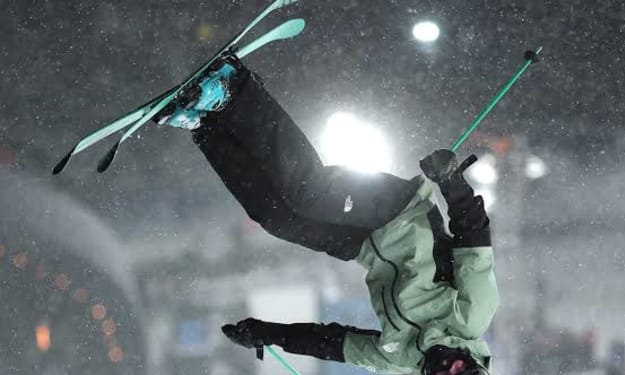
When Indra Brown launched off the icy ramp at her first Olympic training run, she felt something few teenagers ever experience: the sensation of defying gravity on the world’s biggest sporting stage. At just 15 years old, Brown became Australia’s youngest-ever Winter Olympian, a milestone that reflects not only extraordinary talent but also an uncommon maturity and dedication. “I just love the feeling of flying,” Brown said in a recent interview. “When you’re in the air, everything else disappears. It’s just you and the moment.” Brown competes in freestyle skiing, a discipline that demands fearless precision, explosive strength, and technical finesse. Her journey from a curious child on the slopes to an Olympic athlete has been shaped by early passion, family support, and relentless training in a sport still growing in Australia. From Local Slopes to Global Stage Born and raised in Victoria, Brown was introduced to skiing almost as soon as she could walk. Family holidays to alpine regions sparked her interest, but it wasn’t long before casual skiing turned into structured training. By the age of nine, she was already competing in junior freestyle events, showing a natural aptitude for aerial tricks and jumps. Coaches quickly noticed her balance and spatial awareness. “She had an instinct for movement in the air,” said one of her early trainers. “That’s something you can’t really teach.” Australia is not traditionally known for producing Winter Olympic athletes at scale, but recent investment in snow sports programs has helped young talents like Brown access elite coaching and facilities. Much of her development took place overseas, particularly in North America and Europe, where she trained alongside more experienced competitors. “It was intimidating at first,” Brown admitted. “Everyone was older and stronger. But I learned so much just by watching and trying to keep up.” Balancing School and Sport Behind the glamour of Olympic competition lies a demanding daily routine. Brown balances schoolwork with hours of physical conditioning, technical drills, and travel. Her education has shifted to a flexible learning program to accommodate training camps and international competitions. “There are days when I train in the morning and study on planes or in hotel rooms,” she said. “It’s not easy, but I really enjoy learning and I don’t want to give that up.” Her parents have played a critical role in helping her manage pressure and expectations. They insist on maintaining structure and normalcy, ensuring she remains connected to friends and family despite her growing public profile. “She’s still a teenager,” her mother said. “We want her to enjoy this experience, not feel like everything depends on results.” The Mental Challenge of Flight Freestyle skiing is as much a mental test as a physical one. Athletes launch themselves into the air at high speed, performing spins and flips that leave little margin for error. For a 15-year-old, managing fear is part of the learning process. Brown admits she still feels nervous before big jumps. “If you’re not scared at all, something’s wrong,” she laughed. “But I trust my training. Once I’m in the air, it feels natural.” Sports psychologists working with young Olympians emphasize the importance of emotional resilience. They focus on visualization techniques, breathing exercises, and routines that help athletes stay grounded amid intense competition. “Indra has shown remarkable composure,” said a team official. “She listens, adapts, and learns quickly. That’s rare at her age.” Representing a New Generation Brown’s Olympic appearance has already made her a role model for young athletes across Australia. Social media has amplified her story, inspiring children who might not have considered winter sports a realistic path. “I get messages from kids saying they want to ski like me,” Brown said. “That’s really cool. I hope they just have fun with it first.” She is careful not to frame her success as the end goal but as part of a longer journey. Her immediate focus is improving technique and gaining experience rather than chasing medals. “I’m here to learn,” she said. “If I do my best run, I’m happy.” Looking Ahead While the Olympics mark a historic moment in her career, Brown sees them as the beginning rather than the peak. Her long-term ambitions include competing in multiple Olympic cycles and helping raise the profile of freestyle skiing in Australia. “I want to keep pushing myself and see what I can do,” she said. “There’s so much more to learn.” Coaches caution against rushing development. Physical growth, injury prevention, and emotional well-being remain priorities. “We want her to have a long career,” said her head coach. “Not burn out too early.” More Than Medals What sets Brown apart is not just her age or her technical ability, but her joy in the sport. She speaks about skiing with enthusiasm rather than pressure, framing competition as an opportunity rather than a burden. “When I jump, it feels like freedom,” she said. “That’s why I love it.” In a sporting world often defined by results and rankings, Indra Brown’s story stands out as one of curiosity, courage, and youthful wonder. As Australia’s youngest Winter Olympian, she represents both the future of her sport and the timeless thrill of pushing boundaries. Whether she finishes on the podium or not, her message is simple and powerful: sometimes success is not about winning, but about daring to fly.
By Fiaz Ahmed about 13 hours ago in Unbalanced
Distracting and Sad’: Olympics Chief Laments ICE Protests and Epstein Fallout. AI-Generated.
The president of the International Olympic Committee (IOC) has voiced concern over what he described as “distracting and sad” controversies surrounding global sport, pointing to protests linked to U.S. immigration enforcement and the renewed fallout from the Jeffrey Epstein case as issues that risk overshadowing preparations for upcoming Olympic Games. In remarks delivered at an international sports forum this week, the IOC chief said the Olympic movement is facing challenges not only from logistical and financial pressures but also from political and social tensions that increasingly intersect with sport. “The Olympic Games should be about unity, respect, and excellence,” he said. “But we are living in a time when outside conflicts and scandals easily intrude into that space. It is distracting and, frankly, sad.” Protests and Immigration Politics One of the flashpoints highlighted by the IOC president involves demonstrations targeting U.S. Immigration and Customs Enforcement (ICE), which have expanded in several cities and occasionally spilled into sporting events and Olympic-related activities. Activists have used major sports venues and sponsorship events as platforms to protest immigration policies, arguing that sport should not remain neutral in the face of human rights concerns. Some athletes have also expressed solidarity with protest movements, posting messages on social media and calling for greater accountability from governments and international institutions. The IOC chief acknowledged that athletes have the right to personal opinions but warned that protests during Olympic competitions could undermine the spirit of the Games. “We respect freedom of expression, but the Olympic stage must remain a place where nations come together peacefully,” he said. “Turning competition into a battleground for political conflict risks dividing people rather than bringing them together.” Critics argue that the IOC’s stance reflects an outdated belief that sport can be separated from politics. Human rights organizations say international sporting bodies should take stronger positions on issues such as migration, labor rights, and civil liberties, particularly when host countries or sponsors are involved in controversial policies. Epstein Fallout Reaches Sports Institutions The second issue weighing on Olympic leadership is the renewed attention surrounding Jeffrey Epstein’s connections to powerful individuals and institutions. Recent document releases and media investigations have revived scrutiny of figures in business, politics, and philanthropy—some of whom have ties to sports organizations through sponsorships or charitable foundations. While no senior IOC officials have been accused of wrongdoing, the Epstein revelations have heightened sensitivity around governance, ethics, and transparency across global sport. “Every time another name surfaces, it damages trust,” the IOC president said. “Sport depends on credibility. Any association with scandal, even indirect, weakens that trust.” Several national Olympic committees have already begun reviewing sponsorship agreements and donor relationships to ensure they meet stricter ethical standards. Some have called for an independent review mechanism to examine financial ties between sports bodies and wealthy benefactors. A Delicate Balancing Act The IOC has long insisted on political neutrality, a principle embedded in the Olympic Charter. However, that position is becoming harder to maintain as athletes, fans, and sponsors demand that sport reflect broader social values. In recent years, the Olympics have faced controversies related to human rights in host nations, allegations of corruption within sporting federations, and protests tied to climate change and racial justice. The addition of immigration-related activism and renewed scandal over elite misconduct further complicates an already fragile environment. Sports governance experts say the IOC is walking a tightrope. “On one hand, they want to protect the Games from becoming politicized,” said a professor of sports law at a European university. “On the other hand, ignoring social issues can make them look disconnected from reality.” Athlete Voices Grow Louder Athletes themselves are increasingly unwilling to stay silent. Several high-profile competitors have spoken publicly about immigration issues and have criticized powerful institutions for failing to take moral positions. One Olympic hopeful from the United States said the protests reflect a generation that expects sport to engage with society rather than stand apart from it. “We’re not robots,” the athlete said. “We live in the same world as everyone else. If something feels unjust, it’s hard to pretend it doesn’t exist just because we’re wearing a uniform.” At the same time, other athletes worry that political activism could overshadow their years of preparation and distract from competition. “I trained my whole life for this,” said a European swimmer. “I want the focus to be on sport, not scandals and protests.” Preparing for the Next Games With the next Olympic Games approaching, organizers are under pressure to ensure security, manage demonstrations, and protect the event’s image. Host city officials have already begun coordinating with law enforcement and civil society groups to prevent disruptions while respecting legal protest rights. The IOC president emphasized that dialogue is essential. “We must listen to concerns without allowing the Olympic Games to become a stage for every conflict in the world,” he said. “Our responsibility is to protect the athletes and the meaning of the Games.” Conclusion The Olympics chief’s remarks highlight a growing tension between sport’s traditional claim to neutrality and the realities of a politically charged world. Protests linked to immigration enforcement and the ongoing Epstein fallout have become symbols of a broader struggle over ethics, accountability, and expression in global sport. While he described the situation as “distracting and sad,” the controversy also reflects deeper questions about what the Olympics represent in the modern era. As athletes and fans demand greater transparency and social engagement, the IOC faces a defining challenge: preserving unity while confronting the pressures of a divided world. Whether the Olympic movement can strike that balance may shape not only the next Games, but the future identity of international sport itself.
By Fiaz Ahmed about 13 hours ago in Unbalanced
Greeley-Jay Outlasts Byram Hills 3-1
Scroll down for photos Practice Photos On Saturday December 13, Greeley-Jay hosted Byram Hills at the Brewster Ice Arena, and at the outset, it was the Bobcats who made themselves at home with a number of good opportunities. But none were converted, and with the door left open, Greeley-Jay came through.
By Rich Monettiabout 18 hours ago in Unbalanced
Why the Cardinals Hiring Mike LaFleur Feels Like a Pivot, Not a Plan
When the Arizona Cardinals finally announced Mike LaFleur as their next head coach, the reaction around the league was less excitement and more confusion. Not because LaFleur lacks credentials, but because the timeline of the hire suggests something uncomfortable: he wasn’t their first choice.
By Logan M. Snyderabout 20 hours ago in Unbalanced
John-Jay-Somers-Yorktown Nails Wappingers
Please scroll to end of the article and click on the image for photos. On Friday January 16, John Jay Somers Yorktown hosted Wappingers at The Dynamic Gym in Cortlandt Manor. A smaller team than in the past few years, the roster size hasn’t diminished the whole, according Kayla Cambareri. “We’re still nailing it out there,” said the John Jay senior, and the visitors could attest first hand.
By Rich Monettia day ago in Unbalanced
The Most Powerful Woman in Football – Meet the Game’s First Female Super Agent. AI-Generated.
For decades, football’s most influential figures have been club owners, managers, and male player agents operating behind the scenes. But today, a new face of power has emerged in the sport: the world’s first widely recognized female super agent, reshaping the business of football and challenging one of the game’s most male-dominated industries. Her rise marks a turning point not only for women in sports management but also for how football’s global business is conducted. Breaking Into a Closed World When she first entered football representation, the industry was dominated by established male agents with decades of connections. Negotiations took place in boardrooms where women were rarely seen. Early in her career, she faced skepticism from club executives who doubted her knowledge of contracts and tactics. “People assumed I was there to assist someone else,” she once said in an interview. “They didn’t expect me to lead negotiations.” Instead of retreating, she learned every detail of football law, transfer regulations, and financial structures. She built relationships not through bravado but through preparation and precision. Within a few years, she began representing promising young players overlooked by major agencies. Building a Global Client List Her reputation grew when she successfully negotiated high-value transfers for several international stars. These deals included record-breaking contracts, image rights agreements, and sponsorship packages with multinational brands. Unlike traditional agents who focus solely on transfer fees, she positioned herself as a full-career strategist. Her agency offers legal support, mental health services, financial planning, and media training to players. “She doesn’t just negotiate contracts,” said one player she represents. “She plans your entire career.” Her client list now includes elite footballers across Europe, South America, and Africa. Several play in top leagues such as the Premier League, La Liga, Serie A, and the Bundesliga. Changing the Culture of Representation What sets her apart is not only her success but her approach. She has introduced a more transparent style of negotiation, focusing on long-term stability rather than short-term profit. In an industry often criticized for secrecy and aggressive tactics, she insists on ethical standards and player welfare. “Footballers are not just assets,” she has said. “They are human beings with futures beyond the pitch.” This philosophy has attracted players who want more control over their careers and fewer exploitative arrangements. Influence Beyond Transfers Her influence now reaches beyond contracts. She advises clubs on youth development policies and serves as an informal consultant to federations seeking to modernize their management structures. She is also a vocal advocate for women in football leadership. Through mentorship programs, she helps young women enter sports law, management, and representation. Her success has already inspired a new generation of female agents and executives who see her as proof that power in football no longer belongs exclusively to men. Resistance and Challenges Despite her achievements, resistance remains. Some critics argue that football’s power structures are slow to accept change. She has faced online harassment and sexist criticism, particularly when representing high-profile male players. “There are still rooms where I have to prove myself twice,” she admitted. “But results speak louder than prejudice.” She has also had to navigate conflicts with powerful figures who prefer the traditional system of influence. Yet each successful deal strengthens her position, making it harder to dismiss her authority. A New Definition of Power In football, power has long been measured in money and influence. Today, her power is defined by trust. Players trust her with careers worth millions. Clubs trust her professionalism. Sponsors trust her brand vision. Her agency now ranks among the most profitable in the sport, managing contracts worth hundreds of millions of dollars. Industry analysts say her rise reflects a broader shift in football’s business culture toward professionalism, diversity, and accountability. Impact on Women’s Football She has also used her platform to promote women’s football, helping female players secure better contracts and sponsorships. Several of her clients compete in top women’s leagues and international tournaments. By representing both men and women, she has created a bridge between two worlds of football that rarely intersect at the business level. This dual focus has helped normalize the idea that women can lead major negotiations in a sport traditionally ruled by men. The Road Ahead Looking forward, she plans to expand her agency into Asia and North America and invest in youth academies that prioritize education alongside football training. Her long-term vision is to redefine what it means to be an agent: not a deal-maker alone, but a guardian of players’ futures. “Football is changing,” she said recently. “And those who don’t change with it will be left behind.” A Symbol of Transformation The rise of football’s first female super agent is more than a personal success story. It is a signal that power in football is evolving. Talent, intelligence, and integrity now compete with tradition and old networks. In a game watched by billions, her presence behind the scenes represents a quiet revolution. She is not only negotiating contracts — she is rewriting the rules of influence. And as football continues to globalize and modernize, her story proves that the most powerful figures in the sport no longer look the same as they once did.
By Fiaz Ahmed a day ago in Unbalanced
A Whole Lot of BS: Part One
Greetings, Vocal readers. I'm starting a new series on Vocal called A Whole Lot of BS. The intention for coming up with this series is to share the things that either irritate me, have a hard time understanding, annoy me, or all three. From sports to politics, I'm willing to share my personal gripes. If you have any topics you want to suggest to me, please leave them in the comments section down below and I will take them into consideration. For the debut story of this series, I have a bone to pick regarding Major League Baseball's End of the Year Awards, in particular, last year's winners.
By Mark Wesley Pritchard a day ago in Unbalanced
Somers Swim Stays Together Despite 49-39 loss to New Rochelle Bronx
For photos of meet, please scroll to the end of the article and click the image. On Tuesday January 13 Yorktown Somers hosted New Rochelle Bronx at The Mildred E. Strang Middle School in Yorktown heights and fell by a close score of 49-39. Not a powerhouse team, the numbers don’t tell the whole story, according to Jimmy Gallivan of Yorktown High School.
By Rich Monetti2 days ago in Unbalanced
Why the Vikings Were Right to Fire Their GM — And Why the Decision Was Inevitable
The Minnesota Vikings didn’t fire their general manager because of impatience. They didn’t do it because of panic, or ownership meddling, or a sudden philosophical shift. They did it because the most important decision in football — quarterback evaluation — went disastrously wrong, and the consequences were impossible to ignore.
By Logan M. Snyder3 days ago in Unbalanced
Gervonta ‘Tank’ Davis is arrested on battery, kidnapping charges after two-week manhunt
When beating up people in the ring just isn’t enough ... .Gervonta “Tank” Davis has been arrested and charged with battery, false imprisonment, and attempted kidnapping. After weeks on the lam, police finally captured Tank and he is now waiting to post a $16,000 bond.
By Skyler Saunders3 days ago in Unbalanced