
How the Iran War Could Hit Gas Prices at the Pump
The war feels far away until you’re standing at the pump watching the numbers jump faster than your paycheck

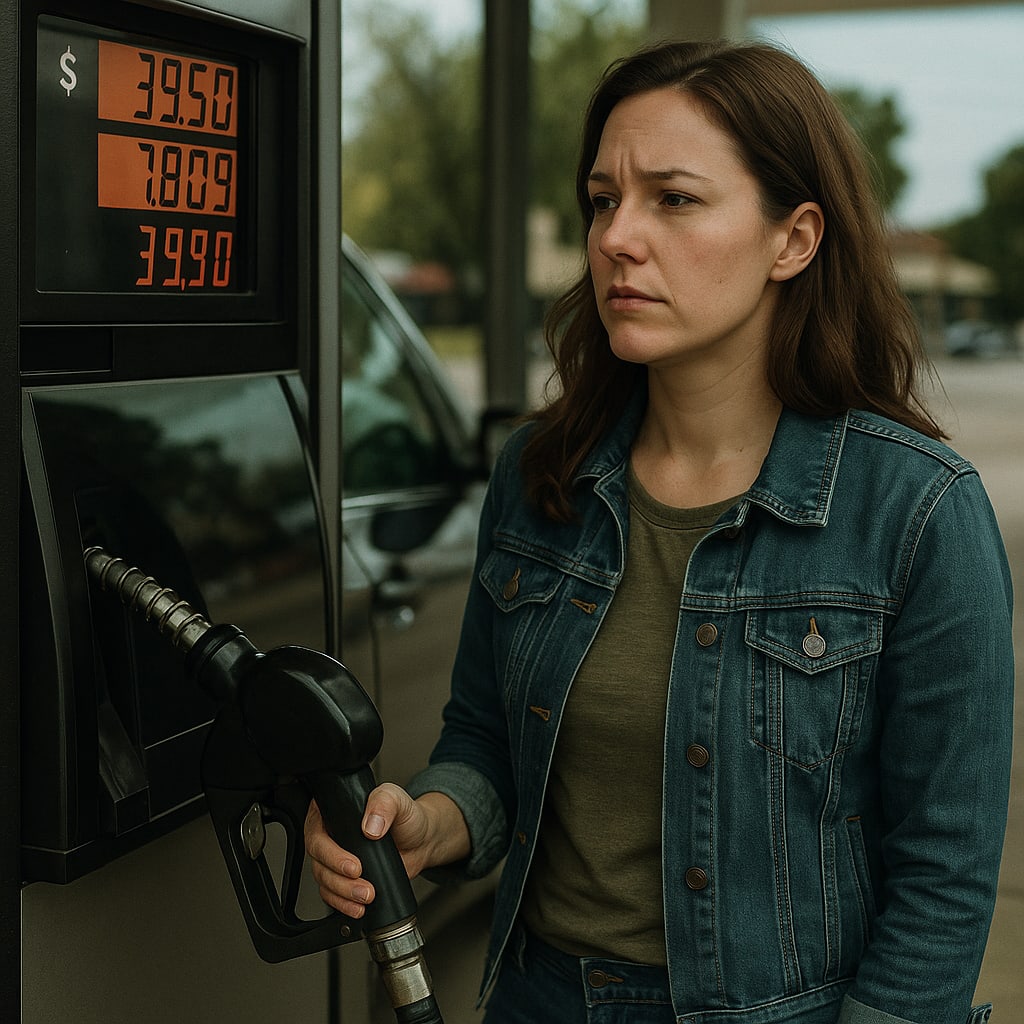
The war feels far away until you’re standing at the pump watching the numbers jump faster than your paycheck
The last time gas spiked in my city, I watched a guy at the pump next to me do the math out loud.
“Okay… twenty bucks gets me… not even half a tank. Cool. Love that for me,” he muttered, shaking his head while the numbers clicked up like a slot machine that only pays out in overdraft fees.
He wasn’t yelling. He wasn’t dramatic. Just tired.
Tired in that way you only really understand when you’re counting dollars by the gallon instead of miles by the trip.
Now, with the Iran war boiling on every headline, I keep thinking about that guy.
Because war always sounds like politics and maps and strategy—until you realize it shows up in your life as ten extra dollars every time you fill up. Then suddenly, it’s not “over there” anymore. It’s sitting in the passenger seat while you decide whether to drive across town or skip the outing altogether.
This is about that moment.
About how a conflict in the Gulf can quietly punch a hole in your monthly budget—and what you can actually do about it before the hit arrives.
The part no one likes to say out loud: war and gas prices are tied together
Gas prices don’t just “go up” because of vibes.
They move because oil traders, governments, and energy companies are constantly trying to guess the future—and pricing in their fear ahead of time.
Iran sits next to the most important oil highway in the world: the Strait of Hormuz.
Roughly a fifth of the world’s oil passes through that narrow waterway. If that artery clogs, even for a short time, the price shock ripples across the planet.
You don’t have to remember every war or crisis to recognize the pattern:
1990–91 Gulf War
2003 Iraq invasion
2011 Arab Spring
2019 tanker attacks in the Gulf
2022 Russia’s invasion of Ukraine
Every time, oil markets jumped. Sometimes for weeks, sometimes for months. Headlines called it “volatility.” Regular people called it “Why is gas suddenly $4.89?”
What’s different with Iran is that we’re not just talking about another regional flare-up.
We’re talking about the possibility—depending on how big this war gets—of direct hits on a choke point that the entire world depends on.
And gas prices at your corner station are chained to that choke point, whether you like it or not.
Timelines: how fast could a war in Iran hit your gas station?
Price shocks don’t wait for CNN to declare “full-scale war.”
They move in phases, and the first phase hits faster than most people expect.
Phase 1: The rumor phase (days to weeks)
This is when the first news breaks:
Missile strikes.
Naval clashes.
Threats to close the Strait of Hormuz.
Statements from Iran about “consequences” for shipping.
No tanker has been blocked yet. Oil is still moving.
But markets don’t care. They trade on fear and expectation.
In this phase, you might see:
Oil prices jump $5–$15 per barrel in a matter of days.
Local gas going up $0.10–$0.40 per gallon within a week or two.
Stations changing prices twice in a single day if the news is bad enough.
It feels almost irrational. Nothing “real” has happened to supply yet.
But your wallet doesn’t care that it’s mostly panic.
Phase 2: The disruption phase (weeks to a few months)
This is where it gets real.
If the war escalates and:
Tankers get attacked,
Insurers refuse to cover ships in the Gulf,
The Strait of Hormuz is partially blocked, or
Major producers in the region pull back exports out of fear,
then supply stops being a theory and becomes a problem.
Historically, this is when you see the scary numbers:
Oil prices pushing toward $100+ per barrel.
Gas going up $0.50–$1.50 per gallon compared to pre-crisis levels.
Regional spikes depending on where you live and how your local refineries are supplied.
The lag between global oil price jumps and your pump price is often just 1–3 weeks.
Not months. Weeks.
If you’re tracking your bank account closely, you’ll feel it quickly.
Phase 3: The adjustment phase (months to years)
War rarely resets back to “normal.”
Even if the worst fighting ends, a few things tend to stick around:
Insurance costs for tankers stay higher.
Producers are jumpier and keep more oil off the market.
Strategic reserves (like the U.S. SPR) may be drawn down, then slowly refilled.
Sanctions and political grudges linger long after the shooting stops.
So you might see gas prices fall back from the peak, but not all the way down.
That’s how we end up with a “new normal”—where $3.00 gas becomes $3.80 gas, and everyone sort of grumbles and adjusts.
Until the next crisis hits.
Three real scenarios: from annoying to “I might have to sell my car”
It’s hard to care about abstract “market risk.”
So here are three grounded scenarios of what a war with Iran could actually mean for your gas receipts.
None of this is guaranteed. But these are the kinds of outcomes energy analysts quietly model behind the scenes.
Scenario 1: Limited strikes, dangerous tension, but the oil keeps flowing
Airstrikes, cyberattacks, and proxy battles.
No full closure of the Strait of Hormuz.
Oil shipping continues, but under constant threat.
What it looks like at the pump:
Oil prices jump $10–$20 per barrel.
Gas prices rise about $0.30–$0.60 per gallon.
Short-lived spikes with roller-coaster patterns as news changes.
This is the “we’re all annoyed, but getting by” outcome.
You cut back on weekend drives.
You grumble at the register.
Politicians yell at each other about who’s to blame.
But most people manage, though it hits low-income households the hardest.
Scenario 2: Partial disruption of the Strait of Hormuz
Attacks on tankers.
Mines or blockades that make shipping risky or slower.
Some producers reduce exports; insurance rates explode.
What it looks like at the pump:
Oil prices jump $30–$50+ per barrel.
Gas goes up $0.80–$2.00 per gallon, depending on your region.
Prices stay elevated for months, not days.
This is where “annoyed” turns into “I’m actually scared.”
You start choosing between:
Driving to work or taking more remote days if you can.
Visiting family vs. saving the trip money.
Filling up fully vs. doing $20 at a time just to feel less overwhelmed.
Experts will talk about OPEC, reserves, and alternative routes.
You’ll be talking about whether you can afford that job that’s 40 minutes away.
Scenario 3: Full-blown regional war and major closure of Hormuz
This is the nightmare scenario—not inevitable, but very real if escalation spirals.
Iran actively blocks or severely disrupts the Strait.
Major producers in the region are drawn into conflict.
Insurance becomes nearly impossible; shipping grinds down.
What it looks like at the pump:
Oil prices could push well over $120–$150 per barrel.
Gas prices might jump $2–$3+ per gallon from current levels.
Some regions could see temporary shortages or rationing if panic buying kicks in.
This is the scenario where:
Truckers protest, because diesel becomes brutal.
Airlines raise ticket prices and cut routes.
Food prices spike because transporting everything gets more expensive.
People who already live on the edge financially are genuinely at risk.
And here’s the hardest part:
By the time we know we’re in this scenario, the damage to your budget has already started.
Which is why the only sane thing to do is to build your defenses early, when it still feels “too soon.”
Why this hurts more than it should: the invisible math of gas and survival
For a lot of people, gas isn’t a “choice” expense.
It’s the cost of:
Getting to work.
Dropping kids at school.
Visiting the one doctor who takes your insurance.
Doing Instacart or Uber shifts that literally require a car.
When gas goes up $1.50 per gallon, that’s not just a number.
If you drive:
60 miles a day roundtrip,
In a car that gets 25 miles per gallon,
That’s about 2.4 gallons per day—12 gallons a week.
At +$1.50 per gallon, that’s:
$18 more per week,
About $72 more per month,
Roughly $864 more per year.
And that’s just commuting.
Add groceries, family trips, side gigs, and suddenly you’re staring at an extra $100–$150 a month in gas alone.
If you’re already juggling rent, food, debt, and maybe one small thing that still brings you joy, that extra $100 can feel like a punch.
That’s why war—something you never voted for, never signed off on, never planned for—feels so deeply unfair when it shows up as a higher gas number on a random Tuesday.
How to brace yourself: practical ways to fight a war you can’t control (at least at the pump)
You can’t move the Strait of Hormuz.
You can’t stop missiles.
You can’t force oil companies to lower their prices.
But you do have levers, even if they’re small. And small moves add up fast when prices surge.
These aren’t theoretical lifestyle tips.
They’re the things I’ve actually watched people do when gas became painful.
Lock in your “war budget” before the war hits your wallet
If you suspect prices are headed up, treat it like a storm forecast.
Build a temporary “high gas” budget for three months and assume:
Gas will be $1 more per gallon than it is today.
You’ll need at least 20–30% more for fuel than your usual month.
Then ask yourself:
What subscription would I cancel first if I had to?
What optional driving can I cut: second grocery run, solo trips, random errands?
Can I redirect $40–$60 a month now into a “gas buffer” fund?
That little buffer won’t stop the price from rising, but it will keep you from panicking the first time you see that spike.
Reduce your “friction miles”
Not every mile hurts equally.
There are “fixed miles” (work, school, medical) and “friction miles” (the extra trips that pile on without you realizing).
Friction miles look like:
Driving to the store three times a week because you didn’t plan.
Making separate trips for errands that could have been bundled.
Saying yes to every drive across town because you don’t want to disappoint people.
If war heats up, here’s what helps:
Batch errands by area: hit everything in one zone in a single trip.
Coordinate with a friend or neighbor: “I’m going to Costco this week. Need anything?”
Use delivery apps strategically: yes, they have fees, but sometimes one delivery is cheaper than three separate drives.
It’s amazing how much gas you save when your week isn’t a zigzag of last-minute trips.
Squeeze a few extra miles out of every gallon
You don’t need to be a car nerd to make your fuel go further.
Some low-effort wins:
Tire pressure: Underinflated tires quietly kill your mileage. A $1 air machine can save you actual dollars.
Trunk clutter: Hauling unnecessary weight burns more fuel. That box you “meant to drop off three weeks ago”? It’s costing you.
Speed habits: Driving 80 instead of 65 chews through gas way faster than most people realize. Even dropping 5–10 mph on the highway adds up.
Idling: Sitting with the engine running for long stretches is just burning money to stay still. If you’re waiting more than a couple of minutes, cut the engine when you can.
These won’t magically erase the impact of war, but they’ll soften the blow more than you think.
Share the burden, literally
Carpooling sounds like a 90s office poster, but when gas prices really spike, people rediscover it fast.
Consider:
Rotating school drop-offs with another parent.
Splitting commutes with a coworker who lives nearby.
Sharing rides to social events instead of everyone driving separately.
Is it slightly inconvenient? Yes.
Is it less inconvenient than spending an extra $50–$100 a month alone? Also yes.
And in a weird way, it makes you feel less isolated.
It’s not just you against the gas station. It’s you and your small crew figuring it out together.
If you can, shorten the distance between your life and your gas tank
This one isn’t possible for everyone, but it’s worth mentioning: when war makes gas expensive, the math on certain big decisions shifts.
Asking your boss (again) for more remote days.
Swapping a long commute job for something closer, even if the pay is slightly lower.
Moving closer to work or public transit when your lease ends.
Picking after-school activities based not just on interest, but also distance.
None of this is easy or instant.
But if you were already on the fence about a change, rising gas prices might be the nudge that makes the decision clearer.
The quiet question behind all of this
There’s something strange about standing at a gas pump and knowing that somewhere on the other side of the world, ships, missiles, and oil ministers are effectively deciding how much you’ll pay to get to your job.
You swipe your card.
You watch the numbers climb.
You feel this mix of anger, helplessness, and resignation that you’re “supposed” to just swallow and move on.
But maybe you don’t just move on.
Maybe you let that feeling sharpen your awareness a bit.
You start noticing how much of your life depends on things you never see: sea lanes, oil futures, sanctions, decisions made in rooms you’ll never enter.
You pay more attention to who’s pushing for war, and who profits from chaos.
You remember that “national security” sometimes translates into “household insecurity” for families who already live thin.
And you quietly, stubbornly decide: I might not control the Strait of Hormuz, but I won’t sleepwalk through the consequences either.
I’ll adjust early.
I’ll prepare more than I panic.
I’ll look out for the people around me who can’t absorb one more financial hit.
Because the Iran war, if it escalates, won’t just be a story about missiles and maps.
It will be a story about small choices at gas pumps in thousands of towns—choices that decide who sinks, who barely floats, and who manages to keep going.
The headlines may eventually move on.
The receipts in your glovebox won’t.
So the question isn’t just “What will war in Iran do to gas prices?”
It’s: “When the numbers start jumping faster than your paycheck again, who do you want to be—unprepared, or already holding a plan you made before the storm hit?”
About the Creator
abualyaanart
I write thoughtful, experience-driven stories about technology, digital life, and how modern tools quietly shape the way we think, work, and live.
I believe good technology should support life
Abualyaanart
Keep reading
More stories from abualyaanart and writers in Trader and other communities.
Tatt~Master
— Assembly Line Tatt Machine ~ Impressions to Impress — As I begin to understand more about the Tattoo Phenomenon. I've written silly, yet verbatim, dating site anecdotes in 'Frazzled.' So let me ask you: Would you be More attracted to someone slathered with tattoos, or Less?
By Jay Kantor3 days ago in Humor



Comments
There are no comments for this story
Be the first to respond and start the conversation.