
🇺🇸🇺🇦 Trump’s Controversial Ukraine Plan: Division, Diplomacy, and Global Reactions
Allegations are swirling that Donald Trump proposed a plan to partition Ukraine — but is it a serious diplomatic blueprint or political theatre? And how is the world responding?

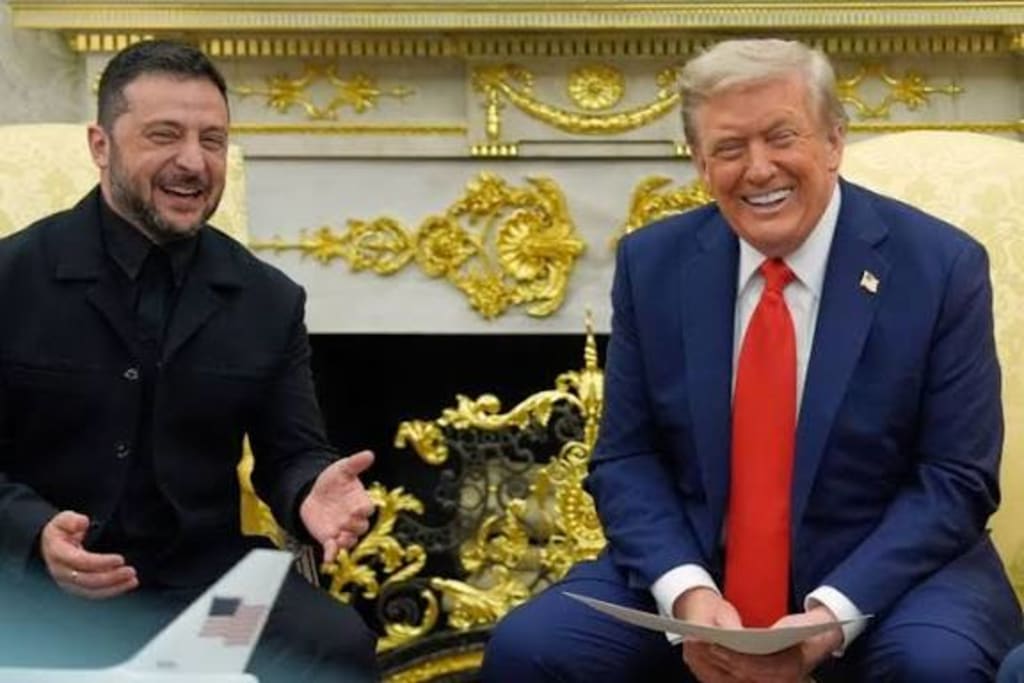
🕰️ Background: How We Got Here
In recent weeks, reports have emerged claiming that Donald Trump is pushing a radical new diplomatic strategy: a proposal to divide Ukraine into zones of influence. According to leaked briefings and confidential sources, this “Trump Plan” allegedly gives major powers — particularly Russia — significant control over parts of Ukraine, while leaving the remainder as an autonomous or Western-aligned region.
These allegations come against the backdrop of the ongoing Russian-Ukrainian war, which began in 2022 with Russia’s full-scale invasion. The international community, led by NATO and the European Union, has consistently supported Ukraine’s sovereignty. At the same time, Trump has repeatedly floated the idea of a “deal” with Russia, raising eyebrows among Western policymakers and Ukrainian officials alike.
📜 What Exactly Is the Trump Plan?
While the full details remain partially unverified, the key elements circulating in media and diplomatic circles include:
1. Partitioning Ukraine Into Spheres of Influence
A western zone under heavy Western (NATO) influence.
Eastern and southern “neutral” zones potentially managed or influenced by Russia.
Possible special status for Crimea, perhaps as a semi-autonomous or demilitarized region.
2. Security Guarantees for Russia
Withdrawal of certain NATO forces or limitations on troop deployments near agreed zones.
Legal or diplomatic guarantees that Ukraine will not join NATO in certain regions.
3. Economic and Reconstruction Aid
Western-backed funds for reconstruction in parts of Ukraine.
Russian participation in rebuilding infrastructure in “neutral” zones, with oversight mechanisms.
4. Autonomy and Governance
Autonomous governance for separatist regions under a new constitutional framework.
International monitors to oversee elections and the implementation of local rights.
---
🌐 Global Reactions: Mixed and Heated
Ukraine’s Response
Unsurprisingly, Ukrainian leaders have strongly rejected the plan. President Zelensky and his cabinet have publicly stated that any such division would constitute a violation of Ukraine’s independence and sovereignty. In Kyiv, protests have flared, and senior Ukrainian diplomats have called the plan a “cynical attempt to betray our nation.”
Russia’s Calculated Silence
Moscow has remained cautiously optimistic. While Kremlin officials have neither fully endorsed nor explicitly rejected the details, they have praised the notion of “negotiated outcomes” and seem ready to leverage the proposal if it offers a pathway to formal recognition or reduced sanctions.
European Powers and NATO
European leaders are deeply divided.
Some (especially in Eastern Europe) view the plan as a dangerous capitulation to Russia.
Others see it as a possible—but risky—shortcut to ending the war.
NATO’s top officials, meanwhile, have reiterated their commitment to Ukraine’s territorial integrity, but behind closed doors, some diplomats argue that a “deal” might be better than prolonged war.
United States
In Washington, the plan has reignited fierce debate.
Trump’s supporters argue that a negotiated settlement is the only realistic way to stop the bleeding.
Critics, including many Republicans and Democrats, claim this is a soft surrender—and a repeat of the kind of diplomacy that rewards aggression.
---
🔍 Analysis: Is This a Realistic Plan or Political Posturing?
Strategic Logic — But Big Risks
From a purely strategic point of view, the Trump plan could appeal to both sides:
For Russia, it offers a way to formalize control over contested regions.
For the U.S. and Europe, it might provide a way to exit a draining conflict.
For Ukraine, under extreme pressure, it might be a bitter but pragmatic compromise… though many in Kyiv reject that outright.
Yet the risks are enormous:
Any “partition” of Ukraine is likely to spark new conflicts, not end old ones.
Monitoring and enforcing peace across divided zones would require massive international commitment.
Allowing Russia such influence could undermine NATO’s credibility.
Political Theater or Secret Deal?
Another possibility is that this is less a fully-formed plan and more a negotiation overture or political theater—designed to test how far Western and Ukrainian actors might go.
Trump’s history of dramatic proposals suggests the possibility that this is a trial balloon, not a contract.
---
💬 Personal Opinion (Kareem Analyst)
In my view, this “Trump Plan” is dangerous but not impossible.
It may be the kind of gray diplomacy that emerges when war becomes too costly—but trust is the biggest barrier. For this to work, Ukraine must maintain enough sovereignty and guarantee security mechanisms. Without that, any “deal” could become an informal surrender.
I believe Trump’s intention is not pure appeasement but leverage: he is offering a way out of the war while making Western powers pay for it diplomatically. Still, Western leaders need to tread carefully. A short-term deal might buy peace, but it could sow the seeds for future instability.
---
🧭 What Could Happen Next? Three Possible Scenarios
1. Full Negotiation Begins
International negotiation table opens
Interim security agreement
Monitoring by UN or NATO
2. Plan Rejected, War Continues
Ukrainian leadership rejects the deal publicly
Military escalation resumes
Western sanctions remain
3. Partial Implementation Under High Risk
Partition in some regions only
International peacekeeping
Reconstruction funds tied to political concessions
---
❓ Key Questions to Ponder
Is it ever moral for a sovereign country to be partitioned in a negotiated peace?
Would this plan permanently weaken Ukraine’s sovereignty?
Could this be the first step toward a broader global “power deal” among superpowers?
Would Western public opinion accept formal concessions to Russia?
Is this really a path to peace—or just a way to legitimize war gains?
About the Creator
Filmon Ke Raaz | Movie Mysteries Explained
Filmon Ke Raaz is a storytelling platform where movies are explained in a simple and engaging way. We uncover hidden meanings, untold facts, and deep mysteries behind thriller, horror, and mystery films.
Keep reading
More stories from Filmon Ke Raaz | Movie Mysteries Explained and writers in The Swamp and other communities.
**🇸🇦💴 Is Saudi Arabia Really Planning to Sell Oil in Chinese Yuan? Is the Petro-Dollar System Finally Crumbling?**
📌 Introduction: A Question the World is Afraid to Ask What happens if the world’s largest oil exporter stops using the U.S. dollar?
By Filmon Ke Raaz | Movie Mysteries Explained2 months ago in The Swamp
Laura Fernández Declares Victory in Costa Rica’s Presidential Election
Costa Rica’s 2026 presidential election has delivered a clear winner: Laura Fernández Delgado, the 39-year-old conservative candidate from the ruling Sovereign People’s Party (PPSO), has claimed victory with more than 40 % of the vote in Sunday’s election, avoiding a runoff and becoming Costa Rica’s next president.� english.news.cn +1 Preliminary and partial results released by Costa Rica’s Supreme Electoral Tribunal (TSE) showed Fernández securing almost 48–49 %, well above the 40 % threshold needed to win the presidency in the first round of voting, with her main rival, centrist economist Álvaro Ramos of the National Liberation Party (PLN), trailing with roughly 33 % of the vote.� Reuters +1 A First-Round Victory in Historic Context Costa Rican electoral law stipulates that a presidential candidate must receive at least 40 % of valid votes to be elected without a runoff election scheduled for April 5. Fernández surpassed that mark as votes continued to be counted, giving her an outright win without a second round.� Reuters With high turnout among the country’s 3.7 million registered voters, Fernández’s victory reflects both her personal appeal and broader public support for her platform, especially on issues where many voters feel the government has fallen short.� english.news.cn Her win also comes as the PPSO is expected to expand its representation in the 57-seat Legislative Assembly, climbing toward a majority, though short of a supermajority that would allow it to pursue constitutional changes without broad opposition support.� NST Online Who Is Laura Fernández? Laura Virginia Fernández Delgado is a political scientist and longtime public servant. She previously served as minister of national planning and economic policy (2022–2025) and minister of the Presidency (2024–2025) in the administration of outgoing President Rodrigo Chaves Robles.� Wikipedia Born on July 4, 1986, in Puntarenas, Fernández holds a degree in public politics and democratic governability and positioned herself as the continuity candidate for Chaves’s policies. Her campaign emphasized security, institutional reform, and economic growth, tapping into widespread voter concern over rising crime and public safety.� english.news.cn She is poised to become the second woman elected president in Costa Rica’s history, following Laura Chinchilla (2010–2014).� amcostarica.com Campaign Themes: Crime, Security & “Third Republic” Crime and security dominated the 2026 election campaign. Costa Rica, historically one of Latin America’s most peaceful democracies, has seen a significant rise in violence and drug-related crime in recent years — a trend that Fernández and other conservative candidates made central to their platforms.� Malay Mail In her victory speech, Fernández framed her win as the start of a “Third Republic,” calling for deep changes and continuity of policies aimed at combating crime, strengthening institutions, and boosting economic activity. She thanked President Chaves for his support and indicated she would involve him in her new administration, even though constitutional rules bar him from seeking immediate reelection.� english.news.cn Reaction from Rivals and International Leaders Álvaro Ramos, Fernández’s closest competitor, conceded defeat and vowed to remain a force in Costa Rican politics, focusing on democratic oversight and constructive opposition in the Legislative Assembly.� Reuters International leaders have also responded. For instance, Israeli Foreign Minister Gideon Sa’ar congratulated Fernández on her victory and underscored the longstanding relationship between Costa Rica and Israel, highlighting expectations for enhanced cooperation.� JNS.org Similarly, El Salvador’s President Nayib Bukele — whose hardline security policies have influenced Fernández’s rhetoric — reportedly congratulated her on social media, reinforcing regional connections among right-wing leaders.� Reddit What Her Presidency Could Mean Fernández’s victory signals a shift to the right in Costa Rican politics — part of a broader regional trend where conservative and populist figures have gained ground amid public frustration over crime, corruption, and governance challenges.� Malay Mail Her policy agenda includes: Tougher measures against crime and organized gangs Support for strong security infrastructure, including completion of a new high-security prison Public–private partnerships to stimulate infrastructure investment Institutional reforms and bureaucratic streamlining While Fernández has pledged to uphold Costa Rica’s democratic norms, critics and political analysts caution against potential overreach or erosion of civil liberties, especially if security policies become increasingly authoritarian.� Malay Mail Looking Ahead: From Election Night to Inauguration Costa Ricans elected Fernández in a crucial moment for the country’s future, choosing leadership that reflects growing public concern about safety and governance. Her presidency will officially begin on May 8, 2026, when she is sworn in for a four-year term that runs through May 8, 2030.� amcostarica.com The expanded majority for her party in the legislature could facilitate her policy initiatives, though meaningful opposition within the Assembly remains to ensure democratic checks and balances.
By Zahid Hussainabout 14 hours ago in The Swamp
Germany Pushes for ‘Two‑Speed’ Europe With New Bloc of Six Leading Economies
In late January 2026, Germany — together with France and four other major EU economies — launched a high‑profile initiative to create a “two‑speed” European Union model aimed at breaking policy stagnation and enhancing Europe’s global economic and strategic competitiveness. The proposal contemplates a core group of six leading economies within the 27‑member bloc that would cooperate more quickly and decisively on shared priorities, especially where consensus among all member states has traditionally slowed progress.
By Salaar Jamali5 days ago in The Swamp


Comments (1)
❓