energy
How politicians and governments around the world are dealing with climate change, solar energy and harnessing renewable resources.
Iran Is Selling More Oil but Making Less Money. AI-Generated.
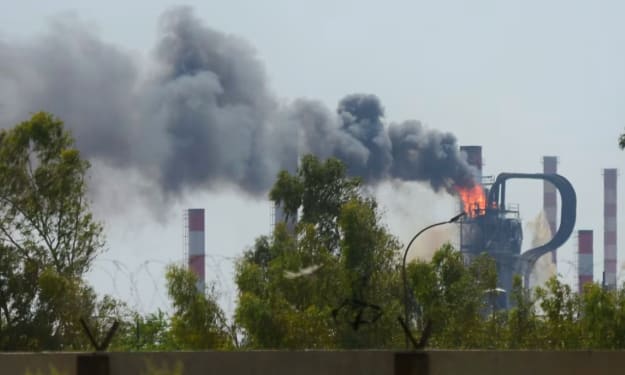
In an unusual twist for one of the world’s largest oil-producing nations, Iran is exporting more crude oil than it has in years — yet its oil revenues are falling instead of rising. At first glance, this seems contradictory: how can selling more of a valuable commodity generate less money? The answer lies in a complex combination of sanctions, market dynamics, discount sales, and geopolitical realities. Despite reports that Iran’s oil exports — particularly to China — have reached levels not seen since before the 2010s, the country is earning far less than expected. This economic paradox reflects how the global energy market can work against even the biggest oil producers under certain conditions. How Iran Is Increasing Oil Exports In 2025, Iran saw a significant increase in oil exports. Analysts report that shipments climbed back toward levels not seen in nearly a decade, largely by relying on covert shipping networks and intermediaries. These methods allow Iran to bypass some international sanctions and keep crude flowing to buyers. Most of this oil is shipped to China, often through informal channels that involve turning off tracking systems, transferring oil ship-to-ship, and using private buyers outside of formal markets. This “shadow fleet” allows Iran to maintain export volumes even when official sales are restricted. Despite these logistical challenges, Iran now exports millions of barrels per day, compared with much lower figures during periods of tight sanctions in the early 2020s. Why Exporting More Oil Doesn’t Mean More Revenue Selling more oil would normally mean more revenue, but several factors are keeping profits low for Iran: 1. Deep Discounts on Iranian Crude Because Iran cannot rely on official export channels, it is forced to sell oil at steep discounts. Chinese buyers, for example, often purchase Iranian barrels $6–$10 below global market prices. While this keeps exports flowing, it significantly reduces profits. 2. Extra Costs Due to Sanctions Operating outside legal channels comes with high costs. Moving oil covertly involves additional expenses for logistics, insurance, and intermediary services. These “shadow market” costs cut into Iran’s earnings, meaning more exports don’t translate into more cash. 3. Falling Global Oil Prices Global crude prices dropped in late 2025 and early 2026 due to oversupply and lower demand. When world prices fall, countries like Iran — already selling at discounts — suffer even more, further reducing revenue. 4. Currency Devaluation Iran’s domestic currency, the rial, has continued to weaken. When oil earnings are converted into local currency, the value received is much lower than expected. Combined with high inflation, this leaves the government and citizens with less real purchasing power. China’s Role in Iran’s Oil Paradox China has become Iran’s largest and most important oil buyer. Roughly 80–90% of Iranian exports are destined for Chinese refineries, many operating outside official global channels. While this relationship keeps Iran’s oil flowing, it also creates a reliance on a single major customer. China benefits from discounted oil, while Iran earns less revenue and has less bargaining power. Meanwhile, competition from other discounted producers like Russia further depresses prices, exacerbating the revenue shortfall. The Economic Impact on Iran Despite higher exports, the lack of revenue growth has serious consequences for Iran’s economy: Government budget shortfalls, since oil revenue makes up a large portion of public spending Inflation and a weak currency, reducing purchasing power for ordinary citizens Rising public dissatisfaction, with protests and economic grievances surfacing due to stagnant income and reduced services The paradox of more exports but less income highlights how sanctions, global market conditions, and domestic economic challenges interact in complex ways. Sanctions and the Shadow Fleet The reason behind Iran’s low profits is deeply tied to international sanctions. These sanctions, particularly those reimposed after the U.S. exited the 2015 nuclear deal, prevent Iran from selling oil through conventional banking and trading channels. To bypass restrictions, Iran relies on a shadow fleet, including covert tankers and private intermediaries. While this keeps oil flowing, it comes at a high cost and keeps Iran outside mainstream markets, preventing the country from earning full market value. In short, Iran is trading profitability for survival, ensuring exports continue while accepting lower revenue. Can Iran Turn This Around? Experts disagree on whether Iran can reverse this trend. Potential solutions include: Sanctions relief or renewed diplomatic agreements, which could allow Iran to access legitimate markets and sell oil at full price Diversifying export markets, reducing dependence on China Investing in domestic infrastructure, improving efficiency and reducing costs for shipping and production However, geopolitical uncertainty, competition from other producers, and internal economic challenges make a full recovery uncertain. Final Thoughts Iran’s oil industry demonstrates that more isn’t always better. Selling higher volumes does not guarantee higher profits, especially when sanctions, discounts, and global market forces are in play. The country’s paradox — exporting more oil but making less money — highlights the delicate balance between geopolitics, economics, and global energy markets. While oil remains Iran’s most important economic asset, the combination of sanctions, low prices, and extra costs continues to challenge the government and citizens alike. For the international community, this situation is a reminder that market access and pricing power are just as important as production volumes. For Iran, it’s a tough lesson in how exporting more can sometimes mean earning less.
By Muhammad Hassan8 days ago in The Swamp
The Buyout: How the "War" for Greenland Was Just a Distraction. AI-Generated.
We all just breathed a sigh of relief. For the last three weeks, the world watched in horror as President Trump threatened to take Greenland "one way or the other." We saw Danish troops mobilizing in the North Atlantic. We saw NATO invoking Article 5. We saw the doomsday clock tick forward.
By Radical Left Scum10 days ago in The Swamp
Ovo Energy Fined £2.7m for Failing to Deliver Government Bill Support on Time. AI-Generated.
Ovo Energy, one of the UK’s leading energy suppliers, has been fined £2.7 million for failing to provide timely government support to customers struggling with energy bills. The fine, imposed by the Energy Ombudsman and Ofgem, underscores the importance of adhering to regulations designed to protect vulnerable households during periods of financial hardship.
By Aarif Lashari10 days ago in The Swamp
Pilot Captures Historic Northern Lights Show From 37,000 Feet. AI-Generated.
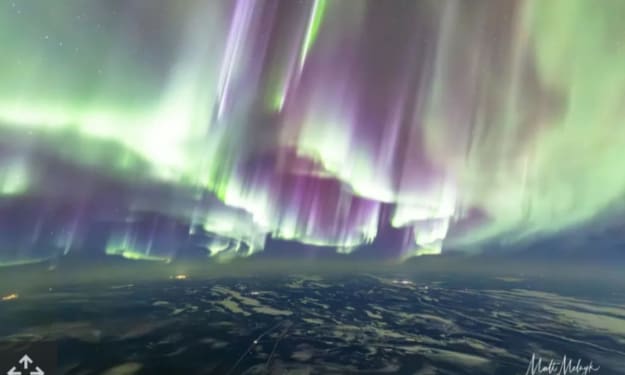
A commercial airline pilot recently captured a breathtaking display of the Northern Lights from 37,000 feet, offering a rare and historic glimpse of one of nature’s most spectacular phenomena. The footage, shared widely on social media, shows the skies over the Arctic lit up in vibrant greens, purples, and reds, stunning both aviation enthusiasts and nature lovers alike. This rare aerial perspective not only highlights the beauty of the aurora borealis but also demonstrates how technology and human curiosity can bring extraordinary natural events to global audiences. What the Pilot Witnessed Flying over the Arctic Circle, the pilot reported seeing one of the most intense aurora displays in recent memory. The Northern Lights, or aurora borealis, occur when charged particles from the sun collide with Earth’s magnetic field, creating shimmering waves of light in the polar regions. From 37,000 feet, the pilot described the scene as “like the sky was on fire with color, moving in waves and ripples across the horizon.” Passengers on the flight were also treated to a rare glimpse of the phenomenon, with many scrambling to take photos or videos. The pilot’s footage shows undulating curtains of green and purple light stretching across the night sky, highlighting how spectacular the aurora can appear from high altitudes, far above city lights and atmospheric haze. The Science Behind the Northern Lights The aurora borealis is caused by solar winds interacting with Earth’s magnetosphere. When electrically charged particles from the sun collide with gases in Earth’s atmosphere, they emit light that appears as glowing sheets, arcs, or waves in the sky. The intensity, color, and movement of the aurora depend on several factors: Solar activity: Higher sunspot activity results in more vivid displays Atmospheric composition: Different gases produce different colors—oxygen typically creates green or red hues, while nitrogen can produce purples and blues Geographic location: The aurora is most visible near the magnetic poles, particularly above northern Scandinavia, Canada, Alaska, and Greenland The pilot’s footage offers an exceptional real-time perspective of this phenomenon from high altitude, giving scientists, enthusiasts, and the public a unique opportunity to observe auroral activity like never before. Why This Footage Is Historic While the Northern Lights are regularly photographed from the ground, footage from cruising altitude in a commercial aircraft is rare. The pilot’s recordings capture: The aurora spanning hundreds of miles across the Arctic sky Dynamic motion and ripples, which are often difficult to appreciate from ground-level photography A unique perspective above cloud cover, offering an unobstructed view Experts say this type of footage is valuable for both scientific observation and public engagement, allowing people to experience the grandeur of the aurora in a way that was previously limited to satellite imagery or specialized flights. Public Reaction The footage has gone viral on social media, with users praising the pilot for capturing such a stunning and rare sight. Many viewers described the video as “otherworldly” and “breathtaking,” while others noted the contrast between the peaceful night sky and the vibrant aurora. Science communicators have also shared the video, highlighting it as an example of how natural phenomena can inspire curiosity and wonder, and emphasizing the importance of studying solar and geomagnetic activity to better understand our planet’s relationship with the sun. Northern Lights and Aviation Aviation professionals note that flights over polar regions sometimes offer rare opportunities to witness the aurora. Commercial aircraft flying north during nighttime winter months are more likely to cross auroral ovals, especially when solar activity is high. However, capturing the Northern Lights from a cockpit requires timing, visibility, and quick thinking, as pilots are primarily focused on flight safety. The fact that this pilot was able to record clear, high-quality footage at cruising altitude makes this capture particularly remarkable. The Importance of Sharing Natural Wonders This historic footage is more than just a viral video—it’s an opportunity to raise awareness about the beauty and fragility of our planet. The Northern Lights are impacted by solar cycles, geomagnetic storms, and atmospheric conditions, and sharing such experiences can inspire greater appreciation for Earth’s natural phenomena. Educational programs and nature enthusiasts are using footage like this to teach about: Solar activity and space weather Earth’s magnetosphere The cultural significance of auroras for northern communities By making these phenomena accessible to a global audience, pilots, scientists, and enthusiasts help cultivate a wider appreciation for Earth sciences and environmental stewardship. Looking Ahead As technology improves and more pilots and passengers have access to high-quality cameras, aerial footage of the Northern Lights may become increasingly common. Such recordings can serve both scientific and educational purposes, helping researchers monitor auroral activity and allowing the public to experience one of the most spectacular natural light shows on Earth. For travelers hoping to witness the aurora, winter flights over the Arctic Circle, particularly between September and March, remain the best opportunity. However, the pilot’s historic footage from 37,000 feet demonstrates that sometimes, extraordinary sights can appear even when least expected. Conclusion The recent footage captured by a commercial airline pilot showcases the Northern Lights like never before, offering an inspiring view of one of nature’s most beautiful phenomena from the sky. From a scientific, educational, and aesthetic perspective, this historic capture reminds us of the power and wonder of the natural world, and the unique experiences that await those who dare to look up. Whether viewed by scientists, aviation enthusiasts, or the general public, this extraordinary light show underscores the beauty of Earth’s polar skies and the enduring fascination of the aurora borealis.
By Muhammad Hassan11 days ago in The Swamp
Trump Backs Down Over Tariffs and Greenland.
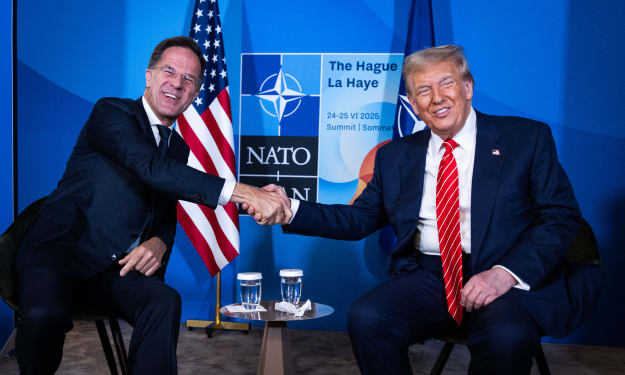
Trump caused panic, worry, anger, and frustration when he threatened his European partners with tariffs because they would not support him in his plan to take over Greenland. Trump wanted to buy Greenland from Denmark, or he would use force, or so it seemed to take it. Trump threatened his opponents with 10% tariffs if they did not acquiesce to his Greenland adventure, or should that be misadventure? These were to start from 1 February and would rise to 25% if those nations that opposed him did not give in.
By Nicholas Bishop11 days ago in The Swamp
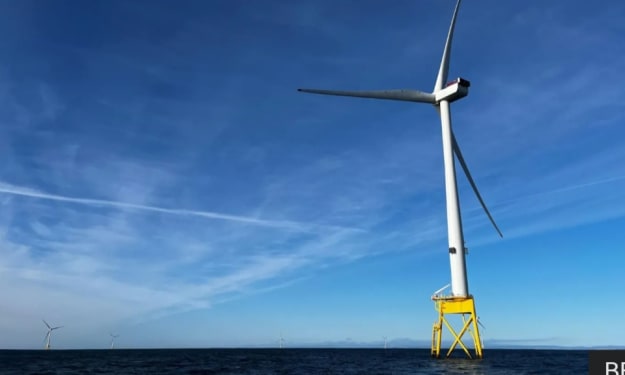
Plans for Huge Wind Farm Paused Over 'Unfair' Grid Charges. AI-Generated.
Ambitious plans for one of the country’s largest wind farms have been paused after developers raised concerns over what they describe as ‘unfair’ grid charges. The move has sparked debate over the cost of renewable energy infrastructure, the role of government in supporting green initiatives, and the balance between energy suppliers and developers in the transition to sustainable power.
By Aarif Lashari11 days ago in The Swamp
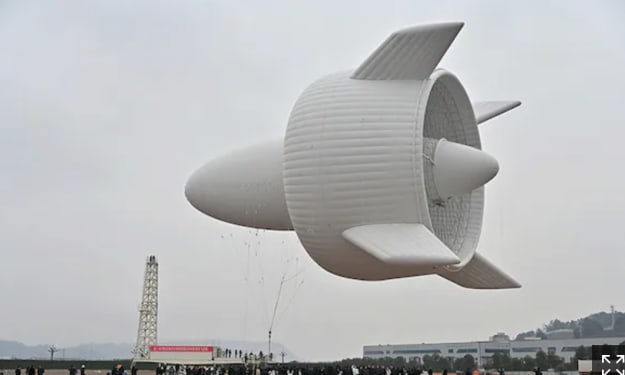
Chinese Airship S2000: The First to Supply Grid Power at 2000 Meters. AI-Generated.
In a groundbreaking development for both renewable energy and aerospace technology, the Chinese Airship S2000 has become the first airborne vehicle to supply grid power at 2000 meters above ground. This milestone represents a new frontier in how renewable energy can be delivered to remote, high-altitude regions where traditional infrastructure has struggled to reach. By harnessing the power of wind turbines and solar panels, the S2000 is setting the stage for a future where airborne platforms can support the global energy grid.
By Muhammad Hassan11 days ago in The Swamp
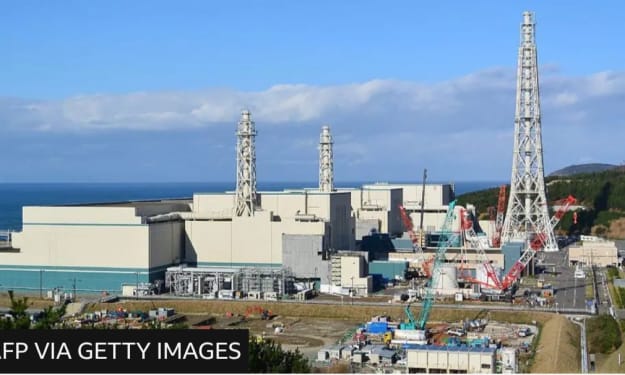
Japan Suspends World's Largest Nuclear Plant Hours After Restart. AI-Generated.
In a dramatic turn of events, Japan has suspended operations at the world’s largest nuclear power plant just hours after it was restarted, raising urgent questions about the country’s energy strategy and nuclear safety protocols. The suspension comes amid heightened scrutiny of nuclear energy in Japan, nearly a decade after the Fukushima disaster, and reflects the ongoing challenges the country faces in balancing energy needs with safety and public trust.
By Aarif Lashari11 days ago in The Swamp