
Laura Fernández Declares Victory in Costa Rica’s Presidential Election
Right-wing populist wins outright with strong first-round showing, signaling a major shift in national politics
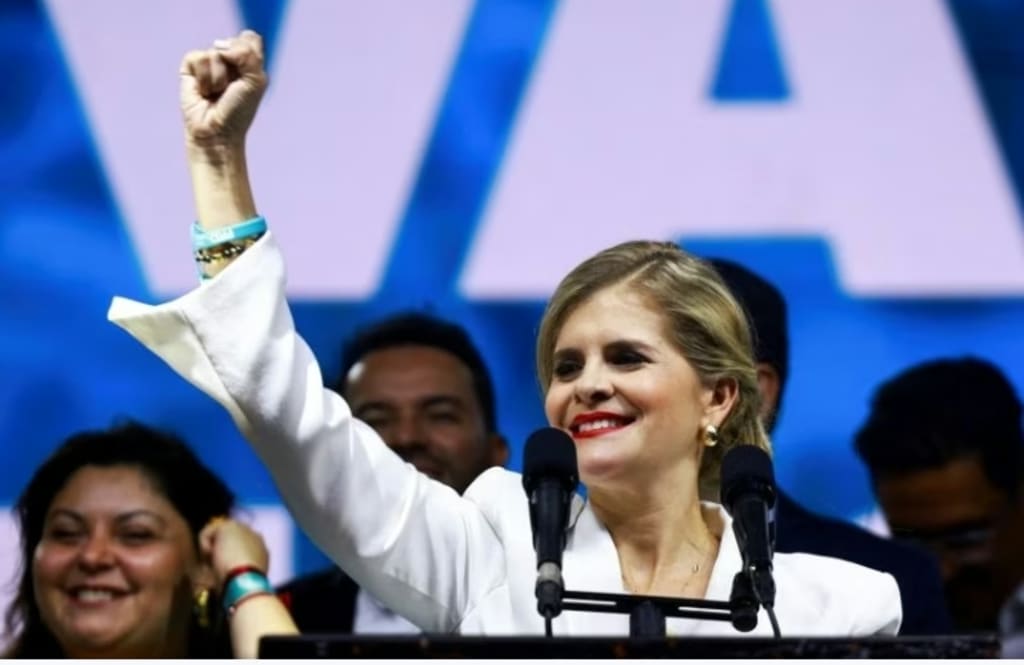
Costa Rica’s 2026 presidential election has delivered a clear winner: Laura Fernández Delgado, the 39-year-old conservative candidate from the ruling Sovereign People’s Party (PPSO), has claimed victory with more than 40 % of the vote in Sunday’s election, avoiding a runoff and becoming Costa Rica’s next president.�
english.news.cn +1
Preliminary and partial results released by Costa Rica’s Supreme Electoral Tribunal (TSE) showed Fernández securing almost 48–49 %, well above the 40 % threshold needed to win the presidency in the first round of voting, with her main rival, centrist economist Álvaro Ramos of the National Liberation Party (PLN), trailing with roughly 33 % of the vote.�
Reuters +1
A First-Round Victory in Historic Context
Costa Rican electoral law stipulates that a presidential candidate must receive at least 40 % of valid votes to be elected without a runoff election scheduled for April 5. Fernández surpassed that mark as votes continued to be counted, giving her an outright win without a second round.�
Reuters
With high turnout among the country’s 3.7 million registered voters, Fernández’s victory reflects both her personal appeal and broader public support for her platform, especially on issues where many voters feel the government has fallen short.�
english.news.cn
Her win also comes as the PPSO is expected to expand its representation in the 57-seat Legislative Assembly, climbing toward a majority, though short of a supermajority that would allow it to pursue constitutional changes without broad opposition support.�
NST Online
Who Is Laura Fernández?
Laura Virginia Fernández Delgado is a political scientist and longtime public servant. She previously served as minister of national planning and economic policy (2022–2025) and minister of the Presidency (2024–2025) in the administration of outgoing President Rodrigo Chaves Robles.�
Wikipedia
Born on July 4, 1986, in Puntarenas, Fernández holds a degree in public politics and democratic governability and positioned herself as the continuity candidate for Chaves’s policies. Her campaign emphasized security, institutional reform, and economic growth, tapping into widespread voter concern over rising crime and public safety.�
english.news.cn
She is poised to become the second woman elected president in Costa Rica’s history, following Laura Chinchilla (2010–2014).�
amcostarica.com
Campaign Themes: Crime, Security & “Third Republic”
Crime and security dominated the 2026 election campaign. Costa Rica, historically one of Latin America’s most peaceful democracies, has seen a significant rise in violence and drug-related crime in recent years — a trend that Fernández and other conservative candidates made central to their platforms.�
Malay Mail
In her victory speech, Fernández framed her win as the start of a “Third Republic,” calling for deep changes and continuity of policies aimed at combating crime, strengthening institutions, and boosting economic activity. She thanked President Chaves for his support and indicated she would involve him in her new administration, even though constitutional rules bar him from seeking immediate reelection.�
english.news.cn
Reaction from Rivals and International Leaders
Álvaro Ramos, Fernández’s closest competitor, conceded defeat and vowed to remain a force in Costa Rican politics, focusing on democratic oversight and constructive opposition in the Legislative Assembly.�
Reuters
International leaders have also responded. For instance, Israeli Foreign Minister Gideon Sa’ar congratulated Fernández on her victory and underscored the longstanding relationship between Costa Rica and Israel, highlighting expectations for enhanced cooperation.�
JNS.org
Similarly, El Salvador’s President Nayib Bukele — whose hardline security policies have influenced Fernández’s rhetoric — reportedly congratulated her on social media, reinforcing regional connections among right-wing leaders.�
Reddit
What Her Presidency Could Mean
Fernández’s victory signals a shift to the right in Costa Rican politics — part of a broader regional trend where conservative and populist figures have gained ground amid public frustration over crime, corruption, and governance challenges.�
Malay Mail
Her policy agenda includes:
Tougher measures against crime and organized gangs
Support for strong security infrastructure, including completion of a new high-security prison
Public–private partnerships to stimulate infrastructure investment
Institutional reforms and bureaucratic streamlining
While Fernández has pledged to uphold Costa Rica’s democratic norms, critics and political analysts caution against potential overreach or erosion of civil liberties, especially if security policies become increasingly authoritarian.�
Malay Mail
Looking Ahead: From Election Night to Inauguration
Costa Ricans elected Fernández in a crucial moment for the country’s future, choosing leadership that reflects growing public concern about safety and governance. Her presidency will officially begin on May 8, 2026, when she is sworn in for a four-year term that runs through May 8, 2030.�
amcostarica.com
The expanded majority for her party in the legislature could facilitate her policy initiatives, though meaningful opposition within the Assembly remains to ensure democratic checks and balances.
About the Creator
Keep reading
More stories from Zahid Hussain and writers in The Swamp and other communities.
Gaza’s Rafah Border Crossing With Egypt Reopens for Limited Traffic
The Rafah border crossing — Gaza’s only direct land link to Egypt — has reopened for limited movement of people after being largely closed for nearly two years amid the Israeli-Hamas war. The reopening marks a key, if cautious, milestone in the implementation of a cease-fire agreement designed to ease the humanitarian plight in Gaza and restore some access to the outside world. � AP News +1 What Has Changed at Rafah? On February 2, 2026, Egyptian and Israeli security officials confirmed that the Rafah crossing had resumed limited pedestrian movement in both directions. The crossing, which had been under Israeli control since May 2024, had remained mostly shut after it was seized early in the conflict, severely restricting movement and worsening humanitarian conditions in Gaza. � AP News +1 Under the initial reopening: Only a small number of Palestinians will be allowed to cross each day. Movement is currently limited to foot traffic, with strict security screening by both Israel and Egypt. No cargo or general goods are entering Gaza through Rafah yet. European Union border agents are also present to help monitor the process. � AP News Egyptian media reported that in the first phase about 50 people are expected to exit Gaza daily and a similar number to return. Priority is being given to patients needing medical treatment abroad, many of whom have been waiting for weeks or months for access. � AP News Why This Matters 1. Reopening After Long Closure The crossing’s closure has been one of the most significant barriers isolating Gaza from the outside world. Rafah is the only border crossing between Gaza and Egypt that does not require transit through Israel, making it especially important for humanitarian access and travel. Its reopening — even at limited capacity — is widely viewed as a humanitarian relief step. � Reuters 2. Part of Cease-Fire Implementation The limited reopening is tied to a fragile cease-fire agreement between Israel and Hamas that began in October 2025. The deal was negotiated with international involvement, including the United States and the European Union, and called for steps to ease restrictions on movement and improve living conditions in Gaza. � Reuters 3. Meeting Urgent Medical Needs Health officials in Gaza estimate tens of thousands of sick or wounded people urgently need medical care not available inside the enclave. Allowing patients and their families to leave for treatment abroad is a high humanitarian priority tied to the crossing’s reopening. � wgvunews.org How the Reopening Is Being Managed The process is being phased in carefully: Screening by multiple parties: Israel and Egypt are vetting individuals before they travel. A European border mission adds an external supervisory role. � wgvunews.org Limited capacity: Movement is restricted at first to keep the process orderly and secure and to allow authorities to manage security concerns. � Al Jazeera Focus on people, not goods: At this stage, the crossing isn’t open for commercial goods or aid shipments — just for the movement of people. � Al Jazeera Ongoing trial phase: Initial movement began with a trial phase, and officials are evaluating how to expand operations safely over time. � Anadolu Ajansı Critics and Ongoing Challenges While the reopening is welcomed by many, it has also drawn criticism and caution: Some humanitarian groups argue the limited scope doesn’t do enough to address basic supply needs in Gaza, where shortages of medicine, fuel, and food remain serious. Social media and commentators point to the strict security approvals and small numbers allowed, describing them as insufficient given the scale of need. � الجزيرة نت Critics say the strict conditions, including prior Israeli security clearance and coordination, continue to limit true freedom of movement and access. � الجزيرة نت What Comes Next? Officials say the reopening of Rafah is a first step in a phased plan to eventually restore fuller access for Gaza residents. Future phases could include: Increasing daily crossing numbers Gradual opening for more categories of travellers Possible future movement of goods and aid supplies However, any expansion will depend on continuing security coordination and progress in broader cease-fire and peace plan negotiations. Conclusion: A Step Forward Amid Fragile Peace The partial reopening of Gaza’s Rafah border crossing to Egypt is a significant symbolic and humanitarian step after nearly two years of severe restriction. While still limited in scope, it offers a lifeline for families, especially for urgent medical travel, and reflects ongoing efforts to implement cease-fire arrangements. For Palestinians in Gaza — long cut off from the outside world — even this small window of movement is a meaningful development, underscoring both the urgency of addressing humanitarian needs and the fragility of regional diplomatic efforts.
By Zahid Hussainabout 20 hours ago in The Swamp
Storm Chandra Unleashes Chaos Across the UK: Flooding, Road Closures, and Urgent Weather Warnings
Storm Chandra has swept across the United Kingdom with relentless force, triggering widespread flooding, dangerous road conditions, and a wave of weather warnings that have placed millions of residents on high alert. Torrential rainfall, fierce winds, and already saturated ground have combined to create one of the most disruptive weather events of the season, bringing daily life to a standstill in several regions.
By Ayesha Lashari7 days ago in The Swamp
Gold Dives and Silver Crashes, Extending Sell-Off in Precious Metals After Historic Plunge
The precious metals market is undergoing one of its most dramatic reversals in decades as gold dives and silver crashes, extending a brutal sell-off that began after a historic plunge. Once seen as the ultimate safe-haven assets amid global uncertainty, both metals have suffered sharp losses, rattling investors and forcing a rethink of bullish assumptions that dominated markets only weeks ago.
By Salaar Jamaliabout 17 hours ago in The Swamp
One Unchecked Box
"Republished" because it was the only way to add the embed for the newly recorded audio version of this story due to the Top Story badge. Plus it serves as a nice, informal announcement of the podcast's revival for another season (go subscribe!):
By Stephen A. Roddewig6 days ago in Fiction




Comments
There are no comments for this story
Be the first to respond and start the conversation.