
Gold Dives and Silver Crashes, Extending Sell-Off in Precious Metals After Historic Plunge
Subtle but Sharp Reset: Why the Once-Unstoppable Precious Metals Rally Has Run Out of Steam

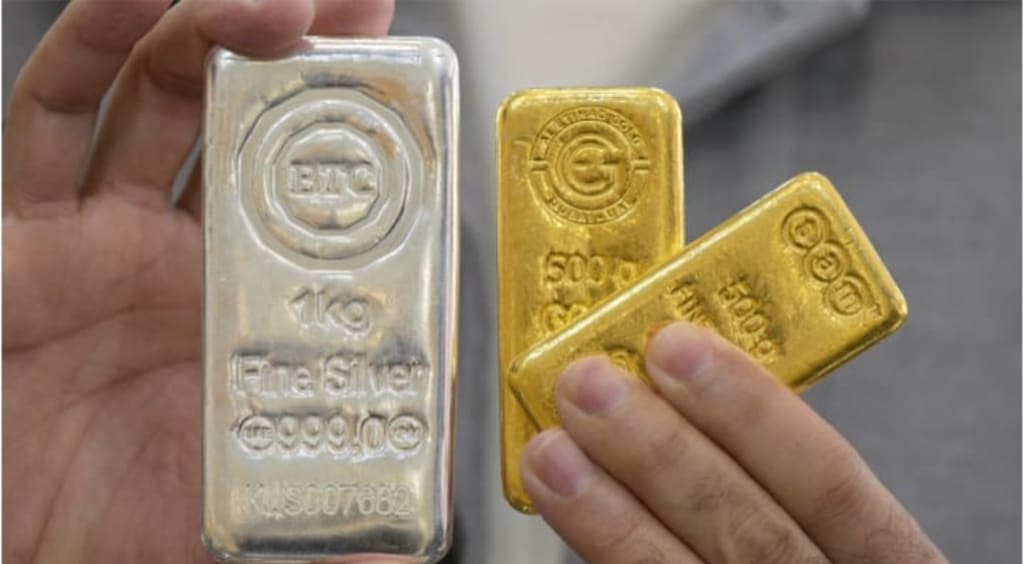
The precious metals market is undergoing one of its most dramatic reversals in decades as gold dives and silver crashes, extending a brutal sell-off that began after a historic plunge. Once seen as the ultimate safe-haven assets amid global uncertainty, both metals have suffered sharp losses, rattling investors and forcing a rethink of bullish assumptions that dominated markets only weeks ago.
Gold, long regarded as a store of value during periods of economic stress, has slipped decisively from recent highs, while silver has endured even steeper declines, reflecting its dual role as both a monetary and industrial metal. The sudden shift has exposed the fragility of speculative positioning and underscored how quickly sentiment can turn when macroeconomic conditions change.
From Safe Haven to Sell-Off
The sell-off in precious metals follows an extraordinary run-up that saw gold and silver prices surge on fears of geopolitical escalation, inflation persistence, and concerns over central bank independence. At their peak, these metals were buoyed by aggressive buying from hedge funds, retail investors, and even central banks seeking diversification away from fiat currencies.
However, the narrative changed abruptly. A combination of easing geopolitical tensions, firmer economic data from major economies, and renewed confidence in central bank policy frameworks triggered a sharp unwinding of bullish positions. As fear receded, so too did the urgency to hold gold and silver as defensive assets.
Gold prices began to slide as investors rotated back into equities and higher-yielding assets, while silver’s decline accelerated due to its heavier exposure to speculative trading and industrial demand cycles. The result has been a cascade of selling that pushed both metals into technically oversold territory.
Interest Rates and the Dollar Factor
A key driver behind the downturn has been the outlook for interest rates. Expectations that major central banks, particularly the US Federal Reserve, will keep rates higher for longer have weighed heavily on non-yielding assets like gold and silver. Higher interest rates increase the opportunity cost of holding precious metals, making bonds and cash more attractive by comparison.
At the same time, the strengthening of the US dollar has added further pressure. Since gold and silver are priced in dollars, a stronger greenback makes them more expensive for non-US buyers, dampening global demand. The dollar’s rebound has coincided with improving US economic indicators, reinforcing the view that recession risks may be less severe than previously feared.
Silver’s Steeper Fall
While gold’s decline has been significant, silver’s crash has been particularly striking. Often described as “gold on steroids,” silver tends to amplify market moves due to its thinner liquidity and higher volatility. During the recent rally, speculative enthusiasm pushed silver prices far beyond levels justified by physical demand.
As sentiment reversed, that speculative froth evaporated quickly. Industrial demand concerns—especially related to slowing manufacturing activity in key economies—have further weighed on silver. Although silver plays a crucial role in sectors such as electronics, solar energy, and electric vehicles, short-term uncertainty around global growth has overshadowed its longer-term demand story.
Impact on Mining Stocks and ETFs
The plunge in precious metals has sent shockwaves through mining equities and exchange-traded funds (ETFs). Shares of major gold and silver miners have fallen sharply, often at a faster pace than the underlying metals, as investors reassess earnings outlooks and balance sheet resilience.
ETFs backed by physical gold and silver have also recorded notable outflows, signaling waning investor confidence. These withdrawals have added to downward pressure on prices, creating a feedback loop that has intensified the sell-off.
For smaller and highly leveraged miners, the downturn poses more serious risks. Lower metal prices can quickly erode profit margins, delay expansion plans, and raise concerns about debt servicing, particularly in a higher interest rate environment.
Is This a Correction or a Structural Shift?
The big question now is whether the current crash represents a healthy correction after an overheated rally or the beginning of a longer-term bear market for precious metals. Some analysts argue that the sell-off is largely technical in nature, driven by forced liquidation and profit-taking rather than a fundamental breakdown in the long-term case for gold and silver.
Supporters of this view point to ongoing structural factors such as high global debt levels, persistent geopolitical risks, and long-term inflationary pressures that could eventually revive demand for safe-haven assets. Central bank gold purchases, while slowing, remain historically elevated and could provide a floor for prices.
Others, however, caution that the landscape has changed. Improved confidence in monetary policy, resilient economic growth, and the allure of higher real yields could limit the upside for precious metals in the near to medium term. For silver, the outlook may remain especially volatile given its sensitivity to both investment flows and industrial cycles.
What Comes Next for Investors?
For investors, the recent plunge serves as a reminder that even traditional safe havens are not immune to sharp corrections. Timing, positioning, and risk management remain critical, particularly in markets driven by shifting macro narratives.
Some may view the crash as a buying opportunity, especially if prices stabilize and long-term fundamentals reassert themselves. Others may prefer to stay on the sidelines until volatility subsides and clearer signals emerge from central banks and global economic data.
Conclusion
As gold dives and silver crashes, the extended sell-off marks a dramatic turning point for precious metals after their historic plunge. Whether this episode proves to be a temporary reset or a deeper trend reversal will depend on how global economic conditions, interest rates, and investor sentiment evolve in the months ahead. For now, one thing is clear: the era of one-way bets in precious metals has come to a sudden and sobering end.
About the Creator
Keep reading
More stories from Salaar Jamali and writers in The Swamp and other communities.
Dubai to Launch World’s First Street Made of Gold
Dubai, the gleaming metropolis known for its extravagant developments and record‑breaking architectural feats, is adding yet another world first to its trophy list: a street constructed using gold. This futuristic concept is set to become a defining feature of the newly inaugurated Dubai Gold District—a purpose‑built hub for the gold and jewellery trade.
By Salaar Jamaliabout 5 hours ago in The Swamp
Laura Fernández Declares Victory in Costa Rica’s Presidential Election
Costa Rica’s 2026 presidential election has delivered a clear winner: Laura Fernández Delgado, the 39-year-old conservative candidate from the ruling Sovereign People’s Party (PPSO), has claimed victory with more than 40 % of the vote in Sunday’s election, avoiding a runoff and becoming Costa Rica’s next president.� english.news.cn +1 Preliminary and partial results released by Costa Rica’s Supreme Electoral Tribunal (TSE) showed Fernández securing almost 48–49 %, well above the 40 % threshold needed to win the presidency in the first round of voting, with her main rival, centrist economist Álvaro Ramos of the National Liberation Party (PLN), trailing with roughly 33 % of the vote.� Reuters +1 A First-Round Victory in Historic Context Costa Rican electoral law stipulates that a presidential candidate must receive at least 40 % of valid votes to be elected without a runoff election scheduled for April 5. Fernández surpassed that mark as votes continued to be counted, giving her an outright win without a second round.� Reuters With high turnout among the country’s 3.7 million registered voters, Fernández’s victory reflects both her personal appeal and broader public support for her platform, especially on issues where many voters feel the government has fallen short.� english.news.cn Her win also comes as the PPSO is expected to expand its representation in the 57-seat Legislative Assembly, climbing toward a majority, though short of a supermajority that would allow it to pursue constitutional changes without broad opposition support.� NST Online Who Is Laura Fernández? Laura Virginia Fernández Delgado is a political scientist and longtime public servant. She previously served as minister of national planning and economic policy (2022–2025) and minister of the Presidency (2024–2025) in the administration of outgoing President Rodrigo Chaves Robles.� Wikipedia Born on July 4, 1986, in Puntarenas, Fernández holds a degree in public politics and democratic governability and positioned herself as the continuity candidate for Chaves’s policies. Her campaign emphasized security, institutional reform, and economic growth, tapping into widespread voter concern over rising crime and public safety.� english.news.cn She is poised to become the second woman elected president in Costa Rica’s history, following Laura Chinchilla (2010–2014).� amcostarica.com Campaign Themes: Crime, Security & “Third Republic” Crime and security dominated the 2026 election campaign. Costa Rica, historically one of Latin America’s most peaceful democracies, has seen a significant rise in violence and drug-related crime in recent years — a trend that Fernández and other conservative candidates made central to their platforms.� Malay Mail In her victory speech, Fernández framed her win as the start of a “Third Republic,” calling for deep changes and continuity of policies aimed at combating crime, strengthening institutions, and boosting economic activity. She thanked President Chaves for his support and indicated she would involve him in her new administration, even though constitutional rules bar him from seeking immediate reelection.� english.news.cn Reaction from Rivals and International Leaders Álvaro Ramos, Fernández’s closest competitor, conceded defeat and vowed to remain a force in Costa Rican politics, focusing on democratic oversight and constructive opposition in the Legislative Assembly.� Reuters International leaders have also responded. For instance, Israeli Foreign Minister Gideon Sa’ar congratulated Fernández on her victory and underscored the longstanding relationship between Costa Rica and Israel, highlighting expectations for enhanced cooperation.� JNS.org Similarly, El Salvador’s President Nayib Bukele — whose hardline security policies have influenced Fernández’s rhetoric — reportedly congratulated her on social media, reinforcing regional connections among right-wing leaders.� Reddit What Her Presidency Could Mean Fernández’s victory signals a shift to the right in Costa Rican politics — part of a broader regional trend where conservative and populist figures have gained ground amid public frustration over crime, corruption, and governance challenges.� Malay Mail Her policy agenda includes: Tougher measures against crime and organized gangs Support for strong security infrastructure, including completion of a new high-security prison Public–private partnerships to stimulate infrastructure investment Institutional reforms and bureaucratic streamlining While Fernández has pledged to uphold Costa Rica’s democratic norms, critics and political analysts caution against potential overreach or erosion of civil liberties, especially if security policies become increasingly authoritarian.� Malay Mail Looking Ahead: From Election Night to Inauguration Costa Ricans elected Fernández in a crucial moment for the country’s future, choosing leadership that reflects growing public concern about safety and governance. Her presidency will officially begin on May 8, 2026, when she is sworn in for a four-year term that runs through May 8, 2030.� amcostarica.com The expanded majority for her party in the legislature could facilitate her policy initiatives, though meaningful opposition within the Assembly remains to ensure democratic checks and balances.
By Zahid Hussainabout 8 hours ago in The Swamp


Comments
There are no comments for this story
Be the first to respond and start the conversation.