
The San Francisco Blackout Was Not a Market Failure. It Was the Inevitable Result of a “Frankenstein” Utility.
Why blaming “corporate greed” is lazy, and how the “Gold-Plating” of the grid left San Francisco in the dark.


I spent the last week of 2025 sitting in my apartment in the Sunset district, watching the fog roll in and the temperature drop, while my refrigerator became a graveyard for a $200 grocery run. While the rest of the country was celebrating, San Francisco was plunged into a 72-hour darkness that felt less like a modern metropolis and more like a decaying relic.
You’ve heard the post-mortem from the politicians at City Hall: they blame "unprecedented weather" and "corporate greed." But as I sat there in the dark, it became clear: this wasn't a failure of the weather. It was a failure of a "Frankenstein" entity that we stubbornly refuse to call by its real name.
Or, to be more precise, it is a category error.
To understand why the lights went out in San Francisco and why they will likely go out again, we must stop viewing Pacific Gas and Electric (PG&E) as a business.
If you walk into a bakery and they sell you stale bread, you stop going there. You go to the bakery across the street. The bad bakery goes out of business. That is the discipline of the market.
You cannot fire PG&E. You can not switch to a competitor.
PG&E operates in a suspended reality where the laws of economics do not apply. It is not a private enterprise subject to the discipline of profit and loss. Nor is it a fully public agency subject to voters.
It is a “Government-Sponsored Hybrid” — the illegitimate child of the state. It exists in a twilight zone where it privatizes profits and socializes risks, all under the explicit protection of the very regulators who claim to be holding it accountable.
The blackout of 2025 was not a failure of the free market. It was the predictable, mathematical result of a system where political mandates replace price signals.
Here is the autopsy of a disaster that was designed by committee.
The Myth of the “Private” Monopoly
Let’s start by dismantling the biggest misconception: that PG&E is a “private” company driven by “market forces.”
In a real market, a company must persuade you to part with your money by offering value. If they fail to maintain their equipment, their service drops, customers leave, revenue dries up, and the company dies. Its assets are then bought by someone more competent.
Bankruptcy is the immune system of capitalism. It cleans out the rot.
PG&E has been shielded from this immune system for over a century. It has been granted a Territorial Monopoly by the state of California. The government explicitly forbids competition. If you try to build a power plant and run a wire to your neighbor’s house to sell them cheaper, more reliable electricity, men with guns will eventually stop you.
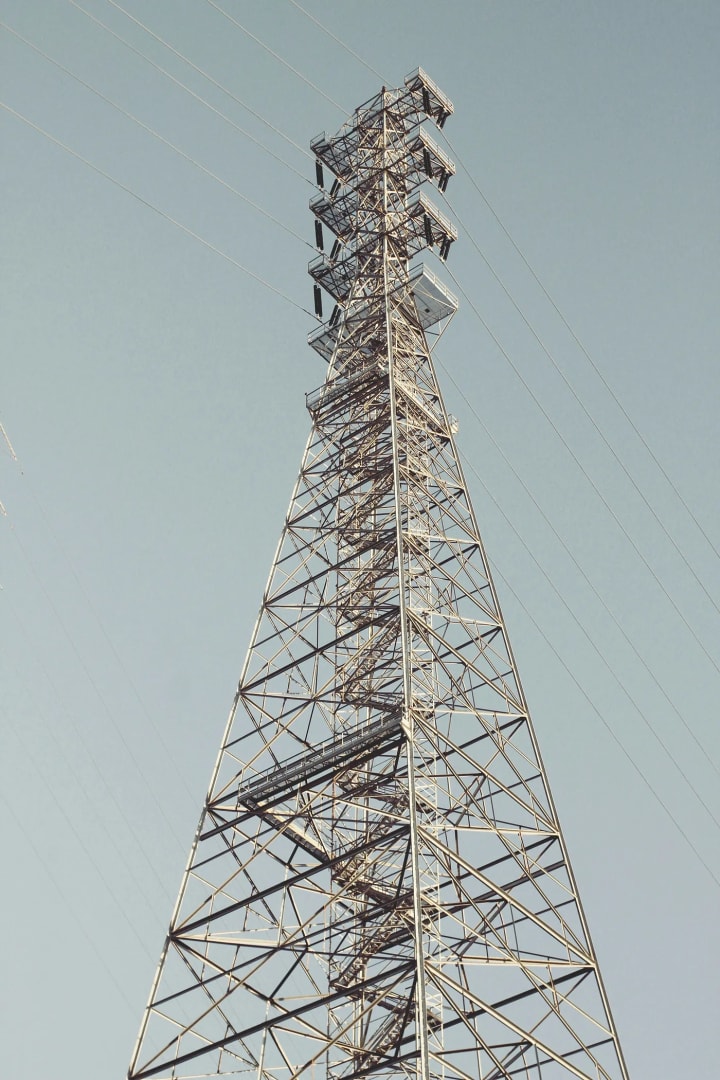
Because PG&E has no competitors, it has no existential fear.
When a company has no fear of death, it behaves like a zombie. It shuffles forward, decaying, feeding on the living, but never actually dying. The executives at PG&E do not wake up wondering, “How do I keep my customers?”They wake up wondering, “How do I satisfy the California Public Utilities Commission (CPUC)?”
The blackout happened because, for the last decade, satisfying the bureaucrat became more profitable than maintaining the grid.
The Decoupling of Risk: The Lesson of San Bruno
In 2025, we saw the culmination of a concept economists call Moral Hazard. This occurs when someone takes a risk because they know someone else will bear the cost if things go wrong.
We don’t need to look at abstract theory to see this. We just need to look at the ghosts of San Bruno.
In 2010, a PG&E natural gas pipeline exploded, killing eight people and leveling a neighborhood. The subsequent investigation revealed a sickening truth: PG&E had collected millions of dollars from ratepayers specifically earmarked for safety upgrades and pipeline replacement.
In a competitive market, you spend that money on safety because blowing up your customers is bad for business. But PG&E didn’t. They diverted that money to boost corporate profits and executive bonuses.
Why did they do this?
Because the incentive structure was broken. They knew that as a state-protected monopoly, they would not be allowed to fail. Even after the explosion, the fines were passed around, the rates were eventually adjusted, and the monopoly remained intact.

PG&E is driving a rental car, and the taxpayers of California are paying the insurance premiums.
Through mechanisms like the AB 1054 wildfire fund, the state has repeatedly signaled that PG&E is “Too Big to Fail.” Consequently, the company allocates capital toward risk. They defer maintenance on 50-year-old transformers to fund short-term dividends because they know the state will bail them out if disaster strikes.
A true private company would be terrified of a lawsuit that wipes out its equity. PG&E simply views lawsuits as a line item to be managed by the state.
The Distortion of Price Signals
The most insidious part of this “Frankenstein” structure is how it destroys the most important tool in economics: The Price Signal.
In December 2025, electricity demand surged. In a functioning market, prices would fluctuate dynamically. High prices would signal consumers to conserve and producers to generate more power immediately.
But California’s electricity market is a centrally planned labyrinth. Retail rates are fixed and decoupled from the immediate reality of supply and demand.
Because the price mechanism is broken, there is no organic way to balance the grid. Instead of Prices, the system relies on commands. The grid operator issues “Flex Alerts” and begs people to turn off appliances. When begging fails, they use the blunt instrument of the blackout.

A blackout is simply a shortage. And as any student of history knows, shortages are the hallmark of price controls. Whether it is bread in the Soviet Union or electricity in San Francisco, whenever a bureaucracy tries to set the price and quantity of a good, the result is inevitably scarcity.
Malinvestment: The “Gold-Plating” Trap
If PG&E were a private company, its capital allocation would be simple: Spend money on the most efficient way to deliver power.
But as a regulated utility, PG&E makes money based on its Return on Equity (ROE). Essentially, the state allows them to charge a guaranteed profit percentage on every dollar they spend on new capital assets. spending
This creates a perverse incentive known as “Gold-Plating.” It is more profitable to build new, expensive things than to fix old, cheap things.
Look at the recent obsession with “Undergrounding.”
After its equipment started massive wildfires, PG&E announced a plan to bury 10,000 miles of power lines. It sounds heroic. But economically, it is insanity.
Underground lines cost roughly $3 million to $5 million per mile. Compare that to “hardening” existing lines (insulating them), which costs a fraction of that amount — around $800,000 per mile.
Why would PG&E aggressively push for the option that costs 5x more?
Because they earn a guaranteed profit on the spend.

If they spend $800,000 insulating a line, they earn a return on $800,000. If they spend $4 million burying it, they earn a return on $4 million. The “Frankenstein” structure incentivizes the most expensive, slowest solution because it pads the “rate base,” even if it means fewer miles are made safe each year.
The grid in San Francisco collapsed because capital was allocated to expensive, flashy projects that maximize guaranteed returns, rather than the unsexy, gritty work of maintaining the existing network.
The “Profit” Illusion
Critics will point to PG&E’s profits and say, “See! They took the money and ran!”
But strictly speaking, they didn’t “take” the money. The government gave it to them.
In a free market, profit is proof of value creation. It means you took resources and combined them in a way that people valued more than the sum of the parts.

In the regulated utility world, profit is a regulatory grant. It is a fee collected by the tax collector (PG&E) on behalf of the state, a portion of which is kept as a handling fee.
When we see PG&E failing to innovate or failing to maintain the grid, we see the logical result of an entity that gets paid regardless of performance. Innovation is risky. Innovation requires failure. Why would a monopoly risk failure when mediocrity is guaranteed a 10% return?
The Solution Nobody Wants to Hear
So, what is the fix?
The standard response from San Francisco politicians has been predictable: “We need more oversight. We need to take it over completely.”
They want to turn the “Government-Sponsored Hybrid” into a full-blown government agency. They argue that if we just remove the “profit motive,” everything will be fine.
This is the ultimate delusion.
If you think PG&E is inefficient now, wait until it is run at the same speed and accountability as the Department of Motor Vehicles (DMV). Removing the last vestige of private ownership removes the last vestige of economic calculation.
The real solution is the one thing California refuses to try: A Free Market.
Imagine a San Francisco where:
- The Monopoly is Abolished: PG&E loses its exclusive right to serve you.
- Competition is Legalized: Micro-grids, local co-ops, and competitors like Tesla are allowed to run lines or beam power.
- Full Liability is Restored: If a utility starts a fire, they are fully liable. No state caps. They must buy insurance on the open market.
- Price Signals are Unleashed: Rates reflect reality.

In this world, a company that diverts safety funds to bonuses (like in San Bruno) goes bankrupt. A company that chooses expensive undergrounding over efficient hardening gets undercut by a competitor.
The “Frankenstein” monster dies, and a responsive ecosystem takes its place.
The Trap of the Middle Road
The lesson of the 2025 San Francisco blackout is not that we need more government control. It is the “Middle Road” that leads to a cliff.
We have tried to engineer a system that is half-socialist and half-capitalist. We wanted the efficiency of the market but the control of the state.
We ended up with neither.
We got the greed of a corporation without the discipline of competition. We got the bureaucracy of the state without the accountability of the ballot box.
PG&E is not a rogue private actor. It is a faithful servant of the perverse incentives the state created. It is the government’s own reflection staring back from the mirror.
As long as we protect this monopoly from the consequences of its actions, the infrastructure will continue to rot. And the next time the wind blows, we will be sitting in the dark again, cursing the wrong villain.
The lights didn’t go out because of corporate greed. They went out because we tried to suspend the laws of economics, and reality finally called our bluff.
About the Creator
Cher Che
New media writer with 10 years in advertising, exploring how we see and make sense of the world. What we look at matters, but how we look matters more.
U.S. Removes Tanker Captain From UK Waters as Crew Prepares to Leave Scotland
The United States has removed the captain of a tanker from UK waters as the vessel’s crew prepares to leave Scotland, a move that has drawn attention from maritime authorities, political observers, and the shipping industry alike. While officials have offered limited public detail, the decision has sparked debate about maritime responsibility, international jurisdiction, and how nations respond when safety concerns arise in shared waters.
By Ayesha Lashari5 days ago in The Swamp
Ukraine to Develop Foreign Intelligence Service Combat Units for Operations Abroad
Why Kyiv is reshaping its intelligence strategy amid a prolonged war Ukraine has announced plans to develop specialized combat units within its Foreign Intelligence Service, marking a significant shift in how the country approaches national security during wartime. The move reflects Ukraine’s determination to adapt its intelligence capabilities as the conflict with Russia continues and as threats increasingly extend beyond its borders. Officials describe the initiative as a defensive and strategic evolution, designed to strengthen intelligence collection, counter external threats, and protect national interests abroad. What Are Foreign Intelligence Service Combat Units? Foreign Intelligence Service combat units are highly specialized teams that operate alongside traditional intelligence functions. Unlike conventional military forces, these units focus on: Intelligence gathering in hostile or high-risk environments Counterintelligence and security missions Protecting Ukrainian interests and personnel abroad Supporting broader national security objectives Ukrainian authorities stress that these units are not designed for large-scale combat, but rather for targeted, intelligence-related tasks that require advanced training and coordination. Why Ukraine Is Making This Move Now The decision comes after nearly two years of full-scale war, during which Ukraine has faced cyber threats, espionage efforts, and covert activities linked to the conflict. Key reasons behind the initiative include: Expanding threat environment: Modern conflicts are no longer confined to battlefields. Intelligence operations now play a major role in shaping outcomes. Protecting national interests abroad: Ukrainian diplomatic missions, supply chains, and partnerships require enhanced security. Responding to hybrid warfare: Ukraine continues to face cyberattacks, disinformation campaigns, and covert pressure outside its borders. By strengthening its intelligence capabilities, Ukraine aims to anticipate threats rather than react to them. A Shift Toward Modern Intelligence Warfare Military and security experts say Ukraine’s move reflects a broader global trend. Many countries have expanded the role of intelligence services as warfare becomes more complex and less visible. Modern intelligence operations now include: Cybersecurity and digital surveillance Tracking financial and logistical networks Monitoring foreign influence campaigns Securing sensitive technologies and partnerships Ukraine’s plan aligns with this evolving reality, recognizing that intelligence superiority is as important as battlefield strength. Legal and Oversight Considerations Ukrainian officials emphasize that the new combat units will operate under strict legal frameworks and civilian oversight. According to government statements: Activities will comply with international law and Ukraine’s constitution Oversight mechanisms will be strengthened to prevent abuse Coordination with allied intelligence agencies will remain transparent This focus on accountability aims to reassure both domestic and international audiences that the program is defensive in nature, not an escalation of covert conflict. International Reactions and Concerns The announcement has drawn careful attention from the international community. While Ukraine’s allies acknowledge the country’s right to self-defense, analysts note several concerns: Escalation risks: Intelligence operations abroad can increase tensions if misinterpreted. Diplomatic sensitivity: Actions conducted outside national borders require careful coordination with host countries. Security balance: The move may prompt other nations to reassess their own intelligence strategies. Despite these concerns, many Western officials privately recognize that Ukraine is adapting to a reality forced upon it by prolonged conflict. Impact on Ukraine’s Long-Term Security If implemented effectively, the new units could offer several long-term benefits: Improved early warning systems against external threats Better protection for Ukrainian citizens and assets abroad Stronger intelligence sharing with international partners Greater resilience against hybrid and non-traditional warfare Security experts argue that these changes could help Ukraine transition from emergency wartime defense to a more sustainable national security model. Challenges Ahead Developing foreign intelligence combat units is not without risks and obstacles: Training requirements: Personnel must meet extremely high standards in language, law, technology, and intelligence ethics. Coordination complexity: Intelligence agencies must work seamlessly with diplomatic and military institutions. Public trust: Maintaining transparency without compromising security will be a delicate balance. Ukraine’s success will depend on discipline, oversight, and international cooperation. A Reflection of the War’s Evolution The announcement highlights how the war has transformed Ukraine’s approach to security. What began as a territorial defense has grown into a multi-domain struggle involving intelligence, diplomacy, cyber defense, and global alliances. By investing in foreign intelligence capabilities, Ukraine signals that it is planning for long-term security, not just immediate survival. Conclusion Ukraine’s plan to develop Foreign Intelligence Service combat units for operations abroad marks a notable evolution in its national security strategy. Faced with a complex and extended conflict, Kyiv is adapting to a world where information, intelligence, and prevention are as crucial as military force. While challenges and risks remain, the initiative reflects Ukraine’s broader effort to protect its sovereignty, safeguard its interests beyond its borders, and prepare for the realities of modern conflict. As global attention remains focused on the war, this development underscores a key truth of the 21st century: intelligence has become one of the most powerful tools in shaping security and stability.
By Fiaz Ahmed 7 days ago in The Swamp




Comments
There are no comments for this story
Be the first to respond and start the conversation.