politics
Politics does not dictate our collective cultural mindset as much as it simply reflects it; We've got to look in the mirror sometimes, and we've got one.
Donkeys, Elephants, and the Great American Zoo: Is There a Way Out?
Donkeys, Elephants, and the Great American Zoo: Is There a Way Out? Do You Really Believe Them? Look, I’m going to be blunt with you. When you watch their polished debates, do you honestly believe they care about you? Or are they just talking to their billionaire donors? I remember checking my bank account after rent last month and thinking: this can’t be what “the greatest country on earth” looks like. Seriously, look at your own bills. Look at the crumbling roads in your neighborhood. How many times have the Elephants been in charge? How many times has the Donkey run the show? The names change, but has your life actually improved? This isn’t complicated. It’s a rigged game. If things keep going from bad to worse, why do you keep giving them your vote? It’s a joke. Your Money Abroad, Their Corruption at Home Doesn’t it boil your blood to see your hard-earned tax dollars shipped overseas to places like Israel—where citizens receive free healthcare and free education—while you are forced to borrow money just to earn a college degree and still can’t afford basic medicine? It’s a bitter irony: you are funding a lifestyle for others that you cannot even secure for yourself at home. And it’s not just about money; it’s about moral decay. The shadow of the Epstein documents still hangs over Washington. When you see names from both sides of the aisle entangled in that filth, you realize these people don’t share your values. They are an elite club, protected from the very laws that apply to you. I’m fed up with it. Aren’t you? The Trap: “Don’t Waste Your Vote” You know all of this is true. But when election day comes, they pull out their favorite weapon: fear. You vote for the Elephant so the Donkey doesn’t kick you. Or you vote for the Donkey so the Elephant doesn’t crush you. They’ve convinced you that any choice outside their circus is a “wasted vote.” But think about it: if every one of us stopped feeding them our power and gave it to someone else, the votes would be split—but their votes would be split too. Suddenly, they wouldn’t be “giants” anymore. Everyone would be standing on a level playing field. Your vote is only “wasted” when you give it to the same people who have been failing you for decades. The Human Alternative Now you’re probably asking: “Who’s the alternative? Are there other animals in this zoo besides the Donkey and the Elephant?” Look, the alternative doesn’t have to be another animal—we’re human beings, after all! 😂 Honestly, it’s time to stop looking for a mascot and start looking for a real solution. Here are the "Human" alternatives that Washington doesn't want you to take seriously: The Forward Party (The Center): This is for the millions of Americans who feel politically homeless. Founded by Andrew Yang and former governors from both sides, the Forward Party isn't about rigid ideology; it’s about fixing the "plumbing" of our democracy so it actually works for us. They focus on Ranked Choice Voting, which allows you to rank candidates by preference so you never have to worry about a "spoiler effect" again. They advocate for Open Primaries, meaning you aren't forced to join a specific "tribe" just to have a say in who runs. Their philosophy is "Not Left, Not Right, but Forward." They want to end the toxic polarization that treats half the country as the enemy and instead focus on data-driven, common-sense solutions that 70% of Americans already agree on. It’s about making the system functional, transparent, and representative of the sensible majority rather than the radical fringes. The Libertarian Party: For those who believe that you, not the government, should own your life. They want to slash federal spending, end the IRS, and bring our troops home. Their philosophy is simple: keep the government out of your wallet and out of your private life. It’s about maximum personal freedom and total fiscal responsibility. The Green Party: If you’ve had enough of corporate monopolies writing our laws. They focus on an economy that works for the people, not the 1%. This includes a "Green New Deal" that guarantees healthcare as a human right and living wages for all. They believe the economy should serve the people, not the CEOs. The Constitution Party: For those who feel we’ve drifted too far from our foundation. They want to strip power away from the federal government and return it to the states and the people, exactly as the Founders intended. They believe in limited government and the strict rule of law. The Choice Is Yours If we all decide—right now—to stop buying into their fear, the walls of this zoo will collapse. The system only works because we agree to stay in our cages. But the door isn't locked from the outside. The key to the cage is already in your pocket. It’s your voice, your dignity, and your refusal to be tricked again. Do you have the courage to use it?
By Beyond the Beltway3 days ago in The Swamp
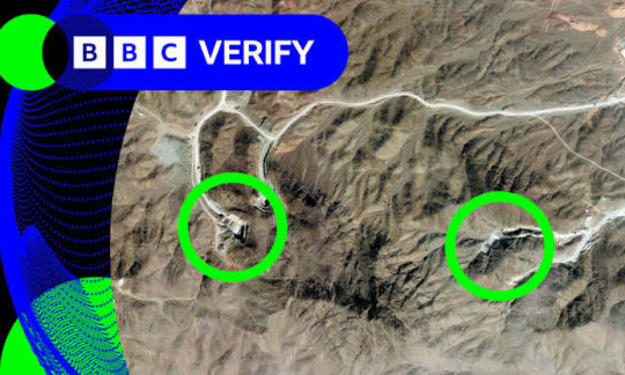
Iran Strengthening Defences Near Key Nuclear Site, New Satellite Image Shows. AI-Generated.
New high-resolution satellite imagery has revealed that Iran is intensifying defensive measures at one of its most sensitive nuclear facilities, a development that experts say reflects Tehran’s growing concern about the possibility of renewed military action against its nuclear infrastructure. Analysts assessing the imagery say the activity signals a concerted push to harden subterranean access points and fortify above-ground structures — moves that could complicate any potential strike planning by foreign powers amid simmering geopolitical tensions. The site at the centre of the imagery is the Isfahan nuclear complex, one of Iran’s major enrichment and conversion facilities. Recent satellite photos, taken earlier this month and analysed by independent watchdog groups, show that entrances to several large underground tunnels and passageways have been buried under earth and debris, making them difficult to detect and access. Additional defensive works — including the construction of new roofs over previously damaged buildings — were also visible around the site, indicating a broader effort to protect infrastructure and restrict the visibility of sensitive components. Satellite Evidence of Defensive Hardening According to imagery reviewed by analysts from the Institute for Science and International Security and other observers, Iran has backfilled both the central and southern tunnels at Isfahan with soil, rendering them “unrecognisable” from above. The northern entrance, while not fully obscured, also showed signs of defensive measures. These changes were marked by the absence of vehicle activity nearby, suggesting that access points were purposefully sealed rather than temporarily closed for maintenance. Experts interpreting the satellite data said the defensive steps likely serve multiple strategic purposes. By burying tunnel entrances and reinforcing buildings, Tehran may be seeking to protect crucial infrastructure from potential aerial strikes or commando raids, shield remnants of its nuclear work from visual surveillance, and slow any adversary’s ability to penetrate the site swiftly in a crisis. One veteran military intelligence analyst described the pattern as part of a broader Iranian doctrine of “passive defence,” in which critical facilities are hardened, concealed or physically obscured to reduce their vulnerability to attack. “Covering and fortifying these entry points makes them far harder targets for precision weapons or a rapid special operations incursion,” the analyst told Reuters, adding that such measures are relatively inexpensive compared to rebuilding after an attack. Context: Conflict and Diplomacy at a Critical Juncture Iran’s reinforcement of its nuclear facilities comes amid ongoing tension with the United States, Israel and other Western powers over Tehran’s nuclear programme and regional influence. Last year’s military confrontations — including airstrikes on Iranian nuclear and military targets by Israel and the United States — fractured diplomacy and heightened fears of further escalation. That conflict, which began with a series of strikes on Iran’s nuclear and missile infrastructure, underscored the vulnerability of above-ground and poorly protected assets to precision attacks. Since then, Tehran has pursued a mix of diplomatic engagements and strategic deterrence measures, even as it resists full resumption of international inspections at key sites. The defensive construction seen in the latest imagery may be interpreted as a precautionary signal that Iran anticipates the possibility of future military actions, particularly if negotiations with global powers over its nuclear programme falter. According to strategic analysts, burying key access points and reinforcing buildings improves survival prospects in the event of air attacks, while complicating foreign intelligence assessments of what remains intact underground. Implications for Regional Stability The defensive moves come at a time of active diplomatic engagement, including offers by Iran to allow broader verification of its nuclear facilities by international inspectors — a position emphasised by President Masoud Pezeshkian in recent remarks. However, Tehran’s insistence on verification without unfettered access has left many questions unresolved. For neighbouring states and Western capitals, the satellite imagery reinforces concerns that Iran is preparing for a dual-track approach: pursuing negotiation when possible, while hardening sites to mitigate the impact of any hostile campaign. Such a posture could make any future military strike considerably more complex, requiring deeper penetration or alternate tactics to neutralise underground infrastructure. The developments highlight a broader reality: in an era of advanced satellite surveillance and hardened underground facilities, the interplay between visible preparedness and strategic ambiguity is likely to shape future confrontation and diplomacy over Iran’s nuclear ambitions. As Tehran continues to adapt, analysts warn that any miscalculation could have far-reaching consequences for regional security and nuclear non-proliferation efforts.
By Fiaz Ahmed 3 days ago in The Swamp