politics
Politics does not dictate our collective cultural mindset as much as it simply reflects it; We've got to look in the mirror sometimes, and we've got one.
Iran Strengthening Defences Near Key Nuclear Site, New Satellite Image Shows. AI-Generated.
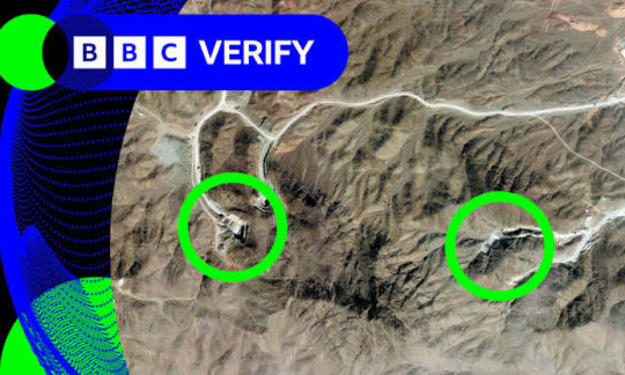
New high-resolution satellite imagery has revealed that Iran is intensifying defensive measures at one of its most sensitive nuclear facilities, a development that experts say reflects Tehran’s growing concern about the possibility of renewed military action against its nuclear infrastructure. Analysts assessing the imagery say the activity signals a concerted push to harden subterranean access points and fortify above-ground structures — moves that could complicate any potential strike planning by foreign powers amid simmering geopolitical tensions. The site at the centre of the imagery is the Isfahan nuclear complex, one of Iran’s major enrichment and conversion facilities. Recent satellite photos, taken earlier this month and analysed by independent watchdog groups, show that entrances to several large underground tunnels and passageways have been buried under earth and debris, making them difficult to detect and access. Additional defensive works — including the construction of new roofs over previously damaged buildings — were also visible around the site, indicating a broader effort to protect infrastructure and restrict the visibility of sensitive components. Satellite Evidence of Defensive Hardening According to imagery reviewed by analysts from the Institute for Science and International Security and other observers, Iran has backfilled both the central and southern tunnels at Isfahan with soil, rendering them “unrecognisable” from above. The northern entrance, while not fully obscured, also showed signs of defensive measures. These changes were marked by the absence of vehicle activity nearby, suggesting that access points were purposefully sealed rather than temporarily closed for maintenance. Experts interpreting the satellite data said the defensive steps likely serve multiple strategic purposes. By burying tunnel entrances and reinforcing buildings, Tehran may be seeking to protect crucial infrastructure from potential aerial strikes or commando raids, shield remnants of its nuclear work from visual surveillance, and slow any adversary’s ability to penetrate the site swiftly in a crisis. One veteran military intelligence analyst described the pattern as part of a broader Iranian doctrine of “passive defence,” in which critical facilities are hardened, concealed or physically obscured to reduce their vulnerability to attack. “Covering and fortifying these entry points makes them far harder targets for precision weapons or a rapid special operations incursion,” the analyst told Reuters, adding that such measures are relatively inexpensive compared to rebuilding after an attack. Context: Conflict and Diplomacy at a Critical Juncture Iran’s reinforcement of its nuclear facilities comes amid ongoing tension with the United States, Israel and other Western powers over Tehran’s nuclear programme and regional influence. Last year’s military confrontations — including airstrikes on Iranian nuclear and military targets by Israel and the United States — fractured diplomacy and heightened fears of further escalation. That conflict, which began with a series of strikes on Iran’s nuclear and missile infrastructure, underscored the vulnerability of above-ground and poorly protected assets to precision attacks. Since then, Tehran has pursued a mix of diplomatic engagements and strategic deterrence measures, even as it resists full resumption of international inspections at key sites. The defensive construction seen in the latest imagery may be interpreted as a precautionary signal that Iran anticipates the possibility of future military actions, particularly if negotiations with global powers over its nuclear programme falter. According to strategic analysts, burying key access points and reinforcing buildings improves survival prospects in the event of air attacks, while complicating foreign intelligence assessments of what remains intact underground. Implications for Regional Stability The defensive moves come at a time of active diplomatic engagement, including offers by Iran to allow broader verification of its nuclear facilities by international inspectors — a position emphasised by President Masoud Pezeshkian in recent remarks. However, Tehran’s insistence on verification without unfettered access has left many questions unresolved. For neighbouring states and Western capitals, the satellite imagery reinforces concerns that Iran is preparing for a dual-track approach: pursuing negotiation when possible, while hardening sites to mitigate the impact of any hostile campaign. Such a posture could make any future military strike considerably more complex, requiring deeper penetration or alternate tactics to neutralise underground infrastructure. The developments highlight a broader reality: in an era of advanced satellite surveillance and hardened underground facilities, the interplay between visible preparedness and strategic ambiguity is likely to shape future confrontation and diplomacy over Iran’s nuclear ambitions. As Tehran continues to adapt, analysts warn that any miscalculation could have far-reaching consequences for regional security and nuclear non-proliferation efforts.
By Fiaz Ahmed 3 days ago in The Swamp
US House Passes Bill to End Canada Tariffs: A Break from Trump’s Trade Policies. AI-Generated.
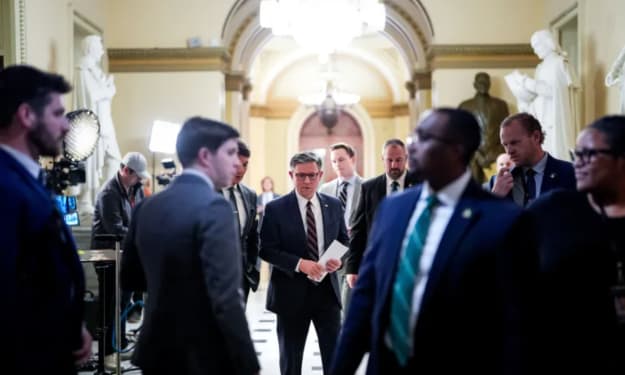
In a significant move signaling a break from former President Donald Trump's trade policies, the US House of Representatives has passed a bill that aims to end the tariffs imposed on Canadian goods. This decision marks a pivotal moment in the trade relationship between the United States and Canada, two of the world's largest trading partners. The bill passed with bipartisan support and represents a significant shift in how the US approaches international trade, especially with its closest neighbor.
By Aqib Hussain3 days ago in The Swamp
India to Import Crude Oil from Cheapest, Best-Quality Non-Sanctioned Sources. AI-Generated.
India will continue to prioritise importing crude oil from the most cost-effective and highest-quality sources that are not subject to international sanctions, government officials told a parliamentary committee this week — a strategy reflecting New Delhi’s efforts to balance energy security, economic priorities and geopolitical pressures in an increasingly volatile global oil market. The Economic Times In a closed session before the Parliamentary Standing Committee on External Affairs, senior officials from the ministries of External Affairs and Commerce outlined the government’s posture on crude oil procurement, emphasising that Indian oil companies will source crude where it is cheapest and of desirable quality — while taking into account geopolitical conditions and avoiding suppliers under sanctions. The disclosure comes as India — the world’s third-largest oil importer and consumer — navigates divergent pressures from major trading partners, sanctions regimes, and strategic relationships with producing nations in the Middle East, Africa, South America and beyond. The Economic Times A Pragmatic Sourcing Strategy Officials clarified that the policy does not lock India into any single supplier, but rather allows flexibility in procurement so long as the oil meets critical parameters of price competitiveness and quality. This approach will factor in evolving geopolitical conditions, including sanctions imposed by Western countries that affect certain exporters and suppliers, without directly contravening United Nations-mandated restrictions. The Economic Times “India’s overarching priority is energy security — ensuring consistent, reliable and affordable crude oil supplies for our economy,” an official briefing note told MPs, underscoring that the strategy aims to keep energy costs low while respecting global regulatory frameworks. The policy was described as forward-looking and commercially driven, rather than ideologically anchored to particular source countries. Indian refiners, including state-owned and private entities, will be encouraged to pursue competitive tendering and diversify supply portfolios to reduce exposure to potential supply shocks. The Economic Times Russia, Discounts, and Diverse Options For much of the past few years, India has been a major buyer of Russian crude oil, taking advantage of steep discounts following Western sanctions on Moscow after its invasion of Ukraine. At times, Russia accounted for 40-45 % of New Delhi’s crude imports, with Urals crude offered at significant discounts compared with global benchmarks. Outlook India However, recent developments have complicated that dynamic. New U.S. sanctions on Russia’s largest oil producers and export infrastructure have begun to reduce direct imports of Russian crude to India, and major Indian refiners have signalled a reduction in purchases that would arrive after sanctions take effect during 2026. At the same time, some refiners have resumed buying non-sanctioned Russian barrels from alternative sellers and traders, illustrating how the market can adapt when direct sourcing from sanctioned entities becomes untenable. Trade Deals and Geopolitical Balance The discussions before the parliamentary panel also touched on ongoing trade negotiations with the United States and the European Union, including a potential interim agreement with Washington that could have implications for energy trade and tariff arrangements. The Economic Times Officials emphasised that energy import strategy will continue to be aligned with India’s broader foreign policy objectives, which include strengthening economic ties with partners while maintaining sovereign decision-making on energy procurement. The Economic Times Market Realities and Refinery Considerations Indian refiners have already begun adjusting supply plans in response to shifting market conditions. Some are exploring greater purchases from the Middle East and African producers, while others have taken steps to limit future Russian imports tied to sanctioned supply chains. Zonebourse For example, private sector giant Reliance Industries reportedly slashed its intake of Russian crude and prioritised non-sanctioned sources to ensure compliance with global sanctions regimes and maintain access to key export markets, such as the European Union, which implemented bans on products derived from Russian oil. Indian refineries are also recalibrating feedstock mixes based on changing crude price dynamics, quality specifications and logistical efficiencies as global producers adjust output. The Economic Times Looking Ahead With crude oil prices still sensitive to geopolitical developments, supply disruptions and OPEC+ production decisions, India’s multidimensional sourcing strategy aims to protect its economy from undue price volatility while ensuring energy imports remain consistent, cost-effective and free from sanction risks. As the government continues to refine procurement guidelines and navigate international trade landscapes, Indian policymakers assert that these measures will help safeguard the nation’s energy security in an uncertain global energy environment.
By Fiaz Ahmed 3 days ago in The Swamp
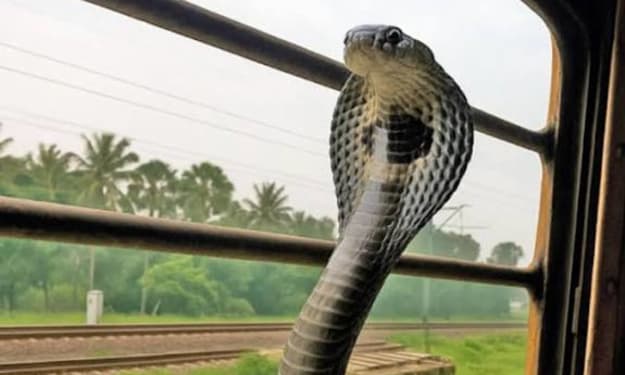
Snakes on a Train: How King Cobras Are Spreading Across India Thanks to the World’s Busiest Railway Network. AI-Generated.
A surprising new study suggests that some of India’s most infamous reptiles — king cobras — may be inadvertently using the nation’s vast and busy railway network to travel far beyond their natural habitats, raising fresh questions about wildlife movement, human-animal interactions, and rail infrastructure’s unintended ecological impacts. The research, published in the scientific journal Biotropica, compiled 22 years of king cobra rescue records and verified sightings from 2002 to 2024 across the western Indian state of Goa — a region nestled between coastal plains and the biodiverse Western Ghats. By mapping these records against ecological models of the species’ preferred environment, scientists uncovered an unexpected pattern. Unusual Cobra Occurrences Along Railway Corridors King cobras (Ophiophagus kaalinga), among the world’s longest venomous snakes, are typically associated with dense forests, riverine ecosystems, and undisturbed inland regions. Yet researchers identified five locations near major railway corridors where cobras were spotted in settings far less suitable than their natural forest home. One notable example involved a king cobra being found close to Chandor railway station, sheltering near stored rails and concrete structures — an environment wholly unsuited to a forest-dwelling predator. Others were recorded near tracks at Vasco da Gama, Loliem, Patnem, and Palolem — all locations associated with heavy train traffic rather than lush habitat. Scientists observed that these “outlier” records all occurred within a few hundred metres of railway infrastructure, prompting a novel hypothesis: trains may be acting as inadvertent transport vectors, moving king cobras from their native forests into unsuitable or marginal habitats where survival prospects are uncertain. au.news.yahoo.com Trains as Unintended Ecological Highways India’s railways are the world’s busiest by passenger volume, with freight and goods lines crisscrossing hundreds of kilometres of landscape, including biodiversity hotspots like the Western Ghats. The study proposes that snakes — while not intentionally seeking out train travel — might board freight wagons or find shelter in rail yards while pursuing prey such as rodents or other snakes. Once aboard, a train’s high speed and extensive reach could carry an individual snake dozens of kilometres away from its typical range, depositing it in terrain ill-suited to its ecological needs. This passive movement mechanism — distinct from active dispersal — represents a novel aspect of how human infrastructure can shape wildlife distributions, researchers say. The phenomenon echoes broader concerns in conservation science about linear structures (like roads and railways) fragmenting habitats — but here, the unintended consequence appears to be connecting distant regions instead of dividing them. Trains may serve as a kind of “high-speed conduit,” moving animals across ecological barriers that would otherwise limit their movements. Drivers and Risks Several factors may make railway environments attractive — or at least accessible — to king cobras. Freight yards and rail sidings often host abundant rodents, a staple in cobra diets, while dark crevices and stacks of materials provide shelter. In some instances, cobras may pursue these cues at night and inadvertently end up aboard a passing train. However, arriving in an unfamiliar or unsuitable habitat can be perilous for the snakes. Outside their core ecological range, they face heat stress, limited prey, and increased encounters with humans, potentially heightening conflict and risk. Likewise, train passengers and railway workers may be startled or endangered by unexpected snake encounters, given the king cobra’s potent venom and reputational fearfulness. Researchers note that improved tracking — such as camera traps at rail hubs, genetic studies, and targeted monitoring — could help clarify the scale of this dispersal mechanism and whether it truly represents a significant expansion of the species’ range. At present, the pattern remains a working hypothesis supported by rescue data and spatial analysis. Broader Implications and Future Monitoring This research highlights an under-appreciated dimension of human-wildlife interaction: that infrastructure designed for efficient movement of people and goods can inadvertently influence the distribution of wildlife — in this case, a species both ecologically important and symbolically powerful in India. As climate change, habitat loss, and expanding transport networks continue to reshape ecological landscapes, scientists warn that such unintended consequences may become more common. Understanding the intersection of wildlife behavior and human systems — and the risks and opportunities it presents — could prove crucial for both conservation and public safety.
By Fiaz Ahmed 3 days ago in The Swamp
PIA Privatisation Finalised: A New Chapter for Pakistan’s Flag Carrier. AI-Generated.
The long-awaited privatisation of Pakistan International Airlines (PIA) has officially been completed, marking a watershed moment in the nation’s economic reform agenda and ending decades of state ownership of the loss-making national carrier. In a decisive move that has stirred political debate and industry interest, the Government of Pakistan has signed off on the sale of a controlling stake in PIA to a private consortium led by the Arif Habib Group. The transaction, years in the making, aims to break the cycle of repeated government bailouts and put the carrier on a commercially sustainable footing. Closing the Privatisation Chapter The Ministry of Privatisation has issued a final “speaking order,” effectively rejecting all legal objections raised by workers’ unions and interest groups regarding the sale. Privatisation Secretary Hammad Hashmi stated that the process was completed fully within the law and that challenges — including claims of constitutional violations or undervaluation of assets — held no legal merit. As such, all outstanding petitions were dismissed, formally concluding the legal phase of the privatisation. Under the deal, the consortium acquired 75 % of PIA’s shares in a competitive bidding process that saw strong participation from major business groups. The sale price was reported at 135 billion Pakistani rupees (approximately $482 million), with the government retaining the remaining 25 % stake and an option for the consortium to acquire it later. Officials have said that nearly 92.5 % of the proceeds from the sale will be reinvested directly into the airline’s operations to support fleet modernisation, service improvements and long-term turnaround efforts, with the balance remitted to the national exchequer. Leadership and Vision Prime Minister Shehbaz Sharif welcomed the completion of privatisation as a “historic milestone” for Pakistan, underscoring the government’s commitment to structural reforms and sustainable economic growth. In remarks at the signing ceremony, he congratulated federal ministers, privatisation officials, and security leadership for ensuring a transparent and professional process. “We believe this transaction will not only strengthen PIA’s performance but will also instil confidence in Pakistan’s investment climate,” the prime minister said, noting that participation by seasoned investors reflects optimism in the country’s economic future. Strategic Implications and Reform Goals For decades, PIA has been burdened by financial losses, deepening liabilities, and operational inefficiencies, making its privatisation one of the most complex commercial undertakings in Pakistan’s recent history. Government officials and economic advisers argue that private-sector leadership, combined with fresh capital and industry expertise, is essential to restoring the airline’s competitiveness on domestic and international routes. The sale aligns with broader commitments under Pakistan’s international financing arrangements, including an International Monetary Fund (IMF) programme that seeks to restructure state-owned enterprises and reduce dependence on public subsidies. Profit by Pakistan Today Key stakeholders have emphasised that the privatisation is not just about divestment but transformation. The new owners have committed to expanding PIA’s fleet over the coming years and improving service standards, punctuality, and operational discipline — areas where the airline has historically struggled. Reactions and Future Prospects Business and aviation analysts have broadly welcomed the privatisation, citing the long-overdue need for structural change. They note that private ownership could enable faster decision-making, deeper market engagement, and strategic partnerships that were previously constrained under state control. However, the deal has its critics. Workers’ unions and labour representatives expressed concern about job security and the implications of private ownership for employee rights, even as officials stressed that the sale complied with all legal protections and due process. Field Marshal Asim Munir’s reported involvement in facilitating investor engagement — and the role of large corporate players such as Fauji Fertiliser Company within the winning consortium — underscores the complex interplay of business, military and political interests surrounding the transaction. The Road Ahead With privatisation now finalised, the incoming management faces formidable tasks: revitalising an ageing fleet, modernising operational systems, and restoring confidence among passengers and global airline partners. Success will be measured not just in financial returns, but in PIA’s ability to reclaim market share and reconnect Pakistan’s aviation network with world markets. The airline’s new chapter, once a distant aspiration, is now underway — with stakeholders across the spectrum watching closely.
By Fiaz Ahmed 3 days ago in The Swamp