politics
Politics does not dictate our collective cultural mindset as much as it simply reflects it; We've got to look in the mirror sometimes, and we've got one.
Philippine Navy to Receive First Follow‑On SSV This Year After PT PAL Delays. AI-Generated.
The Philippine Navy is set to receive the first of two follow‑on Strategic Sealift Vessels (SSVs) — also known as landing platform docks (LPDs) — by the end of 2026, despite earlier delays attributed to contractual hurdles faced by Indonesian shipbuilder PT PAL. The delivery marks a key milestone in the Philippines’ naval modernization program, even though the timeline has shifted significantly from original projections. Background: A Follow‑On Order for Sealift Capability The follow‑on contract was signed in June 2022 for approximately $100.9 million (P5.59 billion) to build two new 7,200‑ton SSVs, each measuring about 124 meters in length and designed to carry landing craft and support amphibious operations. These follow‑on vessels are repeat orders after an earlier order from 2014 that produced the first two ships of the Tarlac class, which remain key sealift and humanitarian assistance assets for the Philippine Navy. The contract envisioned a robust support platform that can transport troops, vehicles and equipment and serve in disaster response, search and rescue, and other multi‑mission roles — a capability deemed critical for a maritime nation composed of more than 7,000 islands. Delays and Revised Delivery Schedules Originally, the first of the follow‑on SSVs was scheduled to be delivered in the first week of November 2025. However, construction and delivery milestones were repeatedly missed due to what Philippine and PT PAL officials described as “challenges the proponent is facing.” These included not meeting contractual milestones such as steel cutting, keel laying or planned launch dates that industry watchers cited as signs of production strain and capacity constraints at the Indonesian yard. The keel for the first vessel was laid in January 2024, followed by steel cut procedures for the second. Despite these steps, the schedule shifted, with the new target for delivery set to November 2026 — a full year after the originally intended date. PT PAL has attributed some of the delays to broader geopolitical conditions and external factors that affected supply chains and production pacing, although the specifics were not publicly detailed. Analysts see such delays as part of broader challenges in regional shipbuilding, where capacity and workforce issues can ripple across defence orders. Default Strategic Importance of SSVs For the Philippine Navy, these follow‑on SSVs represent more than just new hulls. They are part of an evolving fleet architecture aimed at increasing operational reach, disaster response capacity, and amphibious lift capability. The original Tarlac class has demonstrated utility in a variety of roles — from troop transport and humanitarian missions to multinational exercises — and the new ships are expected to augment and eventually replace some of the Navy’s older logistics platforms. The strategic sealift vessels are designed with ample deck space, troop accommodation, and the ability to support helicopter operations, making them versatile contributors to national defence and maritime security. Their role includes facilitating rapid force movement across the archipelago as well as serving in humanitarian assistance and disaster relief (HADR) operations, a mission set increasingly critical for a country prone to natural disasters such as typhoons and earthquakes. Broader Naval Modernization The follow‑on SSVs complement other modernization efforts by the Philippine Navy, which has been acquiring a mix of combat and support vessels to expand its maritime capability. These include offshore patrol vessels, frigates, and other platform types from South Korean and international shipbuilders as part of a multi‑year program to strengthen defence posture and maritime security capacity. The Philippine government’s sustained investment into these platforms reflects a strategic emphasis on enhancing deterrence and operational flexibility in a complex regional security environment, especially in contested waters of the South China Sea. As new platforms come online, such as modern OPVs and guided‑missile frigates, support vessels like SSVs will play a vital role in enabling extended deployments and joint operations. Looking Ahead While the delivery of the first follow‑on SSV by November 2026 represents progress, observers will be watching closely how PT PAL and Philippine defence planners manage the second vessel’s construction and delivery. Continued close cooperation and clear milestone management will be essential if Manila is to avoid further delays and ensure fleet requirements are met on schedule. For now, the upcoming arrival of the first follow‑on vessel underscores both the ongoing challenges and the enduring partnerships underpinning the Philippine Navy’s modernization journey — a testament to how strategic sealift capability remains at the heart of its expanding maritime ambitions. Start writing...
By Fiaz Ahmed 9 days ago in The Swamp
With Latest Rollback, the U.S. Essentially Has No Clean‑Car Rules. AI-Generated.
The United States has effectively dismantled its federal clean‑car framework after the Environmental Protection Agency (EPA) under President Donald Trump rescinded a foundational climate science finding that provided the legal basis for regulating vehicle emissions and other greenhouse gases. The move, described by critics as the most sweeping climate policy rollback in U.S. history, removes federal limits on tailpipe emissions and leaves the nation without core nationwide standards designed to reduce vehicle pollution and promote cleaner cars. The End of a Legal Foundation At the center of the rollback is the EPA’s February 12 decision to revoke the 2009 “endangerment finding” — a scientific judgment that concluded greenhouse gases, such as carbon dioxide and methane, pose a danger to public health and welfare. That finding gave the agency authority under the Environmental Protection Agency and the Clean Air Act to regulate emissions from vehicles, industrial polluters, and power plants. With that basis gone, federal rules that once required automakers to limit greenhouse gas emissions and increase fuel efficiency have been rolled back or canceled. The repeal effectively removes emissions targets for cars and trucks that were supposed to apply through the late 2020s, and opens the door for manufacturers to prioritize traditional internal combustion vehicles over cleaner alternatives such as hybrids and electric vehicles (EVs). Administration officials argue the rollback reduces regulatory costs for the auto industry and consumers. Trump and EPA Administrator Lee Zeldin have said the shift will cut economic burdens by trillions of dollars while restoring “common sense” to climate policy. They also claim it supports affordability and consumer choice in the vehicle market. What’s Lost in Regulation Under the previous regulatory regime, clean‑car standards were expected to deliver significant public health and environmental benefits. According to EPA analysis under earlier administrations, stricter vehicle emission limits could have prevented billions of tons of carbon dioxide emissions over several decades and reduced pollutants linked to respiratory diseases, heart conditions, and premature deaths. The Associated Press With federal standards effectively gone, critics warn that: Tailpipe pollution could increase as automakers face less pressure to improve fuel efficiency. States with stricter standards, such as California, may be challenged legally or pushed to adjust their programs. Long‑term incentives for EV adoption and low‑emission technology could weaken. Public health outcomes could worsen, especially in communities already burdened by poor air quality. Environmental and health advocates have framed the turnabout as a direct assault on clean‑air progress and climate action. The American Lung Association, among others, had previously emphasized that cleaner cars standards not only reduce carbon pollution but also slash substances that trigger asthma, heart disease, and other health issues. States, the Auto Industry, and Legal Conflicts With federal oversight diminished, individual states may attempt to fill the void. In the past, several states — led by California — adopted stricter vehicle emissions standards than the federal baseline, a provision allowed under the Clean Air Act. Whether these state programs can withstand legal and political pressure remains a key question. Automakers themselves have offered mixed reactions. Industry groups generally support regulatory relief but worry that uncertainty could stifle long‑term investment in new technologies. Some companies had already committed billions to electrification and advanced efficiency improvements, betting on a cleaner‑vehicle future before the rollback. Legal battles are expected to follow. Environmental lawyers argue that the EPA lacks statutory authority to erase the endangerment finding and suspend emissions regulation without congressional action. Prior Supreme Court rulings, notably Massachusetts v. EPA, upheld the agency’s ability to treat greenhouse gases as pollutants under the Clean Air Act — a precedent now directly challenged. Broader Impacts and the Path Ahead Without federal clean‑car rules, the U.S. joins a shrinking group of industrialized countries with minimal centralized emissions standards. Critics say this shift could slow national progress toward combating climate change, ceding technological leadership in clean transportation to other countries while raising both health and environmental costs. Supporters, by contrast, frame the rollback as economic deregulation that empowers consumers and reduces compliance burdens on businesses. They argue that market forces, rather than federal mandates, should drive vehicle innovation. As the legal challenges continue and states consider their own strategies, the absence of federal clean‑car rules will be felt across policy, industry, and everyday life — from vehicle prices at dealerships to the air millions of Americans breathe.
By Fiaz Ahmed 9 days ago in The Swamp
Trump’s New World Order Has Become Real — and Europe Is Having to Adjust Fast. AI-Generated.
For decades, Europe built its political and security architecture on a single assumption: that the United States would remain the continent’s ultimate guarantor of stability. That assumption is now under intense strain. The return of Donald Trump to center stage in global politics has accelerated a transformation many analysts once dismissed as temporary rhetoric. What was once called “Trump’s worldview” is increasingly becoming a concrete reality—one that is reshaping Europe’s strategic thinking at remarkable speed.
By Sajida Sikandar9 days ago in The Swamp
PTI Leader Latif Khosa Writes to CJP, Raises Concerns Over Imran’s Medical Check-Up at Adiala Jail in ‘Secrecy’. AI-Generated.
Senior Pakistan Tehreek-e-Insaf (PTI) leader Latif Khosa has written a formal letter to the Supreme Court of Pakistan, urging immediate judicial intervention over what he described as a “secretive and non-transparent” medical examination of former prime minister Imran Khan at Adiala Jail. In his letter addressed to the Chief Justice of Pakistan, Khosa alleged that Khan’s recent medical check-up was conducted without informing his legal team or family members and without following standard legal and medical protocols. The PTI leader claimed that this secrecy has raised serious concerns about Khan’s health, safety, and constitutional rights while in custody. Concerns Over Transparency Khosa stated that the medical examination was carried out under “unusual circumstances,” with restricted access to independent doctors and no official medical report shared with Khan’s lawyers. According to the letter, this violated basic principles of transparency and due process guaranteed under Pakistan’s Constitution and international human rights conventions. “Such secrecy creates doubt and anxiety regarding the true state of Mr. Khan’s health,” Khosa wrote, emphasizing that a former prime minister and political leader must not be deprived of proper and transparent medical care. He urged the court to ensure that future medical assessments be conducted in the presence of independent physicians and legal representatives. Health Issues and Previous Warnings Imran Khan, who has been in custody in multiple cases, has previously complained of deteriorating health conditions, including vision problems and chronic pain. PTI officials have repeatedly warned that his confinement conditions could worsen his medical state if not monitored properly. Party leaders have also accused jail authorities of denying him access to personal physicians and adequate medical facilities. While prison officials have denied these claims, asserting that Khan is receiving routine care under jail regulations, PTI leaders argue that the lack of documentation and public reporting undermines those assurances. Legal and Political Dimensions The issue has quickly taken on political significance, with PTI framing the situation as part of a broader pattern of pressure on its leadership. Khosa’s letter highlights what he called a “systematic effort to isolate Imran Khan” by restricting communication, visitation rights, and now medical transparency. Legal experts say the matter could prompt the Supreme Court to seek a detailed report from jail authorities and health officials. In past cases involving high-profile detainees, the court has intervened to ensure independent medical boards were formed and periodic health reports submitted. Khosa requested that the Chief Justice order the constitution of a neutral medical board comprising senior doctors from government hospitals, with authority to conduct a comprehensive health assessment of Khan and submit findings directly to the court. Reaction from PTI Leadership PTI leaders rallied behind Khosa’s move, calling it a necessary step to safeguard Khan’s well-being. Several party figures said the secrecy surrounding the medical check-up had alarmed supporters and family members alike. A senior PTI spokesperson said the party was not seeking preferential treatment but only equal rights under the law. “Every prisoner has the right to transparent medical care. Imran Khan is no exception,” the spokesperson said, adding that the party would continue to pursue legal remedies if concerns were not addressed. Government and Jail Authorities’ Position Officials from Adiala Jail have maintained that Khan is receiving medical attention according to prison rules and that no extraordinary measures were taken. They argue that medical procedures inside high-security prisons often involve limited disclosure due to security considerations. Government representatives have also rejected claims of mistreatment, stating that opposition leaders are politicizing a routine health check-up. However, they have not publicly released detailed medical findings, citing privacy and security concerns. Broader Implications The controversy highlights ongoing tensions between the PTI and state institutions, especially the judiciary and prison authorities. Analysts believe the case could further polarize the political environment, as supporters interpret the issue as symbolic of larger questions about rule of law and human rights. Human rights advocates have called for full transparency in the treatment of political detainees, warning that secrecy in medical matters can erode public trust in institutions. What Comes Next The Supreme Court is expected to review Khosa’s letter and decide whether to seek an official response from jail authorities or order an independent medical evaluation. If taken up, the case could set a precedent for how health concerns of high-profile prisoners are handled in Pakistan. For now, the issue remains a focal point for PTI’s legal and political campaign, with party leaders insisting that only judicial oversight can guarantee Imran Khan’s safety and constitutional rights while he remains in custody.
By Fiaz Ahmed 9 days ago in The Swamp
Coco Gauff: ‘I Don’t Think People Should Be Dying in the Streets Just for Existing. AI-Generated.
American tennis star Coco Gauff has spoken out forcefully about social justice, saying she feels a responsibility to use her platform to address violence and inequality, even when doing so risks criticism. In a candid interview following her recent tournament appearance, the 20-year-old athlete reflected on the intersection of sport, activism, and personal identity, stressing that silence is no longer an option when lives are at stake. “I don’t think people should be dying in the streets just for existing,” Gauff said, underscoring her belief that athletes cannot remain detached from the realities shaping their communities. Her comments come amid renewed global debate over racial justice, policing, and the role of public figures in advocating for change. A Voice Beyond the Court Gauff has long been recognized not only for her rapid rise in tennis but also for her willingness to speak about social issues. From addressing crowds at protests to using press conferences as platforms for awareness, she has consistently argued that being an athlete does not mean being apolitical. She explained that her experiences growing up in the United States shaped her views, particularly witnessing protests and conversations about racial inequality during her teenage years. “I’m young, but I’ve seen enough to know that this isn’t something you can just ignore,” she said. “If I have a voice and people are listening, then I feel like it’s wrong not to say something.” Balancing Pressure and Purpose Gauff acknowledged that activism brings added pressure to an already demanding career. Professional tennis requires relentless focus, intense travel schedules, and constant scrutiny. Adding social commentary to that mix can invite backlash from fans who believe athletes should “stick to sports.” Yet she rejects that notion. “Tennis is what I do, but it’s not all that I am,” she said. “I care about people. I care about fairness. Those things don’t disappear when I step on the court.” She also emphasized that her advocacy is not about attacking institutions or individuals but about urging compassion and accountability. According to Gauff, the goal is to humanize conversations that often become polarized and political. “This is about basic human rights,” she noted. “It shouldn’t be controversial to say people deserve to live safely.” A Generation of Athlete-Activists Gauff’s stance reflects a broader trend among younger athletes who are increasingly vocal about social issues. Unlike previous generations that often avoided public political statements, today’s stars view activism as part of their public responsibility. Sports analysts suggest that social media has played a key role in this shift, allowing athletes to speak directly to millions without relying solely on traditional media outlets. For Gauff, that visibility carries weight. “When you have that reach, you can’t pretend it doesn’t matter,” she said. She has also credited her family for encouraging thoughtful engagement rather than impulsive reactions. “They taught me to learn, to listen, and to speak when I feel something is wrong,” she explained. Reaction from the Tennis World Within the tennis community, reactions have been mixed. Many fans and fellow players praised her courage and maturity, calling her a role model for young athletes. Others argued that sports should remain neutral spaces free from political discussion. Tournament officials have so far avoided taking positions on her comments, maintaining that players are free to express personal views as long as they do not disrupt competition. Sponsors, too, have largely stayed silent, reflecting the delicate balance between commercial interests and individual expression. Looking Ahead Gauff says she does not plan to retreat from speaking out, even as her career continues to accelerate. She believes that success on the court and responsibility off it can coexist. “I want to win Grand Slams, but I also want to be someone who stands for something,” she said. As she prepares for upcoming tournaments, Gauff remains focused on her training while staying engaged with issues beyond tennis. Her message, she insists, is simple and universal: dignity and safety should not depend on race, background, or circumstance. “I’m just saying what I think is right,” she concluded. “People shouldn’t be dying in the streets just for existing.”
By Fiaz Ahmed 9 days ago in The Swamp
Sir Keir Condemns Reform UK and The Green Party.
Sir Keir Starmer made a speech in Munich. The objects of his ire were his political rivals, Reform UK and the Green Party. The fact that the Conservatives did not come under fire says one thing: he doesn't regard them as a threat anymore, or at least, not right now. Mr. Starmer has his eye on the Gorton and Denton seat that some polls say his Labour Party may lose. Zack Polanski of the Greens and Nigel Farage of Reform have been campaigning hard to make sure it is their candidates being returned as the MPs for this area and not Labour's.
By Nicholas Bishop9 days ago in The Swamp
Macquarie-Led Group to Buy Qube Holdings for $8.3 Billion. AI-Generated.
A consortium led by Macquarie Group has announced plans to acquire Qube Holdings in a deal valued at approximately $8.3 billion AUD, marking one of the largest transactions in the Australian logistics and infrastructure sector in recent years. The agreement, which is subject to regulatory approval and shareholder consent, represents a significant consolidation in the logistics and port operations market. Transaction Overview Under the terms of the proposed deal, the Macquarie-led group, which includes a mix of institutional investors and private equity partners, will acquire all outstanding shares of Qube Holdings. The deal structure combines cash payments with potential equity stakes, ensuring that Qube shareholders are offered a premium over recent trading prices. The transaction aims to leverage Macquarie’s global infrastructure expertise while enhancing Qube’s strategic growth prospects. Qube Holdings, known for its integrated logistics and port operations across Australia, has seen steady growth over the past decade. The company operates container terminals, bulk handling facilities, and rail logistics networks, providing a critical backbone to Australia’s import and export supply chains. Analysts note that the acquisition will allow Qube to expand its operational capabilities and capitalize on growing trade volumes, particularly in containerized goods and bulk commodities. Strategic Rationale The acquisition reflects Macquarie’s continued strategy of investing in infrastructure and logistics assets with long-term growth potential. By taking control of Qube, the group gains access to a diversified portfolio of ports and transport networks, enabling operational synergies and economies of scale. Industry experts highlight several strategic benefits: Operational Integration: Combining Qube’s logistics platforms with Macquarie’s infrastructure management could streamline operations, reduce costs, and enhance service delivery. Market Expansion: The deal positions the consortium to participate in growing domestic and international trade corridors. Financial Optimization: Macquarie’s financial expertise is expected to strengthen Qube’s capital structure and support future investment in technology and automation. Market and Shareholder Implications Qube’s shareholders are likely to benefit from a significant premium over the company’s recent market valuation, reflecting both the competitive nature of the bid and Qube’s strategic importance. Financial advisors are assisting in ensuring compliance with Australian corporate regulations, including shareholder approval processes, foreign investment review board (FIRB) clearance, and other regulatory requirements. Market analysts predict that the acquisition may trigger interest from other infrastructure investors, as Qube’s scale and integrated logistics operations make it a sought-after asset. The transaction could also influence market valuations for comparable logistics and infrastructure companies operating in Australia and the broader Asia-Pacific region. Industry Reactions The deal has garnered attention from industry stakeholders, with logistics experts emphasizing the long-term benefits for supply chain efficiency. Port operators, shipping lines, and freight forwarders may see improved coordination and investment in state-of-the-art handling and storage facilities. Regulatory authorities are expected to scrutinize the deal for competition implications, ensuring that the acquisition does not lead to monopolistic behavior in Australian port and logistics operations. Analysts note that Macquarie’s prior experience in infrastructure investments positions the group to navigate these regulatory hurdles successfully. Outlook and Next Steps The acquisition process is expected to take several months to complete. Key milestones include shareholder meetings, regulatory approvals, and finalization of financing arrangements. Both Macquarie and Qube have committed to keeping stakeholders informed throughout the process, emphasizing continuity in Qube’s operations and employee retention. Once completed, the deal is anticipated to reshape the Australian logistics landscape, combining Qube’s operational capabilities with Macquarie’s financial and strategic expertise. This consolidation reflects a broader trend of investment in critical infrastructure assets globally, where private capital plays an increasing role in managing essential logistics networks. Conclusion The proposed $8.3 billion acquisition of Qube Holdings by the Macquarie-led consortium represents a major strategic and financial milestone in Australia’s infrastructure sector. By combining operational expertise, capital resources, and strategic vision, the deal is poised to enhance the efficiency, capacity, and resilience of Australia’s logistics and port networks, while delivering value to shareholders and strengthening the country’s position in global trade.
By Fiaz Ahmed 9 days ago in The Swamp
Russia Reports Large-Scale Ukrainian Drone Attack, Including on Moscow. AI-Generated.
Russia has reported a significant escalation in drone attacks allegedly carried out by Ukraine, including strikes targeting Moscow and other strategic locations. According to statements from the Russian Ministry of Defense, multiple unmanned aerial vehicles (UAVs) were detected and intercepted over the course of the day, with some reportedly reaching areas near the Russian capital. While damage assessments are ongoing, the attacks mark one of the most extensive drone operations claimed by Ukraine since the conflict intensified. Scale and Scope of the Attack Russian officials described the operation as involving “dozens of drones” aimed at both military installations and urban infrastructure. While official sources asserted that most drones were successfully intercepted by air defense systems, some reports indicate localized damage and minor injuries in peripheral regions. Moscow authorities confirmed that emergency services were deployed to respond to incidents triggered by falling debris or drone impacts, though no mass casualties have been reported. Experts note that such large-scale drone operations represent a shift in Ukraine’s tactical approach. By leveraging unmanned systems, Ukraine can conduct targeted strikes while minimizing direct exposure of personnel, creating operational challenges for Russian air defense. Strategic and Symbolic Implications Moscow’s inclusion as a target carries significant symbolic weight. Analysts suggest that striking near the capital serves multiple purposes: demonstrating reach, applying psychological pressure on Russian authorities, and signaling resilience in the face of a prolonged conflict. For Russia, even minor incursions near sensitive areas raise security concerns and highlight vulnerabilities in airspace protection. Additionally, the attacks may indicate Ukraine’s growing capabilities in drone technology, which includes both reconnaissance and strike drones. Over the past year, Ukraine has increasingly relied on drones to gather intelligence, target supply lines, and disrupt Russian logistics. The current operation, reportedly coordinated across multiple regions, underscores the integration of UAVs into broader military strategy. Russian Response Russia has emphasized that its air defense networks successfully neutralized the majority of incoming threats. Anti-aircraft batteries, radar systems, and electronic warfare measures were reportedly activated to counter the drones. Moscow’s authorities have also called for heightened vigilance, urging residents to report unusual aerial activity and remain alert. State media coverage frames the attack as a provocation and escalation, reinforcing narratives of Ukrainian aggression and foreign support for Kyiv. Officials have also pledged to strengthen defenses and investigate potential lapses in monitoring and interception, signaling a commitment to preventing future strikes. International Reactions and Security Concerns The international community has been closely monitoring developments. While few countries immediately commented on the specific drone attacks, experts note that UAV operations in densely populated urban areas carry risks of civilian harm and escalation. The use of drones near capitals or critical infrastructure raises questions about the evolving nature of warfare, the role of unmanned systems in conflict, and the potential for rapid escalation. Analysts also highlight the implications for security and deterrence. Nations observing the conflict are reassessing how small, relatively low-cost drone systems can be used to challenge conventional military power and bypass traditional defenses. The incident is likely to influence future procurement, air defense planning, and military training in countries facing similar threats. Humanitarian and Operational Implications Although Russian officials report limited casualties, residents in affected areas have expressed concern over the suddenness of drone activity, disruptions to daily life, and the psychological impact of strikes near urban centers. Emergency services remain on alert, while authorities continue to assess damage to infrastructure, including communication networks, transport facilities, and industrial sites. From a military perspective, the operation underscores Ukraine’s intent to maintain persistent pressure on Russian targets, signaling that drone technology will continue to play a critical role in ongoing operations. It also highlights the need for continuous innovation in air defense and electronic warfare to mitigate emerging threats in modern conflict. Conclusion The reported large-scale drone attack targeting multiple Russian regions, including Moscow, illustrates a significant evolution in Ukraine’s military strategy. Beyond tactical objectives, the operation carries symbolic, psychological, and operational weight, emphasizing the growing importance of unmanned systems in modern warfare. As Russia assesses damage, strengthens air defenses, and monitors aerial threats, the event serves as a reminder that the use of drones is shaping both the current conflict and the broader security landscape in Eastern Europe.
By Fiaz Ahmed 9 days ago in The Swamp
Zelenskyy Says Ukraine, Not Russia, Is Facing Pressure to Make Concessions to End War. AI-Generated.
As the war in Ukraine continues into another grueling year, President Volodymyr Zelenskyy has made a stark claim: it is Ukraine — not Russia — that is facing growing pressure to make concessions in order to end the conflict.
By Sajida Sikandar9 days ago in The Swamp
Starmer Pledges Crackdown on ‘Addictive Elements’ of Social Media. AI-Generated.
In a bold move that signals a tougher stance on Big Tech, UK Prime Minister Keir Starmer has pledged to take action against what he calls the “addictive elements” of social media platforms. His proposal focuses on curbing features that encourage excessive screen time, particularly among children and teenagers.
By Sajida Sikandar9 days ago in The Swamp
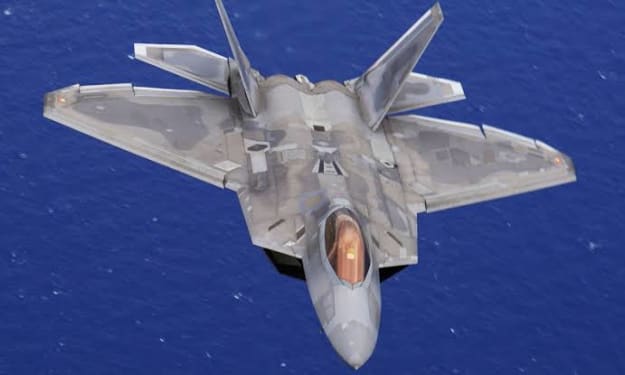
Security: The U.S. Air Force Can’t Ever Build New F-22 Raptor Stealth Fighters. AI-Generated.
The United States Air Force operates one of the most advanced fighter jets ever built: the F-22 Raptor. Designed during the Cold War to dominate enemy aircraft and evade radar, the F-22 remains unmatched in speed, stealth, and maneuverability. Yet despite its proven superiority, the U.S. Air Force can no longer build new F-22s—and may never be able to again. The reason lies in a combination of cost, politics, and lost industrial capability. A program frozen in time The F-22 program was officially ended in 2011 after only 187 operational aircraft were produced. Originally, the Pentagon planned to buy more than 700 Raptors, but the collapse of the Soviet Union and shifting defense priorities reduced the perceived need for such a specialized air-to-air fighter. At the same time, costs ballooned. Each aircraft ended up costing more than $150 million, making it one of the most expensive fighters in history. Congress decided to shut down production permanently, redirecting funds toward the newer F-35 program and other defense needs. What made this decision irreversible was not just stopping assembly—but dismantling the entire production line. The lost manufacturing ecosystem The F-22 was built by Lockheed Martin with contributions from hundreds of suppliers across the United States. Specialized tools, custom machinery, and unique software systems were created solely for this aircraft. When production ended, much of that equipment was destroyed or repurposed. Some suppliers went out of business; others shifted to different programs. Even more important, the workforce dispersed. Engineers and technicians with deep knowledge of the Raptor’s stealth coatings, titanium airframe, and avionics systems retired or moved to other industries. Rebuilding that expertise today would take years and billions of dollars. Pentagon studies later concluded that restarting F-22 production would cost well over $50 billion and still take a decade or more. For that price, the Air Force could instead develop newer, more advanced platforms. Classified technology and outdated systems Another obstacle is the aircraft’s classified design. The F-22 uses stealth materials and avionics developed in the 1990s and early 2000s. Some components rely on obsolete microchips and software no longer manufactured. Updating the jet to modern standards would require a major redesign, essentially creating a new aircraft under the old name. Security restrictions also complicate matters. Because much of the F-22’s technology remains highly classified, even modernizing its systems requires special clearance and isolated facilities, making production far more complex than restarting a civilian aircraft line. Strategic shift to next-generation fighters Rather than reviving the F-22, the Air Force has chosen to focus on future platforms such as the Next Generation Air Dominance (NGAD) program. These aircraft are expected to include artificial intelligence, drone teaming, and improved stealth optimized for modern threats like Chinese and Russian air defenses. The F-22 remains in service and continues to receive upgrades to radar, weapons, and communications. However, its limited fleet size means every loss—whether through accidents or wear—reduces overall capability. Why it still matters The inability to build more F-22s highlights a critical vulnerability in U.S. defense planning: once a highly specialized production line is shut down, it may be impossible to restart. In an era of rising tensions with major powers, this has raised concerns about whether future aircraft programs should be kept alive longer to preserve industrial readiness. For now, the Raptor remains a symbol of unmatched air dominance—and of a strategic decision that cannot be undone. The U.S. Air Force may fly the F-22 for decades to come, but the era of building new Raptors is over for good. In the history of military aviation, few aircraft have been so advanced—and so permanently out of reach.
By Fiaz Ahmed 9 days ago in The Swamp