politics
Politics does not dictate our collective cultural mindset as much as it simply reflects it; We've got to look in the mirror sometimes, and we've got one.
Navalny Was Poisoned With Frog Toxin, European Governments Say. AI-Generated.
European governments say that Russian opposition leader Alexei Navalny was killed with a rare poison taken from a frog toxin. The claim comes after new laboratory tests were done on samples from his body. Leaders from the United Kingdom, France, Germany, Sweden, and the Netherlands say the evidence shows he was poisoned with a substance called epibatidine. This chemical is found in certain poison dart frogs from South America.
By sehzeen fatima8 days ago in The Swamp
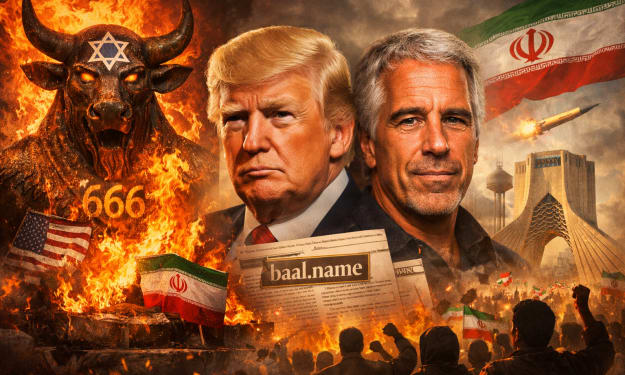
Baal on Fire, Iran’s Fiery Message to the West
1. A Revolutionary Anniversary with a Twist On February 11, 2026, tens of thousands of Iranians took part in state-organised rallies marking the 47th anniversary of Iran’s 1979 Islamic Revolution. These rallies — held nationwide in cities from Tehran to Isfahan — blended political chanting, patriotic slogans and symbolic acts meant to underline Iran’s resistance to perceived foreign enemies.
By USA daily update 8 days ago in The Swamp
Bangladesh’s Tarique Rahman Poised to Be PM as Jamaat-i-Islami Concedes. AI-Generated.
Bangladesh’s political landscape appears set for a dramatic shift as Tarique Rahman moves closer to becoming the country’s next prime minister following a concession by Jamaat-i-Islami, signaling the likely formation of a new governing alliance. The development comes after weeks of intense negotiations and political maneuvering following national elections that produced a fragmented result. Jamaat-i-Islami’s decision to step aside from contesting leadership has cleared the way for Rahman, the acting chairman of the Bangladesh Nationalist Party (BNP), to consolidate enough parliamentary support to claim the top office. A Turning Point in Bangladeshi Politics Rahman’s rise marks a pivotal moment for Bangladesh, which has experienced prolonged political tension, economic challenges, and street protests over governance and electoral credibility. Son of former prime minister Khaleda Zia, Rahman has long been a central figure in opposition politics despite living in exile for years amid legal cases that he has consistently described as politically motivated. Sources close to coalition talks say Jamaat-i-Islami concluded that backing Rahman offered the best chance for a stable government capable of commanding majority support in parliament. In a brief statement, party leaders said their priority was “national unity and democratic restoration,” adding that they would cooperate with the incoming administration on key reforms. Political analysts say the concession reflects a broader realignment among opposition forces seeking to challenge years of dominance by the ruling Awami League and to restore what they call competitive democracy. Challenges Ahead for Rahman If confirmed as prime minister, Rahman will inherit a nation facing serious economic pressures. Inflation has strained household incomes, foreign currency reserves remain under stress, and unemployment among young people continues to rise. Business leaders are calling for swift action to restore investor confidence and stabilize markets. Rahman has pledged to focus on economic revival, judicial independence, and electoral reforms. In recent speeches, he promised to bring back “accountability and transparency” to state institutions and to ensure that future elections are free from controversy. “We must rebuild trust between the people and the government,” Rahman said in a recorded message to supporters. “This transition must serve the interests of every Bangladeshi, regardless of political affiliation.” However, critics question whether his leadership can bridge deep divisions in society. Human rights groups have urged the incoming government to protect freedom of expression and avoid reprisals against political rivals. Jamaat-i-Islami’s Calculated Move Jamaat-i-Islami’s concession has drawn mixed reactions. Supporters say it demonstrates political maturity and a willingness to prioritize stability. Opponents accuse the party of seeking influence behind the scenes by aligning with a likely winner. The party has historically played a controversial role in Bangladeshi politics, particularly over its stance during the 1971 war of independence. Its renewed engagement in coalition politics is expected to be closely scrutinized both domestically and internationally. Diplomats in Dhaka say regional partners are watching developments carefully. India, China, and Western governments have expressed hopes that the next administration will uphold democratic norms and maintain balanced foreign relations. Public Response and International Attention News of Rahman’s potential premiership has sparked celebrations among BNP supporters in several cities, while others remain cautious. Many citizens say their main concern is whether the new leadership can improve daily living conditions rather than simply reshuffle political power. “This is a moment of hope, but also uncertainty,” said a university student in Dhaka. “We want jobs, fair prices, and freedom to speak without fear.” International observers see the transition as a test case for Bangladesh’s political future. The country has been a key player in South Asia’s economic growth and a major contributor to UN peacekeeping missions, making stability critical beyond its borders. What Comes Next Formal confirmation of Rahman as prime minister is expected once coalition agreements are finalized and parliament convenes. A new cabinet is likely to be announced shortly afterward, with promises of reforms in policing, courts, and election oversight bodies. Whether this transition leads to lasting political stability remains uncertain. Yet Jamaat-i-Islami’s concession and Rahman’s rise suggest a rare opening for change after years of entrenched political rivalry. As Bangladesh stands at a crossroads, the coming weeks will reveal whether this shift will usher in a new chapter of governance or deepen the challenges facing one of South Asia’s most populous nations.
By Fiaz Ahmed 8 days ago in The Swamp
Bangladesh PM-in-Waiting Rahman Appeals for Unity as BNP Sweeps Polls. AI-Generated.
Bangladesh’s prime minister-in-waiting Tarique Rahman has called for national unity and reconciliation after his party secured a decisive victory in parliamentary elections, marking a major political shift in the country after years of polarized rule. Rahman, the acting chairman of the Bangladesh Nationalist Party (BNP), addressed supporters through a televised message shortly after preliminary results showed the opposition sweeping a majority of seats. He urged calm and restraint, saying the outcome reflected the people’s desire for democratic renewal and economic stability. “This victory does not belong to one party alone,” Rahman said. “It belongs to the people of Bangladesh who have chosen hope, justice, and unity over division. I will work to serve every citizen, regardless of political identity.” A Political Earthquake The election result represents one of the most dramatic turnarounds in Bangladesh’s recent history. After years of dominance by the ruling Awami League, the BNP’s landslide win signals widespread public dissatisfaction with inflation, unemployment, and allegations of shrinking political space. Observers reported high voter turnout in several urban and rural districts, with long lines forming at polling stations despite concerns over security and logistics. While isolated incidents of unrest were reported, the overall process was described by local monitoring groups as largely orderly. Political analysts say the scale of the BNP victory indicates a hunger for change among voters, especially young people struggling with rising living costs and limited job opportunities. “This is a protest vote as much as a political one,” said a Dhaka-based political scientist. “Rahman’s challenge will be to convert electoral momentum into credible governance.” Rahman’s Message of Reconciliation In his address, Rahman emphasized the need to heal political wounds that have deepened over the past decade. He promised to restore judicial independence, protect press freedom, and reform electoral institutions to ensure future polls are credible and inclusive. “We must move beyond revenge politics,” he said. “Our priority will be rebuilding trust between the state and its citizens.” Human rights groups welcomed the tone of Rahman’s speech but said his administration would be judged by actions rather than words. Several organizations called on the incoming government to release political detainees and guarantee freedom of assembly. Business leaders also reacted cautiously positively, saying stability and predictability would be essential to revive investor confidence in a slowing economy. Economic Pressures Await New Government Rahman inherits a nation facing significant economic headwinds. Inflation has driven up food and fuel prices, putting pressure on household budgets. Foreign currency reserves remain fragile, and the garment sector—Bangladesh’s largest export industry—has been affected by weaker global demand. In campaign statements, Rahman pledged to focus on job creation, anti-corruption measures, and support for small businesses. He also vowed to renegotiate international financial arrangements to ease pressure on the economy while protecting social welfare programs. “Our economy must work for the people, not for a privileged few,” he said. Regional and International Reactions Regional powers and Western governments closely watched the election, given Bangladesh’s strategic position in South Asia and its role in global supply chains. Several foreign missions in Dhaka issued statements congratulating the people of Bangladesh and urging the new leadership to uphold democratic norms and human rights. Diplomats said Rahman’s unity message would be key in determining how quickly Bangladesh can restore confidence abroad after years of criticism over political freedoms. India and other neighbors are expected to seek continuity in trade and security cooperation, while international financial institutions will likely press the new government for fiscal discipline and transparency. What Comes Next The formal transition of power is expected once the election commission certifies the final results and parliament convenes. Rahman is widely anticipated to be sworn in as prime minister within weeks, followed by the formation of a new cabinet. Supporters celebrated in the streets of Dhaka and Chittagong, waving party flags and chanting slogans calling for a “new Bangladesh.” Yet many citizens remain cautious, hoping that promises of unity translate into tangible improvements in daily life. For now, Rahman’s appeal for reconciliation sets a hopeful tone after a fiercely contested campaign. Whether his government can bridge deep political divisions and deliver economic relief will determine if this election becomes a turning point or another chapter in Bangladesh’s turbulent political story.
By Fiaz Ahmed 8 days ago in The Swamp