politicians
Reviews of the politicians kissing babies and running governments around the world; applaud and criticize the decisions they make and their implications.
Save America Act: What It Means for American Voters
Across the United States, voting is more than a civic task. It carries history, struggle, hope, and sometimes fear. Every election cycle brings new debates about fairness, security, and access. In recent years, one proposal that has stirred strong reactions is the Save America Act. Supporters say it protects elections. Critics argue it may create new barriers. Many voters, however, simply want clarity. What is the Save America Act? Who does it affect? And why does it matter now?
By Muqadas khana day ago in The Swamp
Is Jeffrey Epstein Alive?
The question “Is Jeffrey Epstein alive?” continues to circulate across social media platforms, online forums, and public discussions years after his reported death in 2019. Jeffrey Epstein, the American financier who was charged with sex trafficking of minors, became the center of one of the most controversial criminal cases in modern U.S. history. His connections to powerful political leaders, business figures, and celebrities fueled widespread speculation. When he died in federal custody on August 10, 2019, the official ruling was suicide. However, doubts and conspiracy theories quickly followed, leading some to ask whether Epstein might still be alive.
By shaoor afridi2 days ago in The Swamp
Sir Keir Reprieved.. AI-Generated.
No doubt about it, the Jeffrey Epstein files have blown up in so many people's faces. Whether it be former Prince Andrew or former President Bill Clinton. Even Trump had links to the notorious underage trafficker. But so far, Trump seems to have sailed through unscathed with no dirt on him. Who else will be implicated with links to Epstein?
By Nicholas Bishop4 days ago in The Swamp
Thomas Massie. AI-Generated.
In an era when American politics is increasingly defined by polarization, a handful of lawmakers stand out not just for their party affiliation, but for how consistently they challenge the political mainstream. Thomas Massie, a Republican congressman from Kentucky, is one such figure. Known for his libertarian-leaning philosophy, strict constitutionalism, and willingness to oppose his own party, Massie has carved out a unique and often controversial space in Washington. To understand Massie’s role in today’s political landscape, it is equally useful to view him in contrast with lawmakers from across the aisle, such as Ro Khanna, a progressive Democrat from California. While the two differ sharply in ideology, their careers highlight a broader conversation about principles, independence, and the future direction of American governance. Who Is Thomas Massie? Thomas Massie has represented Kentucky’s 4th congressional district since 2012. A trained engineer with degrees from MIT, Massie brings a technical, data-driven mindset to politics. He often emphasizes logic, constitutional limits, and skepticism toward expansive federal power. Unlike many career politicians, Massie entered Congress with a clear philosophical framework rooted in libertarian ideals. He consistently votes against large spending bills, foreign military interventions, and legislation he believes exceeds the federal government’s constitutional authority. This approach has earned him both admiration and criticism—from voters who value ideological consistency and from colleagues frustrated by his refusal to compromise. A Willingness to Stand Alone One of the defining traits of Thomas Massie’s political career is his willingness to stand alone, even when doing so invites backlash. He has openly opposed leadership from his own party, including high-profile Republican presidents, when he believed their policies conflicted with constitutional principles. Massie’s critics argue that this rigidity can be counterproductive, especially in moments of national crisis. Supporters, however, see it as rare integrity in a system driven by party loyalty and short-term political gains. In a political environment where bipartisan compromise is often praised but rarely practiced, Massie represents a different kind of dissent—one rooted in ideological consistency rather than political calculation. The Political Philosophy Behind the Votes At the core of Thomas Massie’s political worldview is a belief in limited government. He advocates for reduced federal spending, a restrained foreign policy, and stronger protections for individual liberty. This philosophy places him at odds not only with Democrats, but also with many Republicans who support defense spending, surveillance programs, or emergency legislation. Massie frequently frames his arguments around the Constitution, insisting that good intentions do not justify unconstitutional actions. Whether addressing fiscal policy or civil liberties, he tends to ask the same fundamental question: does the federal government have the authority to do this? A Contrast With Ro Khanna On the opposite end of the ideological spectrum stands Ro Khanna, a Democratic congressman from Silicon Valley. Where Massie emphasizes limitation, Khanna focuses on expansion—of social programs, federal investment, and government-led innovation. Khanna supports policies such as universal healthcare, climate action, and stronger labor protections, viewing the federal government as a tool for addressing inequality and economic transformation. Despite these differences, both lawmakers share a reputation for independence. Ro Khanna has challenged his own party on issues like military intervention and corporate influence, just as Massie has challenged Republican leadership. Their disagreements reflect not just party lines, but fundamentally different views of what government should be. This contrast highlights a broader political tension in the United States: whether the future lies in scaling back government power or redefining and expanding it to meet modern challenges. Media Attention and Public Perception Thomas Massie often attracts media attention for his dissenting votes and outspoken positions, particularly on social media. His critics sometimes portray him as obstructionist or out of touch with political realities. Supporters counter that his role is not to follow trends, but to act as a constitutional safeguard. In comparison, Ro Khanna is frequently featured as a forward-looking progressive voice, especially on economic and technology-related issues. Together, their public images underscore how political narratives are shaped not just by policy positions, but by storytelling and media framing. Influence Beyond Legislation While neither Massie nor Khanna always succeeds in passing their preferred legislation, their influence extends beyond bill counts. They shape conversations within their parties and among voters who are increasingly skeptical of traditional political leadership. Thomas Massie’s impact lies in forcing debates about spending, authority, and accountability. Ro Khanna’s influence comes from pushing discussions about fairness, innovation, and long-term economic reform. Both reflect a growing desire among Americans for representatives who prioritize principles over party discipline. The Bigger Picture in American Politics The political careers of Thomas Massie and Ro Khanna illustrate a deeper shift within American democracy. Voters are no longer content with vague promises or scripted talking points. They are paying closer attention to consistency, transparency, and authenticity. Massie represents a strain of politics that values restraint and constitutional fidelity above consensus. Khanna embodies a belief that bold government action is necessary to meet modern challenges. The tension between these views is not a flaw in the system—it is a reflection of a diverse and evolving electorate. Final Thoughts Thomas Massie is unlikely to ever be a conventional political figure, and that is precisely why he continues to matter. In a system often driven by compromise and conformity, his steadfast approach forces uncomfortable but necessary questions about power and principle. When viewed alongside lawmakers like Ro Khanna, Massie’s role becomes clearer. American politics is not just a battle between parties, but a debate over the very purpose of government. As that debate continues, figures like Massie ensure it remains grounded in fundamental questions rather than fleeting headlines.
By Saboor Brohi 4 days ago in The Swamp
The Soul Detective. Content Warning.
The Blueprint of the Soulless Lately, as the world watches the exposure of long-buried crimes, I’ve been haunted by a question that goes deeper than the headlines. It isn't just about what occurred; it’s about the Architecture of Harm that made it possible.
By Vicki Lawana Trusselli 4 days ago in The Swamp
OK Gooner
Oh, how interesting things become in a new year. Here we are, just past January; just after a Super Bowl, and a Grammy ceremony; just after the break between what was and what we are is so stark and clear that even the ones naive enough to not believe things now accept that the ugliness was always there under the rock they refused to lift.
By Kendall Defoe 4 days ago in The Swamp
US Gave Ukraine and Russia a June Deadline to Reach Agreement to End War, Zelenskyy Says. AI-Generated.
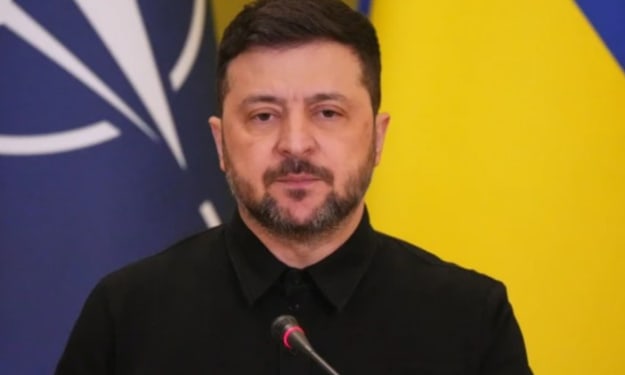
The war between Ukraine and Russia may be approaching a critical diplomatic crossroads. Ukrainian President Volodymyr Zelenskyy has revealed that the United States has set a June deadline for both Kyiv and Moscow to reach an agreement aimed at ending the conflict. While fighting continues on the ground, this timeline signals a renewed and more assertive push by Washington to move the war from the battlefield to the negotiating table. According to Zelenskyy, the deadline is not merely symbolic. It comes with a clear message: if progress is not achieved by June, the United States is prepared to increase pressure on both sides to force movement toward a settlement. This announcement has sparked intense discussion among analysts, diplomats, and citizens alike, as it raises hopes for peace while also highlighting the immense challenges that remain. Why the June Deadline Matters Deadlines in diplomacy are rare, especially in conflicts as complex as the Ukraine–Russia war. By setting a clear timeline, the U.S. appears to be signaling that the status quo—continued fighting, rising casualties, and mounting economic costs—is no longer acceptable. From Washington’s perspective, the war has become a long-term drain on global stability. It has disrupted energy markets, strained alliances, and deepened geopolitical divisions. A June deadline suggests that the U.S. wants tangible results within months, not years, and is willing to use diplomatic and political leverage to get there. For Ukraine and Russia, the deadline raises the stakes. Negotiations that once felt open-ended now come with a clock ticking loudly in the background. Zelenskyy’s Position: Peace, But Not at Any Cost President Zelenskyy has consistently emphasized that Ukraine seeks peace, but not one that compromises its sovereignty or territorial integrity. In recent statements, he made it clear that certain Russian demands—particularly those involving Ukrainian withdrawal from occupied territories—remain unacceptable. Ukraine’s leadership is especially firm on issues related to the eastern regions and critical infrastructure. Zelenskyy has stressed the importance of reliable ceasefire mechanisms, protections for civilians, and guarantees that any agreement will actually be honored. Past attempts at ceasefires and partial agreements have often collapsed, leaving Ukraine skeptical of proposals that lack enforcement or international oversight. As a result, while Kyiv welcomes U.S. involvement and pressure, it remains cautious about rushing into a deal simply to meet a deadline. Russia’s Calculations and Reluctance On the Russian side, the picture is equally complicated. Moscow continues to pursue strategic objectives while signaling selective openness to talks. However, core disagreements—territory, security guarantees, and Ukraine’s future alignment with the West—remain unresolved. For Russia, agreeing to a deal by June may require concessions that could be framed domestically as weakness. This makes negotiations politically sensitive, even if economic sanctions and military costs are mounting. The U.S. deadline may therefore test how much pressure Russia is truly willing—or able—to absorb before adjusting its position. The Role of the United States as a Broker The U.S. has positioned itself as a central mediator in the latest phase of diplomacy. According to Zelenskyy, upcoming talks are expected to take place on U.S. soil, following earlier rounds in neutral locations that failed to produce breakthroughs. Washington’s role is not limited to hosting discussions. The deadline itself is a form of leverage, implying that continued inaction could lead to intensified diplomatic, economic, or political measures against whichever side is seen as obstructing progress. At the same time, the U.S. must balance its mediator role with its strong support for Ukraine, a dynamic that adds complexity to the process. Any perception of bias could undermine trust, while excessive pressure risks backfiring. Ongoing Fighting Underscores the Urgency While diplomats talk, the war continues to exact a heavy toll. Recent attacks on energy infrastructure have caused widespread power disruptions in Ukraine, affecting millions of civilians. Military casualties continue to rise on both sides, and displacement remains a persistent humanitarian crisis. These realities give the June deadline added weight. Every delayed agreement means more destruction, more loss of life, and deeper long-term consequences for the region. For ordinary Ukrainians, the idea of a firm timeline offers a fragile sense of hope—tempered by the painful memory of past negotiations that failed to stop the fighting. Can a Deadline Deliver Peace? The key question remains whether a deadline can actually force progress in a war defined by deep mistrust and incompatible demands. Optimists argue that external pressure, especially from a powerful actor like the U.S., can break diplomatic deadlock. Pessimists warn that rushed negotiations may produce fragile agreements that collapse under pressure. What is clear is that June now looms as a defining moment. If talks succeed, it could mark the beginning of the end of one of the most consequential conflicts of the 21st century. If they fail, the deadline may simply become another missed opportunity, followed by intensified pressure and prolonged war.
By Jameel Jamali6 days ago in The Swamp