finance
Money talks; reviewing the global economy, government spending, taxes, and economic policy that affect our social and political future.
Gordon Ramsay Says Tax Changes Will Make Restaurants ‘Lambs to the Slaughter’. AI-Generated.
Celebrity chef Gordon Ramsay has issued a stark warning to the UK government, claiming that recent tax proposals could place restaurants at serious financial risk. Speaking to the media, Ramsay described the changes as potentially devastating for the hospitality industry, which has already faced significant challenges following the COVID-19 pandemic and rising operational costs.
By Aarif Lashari15 days ago in The Swamp
Demand for Online Jewellery Boosts December Retail Sales. AI-Generated.
Retail sales received a welcome boost in December as growing demand for online jewellery purchases helped lift overall consumer spending during the crucial holiday period. New figures show that while many traditional retail sectors faced ongoing challenges, jewellery stood out as a strong performer—particularly through digital platforms.
By Aarif Lashari15 days ago in The Swamp
Davos Onlookers Notice Trump’s ‘Board of Peace’ Logo Resembles UN Emblem. AI-Generated.
As global leaders, corporate executives, and policy experts gathered in Davos for the World Economic Forum, an unexpected detail sparked discussion beyond speeches and policy panels. Observers noted that the logo associated with former U.S. President Donald Trump’s newly promoted “Board of Peace” bears a striking resemblance to the emblem of the United Nations, raising questions about symbolism, branding, and political messaging on the world stage.
By Aarif Lashari15 days ago in The Swamp
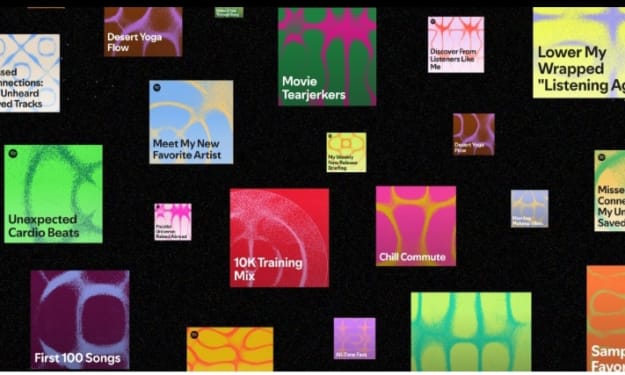
Prompted Playlists in Beta Coming to Premium Listeners in More Markets. AI-Generated.
Music streaming is entering a new era of personalization, and Spotify is once again pushing the boundaries. The company has announced that its Prompted Playlists feature, currently in beta, is expanding to more markets for Premium listeners. This move signals Spotify’s growing commitment to artificial intelligence, user-driven discovery, and interactive listening experiences.
By Aarif Lashari15 days ago in The Swamp
Scottish Water Bills Set to Rise by 8.7% from April 2026. AI-Generated.
Scotland, January 23, 2026 — Scottish Water has confirmed that household water and waste water charges will rise by 8.67% from April 2026, marking another increase in essential utility costs for people across Scotland. The change, which takes effect at the start of the new financial year, will see the average water bill increase by around £42 per year — equivalent to roughly £3.50 more per month for the typical household. �
By Ayesha Lashari15 days ago in The Swamp
Nationwide Confirms Future of 605 Branches After 432 UK Banks Close – Full List. AI-Generated.
Nationwide has provided clarity on the future of its 605 branches across the UK following the recent closure of 432 other bank branches. The announcement comes amid ongoing changes in the banking sector, driven by digital transformation, consumer behavior shifts, and cost pressures. Nationwide’s confirmation aims to reassure customers, employees, and communities about the availability of banking services despite the high-profile closures of competitors.
By Aarif Lashari15 days ago in The Swamp
Full List of UK High Street Giant’s 33 Stores Facing Closure After Entering Administration. AI-Generated.
A major UK high street retailer has announced that 33 of its stores are set to close after the company entered administration. The move is part of a broader effort to restructure its operations and cut costs amid challenging economic conditions, rising costs, and shifting consumer behavior. The closures have raised concerns about job losses, the future of high street shopping, and the long-term impact on local communities.
By Aarif Lashari15 days ago in The Swamp
Highnoon Laboratories Starts Work on New Pharmaceutical Manufacturing Facility. AI-Generated.
Highnoon Laboratories, one of Pakistan’s leading pharmaceutical companies, has officially started work on a new pharmaceutical manufacturing facility, signaling a major expansion of its production capabilities. The move reflects growing demand for locally manufactured medicines and highlights the company’s long-term commitment to strengthening Pakistan’s healthcare and pharmaceutical infrastructure.
By Muhammad Hassan15 days ago in The Swamp
Missing a Package? Maybe It’s for Sale in Heerhugowaard. AI-Generated.
If you’ve ever tracked an online order only to see it marked as delivered—while nothing ever arrived at your door—you’re not alone. Across Europe, complaints about missing parcels have surged alongside the boom in online shopping. But in the Dutch town of Heerhugowaard, a surprising twist has emerged: lost packages may not be lost at all—some are being resold openly.
By Aarif Lashari15 days ago in The Swamp
NC Ticket Wins $209.3 Million Powerball Jackpot. AI-Generated.
A single Powerball ticket sold in North Carolina has claimed a staggering $209.3 million jackpot, instantly changing the life of one lucky player and capturing national attention. The win marks one of the largest lottery prizes in the state’s history and serves as a reminder of the enormous allure—and long odds—of America’s biggest lottery games.
By Muhammad Hassan15 days ago in The Swamp
Consumer Spending Pushes U.S. Economy Up 4.4% in Third Quarter, Fastest Growth in Two Years. AI-Generated.
The U.S. economy surprised many analysts in the third quarter by growing at an annualized rate of 4.4 percent, marking its fastest expansion in two years. At the center of this unexpected surge was robust consumer spending, which continued to power economic activity even as Americans faced higher prices, elevated borrowing costs, and lingering uncertainty about the future. The latest data highlights the resilience of U.S. households and underscores how consumer behavior remains the backbone of the American economy. While economists caution that such rapid growth may not be sustainable, the third-quarter performance provides a snapshot of an economy still running hotter than expected. A Stronger-Than-Expected Growth Report According to official figures, gross domestic product (GDP) growth accelerated sharply compared with previous quarters. The 4.4 percent pace exceeded most forecasts and reflected broad-based strength across multiple sectors. Economists had anticipated moderate growth as the Federal Reserve’s interest rate hikes worked their way through the economy. Instead, consumer activity defied expectations, helping offset slower business investment and a cooling housing market. This growth rate signals that fears of an immediate recession have eased, at least for now. Consumer Spending: The Key Driver Consumer spending accounts for roughly two-thirds of U.S. economic activity, making it the single most important factor in overall growth. In the third quarter, Americans increased spending on: Services, including travel, dining, and entertainment Goods, particularly durable items and household products Experiences, reflecting pent-up demand following years of pandemic-related disruptions Strong job growth, rising wages in some sectors, and accumulated savings helped households maintain spending levels despite inflation pressures. Even as prices remained elevated, many consumers appeared willing to spend, suggesting confidence in their financial stability—or at least a willingness to prioritize consumption. Labor Market Strength Supports Demand One reason consumer spending held up is the continued strength of the U.S. labor market. Unemployment remained historically low during the quarter, and job openings stayed relatively high. Steady employment provides households with income security, which encourages spending even in uncertain economic conditions. While wage growth has slowed compared with earlier periods, it has still outpaced inflation in some recent months, helping restore purchasing power. This dynamic has created a feedback loop: strong employment supports spending, and strong spending supports business activity and hiring. Inflation and Interest Rates Still Loom Large Despite the impressive growth numbers, challenges remain. Inflation, though down from its peak, continues to run above the Federal Reserve’s target. Higher prices for essentials such as housing, food, and energy have strained household budgets, particularly for lower-income Americans. At the same time, interest rates remain at their highest levels in decades. Higher borrowing costs have cooled demand in interest-sensitive sectors like housing and business investment. Some economists warn that consumer spending may eventually slow as savings are depleted and credit becomes more expensive. Business Investment Shows Mixed Signals While consumer activity surged, business investment painted a more mixed picture. Some companies continued to invest in technology and equipment, while others delayed expansion plans due to uncertainty about future demand and financing costs. Manufacturing activity remained uneven, reflecting global economic weakness and slower growth in key overseas markets. However, service-oriented industries benefited directly from strong consumer demand. This imbalance highlights the economy’s current dependence on households rather than corporate expansion. Government Spending and Trade Effects Government spending also contributed modestly to third-quarter growth, particularly at the state and local levels. Public investment in infrastructure and services added to overall economic momentum. Meanwhile, trade had a smaller impact, with imports rising alongside consumer demand. Higher imports can subtract from GDP calculations, but they also signal strong domestic consumption. What This Means for the Federal Reserve The unexpected strength of the economy complicates the Federal Reserve’s policy decisions. On one hand, strong growth suggests the economy can handle higher interest rates. On the other, persistent consumer demand could keep inflation elevated. Policymakers are now faced with balancing the risk of tightening too much—potentially slowing growth abruptly—against the risk of easing too soon and reigniting inflation. The third-quarter data reinforces the Fed’s cautious approach, suggesting that rates may remain higher for longer. Is This Growth Sustainable? While the 4.4 percent growth rate is impressive, many economists caution against assuming it will continue. Several factors could weigh on future quarters: Declining household savings Rising credit card and loan balances Slowing global growth Tighter financial conditions Some analysts view the third quarter as a peak driven by temporary factors rather than a new long-term trend. What It Means for Everyday Americans For consumers, strong economic growth does not always translate into immediate relief. While job security remains solid, many households still feel squeezed by the cost of living. However, continued economic expansion reduces the risk of widespread layoffs and supports income stability. For workers, this environment may offer leverage in wage negotiations and job mobility. For policymakers, the challenge is ensuring growth remains inclusive and does not come at the cost of renewed inflation. Conclusion: A Resilient but Uneven Economy The U.S. economy’s 4.4 percent growth in the third quarter highlights the enduring strength of consumer spending and the resilience of American households. Despite higher interest rates and lingering inflation, consumers continue to drive economic momentum. At the same time, underlying risks remain. Whether this pace of growth can be sustained will depend on how long consumers can keep spending and how policymakers manage inflation pressures. For now, the data paints a picture of an economy that is not slowing as quickly as many once feared—but one that still faces critical tests ahead.
By Muhammad Hassan15 days ago in The Swamp
Will AI Replace Finance Professionals?. AI-Generated.
Artificial intelligence has rapidly transformed the finance industry, reshaping how data is analyzed, decisions are made, and services are delivered. From algorithmic trading to automated accounting systems, AI-driven tools are becoming more sophisticated and widely adopted. This rapid evolution has sparked a pressing question across the financial world: will AI replace finance professionals, or will it redefine their roles instead?
By TheHonest Publishing16 days ago in The Swamp