finance
Money talks; reviewing the global economy, government spending, taxes, and economic policy that affect our social and political future.
Will AI Replace Finance Professionals?. AI-Generated.
Artificial intelligence has rapidly transformed the finance industry, reshaping how data is analyzed, decisions are made, and services are delivered. From algorithmic trading to automated accounting systems, AI-driven tools are becoming more sophisticated and widely adopted. This rapid evolution has sparked a pressing question across the financial world: will AI replace finance professionals, or will it redefine their roles instead?
By TheHonest Publishing17 days ago in The Swamp
DAVOS 26: Nestlé to Expand Operations in Pakistan with $60 Million Investment. AI-Generated.
Nestlé, the world-renowned food and beverage company, announced at the 2026 World Economic Forum in Davos that it plans to expand its operations in Pakistan with a $60 million investment. This move underscores the company’s long-term commitment to the Pakistani market and highlights the country’s growing potential as a hub for food manufacturing and innovation.
By Muhammad Hassan17 days ago in The Swamp
Stock Futures Rise After Major Averages Rebound on Easing Tariff Fears. AI-Generated.
After a turbulent period marked by global trade uncertainty and fears of escalating tariffs, investors are breathing a sigh of relief as stock futures rise, and major stock averages rebound. This uptick comes after easing concerns regarding the tariff disputes that have dominated headlines and caused market volatility. For many, this marks a welcome shift in sentiment, providing hope for a stabilizing global economy and a return to growth.
By Muhammad Hassan17 days ago in The Swamp
China and Hong Kong Stocks Slip as Non-Ferrous Metals Slide on Easing Geopolitical Tensions. AI-Generated.
On a day marked by shifting geopolitical dynamics, China and Hong Kong stocks saw a slight decline as the non-ferrous metals sector took a hit. The downturn came amid a global easing of geopolitical tensions, which had previously driven volatility in commodity markets, particularly in the metals sector. While the easing of these tensions is seen as a positive development for the global economy, it has led to an unexpected slip in markets, as investors recalibrate their positions in response to changing global conditions. Let’s dive deeper into how these shifts in the geopolitical landscape have impacted the Chinese and Hong Kong stock markets and the performance of non-ferrous metals, such as copper, aluminum, and zinc. Geopolitical Tensions Easing: A Double-Edged Sword for Global Markets For much of the past few years, geopolitical tensions—particularly between the United States and China, as well as concerns over global supply chains and trade restrictions—have weighed heavily on global financial markets. Tariffs, sanctions, and trade war rhetoric have all contributed to volatility in both stock markets and commodities. However, recent signs of easing tensions between major global players have shifted market sentiment. Diplomatic breakthroughs, trade negotiations, and the reduction of military conflicts in certain regions have led investors to believe that the worst of these geopolitical risks may be behind us—at least for now. While this development is largely viewed as positive for long-term economic stability, it has had an immediate impact on commodity prices, particularly for non-ferrous metals. Non-ferrous metals, which include widely used materials like copper, aluminum, and zinc, have been particularly sensitive to geopolitical events. These metals are crucial to industries ranging from electronics to construction, and their prices tend to rise when there are concerns about supply disruptions, such as those caused by geopolitical instability. With the easing of these tensions, the fear of disruptions has decreased, and as a result, prices for non-ferrous metals have softened. The immediate market reaction has been mixed, but it has led to sliding prices for commodities that have been highly sensitive to geopolitical risks, thereby putting pressure on related stocks. China’s Stock Market Reaction On the Chinese mainland, the Shanghai Composite Index and other key indices experienced a downward movement as a result of these developments. While the Chinese government continues to push for economic stability and growth, its stock market has been vulnerable to external pressures. The easing of geopolitical tensions has led investors to reassess their positions, and concerns over a slowdown in demand for non-ferrous metals have weighed on sentiment in China’s resource-heavy sectors. The non-ferrous metals sector is a significant component of China’s stock market, with large mining and manufacturing firms playing an integral role in the economy. The decline in metal prices has directly impacted these firms, leading to a drop in their stock values. Notably, China Northern Rare Earth Group, Zhongtai International, and other key players in the metals sector saw their share prices decline, reflecting the reduced demand for their products amid the calming of geopolitical tensions. Despite the recent decline, experts suggest that China’s long-term economic growth prospects remain strong, driven by industrial demand, technological advancements, and an increasing push for green energy. However, the short-term impact of easing geopolitical risks has brought some caution to the market. Hong Kong Stocks: A Reflection of Broader Regional Trends Hong Kong, often seen as a global financial hub and a barometer for regional market movements, mirrored the broader trend observed in mainland China’s stock market. The Hang Seng Index, which tracks the performance of major Hong Kong-listed companies, also slipped as resource and materials stocks experienced declines. In particular, companies involved in the extraction, processing, and trading of metals saw their share prices dip. China Hongqiao Group, a major aluminum producer, was among the hardest-hit, reflecting the downturn in aluminum prices caused by the stabilization of geopolitical risks. Other resource-focused companies in Hong Kong, including those dealing with copper and zinc, also saw a decline in investor confidence. The volatility in the Hong Kong market is a reminder that even the easing of geopolitical risks, typically seen as a positive factor, can sometimes cause short-term turbulence in sectors that have been driven by heightened global tensions. The metals market, in particular, has been highly reactive to international events, and the softening of those tensions can result in price corrections, impacting the stock values of companies dependent on those prices. Non-Ferrous Metals: The Core of the Drop Non-ferrous metals, essential for a wide range of industries—from electronics to automotive manufacturing and construction—have been a key focus for investors in recent years. Historically, copper, aluminum, and zinc prices rise during periods of geopolitical instability due to concerns about supply chain disruptions and reduced availability. When tensions rise, countries like China and the United States—major consumers and producers of metals—stockpile resources, which further drives up prices. However, with tensions easing, the immediate demand for these metals has softened, leading to a pullback in prices. The drop in copper prices, for instance, has had a significant impact on related industries, including electric vehicle manufacturing and renewable energy, both of which rely on the metal for their products. Similarly, the aluminum market has faced a correction as the fear of trade restrictions and export bans has lessened. This has caused prices to fall back from their recent highs, with global supply chains now facing fewer disruptions. As a result, companies dealing in non-ferrous metals are seeing the effects on their stock prices, with investors shifting their focus to other industries that may be better positioned to benefit from the current global climate. The Impact on Investor Sentiment Investor sentiment in both China and Hong Kong has been notably influenced by the easing of geopolitical tensions, as markets recalibrate in response to changing global conditions. While long-term optimism remains for both regions, the short-term effects of sliding metal prices have introduced a level of caution, particularly among resource-heavy stocks. In the broader context of global markets, these developments serve as a reminder that even positive changes in the geopolitical landscape can have mixed outcomes for investors. For sectors like non-ferrous metals, which have long been subject to geopolitical risks, a return to normalcy in global relations can result in price corrections and shifts in investor expectations. Looking Ahead: What’s Next for the Markets? As geopolitical tensions continue to ease, markets in China, Hong Kong, and beyond are likely to experience a period of adjustment. While non-ferrous metals may face further downward pressure in the short term, this could present opportunities for long-term investors who are focused on sustainable growth and technological advancements. Furthermore, as the global economy stabilizes, sectors like technology, renewable energy, and consumer goods may emerge as stronger drivers of growth, offering diversification opportunities for investors looking to hedge against the volatility in resource-based industries. Conclusion The recent slip in China and Hong Kong stocks, driven by the decline in non-ferrous metal prices, underscores the complex relationship between geopolitical tensions and commodity markets. While easing tensions are seen as a positive development for global stability, the short-term impact on resource stocks reminds investors of the inherent volatility in these markets. As the global economic landscape continues to evolve, the key will be to find a balance between geopolitical stability and market opportunities across sectors.
By Muhammad Hassan17 days ago in The Swamp
KARACHI: BRIndex100 and BR Sectoral Indices on Wednesday (January 21, 2026). AI-Generated.
On Wednesday, January 21, 2026, the Karachi Stock Exchange (KSE) witnessed notable movements across various indices, with the BRIndex100 and the BR Sectoral Indices showing significant shifts in their values. The day’s trading session revealed the market’s response to both global financial trends and local economic developments, offering traders and investors critical insights into the state of Pakistan’s economy. Let’s break down the performance of these indices and the broader trends influencing them.
By Muhammad Hassan17 days ago in The Swamp
Theranos Founder Elizabeth Holmes Asks Trump to Commute Prison Sentence. AI-Generated.
Elizabeth Holmes, the embattled founder and former CEO of the now-defunct health technology company Theranos, has reportedly submitted a petition to former President Donald Trump seeking a commutation of her prison sentence. Holmes, who was convicted on multiple counts of fraud related to misleading investors and patients about Theranos’ blood-testing technology, is currently serving a lengthy federal sentence.
By Aarif Lashari17 days ago in The Swamp
Significant Fall in Government Borrowing in December, Figures Show. AI-Generated.
Recent figures from the UK government reveal a notable decline in public borrowing in December, marking a positive shift in the nation’s fiscal landscape. According to the latest data, the government borrowed significantly less than in previous months, reflecting a combination of higher tax receipts, reduced spending pressures, and seasonal economic trends. Analysts are weighing the implications for public finances, monetary policy, and broader economic recovery.
By Aarif Lashari17 days ago in The Swamp
Physical AI: Robotics Are Poised to Revolutionize Business. AI-Generated.
The convergence of artificial intelligence (AI) and robotics is ushering in a new era of “Physical AI,” promising to transform the way businesses operate across industries. Unlike traditional software AI, Physical AI combines machine learning with autonomous machines capable of interacting with the physical world—robots that can perceive, learn, adapt, and execute tasks without human intervention.
By Aarif Lashari17 days ago in The Swamp
Intel Stock Surges to a 4-Year High Ahead of Earnings. AI-Generated.
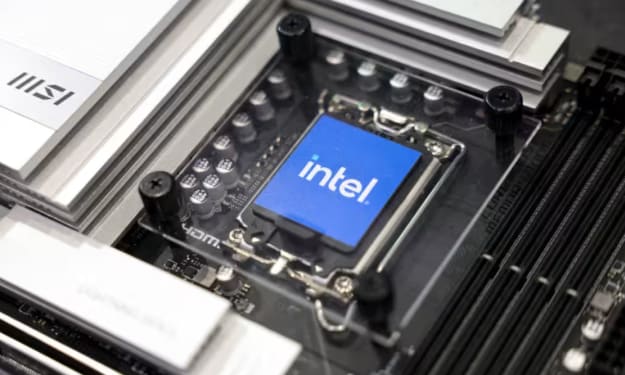
For much of the past decade, Intel was seen as a tech giant struggling to keep pace with faster-moving rivals. Delays in chip manufacturing, rising competition from AMD and Nvidia, and a rapidly changing semiconductor market weighed heavily on investor confidence. But that narrative is changing — and fast. As Intel stock climbs to a four-year high ahead of its upcoming earnings report, optimism is clearly building across Wall Street. This rally is not the result of hype alone. Instead, it reflects a growing belief that Intel’s long-term turnaround strategy may finally be gaining real traction. So why are investors suddenly more confident, and what exactly is driving Intel’s momentum? A Market Shift in Intel’s Favor The semiconductor industry is notoriously cyclical, and Intel appears to be entering a favorable phase at the right moment. After years of supply chain disruptions and uneven demand, the market is stabilizing. Enterprise customers are beginning to invest again, and PC demand — while not booming — is showing signs of recovery. For Intel, even modest improvements in demand can have an outsized impact. As one of the world’s largest chipmakers, scale works both ways. When demand weakens, losses grow quickly. But when conditions improve, revenue and margins can rebound just as fast. This changing market backdrop is one reason investors are positioning themselves ahead of earnings. AI Is No Longer Just Nvidia’s Story Artificial intelligence has been the single biggest driver of semiconductor enthusiasm over the past two years. For a long time, Intel was seen as a secondary player in this space, trailing far behind Nvidia’s dominant GPUs. That perception is starting to evolve. Intel has been steadily expanding its AI-focused product portfolio, particularly in data centers and enterprise applications. Its newer processors are increasingly optimized for AI workloads, and the company has been vocal about integrating AI acceleration directly into CPUs — a different approach from relying solely on standalone GPUs. Investors are warming to the idea that AI growth does not belong to one company alone. As AI adoption spreads across industries, demand for diverse and cost-effective solutions grows — an environment where Intel can compete more effectively. Manufacturing Comeback Builds Credibility Perhaps the most important driver of renewed optimism is Intel’s manufacturing strategy. For years, manufacturing delays damaged the company’s reputation. Falling behind rivals that outsourced production raised serious questions about Intel’s ability to execute. Today, however, that concern is slowly being replaced with cautious confidence. Intel’s push to rebuild its manufacturing leadership — including advanced fabrication nodes and foundry services — is starting to look more credible. Progress may not be instant, but consistency matters more than speed at this stage. Investors are responding not because Intel has already won, but because it is finally delivering predictability — something markets value deeply. Foundry Business Adds a Long-Term Growth Story Intel’s foundry ambitions deserve special attention. By opening its manufacturing capacity to external customers, Intel is attempting to position itself as both a designer and a producer of chips — a rare combination. This move aligns closely with broader geopolitical and economic trends. Governments and corporations are increasingly focused on securing domestic semiconductor supply chains. Intel’s manufacturing footprint gives it a strategic advantage in this environment. While the foundry business will take time to mature, investors see it as a long-term option with enormous upside. That optionality alone can justify higher valuations when sentiment shifts. Earnings Expectations Are Manageable — Not Perfect Interestingly, Intel’s stock surge is not being driven by expectations of flawless earnings. Instead, optimism stems from reasonable expectations. Markets are not demanding record profits. They are looking for: Stable margins Clear guidance Evidence that strategy aligns with execution If Intel demonstrates operational discipline and reaffirms its long-term roadmap, it may not need dramatic earnings beats to sustain momentum. In many ways, this is a healthier rally — built on credibility rather than speculation. Leadership Stability Matters More Than Headlines Intel’s leadership has played a quiet but important role in restoring confidence. Consistent messaging, transparent goals, and a willingness to acknowledge past mistakes have helped rebuild trust with investors. Rather than chasing every tech trend, Intel’s leadership appears focused on doing fewer things better. That strategic clarity is often undervalued — until it begins to show results. Markets reward companies that look steady in uncertain times, and Intel is increasingly projecting exactly that image. Why the Stock Is Rising Before Earnings The timing of the rally is telling. Stocks often move before earnings when investors believe future expectations are being underestimated. In Intel’s case, rising prices suggest that investors fear missing out on a longer-term recovery story. Even those cautious about near-term numbers may be choosing to enter now rather than wait for perfect clarity. This kind of pre-earnings optimism usually reflects belief in direction, not just data. What Comes Next for Intel Investors Intel’s journey is far from complete. Risks remain, competition is intense, and execution must stay consistent. But the market is no longer asking whether Intel can survive — it is asking how strong the recovery could become. That shift in perception is powerful. If Intel continues to show steady progress across AI, manufacturing, and operational discipline, today’s four-year high may look less like a peak and more like a new base. For investors, the growing optimism is not about nostalgia for Intel’s past dominance. It’s about the belief that the company is finally building a future that markets can trust.
By Muhammad Hassan17 days ago in The Swamp
How Slovakia Became the World’s Number One Carmaker. AI-Generated.
Slovakia may be a small Central European nation, but it holds a remarkable global title: the world’s number one car producer per capita. Despite having a population of just over five million, the country manufactures more cars per person than any other nation. This achievement did not happen by accident. It is the result of strategic policy decisions, geographic advantages, skilled labor, and long-term investment by global automotive giants.
By Aarif Lashari17 days ago in The Swamp
Stocks Surge as Trump Cancels Greenland Tariffs. AI-Generated.
Global stock markets rallied sharply after former US president Donald Trump announced the cancellation of proposed tariffs linked to Greenland, easing fears of a new trade dispute and restoring investor confidence. The decision sparked gains across major indices, as markets welcomed the reduction in geopolitical and trade-related uncertainty that had weighed on sentiment in recent days.
By Aarif Lashari17 days ago in The Swamp