Latest Stories
Most recently published stories in The Swamp.
Rubio Delivers MAGA’s Foreign Policy Doctrine in Munich. AI-Generated.
When Marco Rubio stepped onto the international stage at the Munich Security Conference, his speech signaled more than a routine policy address. It was a declaration of what the “Make America Great Again” (MAGA) movement believes U.S. foreign policy should look like in a rapidly changing world.
By Sajida Sikandar7 days ago in The Swamp
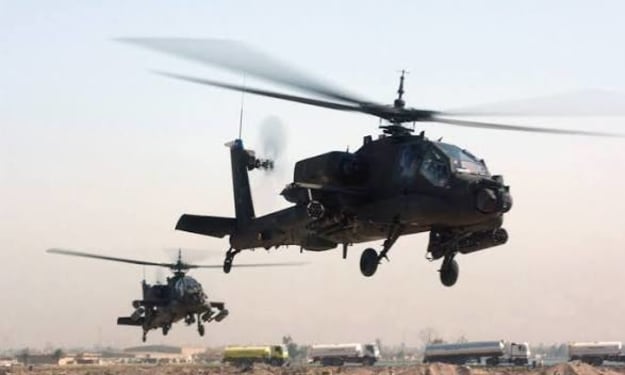
As Costly As Rafale, Far Less Survivable: Why U.S. Apache Helos Found No Place in India’s $40B Deal. AI-Generated.
India’s ambitious $40 billion defense modernization program has reshaped the future of its air combat fleet, with a strong emphasis on survivability, multirole capability, and long-term strategic autonomy. While the deal prominently features advanced fighter jets such as the French-made Rafale, the conspicuous absence of the U.S.-built Apache attack helicopter has raised questions among defense analysts. The Apache, widely regarded as one of the most lethal helicopter gunships in the world, was once expected to play a larger role in India’s expanding aerial arsenal. Instead, it found itself sidelined in favor of other platforms deemed better suited to India’s evolving operational doctrine. The Apache’s reputation is formidable. Designed for high-intensity battlefields, it boasts advanced radar, precision-guided munitions, and a long combat record in U.S. military operations. However, India’s $40 billion procurement strategy is not merely about firepower; it is about survivability in contested airspace, integration with indigenous systems, and long-term cost-effectiveness. Cost Without Strategic Flexibility One of the most striking comparisons is cost. Each Apache helicopter, depending on configuration, can approach the price range of modern fighter aircraft such as Rafale. This raises a critical question: why invest fighter-jet-level resources in a helicopter platform that is inherently more vulnerable to modern air defenses? Helicopters, by design, operate at lower altitudes and slower speeds, making them more exposed to surface-to-air missiles, shoulder-fired weapons, and radar-guided systems. In modern battlefields saturated with air defense networks, survivability is no longer measured by armor alone but by stealth, speed, and electronic warfare capabilities—areas where fighter jets significantly outperform attack helicopters. Survivability in High-Threat Environments India’s security challenges include two nuclear-armed neighbors and the possibility of conflict in high-altitude and technologically dense theaters. In such scenarios, survivability becomes paramount. The Apache, though heavily armored, lacks the low-observable features and high-speed escape profiles of advanced fighter jets. Military planners increasingly prioritize platforms that can penetrate defended airspace, deliver strikes, and exit before detection or interception. The Apache’s operational doctrine works best in environments where air superiority is already established. India’s planners, however, are preparing for situations where air superiority cannot be assumed from the outset. Logistics and Dependency Concerns Another factor is logistical dependence. Apache helicopters rely heavily on U.S. supply chains for spare parts, software updates, and weapon systems. India has long pursued a policy of reducing overreliance on any single foreign supplier. While cooperation with the United States has grown, New Delhi remains cautious about potential political or regulatory constraints that could affect availability of parts during crises. By contrast, the Rafale deal includes technology transfer, local maintenance infrastructure, and greater autonomy in operations. This aligns with India’s broader “Make in India” and self-reliance initiatives in defense production. Shifting Doctrines and Indigenous Alternatives India is also investing heavily in indigenous rotary-wing platforms and armed drones. Attack helicopters are increasingly seen as vulnerable assets compared to unmanned systems that can perform reconnaissance and strike missions without risking pilot lives. Drones can loiter longer, operate at higher altitudes, and integrate more seamlessly with network-centric warfare strategies. Moreover, India’s focus is shifting toward multi-domain warfare—coordinating air, land, cyber, and space assets. Fighter aircraft and unmanned systems are better suited for such integration than traditional attack helicopters. Political and Strategic Calculations Defense procurement is never purely technical. Political alignment, strategic signaling, and long-term partnerships all play roles. The Rafale deal strengthened ties with France, a country that has historically supported India’s strategic independence and provided fewer restrictions on operational use of equipment. The Apache, despite its battlefield credibility, represents a model tied closely to U.S. doctrine and export controls. For India, the priority is not just buying weapons but ensuring freedom of action in future conflicts. The Bigger Picture The exclusion of Apache helicopters from India’s $40 billion deal does not mean the platform is ineffective. It remains one of the most capable attack helicopters in the world. However, India’s requirements are evolving toward survivability in high-threat environments, reduced dependency on foreign supply chains, and integration with indigenous and unmanned systems. In a battlefield defined by long-range missiles, electronic warfare, and dense air defense networks, a helicopter—no matter how advanced—faces limitations that fighter aircraft and drones do not. When cost is nearly comparable to a multirole fighter jet, the calculus becomes even more unforgiving. Conclusion India’s decision reflects a strategic shift rather than a rejection of U.S. technology. The Apache’s absence from the $40 billion deal underscores how modern warfare priorities have changed. Survivability, autonomy, and flexibility now outweigh sheer firepower. In that context, a platform as costly as Rafale but far less survivable in contested airspace simply could not justify its place in one of the largest defense modernization efforts in India’s history. The message is clear: future wars will be fought not just with powerful machines, but with systems that can endure, adapt, and operate independently in the most hostile environments.
By Fiaz Ahmed 7 days ago in The Swamp
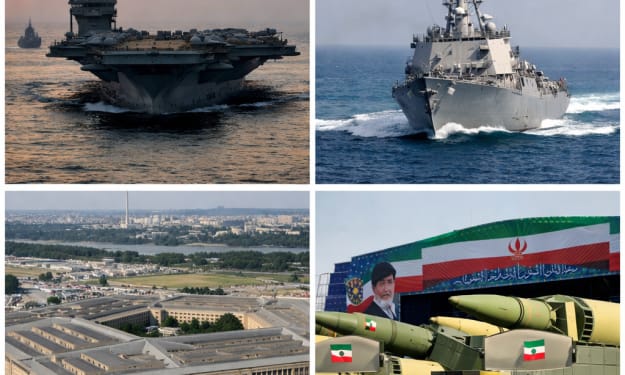
Rising Tensions: U.S. Military Prepares for Possible Weeks-Long Operations Against Iran. AI-Generated.
The United States military is preparing for the possibility of a weeks-long operation against Iran, according to recent reports. This development has raised concerns around the world. While no final decision has been announced, officials say that the Pentagon is reviewing plans in case the President orders military action. The situation shows rising tension between the two countries and has led many leaders to call for calm and diplomacy.
By 😎Baلoch✨.zada😎7 days ago in The Swamp
China Is the Real Threat, Taiwan Says in Rebuke to Munich Speech. AI-Generated.
The world’s attention turned sharply toward East Asia following a dramatic exchange of words between China and Taiwan after the recent Munich Security Conference. What began as a speech meant to promote China’s vision of global order quickly turned into a flashpoint of geopolitical tension when Taiwan responded with a bold accusation: China is the real threat to regional and international security.
By Sajida Sikandar7 days ago in The Swamp
Marco Rubio to Address Munich Security Conference Amid Tensions Over Donald Trump’s Foreign Policy. AI-Generated.
The annual Munich Security Conference has long been a place where world leaders speak openly about war, peace, and global cooperation. This year, the atmosphere is tense. Many European officials are uneasy about the direction of United States foreign policy. Into this uncertain setting steps U.S. Secretary of State Marco Rubio, who is scheduled to deliver a major speech.
By Muhammad Hassan7 days ago in The Swamp
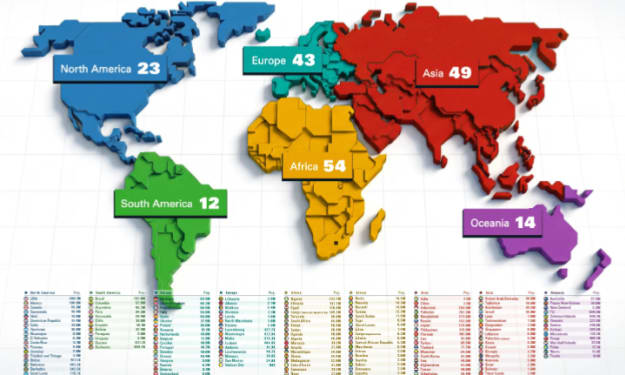
Mapped: Every Continent Ranked by Number of Countries. AI-Generated.
When we look at a world map, it often feels orderly and balanced. Continents appear neatly divided into nations, each with defined borders and identities. But beneath that visual simplicity lies a fascinating imbalance: some continents contain dozens of independent countries, while others have only a handful—or none at all.
By Sajida Sikandar7 days ago in The Swamp
United Kingdom Joins Norway, Italy, Iceland, Switzerland, France, and More European Countries in Taking a Stand on Sustainable Tourism with New Levies, Cruise Taxes, and Stay Limits. AI-Generated.
Travel in Europe is entering a new chapter—one where sustainability is no longer just a buzzword but a policy priority. From bustling historic cities to fragile natural landscapes, destinations are struggling with the effects of overtourism. Now, governments are responding with new visitor levies, cruise taxes, and stay limits designed to protect communities and preserve the environments that make Europe so desirable in the first place.
By Sajida Sikandar8 days ago in The Swamp
More Conflict in Curling as Canadian Women Are Accused of the Same Violation as Men. AI-Generated.
The world of international curling is once again in the spotlight after the Canadian women’s team was accused of committing a violation similar to one that embroiled their male counterparts earlier this season. The controversy, emerging during the 2026 World Women’s Curling Championship, has reignited debates over rules enforcement, competitive fairness, and the consistency of officiating at the highest levels of the sport. The Alleged Violation During a critical match in the round-robin stage, video analysis suggested that the Canadian women’s skip may have performed an action in breach of curling delivery regulations, a violation reminiscent of an incident that involved the Canadian men’s team at a previous international event. In curling, rules are precise: delivery mechanics, stone release, and sweeping protocols are closely monitored, and any deviation can result in warnings or penalties. Officials initially issued a formal warning after reviewing footage, but the decision quickly escalated into a broader discussion among players, coaches, and fans about consistency and fairness in rule enforcement. Reactions from the Teams The Canadian women’s team expressed surprise at the accusation, emphasizing that any deviation was unintentional and fell within what they considered standard competitive practice. “We take the rules very seriously,” said the team skip. “If there was an error, it was not deliberate, and we will fully cooperate with officials to clarify the situation.” Meanwhile, rival teams expressed concern that similar violations by one country in men’s and women’s events suggested inconsistent application of the rules. “We are here to compete at the highest level,” said a European team coach. “It’s crucial that enforcement is fair across the board; otherwise, it undermines the sport’s integrity.” Historical Context The Canadian men’s team faced scrutiny earlier this season when officials identified a minor violation during a championship match. That incident sparked heated debates in the curling community over how strict or lenient referees should be, particularly regarding delivery technique. Curling is a sport steeped in tradition and fairness, and any hint of a competitive edge gained through rule bending can generate significant controversy. Analysts note that while these violations rarely affect the final outcome in a dramatic way, they hold symbolic importance. Canada, long a dominant force in curling, is frequently scrutinized for the conduct of its teams, leading to heightened attention whenever alleged breaches occur. The Broader Debate This latest controversy has reignited a long-standing discussion within the sport: how to balance strict rule enforcement with the practical realities of high-level competition. Curling relies on precise mechanics, but the fast pace of modern championships, combined with intense pressure, can lead to minor deviations that officials must judge. Many former players and commentators argue for clearer guidelines and more transparent officiating to reduce disputes. “Consistency is everything,” said a former world champion. “Players need to know that the rules apply equally to everyone, whether it’s men, women, or teams from different countries.” Impact on Competition The controversy has inevitably affected the atmosphere in the tournament. The Canadian team has had to contend with increased scrutiny, and some opponents have raised objections during matches, creating tension on the ice. Spectators and media coverage have amplified the debate, with social media platforms buzzing with commentary, memes, and opinions on whether the accusations are fair or overblown. Despite the distraction, the Canadian women’s team remains focused on performance. Their strategy, shot selection, and teamwork continue to be closely observed, both as a response to the rules debate and as part of a larger goal to claim the championship title. Officials’ Response Tournament referees and international curling authorities have pledged to review the incident thoroughly. A statement from the World Curling Federation emphasized that all teams would be treated equally, and any penalties would follow established protocols. The federation also indicated plans to release a clarifying report to ensure that players, coaches, and fans understand how rules are interpreted and enforced moving forward. “This is about fairness and maintaining the integrity of curling,” the statement read. “Our aim is to ensure that all participants compete on a level playing field, and that officials have the tools to enforce regulations consistently.” Looking Ahead As the championship progresses toward the playoffs, attention will remain on the Canadian women’s team and the ongoing debate over rules enforcement. While the incident may not decide the outcome of the tournament, it highlights the delicate balance between competitive strategy and adherence to official regulations. For fans, players, and officials alike, this controversy serves as a reminder of the precision, discipline, and scrutiny that define modern curling. Whether the Canadian women are ultimately penalized or cleared, the incident is likely to influence discussions about officiating standards and competitive fairness for years to come.
By Fiaz Ahmed 8 days ago in The Swamp