Latest Stories
Most recently published stories in The Swamp.
Trump Touts Climate Savings but New Rule Set to Push Up US Prices. AI-Generated.
Former President Donald Trump has highlighted potential cost savings from a new environmental policy shift, even as analysts warn that the changes could lead to higher prices for consumers in the United States. The debate centers on regulations affecting energy production, industrial practices, and the broader transition toward cleaner technologies, raising complex questions about balancing economic impacts with environmental goals. The Policy Shift The new rule, introduced under the current federal administration, modifies existing environmental regulations, particularly those related to fuel efficiency, emissions, and energy generation. Advocates argue that the rule could reduce regulatory burdens for certain industries, leading to lower compliance costs and stimulating investment in domestic energy infrastructure. Trump and his supporters have framed the policy as a way to unlock economic benefits, emphasizing potential reductions in government spending and operational costs for businesses. “This is about saving money for Americans while maintaining energy independence,” he stated in recent remarks, highlighting projected efficiencies in industrial and energy sectors. Consumer Impact While regulatory easing may benefit producers, experts caution that the rule could indirectly lead to higher prices for consumers. Economists note that relaxed emission standards and changes to energy regulations may affect the cost of fuels, electricity, and goods tied to energy-intensive production processes. “Even if businesses save on compliance, those savings don’t always reach consumers directly,” said a Washington-based economic analyst. “In some cases, costs can increase due to market adjustments, supply chain shifts, or changes in demand for certain fuels.” Data from prior regulatory rollbacks show that while short-term savings can appear in corporate accounting, the broader economic consequences often include higher operational costs that trickle down to households. Industry and Environmental Reactions Energy producers and manufacturing groups generally welcome the rule, highlighting flexibility in operations and potential for increased domestic output. Trade associations argue that reduced regulatory constraints allow for faster adaptation to market demands and investment in new technologies. Environmental organizations, however, have expressed concern that easing regulations may slow progress toward emissions reduction and climate resilience. They warn that such changes could counteract national and international climate commitments, potentially increasing long-term environmental and economic costs. Balancing Economics and Environment The new policy illustrates the ongoing tension in U.S. policymaking: achieving economic growth while addressing climate challenges. Supporters emphasize that regulatory simplification can reduce government oversight costs and spur investment, while critics argue that environmental protection must remain a priority to prevent future financial and ecological consequences. This balancing act has historically been a point of contention, with economic forecasts and environmental projections often diverging. Analysts stress that both short-term savings and long-term sustainability need careful consideration to avoid unintended consequences for both consumers and the environment. Public Debate The issue has sparked debate among policymakers, economists, and citizens. Media coverage highlights contrasting perspectives, with some praising potential efficiency gains and others cautioning against higher living costs and environmental setbacks. Public sentiment appears divided, reflecting broader concerns about energy prices, climate action, and government regulation. Experts suggest that transparent reporting of projected savings versus expected consumer costs is essential to inform policy discussions. They note that policy impacts are often complex, requiring detailed modeling to understand how changes will affect households, industries, and environmental outcomes. Looking Ahead As the new rule takes effect, monitoring its impact on both prices and energy consumption will be critical. Analysts will track shifts in industrial costs, consumer energy bills, and compliance trends, while environmental groups are likely to continue advocacy for stringent standards to safeguard climate goals. The debate surrounding the policy underscores the challenges inherent in designing regulations that balance economic efficiency with environmental responsibility. How the United States navigates this issue may influence both domestic markets and its role in global climate initiatives.
By Fiaz Ahmed 7 days ago in The Swamp
Pakistan Accused of Denying Treatment for Imran Khan’s Failing Eyesight. AI-Generated.
Former Pakistani Prime Minister Imran Khan is reportedly facing worsening eyesight, with allegations emerging that authorities have denied him access to timely medical care. Sources close to Khan indicate that his right eye has lost significant vision, with doctors warning that further delays could result in permanent impairment. The situation has drawn attention from human rights organizations, political analysts, and the international community, raising questions about the treatment of high-profile political figures under house arrest or government scrutiny. The Health Situation According to insiders, Khan’s vision deterioration began months ago, initially manifesting as blurred vision and reduced visual acuity in his right eye. Medical examinations reportedly revealed advanced damage to the optic nerve, which experts say could lead to irreversible blindness if not treated promptly. Khan’s personal doctors have reportedly recommended immediate intervention, including specialized surgical procedures and continuous monitoring. However, supporters claim that the government has not permitted him to access necessary treatment outside controlled facilities. Reports indicate that Khan’s medical appointments have been repeatedly delayed, with bureaucratic restrictions cited as the primary obstacle. Some political commentators describe the situation as a deliberate effort to undermine his well-being and limit his public engagements. Political Context Khan, who was ousted from office in a no-confidence vote in 2022, remains a central figure in Pakistan’s political landscape. His Pakistan Tehreek-e-Insaf (PTI) party continues to enjoy substantial popular support, and Khan’s personal charisma has made him a polarizing figure. Analysts note that restricting access to medical care for prominent political figures is highly unusual and has heightened tensions between the government and opposition supporters. Political allies have framed the allegations as part of a broader pattern of targeting Khan and his supporters. “This is not just about health; it’s about intimidation,” said a senior PTI official. “Denial of medical care to a political leader is unacceptable under any democratic or human rights framework.” Human Rights and Legal Concerns The claims have drawn attention from human rights advocates, who emphasize that access to medical care is a fundamental right. International observers have urged Pakistani authorities to ensure that Khan receives prompt and appropriate treatment. Delays in care for high-risk conditions, such as deteriorating eyesight, can have lasting consequences and are considered serious violations of medical and human rights standards. Legal experts note that under Pakistani law, citizens—including political figures—are entitled to medical attention regardless of their political status. Denying treatment could expose authorities to both domestic and international scrutiny, particularly if the situation leads to permanent disability. Public Reaction News of Khan’s alleged treatment denial has fueled protests and social media campaigns. Supporters have called for urgent intervention, using hashtags and online platforms to demand medical access. Street demonstrations have been reported in several major cities, with protestors emphasizing the broader implications of denying healthcare to political leaders. Opposition figures argue that the case is emblematic of a wider erosion of rights and liberties, while government spokespeople have largely remained silent, citing security and procedural concerns. Analysts suggest that the lack of transparency has intensified speculation and public concern, further politicizing Khan’s health condition. Implications and Outlook If the allegations are confirmed, Khan’s health crisis could have significant political and social repercussions. Beyond the personal risk to a prominent leader, the case raises questions about the treatment of political detainees and opposition figures in Pakistan. Observers warn that mishandling the situation could inflame public tensions and undermine trust in government institutions. Medical experts stress the urgency of intervention. Prompt surgical or therapeutic measures could stabilize Khan’s eyesight and prevent permanent damage. Meanwhile, political analysts are monitoring how the situation might affect PTI’s activities, public support, and upcoming political developments. As Pakistan grapples with a complex intersection of health, politics, and human rights, the international community continues to watch closely. The outcome of Khan’s medical access could set important precedents for the treatment of political figures and the broader protection of citizen rights in the country.
By Fiaz Ahmed 7 days ago in The Swamp
China’s Box Office Presales Fall Over 60% From Last Year in Crucial Lunar New Year Window. AI-Generated.
China’s film industry is facing a surprising slowdown as presales for the Lunar New Year box office—a period traditionally considered the most lucrative for Chinese cinema—have plummeted by more than 60% compared with last year. The sudden drop has raised concerns among producers, distributors, and exhibitors about audience appetite, content strategy, and the sustainability of China’s rapidly expanding movie market. Industry analysts report that, as of early February, ticket presales for the first week of the Lunar New Year period were just over $120 million, compared with $320 million during the same period in the previous year. This decline comes despite a slate of highly anticipated releases, including major domestic blockbusters and high-profile co-productions with foreign studios. Factors Behind the Decline Several factors appear to be contributing to the sharp fall in presales. Analysts cite a combination of audience fatigue, market saturation, and changing viewing habits. After years of unprecedented growth, Chinese audiences are increasingly selective, often favoring streaming platforms over cinemas for convenience and cost-effectiveness. “The market is no longer simply about releasing big titles and expecting box office gold,” said a Shanghai-based film distributor. “Audiences are more discerning and have more options than ever. Presales reflect the mood of the market, and this year, the mood is cautious.” Content quality is also under scrutiny. While blockbuster marketing campaigns have dominated social media platforms, early reviews and audience reactions to trailers have been mixed. Some industry insiders suggest that recent films fail to deliver the compelling storytelling and high production values expected from Lunar New Year releases, traditionally a showcase of domestic cinematic excellence. Impact on the Industry The presales slump has immediate financial implications for producers and cinema chains. Lunar New Year often accounts for 30–40% of a studio’s annual revenue, making it a critical window for recouping production costs and generating profits. Lower-than-expected ticket sales could lead to tighter budgets for upcoming projects, reduced investment in domestic content, and delays in planned releases. Exhibitors are also feeling the pinch. Cinema chains, which rely heavily on this period to offset slower months, have begun reevaluating staffing, scheduling, and promotional strategies. Some chains are offering deeper discounts and bundled packages in an effort to attract audiences, while others are emphasizing enhanced cinematic experiences such as premium seating and immersive audio-visual technology. Streaming and Changing Habits Streaming platforms have emerged as a formidable competitor to traditional cinemas. Platforms offering early access to films, subscription models, and interactive features are reshaping audience expectations. Analysts believe that the presales drop signals a broader trend: a growing segment of Chinese consumers prefers the flexibility of at-home viewing, particularly for family-friendly content that has traditionally dominated the Lunar New Year window. “Lunar New Year used to be a communal cinema experience,” said a Beijing-based cultural commentator. “Now, the communal aspect often happens at home, with family members streaming the same films together rather than going out to theaters.” Market Saturation and Audience Fatigue Another factor is market saturation. China releases hundreds of films annually, and during peak periods, competition for audience attention is fierce. With multiple high-profile releases scheduled simultaneously, consumers are faced with difficult choices, leading to lower presales for individual films. Audience fatigue is evident on social media platforms, where discussions reveal skepticism toward big-budget productions and a preference for content that offers novelty and emotional resonance. Analysts note that marketing campaigns alone are no longer sufficient to guarantee presales success; content quality, word-of-mouth, and audience trust now play a more decisive role. Looking Ahead Industry watchers caution that while the presales drop is significant, it may not translate directly into a proportional decline in overall box office revenue. Weekend peaks, last-minute ticket purchases, and strong word-of-mouth can still drive substantial earnings. However, the trend serves as a warning for studios and distributors. As China’s film market matures, success depends increasingly on understanding audience preferences, investing in compelling storytelling, and innovating beyond traditional marketing strategies. The Lunar New Year window has long been a symbol of the industry’s vitality and cultural resonance. This year’s presales decline underscores a shift in audience behavior and the growing influence of alternative viewing platforms. For China’s film industry, the challenge is clear: adapt to changing habits, elevate content quality, and find ways to engage audiences in a landscape that is no longer guaranteed by tradition alone.
By Fiaz Ahmed 7 days ago in The Swamp
Woke Europe Not Facing Civilisational Erasure,’ Says EU’s Kallas After Rubio’s Munich Speech – As It Happened. AI-Generated.
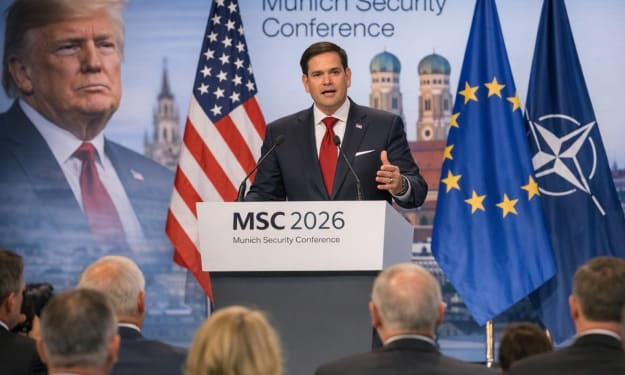
In the wake of a provocative speech by U.S. Senator Marco Rubio at the Munich Security Conference, Estonia’s Prime Minister Kaja Kallas moved swiftly to reassure Europeans that fears of civilisational collapse are overblown, emphasizing resilience and cohesion within the European Union. Rubio’s address, which highlighted demographic trends, cultural shifts, and the perceived weakening of traditional European values, sparked intense debate among policymakers, analysts, and media outlets across the continent. Rubio’s Munich Speech: Key Points Rubio’s address at the conference outlined a scenario in which Europe, he argued, risks losing its cultural and strategic identity. He warned of declining birth rates, immigration pressures, and what he termed the rise of “woke policies” as threats to Europe’s traditional societal structures. His speech urged EU nations to adopt more assertive defense policies, reinforce cultural identity, and strengthen ties with the United States to counter perceived demographic and ideological shifts. While many attendees lauded Rubio’s remarks for drawing attention to strategic challenges, critics described the speech as alarmist and politically charged. Social media erupted with contrasting opinions, with hashtags debating Europe’s future trending for several hours. Kallas’ Response: Calm Amid Alarm Responding promptly to Rubio’s remarks, Prime Minister Kallas downplayed the notion that Europe is facing civilisational erasure. Speaking at a follow-up press briefing, she stressed that the EU is navigating global challenges with “resilience, unity, and adaptability.” “Europe faces challenges, but it is not on the brink of collapse,” Kallas said. “Our institutions, economies, and societies have endured far more difficult periods. We will continue to defend our values, innovate, and grow together.” She also highlighted the EU’s commitment to sustainability, education, and digital transformation, framing these priorities as tools that strengthen rather than weaken European identity. “Progressive policies do not erase heritage; they prepare us for a more inclusive and resilient future,” Kallas added. Reactions Across Europe The exchange between Rubio and Kallas sparked immediate discussion in Brussels, Berlin, and Paris. Analysts noted that Rubio’s framing tapped into anxieties among certain conservative circles regarding demographic changes and social liberalization. However, Kallas’ response was seen as a balancing act, seeking to reassure the public without dismissing legitimate concerns about defense and strategic autonomy. Several political commentators described the exchange as indicative of the broader transatlantic debate over identity, values, and security in an era of rapid global change. Some highlighted that Kallas’ measured tone reinforced the EU’s ability to respond to external critiques while maintaining internal cohesion. Strategic and Geopolitical Implications Beyond rhetoric, Rubio’s speech reflects deeper transatlantic discussions about Europe’s role in global security and its reliance on U.S. military and economic support. While the EU has increased defense spending and coordinated strategic initiatives, some U.S. policymakers continue to press European nations to adopt more assertive postures in NATO and in countering global adversaries. Kallas’ assurance that Europe is resilient signals a desire to maintain a steady course. By balancing reassurance with recognition of challenges, she reinforced the EU’s commitment to collaboration both within the continent and with key partners, including the United States. Looking Ahead As the Munich Security Conference concluded, debates over Europe’s cultural and strategic trajectory remained central. While Rubio’s warnings resonate with some policymakers and analysts, Kallas’ response underscores that Europe’s approach is multifaceted—addressing demographic trends, social policies, and security imperatives without succumbing to alarmism. Observers note that the exchange may shape upcoming policy discussions within the EU, particularly in areas such as defense funding, education initiatives, and migration management. For many Europeans, the conversation reflects not a crisis, but a critical moment to reaffirm values, strengthen institutions, and engage with global challenges thoughtfully. In the end, the dialogue between Rubio and Kallas illustrates the balance between caution and confidence, between critique and reassurance. Europe, according to Kallas, remains far from civilisational erasure—it is a continent capable of adaptation, unity, and enduring influence in a complex world.
By Fiaz Ahmed 7 days ago in The Swamp
Reports: Israel’s ZIM to Be Sold to German Shipping Giant Hapag-Lloyd for Over $3 Billion. AI-Generated.
Reports circulating in global shipping and financial circles suggest that Israel’s largest container shipping company, ZIM, is set to be acquired by Germany’s maritime powerhouse Hapag-Lloyd in a deal valued at more than $3 billion. If finalized, the transaction would mark one of the most significant consolidations in the international shipping industry in recent years and signal a strategic shift in control over one of Israel’s most prominent commercial fleets. According to sources familiar with the negotiations, the talks have intensified over recent months as both companies seek to strengthen their positions in a volatile global shipping market. While neither company has officially confirmed the agreement, insiders describe the discussions as advanced and centered on a full acquisition rather than a partial partnership. ZIM, founded in 1945, has long been regarded as a symbol of Israel’s maritime independence and commercial resilience. The company expanded rapidly during the pandemic-era shipping boom, benefiting from soaring freight rates and strong demand for container transport. However, the post-pandemic slowdown in global trade, combined with falling shipping prices and rising operational costs, has put pressure on many mid-sized carriers to seek strategic alliances or buyers. Hapag-Lloyd, one of the world’s largest container shipping companies, has pursued an aggressive expansion strategy through mergers and acquisitions. Executives at the German firm see ZIM as a valuable asset due to its established trade routes in the Mediterranean, Asia, and North America, as well as its modern fleet and digital logistics systems. The acquisition would significantly enhance Hapag-Lloyd’s presence in Middle Eastern and Eastern Mediterranean shipping corridors. Industry analysts say the proposed price tag of more than $3 billion reflects ZIM’s remaining market strength despite recent financial headwinds. The company reported declining profits in the past year as shipping rates normalized, but it still maintains a strong customer base and strategic port access agreements. For Hapag-Lloyd, the deal would provide long-term growth potential once global trade volumes recover. Beyond commercial considerations, the sale carries political and strategic implications. ZIM has historically played a role in Israel’s national supply chain security, especially during periods of regional conflict or trade disruption. The prospect of foreign ownership has raised concerns among some policymakers about dependence on external operators for critical shipping capacity. However, proponents argue that global integration is unavoidable in modern shipping and that strong international partnerships can improve resilience rather than weaken it. German-Israeli economic relations have steadily expanded over the past decade, with cooperation in technology, defense, and infrastructure. Observers note that this deal could further deepen those ties, positioning Germany as a key stakeholder in Israel’s maritime commerce. Still, regulatory approvals from Israeli and European competition authorities would be required before any transaction could proceed. Labor unions within ZIM are also watching developments closely. Thousands of jobs could be affected depending on how the merger is structured. Past shipping consolidations have often resulted in fleet optimization and staff reductions, although Hapag-Lloyd has pledged in previous acquisitions to preserve core operational teams and regional offices. The timing of the reports is notable, coming amid heightened uncertainty in global shipping routes due to geopolitical tensions, climate disruptions, and security risks in major maritime corridors. Companies with diversified fleets and strong financial backing are better positioned to weather these challenges, which may be driving ZIM’s willingness to consider a sale at this stage. For Hapag-Lloyd, the acquisition would reinforce its standing among the top global container carriers, enabling it to compete more effectively with Asian and European rivals. For ZIM, the move could represent the end of an era as an independent Israeli shipping icon, but also the beginning of a new phase within a larger multinational structure. While official confirmation is still pending, the reported negotiations underline a broader trend of consolidation reshaping the shipping industry. As margins tighten and competition intensifies, only the largest and most integrated players may survive. If completed, the ZIM-Hapag-Lloyd deal will not only alter corporate ownership but also redraw key lines in global maritime trade.
By Fiaz Ahmed 7 days ago in The Swamp
Rubio Delivers MAGA’s Foreign Policy Doctrine in Munich. AI-Generated.
When Marco Rubio stepped onto the international stage at the Munich Security Conference, his speech signaled more than a routine policy address. It was a declaration of what the “Make America Great Again” (MAGA) movement believes U.S. foreign policy should look like in a rapidly changing world.
By Sajida Sikandar7 days ago in The Swamp
As Costly As Rafale, Far Less Survivable: Why U.S. Apache Helos Found No Place in India’s $40B Deal. AI-Generated.
India’s ambitious $40 billion defense modernization program has reshaped the future of its air combat fleet, with a strong emphasis on survivability, multirole capability, and long-term strategic autonomy. While the deal prominently features advanced fighter jets such as the French-made Rafale, the conspicuous absence of the U.S.-built Apache attack helicopter has raised questions among defense analysts. The Apache, widely regarded as one of the most lethal helicopter gunships in the world, was once expected to play a larger role in India’s expanding aerial arsenal. Instead, it found itself sidelined in favor of other platforms deemed better suited to India’s evolving operational doctrine. The Apache’s reputation is formidable. Designed for high-intensity battlefields, it boasts advanced radar, precision-guided munitions, and a long combat record in U.S. military operations. However, India’s $40 billion procurement strategy is not merely about firepower; it is about survivability in contested airspace, integration with indigenous systems, and long-term cost-effectiveness. Cost Without Strategic Flexibility One of the most striking comparisons is cost. Each Apache helicopter, depending on configuration, can approach the price range of modern fighter aircraft such as Rafale. This raises a critical question: why invest fighter-jet-level resources in a helicopter platform that is inherently more vulnerable to modern air defenses? Helicopters, by design, operate at lower altitudes and slower speeds, making them more exposed to surface-to-air missiles, shoulder-fired weapons, and radar-guided systems. In modern battlefields saturated with air defense networks, survivability is no longer measured by armor alone but by stealth, speed, and electronic warfare capabilities—areas where fighter jets significantly outperform attack helicopters. Survivability in High-Threat Environments India’s security challenges include two nuclear-armed neighbors and the possibility of conflict in high-altitude and technologically dense theaters. In such scenarios, survivability becomes paramount. The Apache, though heavily armored, lacks the low-observable features and high-speed escape profiles of advanced fighter jets. Military planners increasingly prioritize platforms that can penetrate defended airspace, deliver strikes, and exit before detection or interception. The Apache’s operational doctrine works best in environments where air superiority is already established. India’s planners, however, are preparing for situations where air superiority cannot be assumed from the outset. Logistics and Dependency Concerns Another factor is logistical dependence. Apache helicopters rely heavily on U.S. supply chains for spare parts, software updates, and weapon systems. India has long pursued a policy of reducing overreliance on any single foreign supplier. While cooperation with the United States has grown, New Delhi remains cautious about potential political or regulatory constraints that could affect availability of parts during crises. By contrast, the Rafale deal includes technology transfer, local maintenance infrastructure, and greater autonomy in operations. This aligns with India’s broader “Make in India” and self-reliance initiatives in defense production. Shifting Doctrines and Indigenous Alternatives India is also investing heavily in indigenous rotary-wing platforms and armed drones. Attack helicopters are increasingly seen as vulnerable assets compared to unmanned systems that can perform reconnaissance and strike missions without risking pilot lives. Drones can loiter longer, operate at higher altitudes, and integrate more seamlessly with network-centric warfare strategies. Moreover, India’s focus is shifting toward multi-domain warfare—coordinating air, land, cyber, and space assets. Fighter aircraft and unmanned systems are better suited for such integration than traditional attack helicopters. Political and Strategic Calculations Defense procurement is never purely technical. Political alignment, strategic signaling, and long-term partnerships all play roles. The Rafale deal strengthened ties with France, a country that has historically supported India’s strategic independence and provided fewer restrictions on operational use of equipment. The Apache, despite its battlefield credibility, represents a model tied closely to U.S. doctrine and export controls. For India, the priority is not just buying weapons but ensuring freedom of action in future conflicts. The Bigger Picture The exclusion of Apache helicopters from India’s $40 billion deal does not mean the platform is ineffective. It remains one of the most capable attack helicopters in the world. However, India’s requirements are evolving toward survivability in high-threat environments, reduced dependency on foreign supply chains, and integration with indigenous and unmanned systems. In a battlefield defined by long-range missiles, electronic warfare, and dense air defense networks, a helicopter—no matter how advanced—faces limitations that fighter aircraft and drones do not. When cost is nearly comparable to a multirole fighter jet, the calculus becomes even more unforgiving. Conclusion India’s decision reflects a strategic shift rather than a rejection of U.S. technology. The Apache’s absence from the $40 billion deal underscores how modern warfare priorities have changed. Survivability, autonomy, and flexibility now outweigh sheer firepower. In that context, a platform as costly as Rafale but far less survivable in contested airspace simply could not justify its place in one of the largest defense modernization efforts in India’s history. The message is clear: future wars will be fought not just with powerful machines, but with systems that can endure, adapt, and operate independently in the most hostile environments.
By Fiaz Ahmed 7 days ago in The Swamp
Rising Tensions: U.S. Military Prepares for Possible Weeks-Long Operations Against Iran. AI-Generated.
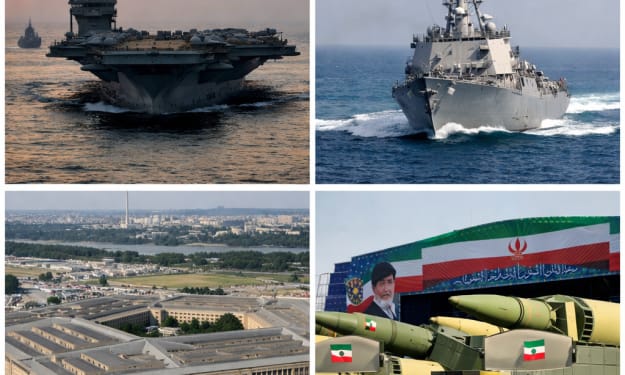
The United States military is preparing for the possibility of a weeks-long operation against Iran, according to recent reports. This development has raised concerns around the world. While no final decision has been announced, officials say that the Pentagon is reviewing plans in case the President orders military action. The situation shows rising tension between the two countries and has led many leaders to call for calm and diplomacy.
By 😎Baلoch✨.zada😎7 days ago in The Swamp
China Is the Real Threat, Taiwan Says in Rebuke to Munich Speech. AI-Generated.
The world’s attention turned sharply toward East Asia following a dramatic exchange of words between China and Taiwan after the recent Munich Security Conference. What began as a speech meant to promote China’s vision of global order quickly turned into a flashpoint of geopolitical tension when Taiwan responded with a bold accusation: China is the real threat to regional and international security.
By Sajida Sikandar7 days ago in The Swamp
Marco Rubio to Address Munich Security Conference Amid Tensions Over Donald Trump’s Foreign Policy. AI-Generated.
The annual Munich Security Conference has long been a place where world leaders speak openly about war, peace, and global cooperation. This year, the atmosphere is tense. Many European officials are uneasy about the direction of United States foreign policy. Into this uncertain setting steps U.S. Secretary of State Marco Rubio, who is scheduled to deliver a major speech.
By Muhammad Hassan7 days ago in The Swamp