science
The science of staying young, healthy, and in-shape.
In the Desert, They Are Building an “Artificial Sun” to Power Cities. AI-Generated.
How cutting-edge solar technology could transform energy production In a vast desert, engineers and scientists are working on a groundbreaking project: building an “artificial sun” to provide clean and nearly limitless energy for cities. This ambitious initiative aims to replicate the power of the sun on Earth, using advanced solar technology to generate electricity more efficiently than conventional solar panels.
By Fiaz Ahmed 9 days ago in Longevity
World's Largest Medieval Cargo Ship Emerges from Its Underwater Grave Off Coast. AI-Generated.
How a centuries-old shipwreck is shedding light on medieval trade and maritime life Off the coast of [Country], archaeologists have uncovered what is believed to be the world’s largest medieval cargo ship, remarkably preserved after centuries underwater. The discovery offers a rare glimpse into maritime technology, trade, and daily life during the Middle Ages. Experts are calling the find a historical treasure, as it provides evidence of how goods, culture, and technology were transported across seas long before modern shipping existed. The Discovery The ship was discovered during a routine underwater survey by marine archaeologists. Initial observations suggest that the vessel: Dates back to the 13th or 14th century Measures over 40 meters in length, making it the largest medieval cargo ship ever found Remains largely intact, with a preserved hull, mast, and parts of its cargo hold “This ship is a time capsule,” said the lead archaeologist. “It allows us to study shipbuilding techniques, trade practices, and even daily life at sea during the medieval period.” The vessel rests on the seabed, protected from strong currents, which has helped preserve its structure for centuries. Medieval Shipbuilding Techniques Analysis of the ship reveals advanced medieval engineering: Wooden hull construction: The ship was built using overlapping planks, a technique known as clinker-built, common in Northern European maritime design. Reinforced frames: Thick timbers provided strength for carrying heavy cargo over long distances. Mast and rigging: Evidence suggests the vessel had multiple sails, allowing for efficient navigation and speed across the open sea. Experts note that the ship’s size indicates a high level of craftsmanship and resources, reflecting the importance of maritime trade during this period. Cargo and Trade Insights Preliminary surveys of the cargo hold suggest the ship may have transported: Grains and foodstuffs for local and regional markets Raw materials such as timber, metal, or stone Luxury goods including spices, textiles, and ceramics The discovery sheds light on medieval trade routes, connecting coastal communities and major trading centers. Archaeologists hope that further excavation will reveal trade networks, economic patterns, and even international connections from centuries ago. Historical and Cultural Significance This shipwreck is more than just a maritime find—it offers insights into the lives of sailors, merchants, and coastal communities of the Middle Ages: Crew life: Artifacts may reveal information about food, tools, and daily routines aboard the ship. Economic history: Understanding the cargo and trade routes helps historians map medieval commerce and regional economies. Cultural exchange: Ships like this were vital in spreading ideas, culture, and technology across regions. Such discoveries contribute to our understanding of human history, demonstrating how people overcame environmental and technological challenges to engage in long-distance trade. Preservation and Archaeological Challenges Recovering and studying a medieval ship presents many challenges: Delicate structure: Wood that has been underwater for centuries is fragile and can deteriorate rapidly once exposed to air. Conservation needs: The ship will require careful preservation using techniques such as PEG (polyethylene glycol) treatments and controlled drying. Limited accessibility: The site is underwater, requiring specialized diving teams and remote sensing technology for excavation. Despite these difficulties, archaeologists are optimistic that modern techniques will allow a thorough study while preserving the ship for future generations. Global Implications The find is being hailed as a significant breakthrough in maritime archaeology. It ranks among the largest and most complete medieval shipwrecks ever discovered and could: Enhance knowledge of European maritime history Provide material for museum exhibits and educational programs Attract global attention to underwater archaeology and heritage preservation Maritime experts suggest that similar discoveries may still lie undiscovered along other coasts, offering the potential for new insights into medieval commerce and navigation. Next Steps for Researchers Archaeologists plan a careful, multi-phase approach: Documentation and mapping: Creating detailed 3D models of the ship and its surroundings. Cargo analysis: Identifying artifacts and materials to understand trade patterns and maritime technology. Conservation planning: Developing strategies to preserve the vessel for study and public display. Publication and public engagement: Sharing findings with the global community to highlight historical significance. Through this process, researchers hope to unlock centuries-old secrets of medieval maritime life while protecting the ship from further damage. Conclusion The emergence of the world’s largest medieval cargo ship off the coast of [Country] is a landmark event in archaeology and maritime history. Beyond its impressive size, the ship offers invaluable insights into medieval trade, technology, and daily life. As archaeologists continue to study and preserve the vessel, it promises to reshape our understanding of how people navigated, traded, and thrived at sea hundreds of years ago. This discovery reminds us that even centuries later, the sea holds countless stories waiting to be uncovered, connecting the past with the present in remarkable ways.
By Fiaz Ahmed 9 days ago in Longevity
How Ants Recognize Each Other
Ants are remarkable insects, especially in how they communicate and recognize one another. One of the most fascinating aspects of their behavior is how they identify friends, strangers, and potential threats. Each ant emits a specific scent from its body that is unique and consistent among members of the same colony. This scent acts like a fingerprint, allowing ants to recognize one another easily.
By Sudais Zakwan9 days ago in Longevity
Inside Ukraine’s Top Drone Units Where Kills Earn Prizes. AI-Generated.
How elite drone operators are reshaping modern warfare and morale on the battlefield In the ongoing conflict in Ukraine, drone technology has become a decisive factor. Beyond reconnaissance and surveillance, Ukrainian forces are increasingly using drones to target enemy positions, vehicles, and personnel. Inside the country’s elite drone units, soldiers are reportedly rewarded for successful operations, with some receiving prizes or recognition for confirmed kills. The use of drones in warfare is transforming both tactics and morale, demonstrating how technology and incentive structures are influencing modern conflicts. The Rise of Drone Warfare in Ukraine Drones, sometimes referred to as unmanned aerial vehicles (UAVs), have dramatically altered the battlefield in Ukraine. They are relatively inexpensive, highly mobile, and capable of striking targets with precision. Key roles of drones in Ukraine include: Reconnaissance: Gathering intelligence on enemy positions and movements Targeting: Identifying and striking high-value targets Psychological impact: Instilling fear and disruption in enemy ranks Ukrainian drone units have reportedly become highly skilled, capable of executing complex operations that previously required much larger forces and resources. How Drone Units Operate Elite drone operators in Ukraine undergo specialized training, which includes: Technical mastery of drones and navigation systems Real-time decision-making under pressure Target identification and strike coordination Communication with ground forces for strategic impact Operators often use small, portable drones for tactical missions and larger UAVs for more destructive strikes. Precision, timing, and coordination are critical, as even minor errors can compromise an operation. Incentives and Prizes for Kills Reports indicate that some units have reward systems in place for confirmed strikes or high-value kills. These incentives are intended to: Boost morale and motivation among operators Encourage precision and effectiveness Recognize skill in high-risk, high-stakes operations Prizes may range from public acknowledgment, medals, or equipment upgrades to monetary awards in some cases. While controversial, these incentives reflect a practical approach to motivating highly specialized personnel in a high-stress environment. Ethical and Tactical Implications The practice of offering prizes for kills raises ethical questions: Is incentivizing lethal action appropriate, even in war? Could it encourage risk-taking or reckless behavior? How does this affect long-term psychological well-being of operators? Military analysts argue that structured recognition programs can improve morale and operational effectiveness if carefully managed. At the same time, oversight is crucial to ensure that rewards do not compromise rules of engagement or international law. Technology Driving Modern Combat Drone warfare is part of a broader trend in modern combat, where small, agile units leverage technology to achieve disproportionate results. Ukraine’s adoption of UAVs demonstrates: Cost-effective force multiplication Ability to disrupt larger, conventional forces Enhanced situational awareness and rapid response Western military advisors have noted that drones in Ukraine provide a significant tactical advantage, especially when integrated with intelligence from satellites, ground forces, and cyber operations. Impact on Morale and Warfare Culture Recognition programs for drone operators can significantly influence unit cohesion and morale. Soldiers who feel their skill and effort are acknowledged are more likely to: Perform effectively under pressure Innovate tactics and improve mission success Maintain commitment during prolonged conflicts At the same time, such programs contribute to a culture where technology and personal performance are closely linked, highlighting the evolving nature of military honor and achievement. Challenges and Limitations Despite their effectiveness, drone units face challenges: Vulnerability to jamming, hacking, or anti-drone defenses Limited payload for destructive operations Psychological stress on operators responsible for life-and-death decisions Risk of escalation if drones are used improperly Commanders must balance operational incentives with strategic prudence to ensure that drone deployments achieve their intended effect without unintended consequences. The Future of Drone Warfare Ukraine’s elite drone units illustrate how modern militaries are adapting to technological change and asymmetric warfare. Analysts suggest: Drone incentives may become more common in other conflicts UAVs will continue to supplement traditional forces Integration of AI and autonomous systems could further enhance effectiveness The ongoing conflict demonstrates that drones are no longer auxiliary tools—they are central to modern strategy, morale, and battlefield outcomes. Conclusion Inside Ukraine’s top drone units, operators are combining skill, technology, and strategic thinking to redefine modern combat. The practice of awarding prizes for confirmed strikes illustrates a unique approach to boosting morale and rewarding excellence in high-pressure environments. While ethical questions remain, there is no doubt that drones have become one of the most influential tools in contemporary warfare, shaping tactics, outcomes, and the culture of modern military operations. Ukraine’s experience provides a window into the future of combat, where technology and human skill intersect in profound and often controversial ways.
By Fiaz Ahmed 9 days ago in Longevity
Poland’s Energy Grid Targeted by Never-Before-Seen Wiper Malware. AI-Generated.
How cyberattacks are threatening critical infrastructure and national security Poland’s energy grid has recently come under attack from a never-before-seen wiper malware, marking one of the most serious cybersecurity incidents targeting the country’s critical infrastructure. While officials report that the attack did not cause widespread blackouts, the incident underscores the growing threat of cyber warfare against essential services such as electricity, water, and telecommunications. Experts warn that attacks on energy grids are increasingly sophisticated and could have devastating consequences if preventive measures are not implemented rapidly. What Is Wiper Malware? Wiper malware is a type of malicious software designed to erase data and disrupt systems. Unlike traditional ransomware, which seeks financial gain, wiper malware is often used to sabotage infrastructure, making it particularly dangerous for utilities and national security. Key characteristics of wiper malware include: Data destruction: Deletes critical files and system backups System disruption: Can render computers or networks inoperable Stealth operations: Often hides its activity to delay detection The malware targeting Poland’s grid is reported to be novel, indicating it was designed specifically for this operation rather than reusing existing malicious tools. Details of the Attack Polish cybersecurity authorities detected unusual activity in the energy grid’s control systems, which manage electricity distribution across the country. Key points include: Malware targeted operational technology (OT) systems, which control physical infrastructure No major power outages have been reported so far, thanks to rapid containment measures Authorities are conducting a full forensic investigation to understand the malware’s origin, design, and potential impact Officials emphasize that prevention and monitoring played a critical role in minimizing the attack’s effects. Cybersecurity Experts Weigh In Experts on industrial cybersecurity warn that this incident demonstrates how critical infrastructure is increasingly vulnerable to digital attacks: Targeted design: The malware appears to be tailored for energy systems, suggesting state-sponsored or highly skilled attackers Global pattern: Energy grids, water supplies, and hospitals worldwide have been targeted in recent years Need for resilience: Authorities stress the importance of redundant systems, real-time monitoring, and cyber drills “This is a wake-up call for all countries relying on digital networks to run essential services,” said a leading cybersecurity analyst. “The potential damage could range from temporary blackouts to major national crises.” Impact on National Security Energy grids are considered critical national infrastructure, and attacks on them can have far-reaching effects: Economic disruption: Power outages could affect industries, banking, and transportation Public safety: Hospitals, traffic control, and emergency services rely on electricity Political implications: Cyberattacks may be used as tools of coercion or influence in geopolitical conflicts Poland’s government has increased cyber defense measures, coordinating with NATO allies and private sector partners to strengthen resilience and deter future attacks. Global Concerns About Cyber Warfare The attack highlights a growing trend in international cyber conflict, where digital tools are used as weapons alongside traditional military strategies. Global experts point out: Cyberattacks on energy systems are more frequent and sophisticated than ever Some malware, like the one used in Poland, is designed to avoid detection while causing maximum disruption Nations are investing heavily in cyber defense, artificial intelligence monitoring, and threat intelligence sharing In the past, similar attacks have targeted countries such as Ukraine, the United States, and Saudi Arabia, demonstrating that no nation is immune. Preventive Measures and Response Poland’s response to the malware attack includes: Isolating infected systems to prevent spread Conducting real-time scans and forensic investigations Coordinating with international cybersecurity teams for threat analysis Strengthening security protocols, employee training, and backup systems Authorities also emphasize public reassurance, stating that power supply and public safety have not been compromised despite the attack. The Road Ahead The incident in Poland underscores the urgent need for countries to: Invest in advanced cybersecurity for critical infrastructure Develop national response plans for cyber emergencies Collaborate internationally to share intelligence and mitigate threats As energy systems become increasingly digitized and interconnected, governments must balance efficiency and security to protect citizens from digital disruptions. Conclusion Poland’s energy grid attack by never-before-seen wiper malware is a stark reminder of the growing risks facing modern infrastructure. While immediate damage was contained, the event highlights the potential consequences of cyber warfare, from economic disruption to public safety risks. Experts stress that robust cybersecurity measures, international cooperation, and continuous vigilance are essential to defend critical systems. As nations digitize their energy, water, and communication networks, incidents like this serve as a wake-up call: cyber threats are no longer hypothetical—they are a present and pressing danger.
By Fiaz Ahmed 9 days ago in Longevity
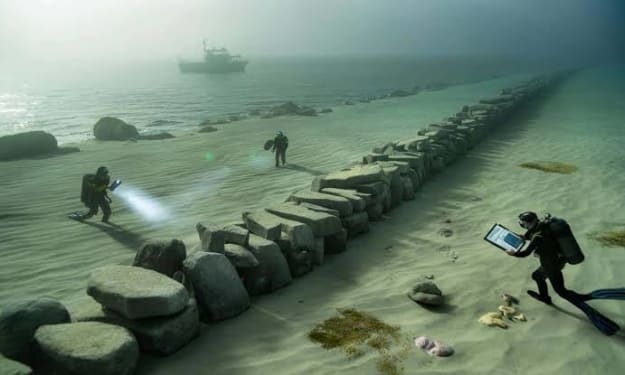
This 7,000-Year-Old Stone Wall Found off the Coast of France May Be the Work of Hunter-Gatherers—and It’s Tearing Archaeology in Two. AI-Generated.
A mysterious underwater structure challenges long-held beliefs about early human societies A remarkable discovery off the coast of France is forcing archaeologists to rethink what they know about early human history. Beneath shallow coastal waters lies a 7,000-year-old stone wall, carefully arranged and stretching across the seabed. What makes this find so controversial is not just its age, but who may have built it. Some researchers believe the wall was constructed by hunter-gatherers, a claim that challenges one of archaeology’s most established ideas: that large stone structures only appeared after humans adopted farming and permanent settlements. The debate has divided experts and opened a new chapter in understanding prehistoric societies. The Discovery Beneath the Sea The stone wall was discovered off the French coastline during underwater surveys conducted by marine archaeologists. Made of stacked stones arranged in a deliberate, linear pattern, the structure clearly shows signs of human design rather than natural formation. Radiocarbon dating of nearby organic material suggests the wall dates back around 7,000 years, a time when much of today’s coastline was dry land. Rising sea levels after the last Ice Age gradually submerged the area, preserving the structure underwater for thousands of years. What archaeologists found was not random debris. The stones were placed with care, forming a barrier that appears too organized to be accidental. Why the Wall Is So Controversial The controversy centers on one major question: Who built it? Traditional archaeological thinking holds that hunter-gatherers lived in small, mobile groups. They are believed to have left behind tools, campsites, and art—but not large-scale stone constructions. Monumental building has long been associated with farming societies, which had stable food supplies and permanent settlements. If hunter-gatherers built this wall, it would suggest they were: More organized than previously believed Capable of long-term planning Able to coordinate labor for large projects This challenges the idea that agriculture was required for complex construction. Arguments Supporting the Hunter-Gatherer Theory Some archaeologists argue that the evidence strongly supports hunter-gatherer involvement. Timing At the time the wall was built, farming had not yet fully spread to the region. This makes agricultural builders unlikely. Location The wall sits in what was once a coastal landscape, rich in marine life. Hunter-gatherers often lived near coastlines, relying on fishing and foraging. Purpose Researchers suggest the wall may have been used to trap fish, manage tidal flows, or mark territory. Such uses align well with hunter-gatherer lifestyles, especially coastal communities known for complex fishing techniques. Supporters argue that hunter-gatherers have long been underestimated, and this discovery may reveal a more sophisticated social structure than previously acknowledged. Skepticism Within the Archaeological Community Not all experts are convinced. Critics argue that labeling the wall as hunter-gatherer work may be premature. Some key objections include: The structure could be younger than estimated, built later by early farming groups Natural processes might have influenced the wall’s shape There is limited evidence of nearby settlements linked directly to the structure Skeptics warn against rewriting history based on a single find, urging further excavation and analysis before drawing major conclusions. Why This Debate Matters This discovery goes beyond a stone wall—it strikes at the heart of how archaeologists understand human development. If hunter-gatherers built the structure, it would mean: Social complexity existed earlier than thought Large cooperative projects did not depend on farming The transition from foraging to farming was more gradual and diverse It would also add to a growing list of discoveries worldwide suggesting that prehistoric societies were far more adaptable and innovative than once believed. Rising Seas and Lost Histories The find also highlights the importance of underwater archaeology. As sea levels rose after the Ice Age, many ancient coastal settlements were submerged and forgotten. Experts believe countless sites like this remain hidden beneath the oceans. These drowned landscapes could hold key evidence about early human life, migration, and innovation. Advances in sonar mapping and diving technology are now allowing researchers to explore these areas more thoroughly, potentially uncovering more discoveries that challenge existing narratives. What Comes Next Researchers plan to: Conduct deeper surveys around the wall Search for tools, campsites, or organic remains Use improved dating techniques to confirm the structure’s age Until more evidence is collected, the debate is likely to continue. Some archaeologists see the wall as proof of early human ingenuity, while others remain cautious. What is certain is that the discovery has already changed the conversation. Conclusion The 7,000-year-old stone wall off the coast of France is more than an underwater curiosity—it is a challenge to long-held assumptions about early human societies. Whether built by hunter-gatherers or early farmers, the structure reveals that prehistoric people were capable of greater planning and cooperation than once believed. As archaeology continues to move beyond land-based discoveries, finds like this remind us that history is not fixed. Sometimes, a single wall beneath the sea is enough to divide experts—and bring us closer to understanding our shared past.
By Fiaz Ahmed 9 days ago in Longevity
Climber Alex Honnold Scales 101-Floor Skyscraper Without Safety Gear. AI-Generated.
The free-solo legend pushes human limits again with a daring ascent that stuns the world Alex Honnold is no stranger to fear-defying feats, but his latest climb has once again left audiences stunned. The world-famous climber, known for scaling massive rock faces without ropes or safety gear, has reportedly climbed a 101-floor skyscraper completely free solo, relying only on his strength, focus, and experience. The climb has reignited global debate about human limits, personal risk, and what drives someone to attempt feats that most people would consider impossible. For admirers, it is a display of discipline and mastery. For critics, it raises serious safety and ethical questions. A Climber Who Redefined Risk Alex Honnold rose to international fame after his historic free solo ascent of El Capitan in Yosemite National Park, a feat documented in the Oscar-winning film Free Solo. Since then, his name has become synonymous with extreme climbing and mental control under pressure. Unlike traditional climbers who rely on ropes, harnesses, and protection systems, Honnold practices free solo climbing, where a single mistake can be fatal. His ability to stay calm in life-threatening situations has fascinated scientists, psychologists, and sports experts alike. Scaling a skyscraper, however, presents a very different challenge from climbing natural rock. The Challenge of a 101-Floor Skyscraper A modern skyscraper is not designed for climbers. Smooth glass surfaces, narrow ledges, and artificial angles make such a climb extremely complex. Wind at high elevations, temperature changes, and vertical exposure add to the danger. Climbing a 101-floor building means: Hundreds of meters of uninterrupted vertical ascent No natural handholds like cracks or ridges Constant exposure to wind and urban hazards Unlike rock faces, buildings offer little forgiveness. Any miscalculation can result in a catastrophic fall. Experts say that even elite climbers would struggle to maintain focus and physical strength for such an extended climb without safety systems. Preparation and Mental Discipline Honnold is known for his intense preparation. He studies routes repeatedly, memorizing every movement before attempting a climb. For a skyscraper ascent, preparation likely included: Analyzing building design and surfaces Practicing similar moves at lower heights Conditioning grip strength and endurance Mental rehearsal of every sequence Psychologists who have studied Honnold note that his brain shows a reduced fear response, allowing him to stay calm in situations that would overwhelm most people. Still, calm does not eliminate danger—it only helps manage it. Public Reaction: Awe and Concern News of the climb quickly spread online, drawing millions of reactions. Supporters praised Honnold’s courage, calling the climb a testament to human potential and discipline. Many compared it to historic athletic achievements that pushed boundaries and redefined possibility. Others, however, expressed concern. Critics argue that such climbs: Encourage dangerous imitation Normalize extreme risk-taking Place unnecessary strain on emergency services Some also questioned whether performing such feats in urban environments sets a troubling example, especially for younger audiences. Safety, Responsibility, and Influence Honnold has consistently stated that he does not encourage others to free solo climb. He emphasizes that his decisions are personal and based on years of training and self-awareness. Still, the influence of a global sports icon cannot be ignored. Extreme acts often inspire admiration, but they can also lead to reckless imitation by less experienced individuals. Urban climbers, sometimes referred to as “builders,” have already drawn attention for scaling skyscrapers illegally. Honnold’s climb, while far more controlled and professional, adds fuel to an ongoing debate about risk versus responsibility. The Line Between Sport and Spectacle Is climbing a skyscraper an athletic achievement or a spectacle designed to shock? Supporters argue that climbing is climbing, regardless of the surface. The physical and mental demands remain enormous, and success requires years of dedication. Skeptics counter that natural rock climbing is rooted in tradition and exploration, while urban free solo climbs blur the line between sport and performance. This debate reflects a broader question facing extreme sports today: how far is too far? What This Means for the Future of Climbing Honnold’s ascent may influence how climbing is perceived beyond mountains and cliffs. It raises questions about: Where climbing belongs How cities manage extreme sports The role of personal freedom in public spaces It also highlights how modern athletes are redefining what constitutes achievement, often blending sport, media, and spectacle. Conclusion Alex Honnold’s free solo climb of a 101-floor skyscraper stands as one of the most daring acts in modern climbing history. It showcases extraordinary physical control, mental discipline, and preparation—while also sparking serious conversations about risk, influence, and responsibility. Whether viewed as an inspiring triumph or a dangerous stunt, the climb reinforces one undeniable truth: Alex Honnold continues to operate at the very edge of human capability, challenging the world to reconsider what is truly possible—and at what cost.
By Fiaz Ahmed 9 days ago in Longevity
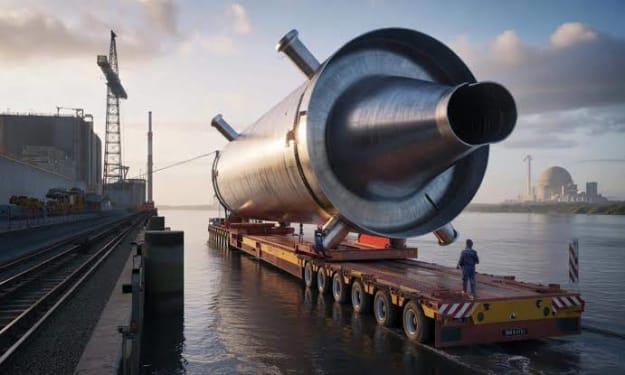
France Ships 500-Ton Nuclear “Colossus” to Britain for Hinkley Point C’s New Generation III Reactor. AI-Generated.
A massive engineering feat underscores Europe’s commitment to next-generation nuclear energy In a remarkable display of international engineering and collaboration, France has shipped a 500-ton nuclear reactor component, described as a “colossus,” to Britain’s Hinkley Point C power plant. This shipment represents a critical milestone in the construction of the UK’s first Generation III nuclear reactor, aimed at providing safer, more efficient, and low-carbon electricity for decades to come. The delivery has drawn attention from engineers, environmental experts, and energy analysts, not only for its size and weight but also for its strategic importance in Europe’s energy transition. What Is Hinkley Point C? Hinkley Point C, located in Somerset, England, is one of the largest nuclear power projects in Europe. Its Generation III reactors promise advanced safety features, higher efficiency, and a lifespan of 60 years or more. Key facts about the project: Two reactors are being constructed, each capable of producing 1,600 megawatts of electricity The plant is expected to supply about 7% of the UK’s electricity needs once operational Construction involves international collaboration, including France’s Framatome and other engineering companies The project represents both a technical and political partnership, highlighting cooperation between European nations in energy development. The “Colossus” Reactor Component The 500-ton shipment, often referred to as a “colossus,” is a critical part of the nuclear reactor’s pressure vessel, which will house the reactor core. Why it is significant: Weight and size: At 500 tons, transporting it requires precise planning, specialized vessels, and advanced logistics. Safety: Reactor components must meet stringent quality and safety standards, ensuring they withstand high temperatures, radiation, and pressure over decades. Engineering marvel: The manufacturing process in France involved high-precision forging, machining, and testing, demonstrating the capabilities of Europe’s nuclear industry. Transporting such a massive component across the English Channel is no small feat. It involves careful navigation, weather monitoring, and security measures to ensure the reactor component arrives intact and on schedule. Importance of Generation III Reactors Generation III reactors, like the one at Hinkley Point C, represent the next stage of nuclear energy. They are designed to be: Safer: Enhanced safety systems can prevent or mitigate accidents More efficient: They extract more energy from nuclear fuel Environmentally friendly: Reduced radioactive waste and lower greenhouse gas emissions Experts argue that Generation III reactors will play a critical role in Europe’s efforts to reduce carbon emissions, especially as countries strive to meet climate goals and transition away from fossil fuels. European Collaboration in Nuclear Energy The Hinkley Point C project exemplifies the benefits of international cooperation in energy infrastructure. French companies have long been leaders in nuclear technology, while the UK relies on their expertise to construct advanced reactors. Benefits of collaboration include: Sharing of technical expertise and research Access to high-quality components manufactured under strict standards Strengthening diplomatic and economic ties between countries The shipment of the “colossus” is a tangible symbol of this partnership, highlighting how large-scale engineering projects often transcend national boundaries. Logistics and Challenges Transporting a 500-ton component is far from simple. The operation involves: Specialized shipping vessels capable of handling extreme weight Route planning to avoid shallow waters, storms, and heavy maritime traffic Security measures to protect a high-value and sensitive piece of nuclear equipment Once it arrives at Hinkley Point C, cranes and precision equipment will carefully place the reactor component into the plant’s construction site. Engineers must ensure perfect alignment and stability, as even minor errors can compromise reactor performance. Economic and Strategic Significance The project is a major economic investment, employing thousands of workers in the UK and France. Beyond the construction jobs, Hinkley Point C will contribute to the UK’s long-term energy security and help stabilize electricity costs. Strategically, the project underscores Europe’s commitment to advanced, low-carbon nuclear power, a key element in meeting climate targets while ensuring reliable electricity for homes and industries. Environmental and Public Considerations While nuclear energy offers many benefits, it is not without concerns. Public debates continue regarding: Safety of nuclear reactors Management of radioactive waste Potential environmental impact during construction Hinkley Point C aims to address these issues through modern engineering, robust safety systems, and regulatory oversight, making it one of the most advanced nuclear projects in Europe. Conclusion The shipment of the 500-ton “colossus” from France to Hinkley Point C marks a major milestone in Europe’s nuclear energy journey. It highlights the technical skill, international collaboration, and strategic importance of nuclear power in a low-carbon future. As the UK moves closer to completing its first Generation III reactors, this monumental component serves as a reminder that modern energy infrastructure is not just about electricity—it is about engineering, diplomacy, and sustainable progress. For Europe and the UK, Hinkley Point C is more than a power plant; it is a symbol of ambition, precision, and the continuing role of nuclear energy in shaping a cleaner, more reliable energy landscape.
By Fiaz Ahmed 9 days ago in Longevity
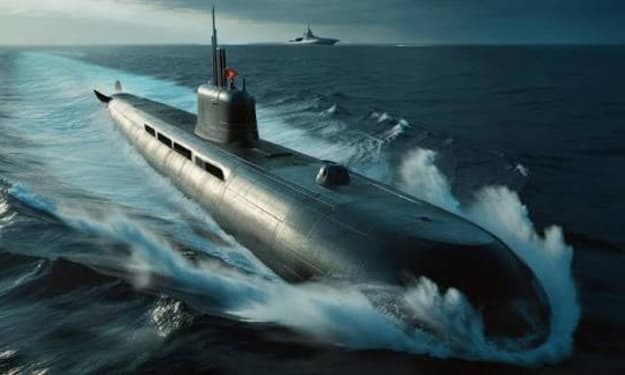
Meet the K-222: The Fastest Nuclear Submarine in History, Capable of Exceeding 80 km/h. AI-Generated.
How a Soviet marvel redefined underwater speed and naval engineering In the world of submarines, speed is rarely the headline feature. Most submarines prioritize stealth, endurance, and firepower over raw velocity. Yet one vessel stands out as an exception: the K-222, a Soviet nuclear-powered submarine that holds the record as the fastest in history, reportedly capable of exceeding 80 kilometers per hour (around 43 knots).
By Fiaz Ahmed 9 days ago in Longevity
Few People Know It, But France Is the Only Country in Europe Capable of Building Fighter Jet Engines With Such Precision, Thanks to the DGA. AI-Generated.
How France’s defense agency makes world-class fighter jet engines When it comes to building fighter jet engines, France holds a unique position in Europe. Few people realize that the country’s Direction générale de l’armement (DGA), the French government’s defense procurement and technology agency, plays a central role in producing high-precision engines for advanced military aircraft. From the Rafale fighter jet to other top-of-the-line aircraft, France’s capability to manufacture engines with exceptional accuracy has made it a key player in European and global defense. This technological edge is not only about military strength—it also reflects decades of investment in engineering, research, and industrial excellence. The Role of the DGA The DGA, or Directorate General of Armaments, is a branch of the French Ministry of Armed Forces. Its primary mission is to design, develop, test, and procure military technology. One of its most remarkable achievements is overseeing the production of fighter jet engines, a task requiring extreme precision and innovation. Why is this significant? Jet engines operate under extreme conditions: temperatures above 1,500°C, pressures far higher than most engines, and rotational speeds exceeding tens of thousands of revolutions per minute. A tiny error in design or manufacturing could lead to catastrophic failure. The DGA ensures that every engine meets the highest standards of safety, performance, and reliability. Precision Manufacturing: A French Specialty France’s expertise in engine manufacturing rests on several key factors: Advanced Engineering – French engineers develop engines using cutting-edge computational models, ensuring optimal aerodynamics and thermodynamics. High-Tech Materials – Components are crafted from superalloys and composites capable of withstanding extreme stress and temperature. Rigorous Testing – Engines undergo thousands of hours of testing in simulated combat conditions before deployment. Industrial Collaboration – The DGA works closely with private companies like Safran Aircraft Engines, integrating research, production, and quality control. This combination of expertise, materials, and oversight allows France to achieve a level of precision unmatched by any other European country. Why Europe Depends on France While other European countries have advanced aviation industries, few can match France’s engine precision. Countries like Germany, Italy, and the UK excel in aircraft design and avionics but often rely on imported engines or partnerships for high-performance fighter jets. France’s independence in engine manufacturing provides several strategic advantages: Sovereignty in Defense – France can maintain autonomy in military operations, ensuring that key technologies are not dependent on foreign suppliers. Export Potential – French fighter jets equipped with DGA-certified engines are highly sought after by allied nations around the world. Technological Leadership – Maintaining this capability allows France to push the boundaries of aerospace innovation, influencing European and global defense industries. The Rafale Fighter Jet: A Case Study The Dassault Rafale, France’s multi-role fighter jet, showcases the precision and reliability of French engine design. Powered by the Snecma M88 engine, the Rafale can reach supersonic speeds, perform complex aerial maneuvers, and operate under extreme conditions—all thanks to the meticulous work of the DGA and its industrial partners. This engine is notable for: Compact Design – Maximizing thrust while minimizing weight High Reliability – Designed to withstand thousands of flight hours without failure Fuel Efficiency – Balancing performance with operational endurance No other European country currently produces an engine with this combination of size, power, and precision, highlighting France’s unique role. Challenges and Future Developments Maintaining this level of precision is not without challenges: Technological Complexity – Continuous innovation is needed to keep up with emerging threats and advanced aircraft requirements. Global Competition – Countries like the United States and China are investing heavily in engine technology, raising the bar for French engineering. Skilled Workforce – High-precision manufacturing requires a highly trained workforce, which demands ongoing education and training programs. Looking ahead, the DGA is exploring next-generation engines that promise greater fuel efficiency, stealth compatibility, and digital control systems, ensuring France remains at the forefront of fighter jet engine technology. Beyond Military Power France’s capability in precision engine manufacturing has broader implications beyond defense: Civil Aviation – Techniques and materials developed for military engines often influence commercial jet engines. Industrial Innovation – Research in high-performance materials and engineering techniques supports other sectors of French industry. National Pride – Being the only European country with this capability reinforces France’s technological leadership and strategic autonomy. Conclusion Few people realize that France holds a unique position in Europe when it comes to building fighter jet engines. Thanks to the DGA’s expertise, rigorous oversight, and industrial collaboration, France produces engines with unmatched precision, ensuring the country’s military aircraft remain reliable, powerful, and globally competitive. This capability is more than a technical achievement—it reflects France’s commitment to innovation, defense sovereignty, and global leadership in aerospace engineering. As technology continues to advance, the DGA and its partners are poised to keep France at the forefront of fighter jet engine design for decades to come.
By Fiaz Ahmed 10 days ago in Longevity
Why the Power May Not Go Out Until After the Storm Has Passed. AI-Generated.
Understanding the hidden resilience of the electricity grid When storms approach, many people immediately worry about losing power. Yet, in many cases, the electricity stays on until the storm is over, leaving some to wonder why outages don’t happen instantly when heavy rain, strong winds, or lightning strike. The answer lies in how power grids are designed, managed, and protected to balance reliability with safety. Power systems are built to withstand temporary disruptions, but certain conditions make it safer to maintain electricity during a storm until the full impact has been assessed. Understanding these mechanisms can help households and businesses better prepare for extreme weather events. The Electricity Grid’s Built-In Resilience Modern power grids are complex networks of generation plants, transmission lines, substations, and distribution networks. Engineers design them with multiple layers of protection to ensure that electricity continues to flow even under adverse weather conditions. Key features include: Automatic Circuit Breakers – These devices detect overloads or short circuits and temporarily cut power to affected areas, preventing damage to the larger grid. Redundant Systems – Many parts of the grid have backup connections, allowing electricity to reroute around damaged sections. Storm-Hardened Infrastructure – Transmission towers, underground cables, and substations are reinforced to withstand wind, ice, and lightning strikes. Thanks to these protections, minor disturbances during a storm often do not cause immediate outages, allowing power to remain on while safety systems monitor conditions. Why Power Stays On During the Storm Keeping electricity running during a storm is often safer and more efficient than shutting it down preemptively. Some reasons include: Preventing unnecessary disruption – Power shutdowns can affect hospitals, emergency services, and communication networks. Cutting power too early could create additional hazards. Monitoring the grid – Operators can assess damage and decide whether targeted outages are necessary. By maintaining power where possible, they reduce widespread impact. Minimizing restoration time – If power remains on until the storm passes, repairs can begin immediately, reducing overall downtime. Electric utilities follow strict protocols during extreme weather, continuously monitoring conditions. They aim to balance public safety with grid reliability, only disconnecting power when there is a clear and imminent danger. Storm-Related Triggers for Power Outages Despite the grid’s resilience, certain storm conditions can force outages: Fallen Trees and Debris – Branches or debris can strike power lines, causing immediate interruptions. Lightning Strikes – Direct hits on substations or transmission lines can trip circuit breakers. Flooding – Water intrusion into substations or underground vaults can create short circuits. High Winds – Sustained gusts can damage poles, lines, and transformers. In most cases, outages occur after these impacts happen, not before or during the initial storm approach. That’s why you may see electricity remain on even as severe weather hits. Role of Grid Operators During Storms Electric utilities rely on real-time monitoring and predictive modeling to manage risks. Operators use weather forecasts, satellite imagery, and sensors to detect threats to the grid. During storms, they: Adjust voltage and load to stabilize the system Dispatch repair crews strategically to prioritize critical infrastructure Activate backup generation to maintain supply if damage occurs Communicate with the public about potential outages and safety measures This careful coordination helps prevent unnecessary blackouts while ensuring safety for both people and equipment. Why Immediate Shutoffs Are Rare Some people assume that utilities should turn off power before a storm hits, but preemptive shutoffs carry risks: Impact on essential services – Hospitals, fire stations, water treatment facilities, and communication systems rely on continuous electricity. Economic disruption – Premature shutdowns can affect businesses, transport, and refrigeration. Public safety hazards – Darkened streets and traffic signals can increase accidents. Because of these risks, utilities often wait until the storm’s full effects are evident before disconnecting electricity, focusing instead on targeted, controlled outages. How Residents Can Prepare Even with a resilient grid, residents should be ready for potential outages: Keep flashlights, batteries, and emergency supplies handy Charge devices and have backup power if possible Secure outdoor items that could damage power lines during high winds Avoid using electrical appliances if flooding or water intrusion occurs Being prepared ensures safety and reduces stress, whether or not the power goes out immediately during a storm. The Future of Storm-Resilient Power Utilities are investing in smarter, more flexible grids that can withstand extreme weather better than ever: Advanced sensors and AI for predicting outages Undergrounding power lines in vulnerable areas Microgrids that isolate damage while keeping surrounding areas powered Renewable energy integration that adds redundancy and reduces reliance on a single source These innovations aim to make power outages less frequent and shorter, even during increasingly severe storms caused by climate change. Conclusion The reason electricity often stays on until after a storm has passed is a combination of engineering, monitoring, and safety protocols. Modern grids are designed to withstand temporary disruptions, and utilities prioritize keeping power flowing while assessing risks. Storms remain unpredictable, and outages can still occur, but understanding how the grid operates helps residents plan, prepare, and stay safe. By combining grid resilience with individual preparedness, households and businesses can weather storms with minimal disruption and risk.
By Fiaz Ahmed 10 days ago in Longevity
The Peculiar Magic of a Winter Snowstorm. AI-Generated.
How the world transforms when snow blankets the landscape There is something undeniably magical about a winter snowstorm. As flakes begin to fall, the world seems to slow down. Streets, trees, and rooftops are covered in a soft, white layer that transforms familiar landscapes into scenes of quiet beauty. But beyond its aesthetic charm, a snowstorm is a fascinating blend of nature’s power, science, and subtle wonder.
By Fiaz Ahmed 10 days ago in Longevity