Latest Stories
Most recently published stories in Longevity.
How Social Media Is Rewiring the Teenage Brain. AI-Generated.
In the last decade, social media has evolved from a simple tool for communication into an immersive ecosystem shaping how we think, feel, and interact. Among the most vulnerable to these changes are teenagers. The adolescent brain, still in its developmental phase, is especially susceptible to the effects of constant connectivity, curated content, and digital validation. Emerging research suggests that social media is not just influencing teenage behavior—it is literally rewiring their brains. The Brain in Adolescence Teenagers undergo profound neurological changes, particularly in the prefrontal cortex, which governs decision-making, impulse control, and planning. At the same time, the limbic system, responsible for emotions and reward processing, is highly active. This imbalance makes teens more prone to risk-taking, peer influence, and emotional volatility. Social media, with its instant feedback loops of likes, comments, and shares, exploits these natural developmental tendencies. Reward Systems and Dopamine Every notification, heart, or comment triggers a release of dopamine—a neurotransmitter associated with pleasure and reward. In the offline world, rewards are typically delayed or earned through effort, but social media delivers instant gratification. Over time, this creates a pattern where teens begin to seek validation from digital platforms rather than internal motivation or real-life achievements. Neuroscientists warn that this constant activation of reward pathways can make adolescents more impulsive and reduce attention spans. The Attention Economy Social media platforms are designed to capture attention. Infinite scrolling, autoplay videos, and algorithm-driven feeds keep users engaged for hours. For teens, whose executive functions are still developing, this can interfere with concentration and memory. Studies have found that teenagers who spend excessive time on social media often experience difficulties focusing on schoolwork, have shorter attention spans, and struggle with task persistence. Emotional Impact and Mental Health The impact of social media on teenage mental health is complex. On one hand, it offers community, self-expression, and connection. On the other, it exposes adolescents to cyberbullying, unrealistic comparisons, and social pressure. Constantly seeing idealized versions of peers’ lives can foster feelings of inadequacy, anxiety, and depression. Researchers have observed changes in brain regions linked to emotional regulation in teens who spend several hours daily on social media. The amygdala, for instance, shows heightened activity in response to perceived social threats, amplifying stress reactions. Social Skills and Empathy Another concern is the effect of social media on social cognition. Face-to-face interactions help teenagers develop empathy, read emotional cues, and understand complex social dynamics. Online interactions, often filtered through text, emojis, and memes, can limit these experiences. Teens who rely heavily on digital communication may find it harder to navigate real-world social situations, potentially impacting long-term relationship skills. Adaptive or Maladaptive? Not all changes induced by social media are negative. Platforms can enhance creativity, provide access to global perspectives, and facilitate learning communities. Some teens leverage social media for activism, skill-building, and self-expression in ways that strengthen their sense of identity and social connectedness. The key lies in moderation, mindful usage, and parental guidance. Toward Healthy Digital Habits Experts recommend several strategies to help teens navigate the social media landscape without compromising brain development. Setting daily time limits, encouraging offline hobbies, and promoting in-person social interactions can balance the benefits and risks. Open communication between parents and teens about online experiences is critical, as is educating adolescents on the impact of digital validation on their emotional and cognitive health. The Road Ahead As neuroscientists continue to study the long-term effects of social media on the teenage brain, one thing is clear: the digital environment is reshaping adolescent development in unprecedented ways. While social media can be a source of learning, community, and creativity, it also presents challenges that require careful navigation. Awareness, education, and proactive strategies can help ensure that teens benefit from the digital age without falling prey to its potential pitfalls. Social media is more than just a tool—it is a force capable of rewiring young minds. Understanding its influence is the first step toward harnessing its potential while safeguarding the next generation’s mental, emotional, and cognitive well-being.
By Fiaz Ahmed Brohiabout a month ago in Longevity
Which City Is Called the Queen of the Arabian Sea: Discover Its History, Trade Legacy, and Multicultural Heritage. AI-Generated.
The “Queen of the Arabian Sea” is a title that evokes images of bustling harbors, golden sunsets over tranquil waters, and centuries of cultural exchange. This title belongs to Mumbai, India’s financial capital and one of the most iconic cities on the western coast of the country. From its strategic location on the Arabian Sea to its rich history and vibrant multicultural society, Mumbai’s story is as fascinating as it is complex.
By Fiaz Ahmed Brohiabout a month ago in Longevity
7 Oral Hygiene Myths You Shouldn’t Believe
Oral hygiene isn't just important for a beautiful smile; it's also a vital part of overall health. Despite advances in dentistry and the availability of information, many myths about dental and gum care persist. These misconceptions can lead to cavities, gum disease, and even tooth loss. In this article, we have gathered seven of the most common oral hygiene myths and explained why you shouldn't trust them.
By Amelia Grantabout a month ago in Longevity
Holy Land: A Fifth Gospel That Begins in Jordan. AI-Generated.
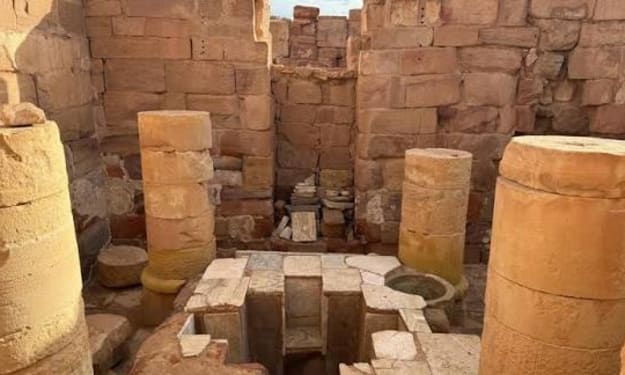
For many Christians, the Holy Land is not confined to a single country or a handful of famous sites. It is a living geography of faith, stretching across modern borders and layered with centuries of memory. While the four Gospels tell the story of Jesus through words, believers often describe the land itself as a “Fifth Gospel”—a silent but powerful testimony that deepens understanding of scripture. Crucially, this unwritten Gospel does not begin in Jerusalem or Bethlehem. It begins in Jordan. Jordan: Where the Story Enters History Jordan holds a unique place in biblical history, often overlooked in favor of Israel and Palestine. Yet it is in Jordan that the Gospel story first touches the public life of Jesus. The Jordan River, flowing quietly through arid landscapes, is where Jesus was baptized by John the Baptist. This moment marked the beginning of his ministry and transformed the river into one of the most sacred waterways in Christian tradition. Standing on the riverbank today, pilgrims often describe a sense of immediacy—as if scripture has stepped off the page and into the present. The landscape does not shout; it whispers. And in that stillness, faith feels tangible. Bethany Beyond the Jordan: A Sacred Threshold At the heart of Jordan’s biblical significance lies Bethany Beyond the Jordan, also known as Al-Maghtas. Recognized as a UNESCO World Heritage Site, it is widely accepted as the authentic location of Jesus’ baptism. Archaeological discoveries—including ancient churches, baptismal pools, and pilgrim routes—support centuries of Christian tradition. This site represents a threshold moment: the transition from preparation to proclamation. In the language of the “Fifth Gospel,” Bethany Beyond the Jordan is the opening chapter—where water, wilderness, and calling converge. Mount Nebo: Seeing the Promise Jordan’s role in the biblical narrative predates Christianity. Mount Nebo, rising above the Jordan Valley, is where Moses is believed to have seen the Promised Land before his death. From its summit, visitors can look across to Jericho, Jerusalem, and the Judean hills, physically connecting Old Testament longing with New Testament fulfillment. This visual continuity reinforces the idea of the Holy Land as a single unfolding story rather than separate religious eras. Jordan becomes the bridge between covenant and incarnation. The Geography of Faith Calling the Holy Land a “Fifth Gospel” is not merely poetic. Geography shapes theology. Deserts evoke temptation and testing, rivers symbolize renewal, and mountains represent revelation. Jordan’s landscapes—its wilderness, valleys, and waterways—mirror the spiritual themes found in scripture. Jesus’ time in the wilderness, traditionally associated with the region east of the Jordan, gains new depth when experienced firsthand. The harsh terrain underscores the gravity of fasting, reflection, and moral struggle described in the Gospels. Pilgrimage Beyond Borders Modern pilgrims increasingly recognize that to understand the Gospel fully, one must look beyond political borders. Jordan offers a relatively peaceful and accessible gateway into the Holy Land experience. Sites such as Machaerus (where John the Baptist was imprisoned), Umm Qais (linked to the miracle of the Gadarene swine), and early Christian pilgrimage routes enrich the narrative. This broader pilgrimage challenges a narrow, location-centric view of faith and invites believers to see Christianity as rooted in a wider regional story. Interfaith Echoes Jordan’s sacred sites also resonate beyond Christianity. The Jordan River is significant in Judaism, and many locations revered by Christians are also important in Islamic tradition. This overlapping reverence adds another layer to the “Fifth Gospel,” reminding visitors that the land speaks in multiple spiritual languages at once. In a region often associated with conflict, Jordan’s preservation of holy sites stands as a quiet testament to coexistence and shared heritage. Why Jordan Matters Today In an age of digital faith and virtual worship, physical places still matter. Jordan’s biblical sites ground belief in reality—stone, soil, and water. They remind believers that the Gospel unfolded in real landscapes among real communities, not abstract spaces. By beginning the Holy Land story in Jordan, Christians gain a fuller, more nuanced understanding of Jesus’ life and mission. The “Fifth Gospel” becomes not an addition to scripture, but a companion to it—one that must be walked, seen, and felt. A Living Gospel Without Words Jordan does not compete with the written Gospels; it completes the context around them. From the waters of baptism to the heights of prophetic vision, the country offers an opening chapter written in earth rather than ink. In that sense, the Holy Land truly is a Fifth Gospel—and its first pages are found in Jordan, where faith steps out of prophecy and into history.
By Fiaz Ahmed Brohiabout a month ago in Longevity
Kratom Powder Uses, Benefits, Dosage, and Buying Guide
Kratom powder is one of the most common forms of kratom used today. Many people choose it because it is flexible, fast acting, and easy to measure. If you are new to kratom or trying to decide whether powder is right for you, you likely have questions. What is kratom powder. How do people use it. What problems does it solve. This guide answers those questions in a clear and practical way.
By Jack Wilderabout a month ago in Longevity
Hoodia: Once a Miracle Now a Mirage
A Miracle from the Desert? The Kalahari Desert in southern Africa is not the most hospitable place to live in. The vast region is arid and hot throughout most of the year, and the vegetation is sparse. Still, it is here where a particular plant that captured the attention of several dietary companies throughout the world.
By Dean Traylorabout a month ago in Longevity
Guide to Walking for Weight Loss
There is almost nothing negative to say about walking—it’s relaxing, it’s good for your body, and it doesn’t require any special skills. For most people, walking never becomes competitive or stressful. A couple of daily short strolls can do wonders for your mood and your health.
By Good health to everyoneabout a month ago in Longevity