
US Data Center Construction Fell Amid Permit and Power Delays
How electricity shortages, regulatory hurdles, and AI demand are reshaping America’s digital infrastructure boom
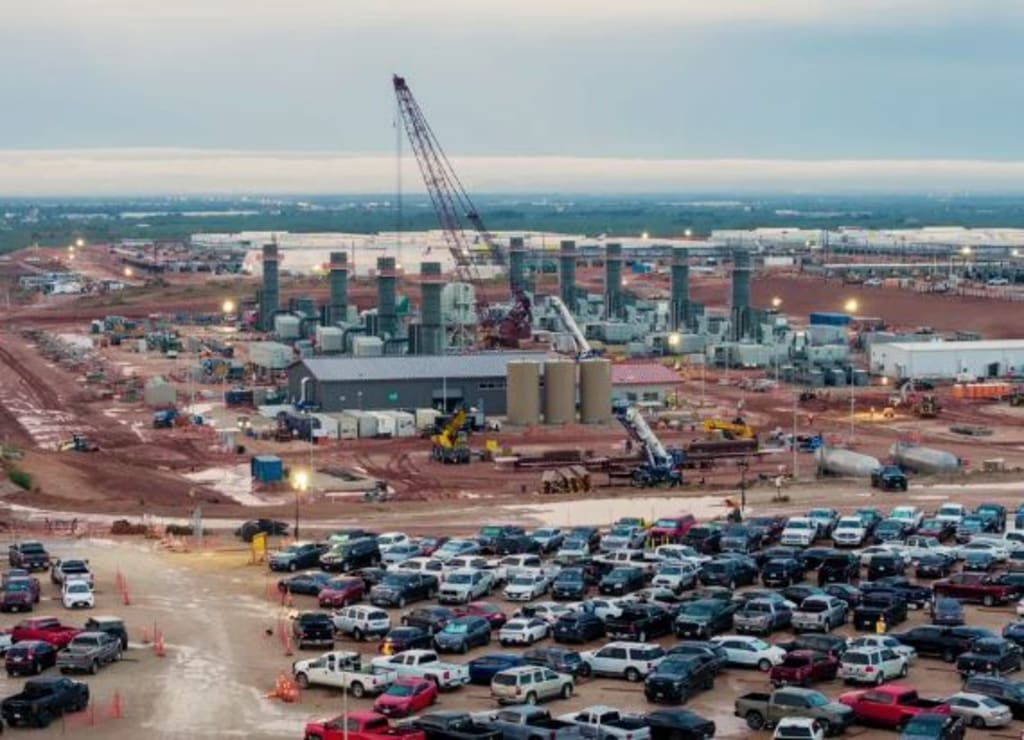
The data center industry in the United States has entered a surprising phase. After years of rapid expansion driven by cloud computing and digital transformation, new construction activity has slowed. Developers are facing growing challenges — from lengthy permitting processes to limited power availability — even as demand for computing capacity continues to surge.
This shift highlights a new reality for the tech sector: building digital infrastructure is no longer just a matter of capital and demand. Physical constraints, regulatory timelines, and energy planning are becoming decisive factors.
📉 A booming sector hits infrastructure limits
For much of the past decade, data centers were among the fastest-growing segments of commercial real estate. Tech giants raced to build massive server campuses to support streaming, enterprise software, and cloud platforms.
Companies like Amazon Web Services, Microsoft, and Google continue to announce new investments. However, many of those projects are experiencing delays before construction even begins.
Industry observers say the bottleneck is no longer demand — it is readiness. Securing land, approvals, and especially power connections has become increasingly complex, slowing the pipeline of new facilities.
⚡ Power shortages become the biggest obstacle
Modern data centers require vast amounts of electricity. Facilities designed for artificial intelligence workloads consume far more power than traditional server farms, pushing regional grids to their limits.
In major hubs such as Virginia, often called the world’s largest data center market, utilities are struggling to keep up with requests for new capacity. Developers sometimes wait years for grid upgrades, transmission expansions, or renewable integration before receiving final approval.
The regional grid operator PJM Interconnection has reported growing backlogs of projects seeking interconnection. Clean energy installations, industrial developments, and data centers are all competing for limited infrastructure, creating a queue that slows progress across sectors.
Without guaranteed electricity, even well-funded projects cannot move forward.
🏗️ Permitting delays add uncertainty
Alongside power challenges, local permitting processes are becoming more rigorous. Communities increasingly examine data center proposals due to concerns about land use, noise, traffic, and environmental impact.
Public hearings, zoning reviews, and environmental assessments can stretch timelines significantly. Some municipalities have even paused approvals while updating regulations to manage the scale of development.
Developers say this added scrutiny is understandable but unpredictable. Construction costs can rise during delays, equipment delivery schedules shift, and financing risks increase.
The result is a cautious industry environment despite strong underlying demand.
🤖 AI demand changes everything
Ironically, construction is slowing just as computing needs accelerate dramatically. Generative AI has transformed data centers into strategic infrastructure rather than background utilities.
High-performance chips from companies like Nvidia require denser racks, advanced cooling, and far greater power per facility. This means new projects are larger, more complex, and harder to approve.
Instead of simply building more facilities, companies must design specialized campuses capable of supporting AI training and inference workloads. That complexity adds cost and lengthens planning cycles.
Some firms are exploring secondary markets with available grid capacity, while others are retrofitting existing industrial buildings rather than starting from scratch.
💰 Economic ripple effects
A slowdown in construction does not mean investment is shrinking — but it does affect timing. Delayed capacity can influence cloud pricing, startup access to computing power, and enterprise digital transformation plans.
Regions competing for tech investment may feel the impact as well. Data centers bring construction jobs, tax revenue, and long-term technology ecosystems. If projects stall, those economic benefits are postponed.
At the national level, infrastructure constraints could shape the pace of AI deployment, potentially affecting competitiveness in emerging technologies.
🌱 Sustainability pressures intensify
Environmental considerations are playing a growing role in approvals. Data centers’ high energy consumption raises questions about emissions, especially in regions reliant on fossil fuels.
Operators are responding by signing renewable power agreements, investing in battery storage, and experimenting with new cooling techniques such as liquid immersion. These innovations can reduce environmental impact but often add complexity to project design.
Water usage has also become a focal point. Some communities require more efficient cooling systems before granting permits, introducing another technical hurdle.
🔄 How the industry is adapting
Developers are adjusting strategies to navigate these challenges. Rather than launching massive campuses immediately, many projects are being built in phases so capacity can scale once power becomes available.
Other approaches include:
Partnering directly with utilities on grid upgrades
Locating facilities near renewable energy sources
Using modular designs that speed up deployment
Expanding into emerging markets with fewer constraints
Meanwhile, policymakers are beginning to recognize data centers as critical infrastructure, prompting discussions about streamlined permitting and coordinated energy planning.
🔮 What happens next?
The slowdown signals a turning point for digital infrastructure. The next wave of growth will depend less on demand — which remains strong — and more on coordination between technology companies, utilities, and governments.
If grid investments accelerate and permitting becomes more predictable, construction could rebound quickly. But persistent bottlenecks may push companies to diversify geographically, including expanding outside traditional U.S. hubs.
Either way, the era of effortless expansion is ending.
✍️ Final thoughts
The decline in new data center construction highlights a fundamental shift in the tech economy. As AI drives unprecedented computing needs, physical infrastructure — electricity, land, water, and regulation — has become the new frontier.
Building the digital future is no longer just about servers and software. It requires long-term planning, sustainable energy strategies, and collaboration across industries.
The data center boom is far from over. But its next chapter will be defined not by how fast companies can build — but by how effectively they can overcome the real-world constraints shaping the infrastructure behind the internet.
About the Creator
~ Fired ~
— Ai Intrusion ~ Are you Next ~ Is Ai Evolution after your job? — Few workplaces haven't been affected. Ai is in supermarkets, at doctors' offices, and even monitoring farms. I just can't think of anything this machine is not getting into, can you? For instance: Education ~ Law and Tech jobs will one day have a major influence or be taken over by these inanimate machines, with accuracy and vigor. From mechanics' diagnoses to a wide variety of everyday jobs, including fast food workers, with this input having the ability to cut their unnecessary work hours. I'm certain all of us have been touched by this with our short stories and colorful headings, have you? Even comments are very questionable 'Non-Robot' insertions.
By Jay Kantor26 days ago in Journal
How to Release the Fear of Losing It All (and Trust Yourself Again)
It was 2:17 AM, and the only light in the room came from my laptop screen, casting a blueish glow on my tear-streaked face. I was staring at a spreadsheet, the numbers blurring together. A few months of lower-than-projected revenue. A client who had unexpectedly paused their contract. A whisper from the bank account that suddenly felt far too thin.
By Edina Jackson-Yussif about 14 hours ago in Journal


Comments
There are no comments for this story
Be the first to respond and start the conversation.