fact or fiction
Is it a fact or is it merely fiction? Fact or Fiction explores relationship myths and truths to get your head out of the clouds and back into romantic reality.
Field of the Fallen
The Field of the Fallen is a poignant concept that represents the eternal memorial to those who have sacrificed their lives in the line of duty, whether in military conflict, humanitarian efforts, or any other circumstances that involve giving one's life for the greater good. This field serves not only as a physical location for remembrance, but also as a symbolic representation of the price paid for freedom, peace, and justice. It stands as a somber reminder of the cost of war and the human spirit's resilience in the face of such adversity.
By Hadiqa Kiani5 days ago in Humans
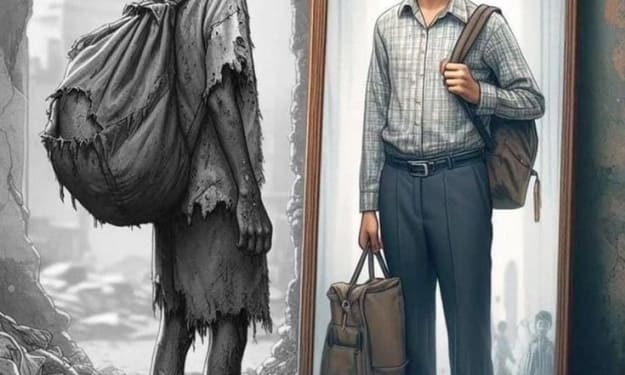
🌍 Real Life Struggle Story — “From Darkness to Dawn”
Ravi was born into a very poor family. He was only 7 years old when his father passed away. He was so poor that he could not even afford to eat two meals a day. In school, he was not allowed to study because he could not pay the fees. When he turned 15 years old, he started his struggle life journey. This is Ravi’s story.
By Harsh Sharma5 days ago in Humans
“Why Being ‘Strong’ Is Destroying a Generation”. AI-Generated.
I learned how to be strong before I learned how to ask for help. And by the time I realized those two things weren’t the same, I was already exhausted. We praise strength like it’s a cure-all. Be strong. Stay strong. You’re so strong—I don’t know how you do it. We say it at funerals. We say it after breakups. We say it to children who are learning too early that crying makes adults uncomfortable. Strength has become our favorite compliment and our most dangerous lie. Because no one ever explains what it costs. I grew up believing that being strong meant swallowing pain quietly. It meant not burdening others. It meant smiling through the worst moments because someone else always had it worse. Strength was silence. Strength was endurance. Strength was survival without witnesses. So I perfected it. When my world cracked, I didn’t scream. I didn’t collapse. I didn’t reach out. I showed up to work on time. I answered texts with “I’m good.” I posted photos where I looked fine. I carried my grief like a private weight strapped to my chest, invisible and crushing. People admired me for it. “You’re so strong,” they said, as if that settled everything. But strength, the way we define it, doesn’t heal you. It just teaches you how to bleed without making a mess. Somewhere along the line, we turned resilience into repression. We taught an entire generation that feeling deeply is a flaw and needing help is a failure. We turned coping into a performance and pain into something you manage quietly so it doesn’t inconvenience anyone else. We don’t tell people to rest. We tell them to push through. We don’t ask how they’re really doing. We accept “fine” and move on. We don’t sit with discomfort. We label it weakness and scroll past it. And the result? Burnout that looks like ambition. Anxiety that masquerades as productivity. Depression hiding behind jokes, overworking, and “I’m just tired.” We’re raising people who don’t know how to fall apart safely. People who can survive almost anything—except themselves. I’ve watched friends disappear slowly, not in dramatic ways, but in quiet ones. They became less expressive. Less present. Less alive. They mastered the art of functioning while numb. They wore strength like armor until they forgot how to take it off. And when they finally cracked, everyone was shocked. “But they were so strong.” That’s the problem. We confuse strength with the absence of visible pain. We trust people who don’t complain. We reward those who endure silently. We miss the warning signs because we’ve trained ourselves to admire them. Strength has become a trap. Especially for men, who are still taught that vulnerability is a liability. Especially for women, who are expected to carry emotional labor without collapsing. Especially for young people, who are navigating a world that demands resilience without offering support. We tell them to toughen up while the ground keeps shifting beneath their feet. Economic pressure. Social comparison. Constant visibility. Endless crises. The message is always the same: adapt, endure, keep going. No wonder so many feel like they’re failing at life while doing everything right. I used to think strength meant never breaking. Now I think it means knowing when you can’t hold yourself together alone. Real strength looks like admitting you’re overwhelmed before you’re destroyed by it. It looks like asking for help without apologizing. It looks like resting without earning it. It looks like saying, “I’m not okay,” and letting that be enough. But we don’t model that. We glorify hustle and stoicism. We romanticize struggle. We clap for survival stories and ignore the cost paid in private. We teach people how to push through pain—but not how to process it. So it stays. It settles in the body. It shows up as chronic stress, emotional distance, insomnia, anger that feels misplaced, sadness without a clear cause. It leaks into relationships. It shapes how we love, how we parent, how we treat ourselves. And then we wonder why so many feel empty, disconnected, and exhausted. This generation isn’t weak. It’s overburdened. It’s tired of carrying everything alone. Tired of being praised for strength when what it really needs is permission to be human. I don’t want to be strong anymore in the way I was taught. I don’t want to be admired for how much I can endure. I want to be supported for how honestly I can live. I want a world where we stop telling people to be strong and start asking what they need. Where we normalize softness alongside resilience. Where breaking isn’t a failure—it’s a signal. Where healing isn’t something you do quietly in the background while life keeps demanding more. Strength didn’t save me. Being seen did. And maybe that’s what this generation is really fighting for—not the right to be unbreakable, but the right to fall apart and be held instead of judged. If we keep teaching people to survive without support, we shouldn’t be surprised when survival feels like all they’re capable of. But if we redefine strength—if we make room for vulnerability, rest, and connection—we might finally raise a generation that doesn’t just endure life… …but actually lives it.
By Faizan Malik5 days ago in Humans
Why they’re called the “Epstein files”
The Files That Wouldn’t Stay Buried The boxes arrived at dawn. They were plain banker’s boxes, taped shut, stacked three high on a rusted cart that squeaked as it rolled down the concrete corridor of the Federal Records Annex. No labels. No inventory sheet. Just a red stamp on the side of each box that read: RESTRICTED – PENDING REVIEW.
By Maavia tahir6 days ago in Humans
Right Now, I’m Bittersweet
To someone I won’t ever send this to, Hey. How’s it going? I’ve seen the recent informal press reports on you. The ones where you’ve come in arguing your dubiously constructed points, thinking you could win even when it was blatantly obvious you couldn’t. The ones where you’ve tried to awkwardly fix what was left of that manager role you worked so hard for. Heck, I’ve even seen the ones where you weren’t directly present.
By Snarky Lisa6 days ago in Humans
The Mall
Maggie was happy with her hip replacement. The physical therapist stretched her legs and massaged her lower back, then watched as Maggie did hip flexor exercises and the rest of the recovery routine. The surgery had been six months ago, and Maggie was now working on her strength, stamina, and balance. She went to PT and water aerobics twice a week. She planned to ski in the upcoming season.
By Andrea Corwin 6 days ago in Humans
The Silent Struggle: Understanding the "Non-Proactive" Heart of a Woman
In the world of emotions, everyone eventually encounters a period of agonizing hesitation—especially when "holding on" becomes the dominant theme of the heart. For many women, affection is a delicate and deep-rooted tapestry. Even when a relationship reaches its breaking point, truly letting go is rarely a clean break.
By Elena Vance 6 days ago in Humans