
I Was Everyone’s Safe Place—Until I Needed One
What happens when the strong person finally asks for help.


By [Ali Rehman]
People used to say it like a compliment.
“You’re so strong.”
“You always know what to say.”
“I don’t know what I’d do without you.”
At first, I wore those words like a medal. Strength felt like purpose. Being needed felt like proof that I mattered. When friends were breaking apart, when relationships collapsed, when families cracked under the weight of unspoken grief, they came to me. My phone buzzed late at night. My door stayed open. My listening ear never closed.
I knew how to hold silence without rushing it. I knew when to offer advice and when to just sit there, breathing beside someone else’s pain. I learned the rhythm of comforting: nod, listen, reassure, repeat. Somewhere along the way, I became a place people rested in—soft, dependable, unmoving.
A safe place.
What no one noticed was how heavy it is to be a place instead of a person.
I swallowed my own bad days because someone else was having a worse one. I postponed my grief because it felt impolite to compete with other people’s pain. Whenever sadness crept up on me, I told myself, You’ll deal with this later. Later became weeks. Weeks became years.
I didn’t think I was neglecting myself. I thought I was being generous.
The thing about being “the strong one” is that people stop checking on you. They assume you’re fine because you always have been. Your silence is read as stability, not exhaustion. Your smile becomes evidence that nothing is wrong.
I perfected that smile.
Even when my chest felt tight for no clear reason.
Even when sleep slipped through my fingers night after night.
Even when I started feeling like I was watching my life instead of living it.
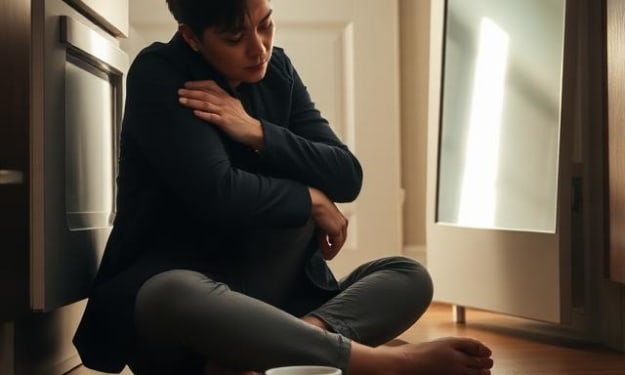
The moment everything cracked wasn’t dramatic. No big argument. No obvious tragedy. Just a quiet Tuesday night when I sat alone on my bed, phone in my hand, scrolling through messages where I had comforted everyone else.
Paragraphs of encouragement. Voice notes filled with calm assurance. Promises that things would be okay.
I tried to type something for myself. Just one honest sentence.
“I’m not okay.”
I stared at the words, then erased them.
Who would I even send that to?
That realization landed harder than any heartbreak I’d known. I had built myself into a shelter so well that I no longer knew how to knock on someone else’s door. I had taught people to lean on me, but never taught them how to hold me back.
When I finally did reach out, it was clumsy and awkward. I downplayed it, as usual.
“Hey, I’m just a little tired lately.”
“Nothing serious, just feeling off.”
The responses were kind—but distant. Advice instead of presence. Solutions instead of listening. Some didn’t respond at all. Others replied days later with a casual, “Hope you’re feeling better!”
I realized then that I had trained everyone to expect strength from me, not truth.
That night, I cried harder than I had in years. Not because no one cared—but because I had never made room for myself to be cared for. I had been so busy holding everyone else that I had forgotten what it felt like to be held.
Recovery didn’t come quickly. It started with small rebellions. Letting calls go unanswered. Saying “I can’t talk right now” without explaining myself. Admitting, out loud, that I was overwhelmed—even when my voice shook.
Some people drifted away when I stopped being endlessly available. That hurt more than I expected. But others stayed, learning a new version of me—one who didn’t always have answers, one who sometimes needed silence, one who was softer and messier and real.
I’m still learning how to ask for help without apologizing. Still learning that being strong doesn’t mean being unbreakable. Still learning that I deserve the same kindness I give so freely.
I am no longer everyone’s safe place.
And that’s okay.
I’m learning to be my own first.
Moral
Being strong for everyone else should never mean abandoning yourself. True strength isn’t carrying everything alone—it’s knowing when to let someone carry you, too.
About the Creator
Ali Rehman
please read my articles and share.
Thank you
Keep reading
More stories from Ali Rehman and writers in Humans and other communities.
The Angry Man in Your House
"If you grow up with an angry man in your house, there will always be an angry man in your house" This statement has caused plenty of controversy online, people say its a statement that blames victims while also undermining those who break traumatic cycles to form health relationships... but if I'm honest now that I'm in my 30s it makes more sense to me than ever, and I'd argue that its not just about fathers and uncles.
By S. A. Crawford2 days ago in Humans



Comments
There are no comments for this story
Be the first to respond and start the conversation.