humanity
For better or for worse, relationships reveal the core of the human condition.
Why Work From Home Didn't Fix Burnout
For a while, work-from-home was treated like a cure. No commute. More flexibility. Control over your environment. People thought that if they could just work from home, the exhaustion would finally lift. That the constant strain would ease once they were out of the office, out of traffic, out of fluorescent lights and forced small talk.
By Danielle Katsourosabout an hour ago in Humans
Are We Letting AI Think for Us — or Teaching It to Think Like Us?
Not long ago, thinking was considered the last truly human frontier. Machines could calculate faster than us, store more information than us, and repeat tasks endlessly—but thinking? That was ours. Messy, emotional, biased, creative, flawed. Human.
By Mind Meets Machineabout an hour ago in Humans
Xenophobia: Why We Fear Strangers – and Why It’s Worse in the East Europe Than in the West
It’s not just some complicated term from books—it’s a common human feeling with deep roots inside us. In this article, we’ll look at where this fear comes from and why, in the countries of the former Eastern Bloc—including the Czech Republic—xenophobia is stronger than in Western Europe.
By Elvira Diggoryabout 2 hours ago in Humans
The Nipah Virus: A Deadly Threat to Global Health. AI-Generated.
The Nipah virus (NiV) is an emerging zoonotic virus that has raised serious public health concerns due to its high fatality rate and potential for rapid transmission. Discovered in 1998 in Malaysia, the virus has since caused multiple outbreaks in South Asia, particularly in countries like India and Bangladesh. While the number of cases has been relatively low compared to other global health threats, the virus's ability to cause severe illness and death has put it on the radar of global health organizations.
By Ayesha Lashariabout 2 hours ago in Humans
The Epstein Files: The Story the World Refuses to Forget.
In recent weeks, the name Jeffrey Epstein has once again taken over global media. Headlines, debates, and social platforms are filled with discussions about the Epstein Files—a collection of court documents and investigation records that continue to expose one of the darkest scandals involving power, wealth, and silence.
By Voxwrite ✍️ about 7 hours ago in Humans
Nigerians Mourn Death of Fast-Rising Singer Nanyah After Snakebite Tragedy. AI-Generated.
Nigeria’s entertainment industry and fans across the country are mourning the sudden death of fast-rising singer Nanyah, who reportedly died after being bitten by a snake in a tragic incident that has shocked the music community. The young artist, whose career had begun to attract national attention for her unique sound and emotionally resonant lyrics, passed away earlier this week after what family sources described as a medical emergency following the bite. News of her death spread rapidly on social media, prompting an outpouring of grief from fellow musicians, fans, and cultural figures. Tributes have poured in from across Nigeria, with many describing her death as a heartbreaking loss for the country’s growing independent music scene. A Promising Career Cut Short Nanyah had recently gained recognition for her blend of Afro-pop and soulful melodies, earning praise for her powerful voice and relatable storytelling. Her songs often touched on themes of hope, resilience, and personal struggle, resonating with young audiences who saw her as a symbol of determination and creativity. Music producers who worked with her said she was on the verge of a major breakthrough. “She had everything — talent, discipline, and a clear vision,” said one Lagos-based producer. “This is someone who was just getting started. Her future was bright.” In recent months, Nanyah had been performing at small but growing venues and had begun collaborating with other emerging artists. Industry insiders say her social media following had been increasing steadily, and she had plans to release a new EP later this year. Circumstances of Her Death According to local reports and family statements, Nanyah was bitten by a snake while visiting a rural area. She was rushed to a nearby medical facility, but complications reportedly developed before anti-venom treatment could be administered in time. Health officials have not released full medical details, but community leaders noted that snakebite incidents remain a serious health risk in many parts of Nigeria, particularly in regions where access to emergency medical care is limited. “This tragedy reminds us how dangerous snakebites can be and how urgently we need better access to treatment in rural communities,” said a public health advocate in Abuja. The World Health Organization classifies snakebite envenoming as a neglected tropical disease, and Nigeria is among the countries most affected, with thousands of cases reported each year. Fans and Fellow Artists React As news of Nanyah’s death spread, the hashtag bearing her name trended on Nigerian social media platforms. Fans shared clips of her performances and lyrics from her most popular songs, expressing disbelief and sorrow. “She inspired me to keep chasing my dream,” wrote one fan on X (formerly Twitter). “This is too painful to accept.” Several well-known Nigerian artists also paid tribute. One singer wrote, “We lost a young star today. May her soul rest in peace. The industry will remember her voice.” Another musician described her as “a humble soul who loved music and loved people.” Radio stations in parts of Lagos and Port Harcourt reportedly played her songs in tribute, while online music communities organized virtual vigils in her memory. A Broader Health Concern Beyond the emotional impact on the entertainment industry, Nanyah’s death has drawn attention to Nigeria’s struggle with snakebite emergencies. Rural health clinics often lack sufficient supplies of anti-venom, and transportation delays can prove fatal. Medical experts say that early treatment is critical. “A snakebite is a race against time,” said a Nigerian emergency physician. “Without rapid access to anti-venom and proper care, survival chances decrease significantly.” Public health organizations have urged the government to increase funding for anti-venom distribution and awareness campaigns, especially during rainy seasons when snake encounters are more common. Family’s Message Nanyah’s family released a short statement thanking Nigerians for their support and prayers. They described her as a loving daughter and a passionate artist who dreamed of using her music to uplift others. “She lived for her music and her fans,” the statement said. “We are grateful for all the love shown during this painful time.” The family asked for privacy as they make funeral arrangements and cope with the loss. The Impact on Nigeria’s Music Scene Nigeria’s music industry has grown rapidly over the past decade, producing global stars and creating opportunities for young talent. Nanyah’s death has highlighted the vulnerability of emerging artists who often lack the resources and security enjoyed by established performers. Cultural commentators say her passing is a reminder of how fragile life can be, even for those on the path to success. “She represented a new generation of voices,” said a music critic. “Her loss is not just personal — it is cultural.” Plans are reportedly underway for a tribute concert organized by fellow musicians to honor her life and work. Conclusion The death of Nanyah has left Nigeria in mourning, cutting short the life of a singer whose talent and ambition promised a bright future. While fans remember her voice and songs, her passing has also drawn renewed attention to the dangers of snakebites and the urgent need for improved medical response in vulnerable communities. As tributes continue to flow, Nanyah’s music remains a testament to her brief but meaningful contribution to Nigeria’s vibrant cultural landscape. For many, she will be remembered not only for how she died, but for the hope and inspiration she shared through her art.
By Fiaz Ahmed about 8 hours ago in Humans
Missing Girl’s Parents Describe ‘Unbearable Fear’ as Search Enters Critical Phase. AI-Generated.
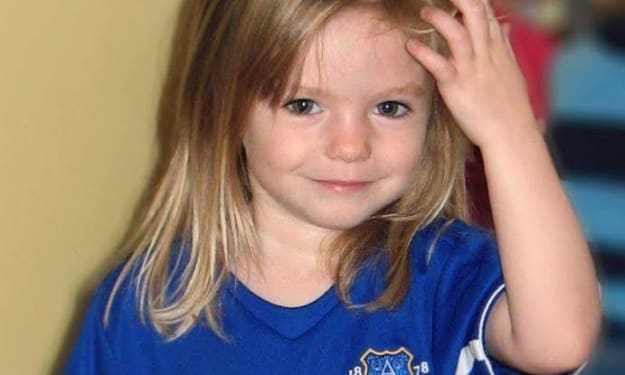
The parents of a missing girl have spoken publicly for the first time since their daughter disappeared, describing their anguish as an “unbearable fear” while authorities intensify efforts to locate her. The emotional appeal comes as police expand search operations and urge the public to come forward with any information, no matter how small it may seem. The girl, whose identity is being withheld for legal and safety reasons, was last seen several days ago near her family’s home. Since then, dozens of officers, volunteers, and search-and-rescue teams have been deployed across nearby neighborhoods, wooded areas, and waterways. Standing outside their home, the child’s mother and father addressed reporters with visible distress, clutching a photograph of their daughter. “We wake up every morning hoping this nightmare will end,” her mother said. “Not knowing where she is or whether she is safe is an unbearable fear that no parent should ever have to face.” Timeline of the Disappearance According to police, the girl was reported missing after failing to return home at her usual time. Family members initially believed she may have gone to a friend’s house or become delayed, but concern grew when repeated calls went unanswered. Authorities have not released specific details about the circumstances of her disappearance, citing the ongoing investigation. However, they confirmed that surveillance footage from nearby streets and businesses is being reviewed, and mobile phone data is being analyzed for potential leads. A senior police spokesperson said there is currently no confirmed evidence of foul play but emphasized that all possibilities remain under consideration. “We are treating this as a high-priority case,” the spokesperson said. “Our focus is on locating the child as quickly and safely as possible.” Community Mobilizes The disappearance has shaken the local community, prompting a wave of volunteer efforts. Neighbors have organized search parties, distributing flyers and combing parks, trails, and vacant lots. Local schools held moments of silence, and community centers have opened their doors to coordinate volunteer teams and provide emotional support to the family. “It’s heartbreaking,” said one neighbor. “Everyone is checking their cameras, retracing steps, doing whatever they can to help.” Social media has also played a major role, with thousands of people sharing the girl’s photo and description. While police welcome public awareness, they caution against speculation or spreading unverified information. “False tips and rumors can distract from genuine leads,” the police spokesperson said. “We urge people to rely on official updates.” Parents’ Emotional Plea In their statement, the parents directly addressed their daughter, hoping she might hear their message. “If you can hear us, please know we love you more than anything,” her father said. “We are waiting for you. We will never stop looking.” They also appealed to anyone who may have seen their child or has information about her whereabouts. “Please, if you know something, say something,” the mother added. “Even the smallest detail could bring her home.” Their words resonated deeply with families across the region, many of whom expressed solidarity and fear that such a tragedy could happen to anyone. Psychological Toll of Uncertainty Experts say the uncertainty surrounding a missing child can be more traumatic than receiving bad news, as families remain trapped between hope and dread. “The brain struggles with not knowing,” explained a child trauma psychologist. “Parents replay every moment, every decision, questioning themselves. It creates intense emotional distress and exhaustion.” Support services have been offered to the family, including counseling and crisis assistance. Authorities say these resources are vital not only for the parents but also for siblings and extended relatives affected by the situation. Law Enforcement Strategy Police confirmed that specialized units trained in missing persons cases have been brought in to assist local officers. Search dogs, drones, and thermal imaging equipment are being used in difficult terrain. Investigators are also interviewing friends, teachers, and acquaintances to reconstruct the girl’s recent movements. Digital evidence, such as online activity and messaging, is being examined to determine whether she communicated with anyone shortly before her disappearance. “We leave no stone unturned,” the police spokesperson said. “Every lead is pursued.” Public Caution and Compassion Authorities have urged the public to remain vigilant but calm. They remind residents to report suspicious activity immediately while avoiding actions that could interfere with the investigation. Community leaders have emphasized the importance of compassion, particularly toward the family. “This is not a time for judgment or blame,” said a local council representative. “This is a time for unity and care.” Hope Amid Fear Despite the fear and uncertainty, the parents said they are holding onto hope. “We believe our daughter is out there,” her mother said. “And we believe she will come home.” Candles and flowers now line the front fence of the family’s home, a quiet symbol of collective concern and prayer. Children in the neighborhood have left handwritten notes wishing for her safe return. Conclusion As the search continues, the case has become a powerful reminder of how fragile everyday life can be and how deeply a community can be affected by one child’s disappearance. The parents’ words—describing their pain as “unbearable fear”—capture the emotional weight of waiting without answers. Authorities continue to appeal for information and promise that the search will not stop until the girl is found. For her family and community, each passing hour is filled with worry, but also with determination that she will be brought home safely.
By Fiaz Ahmed about 10 hours ago in Humans
The Day ‘Stop’ Meant Nothing”
A quiet sign, a loud tragedy, and the cost of a world that won’t pause The stop sign had been there longer than anyone could remember. Its red paint had faded into a tired maroon, edges nicked and scarred by time, winters, and neglect. It stood at the corner like a patient elder, asking—politely, repeatedly—for the world to slow down. Most days, people barely noticed it. Cars rolled through the intersection without fully stopping, drivers glancing left and right just long enough to convince themselves it was safe to keep moving. Cyclists treated it like a suggestion. Walkers passed beneath it, trusting that someone else would obey. The sign did not shout. It did not move. It simply waited, believing in the rules it was made to represent. On the day everything changed, the sky was overcast—one of those gray mornings that feels unfinished, as if the sun forgot to show up. The air carried a cold stillness, the kind that makes sounds sharper and silences heavier. Snow threatened but didn’t fall. Life continued in its ordinary, careless rhythm. And then, somewhere beyond that quiet corner, violence arrived without asking for permission. There are moments in life when you realize how fragile the idea of “normal” really is. How quickly it dissolves. How easily it abandons us. That day, the word stop lost its power—not just on that sign, but everywhere. Gun violence does not announce itself. It doesn’t send warnings ahead of time. It doesn’t respect neighborhoods, routines, or innocence. It crashes into lives like an unwanted storm, leaving behind questions that never find answers. Afterward, people gathered near that intersection. Some stood silently. Others cried. A few argued—about causes, about laws, about what should have been done. The stop sign watched it all, unchanged, unmoved, still doing its job. Still asking the same thing it always had. Stop. But stopping is not something we are good at anymore. We rush through days like they owe us something. We scroll past suffering. We debate tragedies instead of mourning them. We turn real pain into statistics because numbers feel safer than names. Slower than grief is reflection, and reflection requires us to pause—something our world resists with impressive determination. The stop sign is a simple object, but it carries a complex promise: that if we all agree to pause, we can protect one another. That shared responsibility can reduce harm. That rules exist not to control us, but to keep us alive. Gun violence exposes how often we break that promise. After every incident, we hear the same phrases. Thoughts and prayers. This is complicated. Now is not the time. Each sentence is a way of rolling through the intersection without fully stopping. A way of acknowledging the sign without obeying it. Somewhere beneath the surface of all this noise, there are people trying to survive quietly. They don’t always protest. They don’t always speak. They float through the aftermath—traumatized, exhausted, invisible. Like something drifting beneath frozen water, their pain is easy to miss if you aren’t looking for it. Silent survival doesn’t make headlines. The survivors carry it with them to grocery stores, classrooms, and bedrooms where sleep comes reluctantly. They flinch at loud sounds. They measure exits when entering rooms. They learn to live with a background fear that never fully fades. And still, the world asks them to move on. The stop sign remains, doing what it has always done. It does not blame. It does not choose sides. It simply insists that some things require our full attention. That speed is not always strength. That hesitation can be an act of care. But caring takes effort. It requires us to sit with discomfort instead of rushing to conclusions. To listen without planning our rebuttals. To acknowledge that prevention is harder than reaction, and patience harder than outrage. In a culture addicted to momentum, stopping feels unnatural. We mistake motion for progress. We confuse volume with action. We demand quick fixes for slow-burning problems. Gun violence does not thrive in silence alone. It thrives in avoidance. Avoiding hard conversations. Avoiding responsibility. Avoiding the pause that might force us to change. The day “stop” meant nothing was not a single day. It was a culmination. A buildup of moments when we chose convenience over caution, speed over safety, certainty over compassion. That’s what makes the sign so haunting. It reminds us that the tools for prevention are often already in place—but they only work if we agree to honor them. You can repaint a stop sign. You can replace it. You can install brighter lights, louder warnings. But none of it matters if we don’t believe in the message behind it. Stop is not weakness. Stop is not surrender. Stop is not delay for the sake of delay. Stop is a decision. A decision to value life over haste. A decision to notice the people we usually overlook. A decision to treat prevention as seriously as punishment. Long after the crowd dispersed, the intersection returned to its routine. Cars passed. People walked. The sign stood quietly, holding its ground. It did not know about politics or policy. It did not understand arguments. It only understood its purpose. To protect. Maybe that’s what we’ve forgotten—not just how to stop, but why stopping matters. If we paused more often, we might see what’s drifting beneath the surface of our communities: grief waiting to be acknowledged, fear waiting to be eased, resilience waiting to be supported. If we stopped, even briefly, we might hear the quiet voices drowned out by louder ones. We might notice the warning signs before they become memorials. The stop sign will keep standing there, faithful and ignored, until we decide its message is worth following. The question isn’t whether the sign is clear enough. The question is whether we are willing to listen.
By Inayat khanabout 16 hours ago in Humans
Mental Focus Traits Linked to Strong Perceptive Ability.
Perceptive ability is the capacity to notice, interpret, and respond to subtle cues in the environment. People with strong perception often detect details, patterns, and nuances that others overlook. While some individuals seem naturally perceptive, research suggests that mental focus plays a central role in developing and sustaining this skill. Certain traits of mental focus enhance awareness, sharpen observation, and improve decision making. Understanding these traits allows individuals to cultivate stronger perceptive abilities and navigate complex situations with greater clarity.
By Wilson Igbasiabout 19 hours ago in Humans
How Sensitivity Shapes Memory and Awareness.
Sensitivity is often associated with emotional responsiveness, empathy, and awareness of subtle environmental cues. While it is commonly perceived as a personal trait, sensitivity also plays a crucial role in shaping memory and awareness. Highly sensitive individuals process information more deeply, notice nuances in their surroundings, and retain experiences with greater detail. Understanding the connection between sensitivity, memory, and awareness sheds light on cognitive processing and how perception influences learning, decision-making, and daily functioning.
By Wilson Igbasiabout 19 hours ago in Humans