Dr. Mozelle Martin
Bio
Behavioral analyst and investigative writer examining how people, institutions, and narratives behave under pressure—and what remains when systems fail.
Stories (109)
Filter by community
The Workload You Build Yourself
Most adults describe overwhelm as something that arrives from outside. They talk about it as if it settles onto the body without warning. Overwhelm is most often self-induced. It grows out of choices that protect comfort instead of finishing the work. It forms from distractions that feel harmless but produce weight later. People often see the feeling as pressure from the job when it is really pressure from tasks left undone.
By Dr. Mozelle Martin4 days ago in Humans
Why Pet Collars Matter More Than We Think
Domestic animals read the world through continuity. A collar or ID tag may look trivial to a human, but to a dog or a cat it can operate as an identity object. I have seen this pattern across enough households, shelters, and animal-welfare cases to know it is not coincidence. When an animal becomes distressed after its collar is removed, the reaction is almost always tied to safety, belonging, and recognition.
By Dr. Mozelle Martin8 days ago in Petlife
Why I No Longer Sell on Amazon
When I published my first book in 2011, I used Lulu. At the time, it was one of the few print-on-demand options that allowed authors to retain control over content, pricing, and distribution. Over the years, I explored other publishing routes, including limited digital placement on Amazon Kindle, but I remained consistent with Lulu for physical books. As of this writing, I am still evaluating whether those remaining Kindle titles will stay available.
By Dr. Mozelle Martin18 days ago in Humans
Why We Stare at Slow Drivers
Most drivers perform a strange ritual they never talk about. Someone ahead of them is moving so slowly it stretches patience to its thinnest thread. Once the gap opens and they can finally accelerate past, the same thing happens every time. They look. They turn their head just enough to catch a glimpse inside the other car. It feels automatic and unnecessary, but the body does it without taking a vote. The stare is not rudeness, and it is not about proving a point. It is part of a deeper behavioral process that starts the moment another driver interferes with your rhythm.
By Dr. Mozelle Martin21 days ago in Humans
The Handshake Isn’t Dead
People forget how ancient certain gestures are. The handshake is one of them. A brief grip between two human hands started long before business cards, offices, or networking events. It began as proof that neither person carried a weapon. It was the original trust test, done in open view, palm out, fingers visible, nothing hidden. The motion settled nerves in a time when ambush and suspicion shaped daily life. Humans remember rituals that keep them alive. Even if modern culture forgets the origin story, the nervous system does not.
By Dr. Mozelle Martin25 days ago in Humans
Citizen’s Arrest, Explained
Citizen’s arrest is one of those concepts people carry around like common knowledge. Younger generations rarely hear the term unless it pops up in a headline. Older generations remember it from a time when neighborhoods were smaller, policing looked different, and the public was told to “help out” if something happened right in front of them.
By Dr. Mozelle Martinabout a month ago in Criminal
Good Samaritan Laws, Plainly
Most people have heard the phrase “Good Samaritan law” and treat it as a vague safety net. They assume there is some invisible legal blanket that protects anyone who steps in to help a stranger in trouble. The reality is less cinematic. In the United States, there is no single federal Good Samaritan law that covers every scenario. There is a patchwork system of state statutes, case law, and narrow federal rules. Each piece aims at the same goal: convince ordinary people they can try to help without getting dragged into court for making an honest mistake.
By Dr. Mozelle Martinabout a month ago in Humans
For No Reason
I wrote this as a teenager and forgot it existed until I found it again in old files. I’m putting it here because the core point is still true, and still denied. It’s told in the voice of a dog, but it’s not a breed or pet-specific statement. It’s a sequence statement. Same logic applies to any animal living under chronic neglect or abuse.
By Dr. Mozelle Martin2 months ago in Petlife
Who Gets Stopped
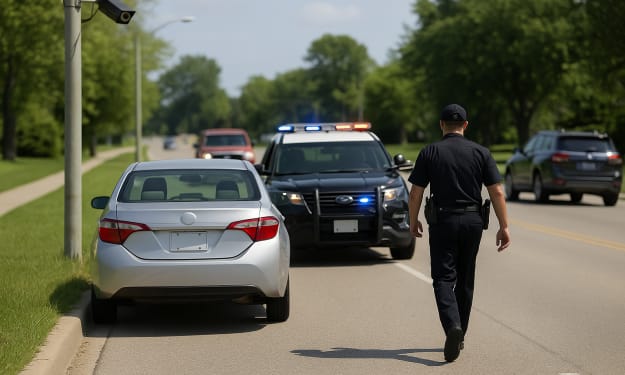
If you read my license plate article, you know plates are not dossiers. They are keys that open records. The question drivers actually want answered is simpler and more uncomfortable: who gets stopped, and why did that officer pick their car. The honest answer lives where law, discretion, and technology meet. It is not conspiracy. It is a system with plenty of legal cover and even more room for human habit.
By Dr. Mozelle Martin2 months ago in Criminal
Your Dog Is Not Truck Cargo
In much of the country, dogs standing loose in the back of a pickup have been treated as part of the scenery for decades. People point at it, smile, say the dog “loves it” and keep driving. The scene looks normal because the community has rehearsed it for years. From a forensic and trauma standpoint, it is anything but normal. It is a low-speed, high-frequency mechanism of serious injury and death that we keep pretending is harmless.
By Dr. Mozelle Martin2 months ago in Petlife