
Why We Stare at Slow Drivers
That Passing Glance

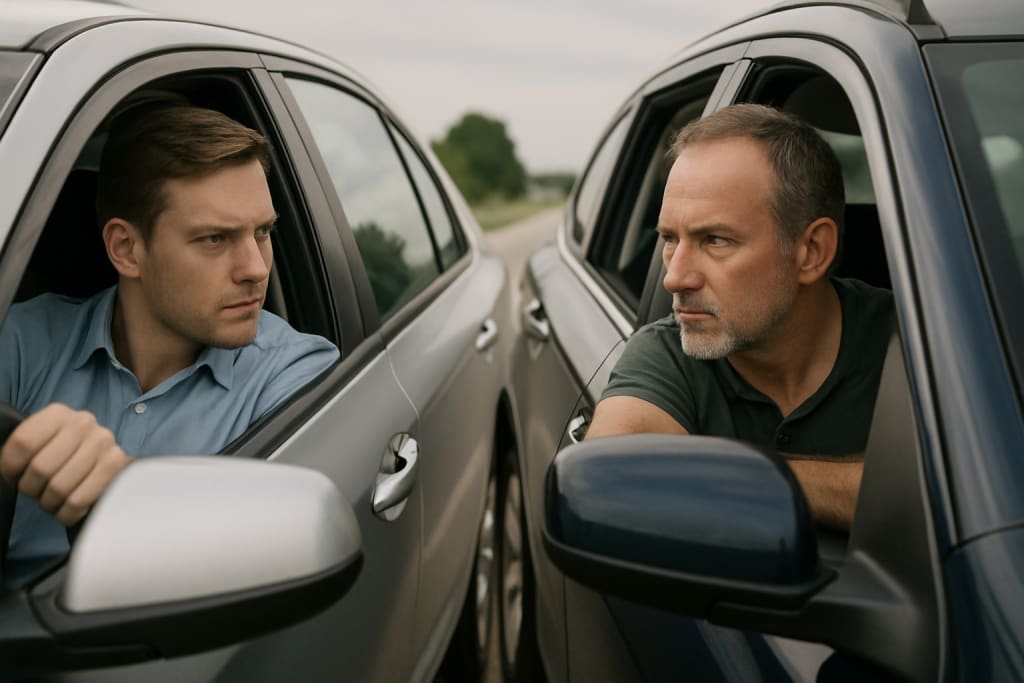
Most drivers perform a strange ritual they never talk about. Someone ahead of them is moving so slowly it stretches patience to its thinnest thread. Once the gap opens and they can finally accelerate past, the same thing happens every time. They look. They turn their head just enough to catch a glimpse inside the other car. It feels automatic and unnecessary, but the body does it without taking a vote. The stare is not rudeness, and it is not about proving a point. It is part of a deeper behavioral process that starts the moment another driver interferes with your rhythm.
American drivers rely on pattern-based navigation. Speed, spacing, and flow form a silent agreement among the people sharing the road. When one driver behaves outside that rhythm, the brain does not accept it quietly. Something in the limbic system wakes up. The disruption might be mild, but the human body doesn’t process it as mild. It registers the break in predictability as a micro threat. The slow driver becomes a variable your nervous system doesn’t trust. You do not consciously analyze this. You just feel irritated, tense, or on alert. By the time you pass, your brain is already searching for closure.
The passing glance is a form of threat assessment. When someone interferes with movement, humans instinctively seek an identity. In a strange way, it is the same reflex that kicks in during face-to-face encounters. The brain tries to understand who caused the interruption. That understanding can be age, posture, expression, distraction level, or any other cue that explains the disruption. Drivers tell themselves they are “just curious,” but behaviorally, it is a forensic moment. You are gathering data. You are verifying whether the danger was incompetence, impairment, emotional instability, or something harmless.
Slow driving often resembles the early signals of impairment. People who are intoxicated, extremely tired, overwhelmed, medicated, sick, or emotionally flooded tend to drift, hesitate, or brake inconsistently. That pattern becomes part of your unconscious library of threats. When a driver matches that pattern, you don’t pass them calmly. Your system wants evidence. It wants to know if the risk was legitimate. The stare is your nervous system checking the box. If the driver looks sober and focused, the tension drops. If they look out of it, the brain files that information differently. Either way, the body completes the loop.
The glance is also an attempt to reclaim lost control. Being stuck behind a slow driver creates a temporary power imbalance. Your pace is controlled by someone else’s limitations, and even if the delay is small, the loss of agency registers. Passing restores the ability to move freely, but the look restores psychological orientation. It confirms that the person who slowed you down is now behind you and no longer shaping your experience. It is subtle. It is not aggressive. It is the nervous system resetting its boundaries.
Something else happens in that moment that most people never label. Drivers look for remorse. When the slow driver appears completely unaware that they hindered anyone, irritation lingers. When the slow driver looks sheepish, apologetic, or self-aware, the irritation dissolves faster. Humans react differently when disruptors acknowledge their impact. That instinct remains even behind tinted windows and steel doors. Awareness soothes. Obliviousness agitates. The stare collects this information whether you want it to or not.
This behavior isn’t limited to cars. It also happens in grocery aisles, airport security lines, or crowded hallways. When someone blocks a path, you look at them as you move past. Not to intimidate, but to understand. The brain relies heavily on quick identity recognition to regulate irritation. That moment of confirmation tells the nervous system that the event is complete. Without the glance, the tension can linger as a half-processed irritation.
The passing look is not about judging another driver. It is the mind finishing what the body started.
- Someone interfered with your movement.
- Your nervous system demanded a resolution.
- The glance provides just enough information to release the tension and restore the sense of order required to continue down the road.
Once you see the face, the event stops reverberating through your system. The car fades into the distance. And your brain can finally settle back into the quiet hum of predictable motion.
Sources That Don’t Suck:
National Highway Traffic Safety Administration
American Psychological Association
Traffic Injury Research Foundation
Human Factors and Ergonomics Society
Society for Personality and Social Psychology
Journal of Environmental Psychology
Police Traffic Services Research Publications
About the Creator
Dr. Mozelle Martin
Behavioral analyst and investigative writer examining how people, institutions, and narratives behave under pressure—and what remains when systems fail.
Keep reading
More stories from Dr. Mozelle Martin and writers in Humans and other communities.
The Handshake Isn’t Dead
People forget how ancient certain gestures are. The handshake is one of them. A brief grip between two human hands started long before business cards, offices, or networking events. It began as proof that neither person carried a weapon. It was the original trust test, done in open view, palm out, fingers visible, nothing hidden. The motion settled nerves in a time when ambush and suspicion shaped daily life. Humans remember rituals that keep them alive. Even if modern culture forgets the origin story, the nervous system does not.
By Dr. Mozelle Martin26 days ago in Humans
Time to change your life.
Is it even possible for you to change your life? A lot of people, more than there should be, are unhappy with their lives. But what are they doing about it? Usually nothing. People talk about how shitty their lives are and want change, but are they not taking the actions to change?
By Jen Phillips3 days ago in Humans


Comments