Trivia
Archaeologists Discovered 22000 Year Old Tracks That May Be From the World’s First Vehicle.
Archaeologists Discovered 22000 Year Old Tracks That May Be From the World’s First Vehicle. The discovery of 22000 year old tracks at White Sands National Park in New Mexico has shed new light on early human innovation and transportation methods. These tracks as revealed in a recent study published in Quaternary Science Advances suggest that ancient humans used a rudimentary vehicle known as a travois to transport goods or belongings. This finding challenges conventional perspectives on early transportation pushing back the timeline of non wheel based vehicles much further than previously thought. At the heart of this discovery are the linear impressions found alongside human footprints. Unlike ordinary tracks left by people walking these marks suggest the dragging of wooden poles indicating the use of a travois. This is a simple yet effective means of carrying heavy loads by lashing two poles together often in the shape of a triangle and pulling them along the ground. Such a transport method was widely used by Indigenous peoples in North America well into recent history particularly among the Plains tribes who adapted it for use with horses. However, this new discovery suggests that its use dates back much further to a time when humans were still navigating the challenges of Ice Age survival.
By Adnan Rasheed12 months ago in History
Guamanian: Culture, Language & Heritage
The Guamanian Chamorro people have a unique culture deeply rooted in the Mariana Islands. This chain of islands is in the Pacific. Their culture is a mix of old traditions and new influences. It shows a strong community spirit and respect for their heritage.
By The Big Bad 12 months ago in History
The Mongol Empire at Its Peak: Power and Legacy
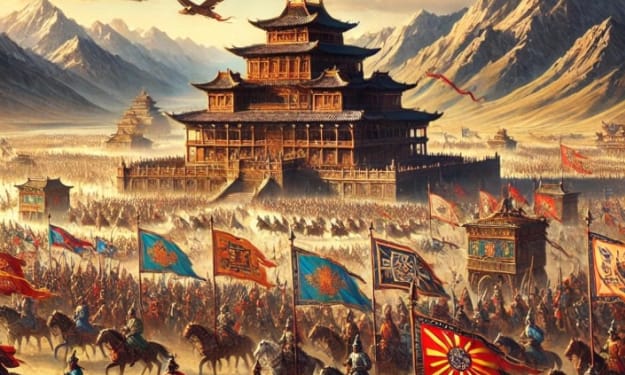
The Authority Afterwards Genghis Khan: The Rise of His Heirs Genghis Khan, the allegorical Mongol leader, larboard abaft an authority that connected above Asia and into Europe. However, his afterlife in 1227 did not mark the abatement of the Mongols; rather, it set the date for an alike greater expansion. His heirs, accomplished in warfare and governance, agitated advanced his vision, transforming the Mongol Authority into the better abutting authority in history.
By Say the truth 12 months ago in History
Hidden in the clay clues to Harappa’s diet.
Hidden in the clay clues to Harappa’s diet. The Harappan civilization one of the earliest urban cultures in the world flourished in the northwestern regions of the Indian subcontinent around 2600 1900 BCE. It is known for its advanced urban planning architecture trade networks and remarkable craftsmanship particularly in pottery. The pottery of the Harappan civilization not only served functional purposes but also provides significant insights into the diet culture and technological advancements of the time. Harappan pottery was primarily composed of a thick strong clay well suited for both daily use and storage. Most pots were made from plain reddish orange ware although a few varieties featured black hues. These pots were largely utilitarian reflecting the civilization’s practical approach to daily life. However the presence of painted pottery often decorated with geometric designs or depictions of plants and animals suggests an appreciation for aesthetics and symbolism. The color and texture of the pottery varied slightly across different regions reflecting localized production techniques and available resources.
By Adnan Rasheed12 months ago in History
Roses, Rifles, and Regrets: A Love Written in Gunpowder
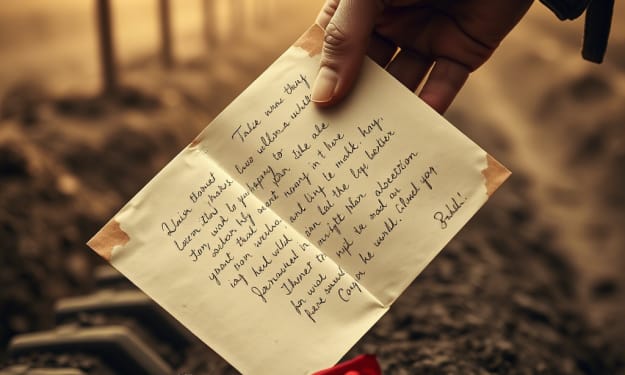
Paris, July 17, 1916 My Dearest Élodie, They said the war would be swift. They lied. Today, the mud swallowed another man whole. One moment, he was lighting a cigarette; the next, he was gone, like a candle snuffed by the wind. It’s strange how silence follows death—not screams, not panic. Just quiet acceptance, as though the earth, having claimed its due, permits us a moment of reflection.
By Alain SUPPINI12 months ago in History
Archaeologists may have found pharaoh's second tomb.
Archaeologists may have found pharaoh's second tomb. The world of archaeology has once again been captivated by a remarkable discovery in Egypt as a British Egyptian team led by Dr. Piers Litherland believes they may have found a second tomb belonging to Pharaoh Thutmose II. This potential find comes shortly after Dr. Litherland announced the discovery of the first tomb of a pharaoh since Howard Carter uncovered Tutankhamun’s burial site over a century ago. Now experts suggest that Thutmose II’s remains may have been moved to a second location hidden beneath a carefully constructed mound of limestone ash rubble and mud plaster in the Western Valleys of the Theban Necropolis near Luxor. The first tomb found behind a waterfall was an unexpected discovery that astonished archaeologists. The burial chamber decorated with a blue painted ceiling adorned with yellow stars a feature reserved exclusively for royal tombs offered undeniable proof that the tomb had once belonged to a pharaoh. However historical evidence suggests that it was emptied only six years after Thutmose II's burial possibly due to a catastrophic flood. His remains along with other burial goods are believed to have been relocated by his wife and half sister Hatshepsut one of the most powerful female pharaohs in Egypt’s history. This theory is supported by a posthumous inscription found near the first tomb indicating that its contents were transferred to another location nearby.
By Adnan Rasheed12 months ago in History
How the CIA Pinpointed Osama bin Laden’s Location
How the CIA Pinpointed Osama bin Laden’s Location Osama bin Laden the leader of al-Qaeda was one of the most wanted terrorists in the world after the 9/11 attacks. His capture was the result of years of intelligence gathering advanced surveillance techniques and covert operations. Finally in 2011 the CIA tracked him down and eliminated him in a secret military raid. This is the story of one of the most significant intelligence missions in modern history which relied on cuttingbedge surveillance human intelligence and data analysis. After 9/11 the United States launched a global war against al Qaeda capturing or killing several of its key members. However bin Laden remained elusive. Initially the CIA believed he was hiding in caves along the Afghanistan Pakistan border leading to drone strikes and special operations in those areas. However by 2005 a new strategy was adopted. Instead of searching for bin Laden directly intelligence agencies decided to track his close associates believing that no high value target could operate in complete isolation.
By Adnan Rasheed12 months ago in History
A Doctor Who Killed 500 Patients Caught By One Mistake.
A Doctor Who Killed 500 Patients Caught By One Mistake. Harold Shipman is considered one of the most horrifying serial killers in history committing crimes that seemed unbelievable to the world. He was a doctor whom people trusted with their lives but he turned out to be the one taking them away. Throughout his career Shipman murdered more than 500 patients and for years there was no evidence against him. He was an extremely intelligent and cunning criminal who skillfully concealed his crimes but in the end a small mistake exposed his horrific secret to the world. Harold Shipman was born in England in 1946. He came from a modest background and after completing his medical education became a well known doctor. He had mastered the art of winning patients' trust. People saw him as a compassionate and caring physician. But behind this façade lay a terrifying truth. He deliberately administered lethal doses of morphine and other drugs to his patients causing their deaths. These deaths appeared natural as most of his victims were elderly patients.
By Adnan Rasheed12 months ago in History
The Mysterious Incident of Anjikuni Lake.
The Mysterious Incident of Anjikuni Lake. The history of humanity is filled with mysterious events that defy explanation but some enigmas become even more baffling with time. One such inexplicable mystery is the disappearance of an entire village near Anjikuni Lake in Canada in 1930. The most astonishing aspect of this story is that an entire settlement vanished without a trace and to this day no satisfactory explanation has been found. This event remains one of the most perplexing and unbelievable cases in history with numerous theories proposed yet none conclusively proven. Anjikuni Lake is located in the Nunavut region of Canada known for its cold climate icy landscapes and vast lakes. The area was home to the Inuit people who relied on hunting and fishing for their livelihood. In the winter of 1930ban experienced trapper named Joe Labelle who frequently visited the region for hunting arrived at a familiar Inuit village. However what he encountered this time was beyond belief. The entire village was deserted there were no signs of life no voices and no human presence anywhere.
By Adnan Rasheed12 months ago in History
The Enigmatic Tale of Polycrates’ Ring
In the chronicles of ancient history, few narratives are as engaging and reflective as the story of Polycrates’ Ring. This account, rich in intrigue and moral implications, centers on Polycrates, the tyrant of Samos, whose ascent to power and eventual decline were both dramatic and symbolic. Chronicled by the Greek historian Herodotus, this tale serves as a perennial reminder of the fragile equilibrium between human ambition and the enigmatic will of the divine.
By A Históriaabout a year ago in History