Events
Color Pattern Names
If I were to present to you a paint chip and inquire about its color, what would be your response? Similarly, what about this one? And this one? Presumably, you would identify them as blue, purple, and brown, respectively. However, if your mother tongue is Wobé from Côte d’Ivoire, you would likely employ a single term for all three. This discrepancy arises from the fact that not all languages possess the same number of fundamental color categories. While English has 11, Russian has 12, and certain languages, such as Wobé, only have 3. Researchers have discovered that if a language has only 3 or 4 basic colors, they can typically anticipate what those colors will be. How do they accomplish this feat?
By Hanif Salahudin3 years ago in History
Is It OK
There exists a ubiquitous two-letter term that is commonly heard in various contexts. It is often expressed as "OK" or "okay". For instance, it is frequently used to inquire about someone's well-being, as in "Are you okay, Annie?" or to address a group of women, as in "Okay ladies...". It is widely recognized as one of the most familiar words worldwide. Its usage is also commonly expressed through the exclamation "OK!" or simply "OK".
By Hanif Salahudin3 years ago in History
The Revolutionary Legacy of Dr. Jose Rizal
This article will explore the life and legacy of Dr. Jose Rizal, a renowned Filipino nationalist, writer, and philosopher who is widely considered the national hero of the Philippines. Dr. Rizal was a key figure in the Philippine Revolution, a nationwide uprising to end Spanish colonial rule in the late 19th century. His writings, which helped to galvanize the Filipino people in pursuit of independence, have been translated into numerous languages and are still widely studied and discussed today. In addition to his writings, Dr. Rizal was also a medical doctor, a polymath, and a passionate advocate for human rights. This article will explore the life of Dr. Rizal and his impact on the Philippine nation.
By Ziain Morales3 years ago in History
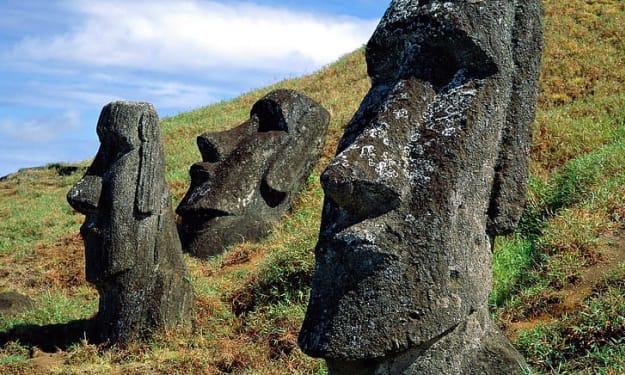
And Now We Know How Easter Island Giants Were Moved
For centuries, the Easter Island giant heads, known as the moai statues, have captivated people worldwide and even earned their own emoji. The true significance behind these enigmatic figures has remained a mystery for hundreds of years. However, recent discoveries shed light on how they were constructed and moved to their permanent locations. Each moai statue comprises three distinct parts: a large yellow body, a red hat or top knot, and white inset eyes with a coral iris. Approximately 1,000 of these remarkable statues were created on Easter Island.
By Makim Piodos3 years ago in History
The Last Stand
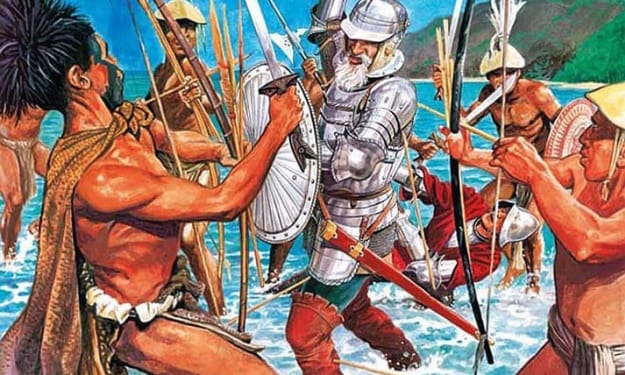
The Battle of Mactan was a pivotal conflict in Philippine history. It took place in 1521 near the island of Mactan in the Visayas region of the Philippines. The battle pitted Lapu-Lapu, and his warriors against Portuguese explorer Ferdinand Magellan and his small force of Spanish soldiers and Filipino mercenaries. Lapu Lapu is one of the most famous figures in Philippine history. He was a native chieftain who led the battle of Mactan against the Spanish forces of Ferdinand Magellan in 1521. He is often considered to be the first Filipino hero to have resisted foreign rule. The city of Lapu Lapu was named in his honour, and his statue stands in the plaza at the city center, as a reminder of his bravery. As such, he is revered as a national hero by most Filipinos and is given much respect for his courage and determination.
By Ziain Morales3 years ago in History
Mondays in the East
In the Eastern part of Nigeria, every Monday has evolved into a distinctive and culturally significant phenomenon - the sit-at-home order. This tradition, born out of historical events, holds deep meaning for the people in the region. However, its observance has not been without consequences, affecting both lives and the economy in diverse ways. This article delves into the history and reasons behind the sit-at-home order, the response of the Nigerian government, and the profound effects it has on the lives and economy of the region. Finally, it explores possible avenues for a harmonious way forward.
By Obianuju Egwuatu3 years ago in History
Archaeologists Are Afraid To Enter China's First Emperor's Tomb.
In an ordinary field in the Shaanxi province of China, farmers made one of the most significant archaeological discoveries of all time in 1974. They unearthed pieces of a clay human figure while digging. Simply put, this was the tip of the iceberg.
By Francis Dami3 years ago in History
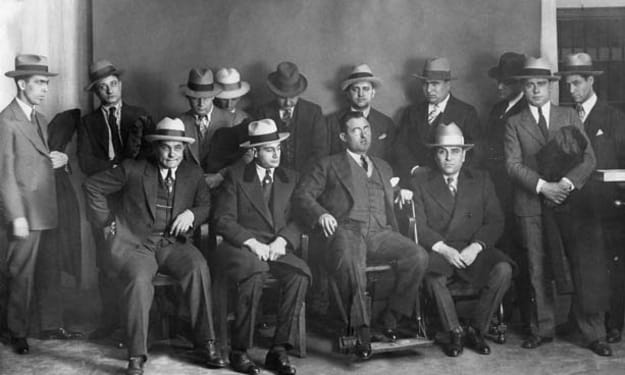
Unraveling the Secrets of the 1930s New York Mafia: An Era of Crime and Power
The 1930s were a tumultuous decade for the United States, marked by economic depression, political unrest, and a blossoming underworld empire—the New York Mafia. A captivating era filled with larger-than-life characters, shadowy dealings, and organized crime, the 1930s Mafia left an indelible mark on the nation's history. Let's delve into the intriguing world of the 1930s New York Mafia and explore its rise, key figures, operations, and eventual downfall.
By Mircea Voicu3 years ago in History
'Life in Pompeii: A Glimpse into Ancient Roman Culture'
Pompeii is an ancient Roman city that was destroyed by the eruption of Mount Vesuvius in 79 AD. Despite its tragic end, Pompeii was an important cultural center and offers a unique glimpse into the lifestyle of the Roman people. This article will explore the everyday life of the people of Pompeii, from their work and leisure activities to their diet and religious practices.
By Ziain Morales3 years ago in History