Events
The national museum of Brazil is live again
National Museum of Brazil in Rio de Janeiro - was the largest and oldest natural history museum in Latin America. It had just celebrated its 200th anniversary in 2018 when, in the evening on September 2nd, an electrical fire started on the ground floor of the museum. As the night progressed, it grew into an inferno that devastated the building and destroyed almost all of the collections it preserved. Within 10 hours, it was clear the destruction was immense: an estimated 18 million objects and specimens were turned to smoke and ash. Among the items lost were 30,000 artifacts from indigenous Brazilian communities, along with recordings of languages that no longer have living speakers. The entire entomology collection was destroyed when the floor it was stored on collapsed. It contained 5 million specimens, including a number of holotypes, which are the single individual animal on which its entire species is based. Without holotypes, future specimen identifications become all but impossible. The Museum had also contained dozens of the best-preserved pterosaur fossils in the world, and a wealth of other fossil discoveries from the last two centuries. Other losses have begun to be quantified, but in many ways, the destruction was, and is, immeasurable. I was devastated to hear the news of the fire. The loss of the collections in Rio isn’t only felt by Brazilians or those who work in museums today: for anyone with a curiosity about the world, its histories, cultures, and the life it has supported -- the fire represents an entire robbery of the global knowledge that was amassed over hundreds of years by just as many people. This loss - what we learn, and how we recover from it - is something I’ve been trying to understand in the months since that fire first broke out -- so, I wanted to talk with someone directly impacted by these events. Paleontologist Beatriz Hörmanseder was a master’s student working in the museum at the time of the fire. She was in the process of describing a new species of extinct crocodile, known from a single specimen, that was among those items destroyed. Beatriz: I study fossil crocodiles and i was studying one species that was from the Ceará region and this particular crocodile was really different from the others in this region. So it probably was a really important species for this, for my study, and I lost it. I even saw where it was when it came out and it was just dirt and nothing was there. Emily: Do you remember your first thoughts upon hearing that there was a fire in the National Museum? Beatriz: Well, I was at home, all of the sudden somebody said:"the museum is on fire."I can remember, I stand for something like three hours in front of the television watching fire enter every room - in the entomology collection, and now the fire got into the archaeology and the mummies and my department, the paleontology department, was the last one to burn. Emily:Do you remember some of the thoughts that were going through your head? Beatriz: At first we couldn't believe it, the fire, it felt like a movie or something like that. Then we started to, with all the museum community, we started talking all together. In the next morning of the fire we were just: hmm -- what's left? In the days after the fire, the burned remains of books, field notes, and stories floated down near the museum, acting as a constant reminder of the catastrophe. Many people felt compelled to collect the larger scraps as tokens of their relationship to the museum. A hashtag emerged on social media as a means of allowing Brazilians to follow the response and recovery process: “Museu Nacional Vive,” or “The National Museum is Alive.” An exhibition with the same name was created to remind the nation that, although much had been lost, not everything was gone: some of the museum’s collections were stored in an annex offsite and had been unharmed. Alongside items from the remaining collections were the artifacts that had been salvaged from the community, as a reminder that there still exists a foundation for future research at the museum. And, hope began emerging elsewhere: Luzia was one of the oldest human skeleton ever found in Latin America and of huge importance to the museum. These remains were thought to have been destroyed in the fire but in the following months news of Luzia’s recovery spread across social media and conservation work on the remains are underway. Today, museum staff continue sharing updates on newly published research as well as photos and stories of the museum’s recovery to keep the community informed of all progress. The losses the Museu Nacional suffered triggered an outpouring of international support. Germany pledged 1 million euros, and resources secured by the Brazilian authorities for reconstruction amount to more than $15 million US dollars. Other countries have donated materials: France gifted close to a thousand books allowing the museum’s library, which had held the most important social sciences collection in Latin America, to begin restocking their shelves. But some researchers, like Bea - whose primary specimen was destroyed - were confronted with not only the obstacle of recovering from a national tragedy, but also tasked with reimagining their entire areas of research. An emergency program was developed by the Museum, in partnership with the Smithsonian Institution to help students like her. Beatriz:Passing by, we got some support from other institutions and then Smithsonian came and I got to see the paleontology collection there and the American Museum collection and Yale Peabody Museum. It was -- it saved my thesis, it absolutely saved it and I'm really grateful for them. After the fire - wanting to address her feeling of loss - Bea got a tattoo of the museum’s facade on her arm. It sparked interest in her colleagues. Without meaning to, she had created a movement among those directly impacted by the fire, and through body art, strengthened the bond of their shared experience. Emily: You've got a pretty awesome tattoo. Bea:Thank you. Emily:Do you think this has been a really important part of that healing process? Bea: For everybody who is impacted.. the National Museum of Brazil, it's like a tradition when you're from Rio, and you're a small kid, just to go there at least once in your life so everyone in Rio had gone to the Museum. Everybody was a little bit happier. I could feel it and wasn't so afraid of what they lost. The tattoo project helped me to pass time and heal, some, Idon't know what, to have just keep moving and get in touch with somebody. "Your tattoo is next week, okay?" or something like that. The Museu Nacional disaster had an impact in many ways, ranging from personal to global expressions of loss. The inability to go back in time - to recreate collections, or to take preventative actions against a disaster of this nature - is a reality that’s difficult to come to terms with for many people, myself included. On an individual scale dozens of people like Bea, having lost their objects of research, changed the course of their careers, their lives, and the ways in which they participate in their local and scientific communities. On a global scale, we lost materials that held knowledge important for all of humanity, and stories precious to our identities as people. So while there is no way to recover all that was destroyed - we can continue to make conscious decisions about what we preserve today. Bea: It's not easy to talk about the museum. Emily: No. Bea:It's - it's a long time ago, but it's, it's still there. And it will forever be here.
By Jack Reigns 3 years ago in History
Secrets of the Deep
tlecretsfheeep In the heart of a small coastal village named Havenbrook, nestled between rugged cliffs and golden sands, lived a young woman named Elara. She was known by the villagers as someone who was always drawn to the sea. Since childhood, Elara's eyes sparkled with curiosity whenever the waves kissed the shore, and her heart pounded in rhythm with the tides. While the village fishermen brought tales of their catches and the distant horizon, Elara yearned for something more—a glimpse into the mysteries that lay beneath the ocean's surface.
By Gyimah Michael3 years ago in History
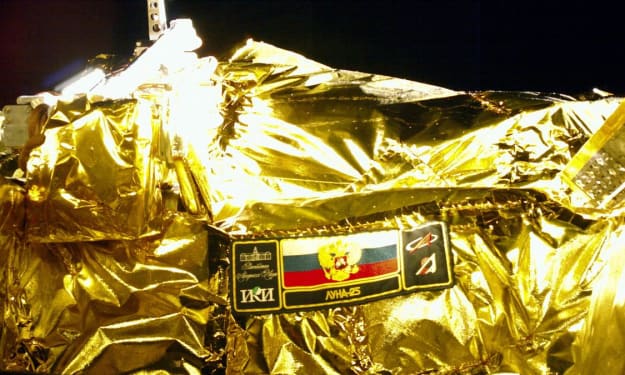
Luna 25 Crash Landing on the Moon :
In the field of space exploration, failures are not uncommon. They serve as a moving reminder of the complexities and challenges involved in transcending the limits of the earth. The unfortunate crash of the Russian lunar lander Lunar 25 is one example, and offers a candid account of the misadventures that led to its untimely sinking.
By Sunil Kumar Lakhani3 years ago in History
Amelia Earhart's Disappearance
Amelia Earhart had a lot of accomplishments- one of which was blazing a trail across the sky. From solo flight to crossing the Atlantic Ocean, she was an inspiration to many. Her signature move was casually zipping across the ocean all alone- something that only a person with nerves of steel could pull off. And if that wasn't enough, she also flew from Hawaii to the mainland United States for the first time ever- something that was unprecedented at the time.
By Belinda Muiruri3 years ago in History
Nigeria's Economic Crisis Solutions
"Unlocking Economic Potential: Combating Corruption's Grip on Nigeria's Development" Corruption, a pervasive challenge deeply ingrained in Nigeria's socio-economic fabric, has posed a significant hurdle to the nation's journey toward sustainable economic development. As a formidable obstacle, corruption has not only eroded public trust in government institutions but has also deterred domestic and foreign investment, hindering Nigeria's potential for growth and prosperity. Nigeria's rich resources and diverse economic sectors hold immense promise. Yet, the shadow of corruption has cast doubt on the realization of this promise. Rampant bribery, embezzlement, and undue influence have siphoned public funds away from essential services, such as education, healthcare, and infrastructure, impeding the very foundations of economic progress. This misallocation of resources has perpetuated inequality and stifled the growth of a vibrant middle class – a cornerstone of any thriving economy.
By Mejabi Elisha Oluwasegun3 years ago in History
Why Didn't Russia Also Scramble Africa? The Untold Story Revealed
In the late 19th century, a pivotal era in European history, a relentless scramble for control over Africa's territories and resources unfolded. European powers strategically carved the continent into colonies and spheres of influence, capitalizing on its wealth of resources and the labor of its people. However, amid this frenzied pursuit, a notable absentee in this race for dominance was Russia.
By Francis Osei3 years ago in History
The CIA's Secret Mission to Raise a Sunken Soviet Submarine
Get ready for a jaw-dropping adventure as I take you on a thrilling journey into one of the CIA's wildest missions, a mission so mind-blowing it could rival a James Bond film. Brace yourself for Project Azorian, a top-secret operation that involved espionage, engineering genius, and a ballsy underwater heist.
By The Purple Olympian3 years ago in History