science
Music is not just an art, but a science; the latest research about your brain on music, scientific innovation in the instrument industry and more.
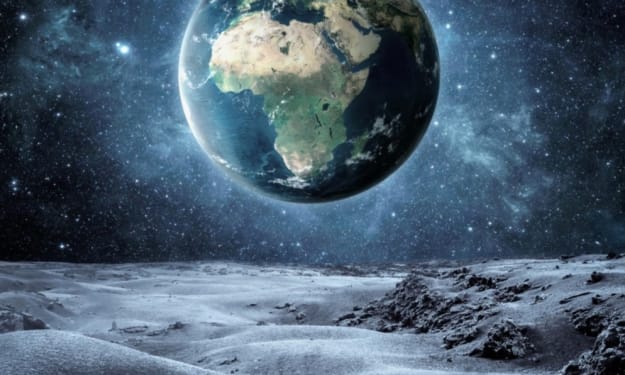
The Moon Is Quietly Collecting Earth’s Escaping Air, Study Finds. AI-Generated.
For centuries, the Moon has been viewed as a silent companion to Earth—airless, lifeless, and largely unchanged. But new scientific research is challenging that long-held perception. According to recent studies, the Moon may be quietly collecting small amounts of Earth’s escaping atmosphere, creating an unexpected chemical connection between the two worlds. This discovery is reshaping how scientists understand atmospheric loss, planetary evolution, and the long-term relationship between Earth and its closest neighbor in space.
By Salaar Jamaliabout 4 hours ago in Beat
To the Moon! Inside the Outer Space Hotels Prepping to Welcome Guests as Soon as 2032. AI-Generated.
To the Moon! Inside the Outer Space Hotels Prepping to Welcome Guests as Soon as 2032 For decades, space travel was reserved for astronauts, scientists, and the ultra-elite backed by government missions. But that era is rapidly changing. What once belonged purely to science fiction is now edging closer to reality. By as early as 2032, outer space hotels may begin welcoming their first civilian guests, offering an experience that blends cutting-edge technology, luxury hospitality, and humanity’s timeless fascination with the stars.
By Salaar Jamaliabout 4 hours ago in Beat
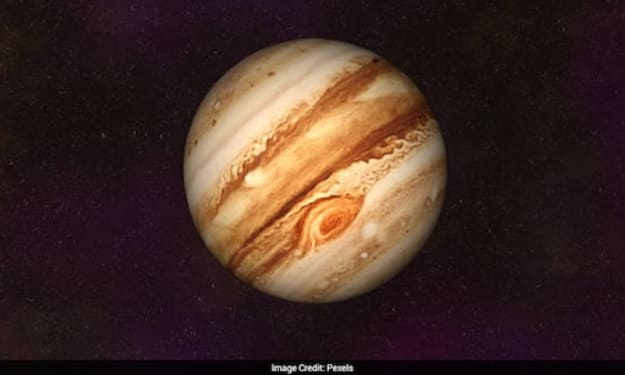
Jupiter’s Moon Europa May Be Supplying Its Ocean With Life-Supporting Matter, Study Finds. AI-Generated.
Title Subtitle Jupiter’s icy moon Europa has long fascinated scientists as one of the most intriguing worlds in our solar system. Beneath its cracked, frozen surface lies a vast subsurface ocean that may contain more water than all of Earth’s oceans combined. Now, a new scientific study suggests that Europa may be actively supplying this hidden ocean with life-supporting chemical ingredients, further strengthening its status as a prime candidate in the search for life beyond Earth.
By Salaar Jamaliabout 5 hours ago in Beat
Buried Beneath Antarctic Ice, Scientists Uncover a Lost World Frozen in Time for 34 Million Years. AI-Generated.
In a remarkable breakthrough, scientists have discovered an ancient ecosystem buried beneath two kilometers of Antarctic ice, frozen and preserved for an astonishing 34 million years. This “lost world” provides an extraordinary window into Earth’s climate, biodiversity, and geological history during the late Eocene, a period of significant global transformation.
By Salaar Jamaliabout 5 hours ago in Beat
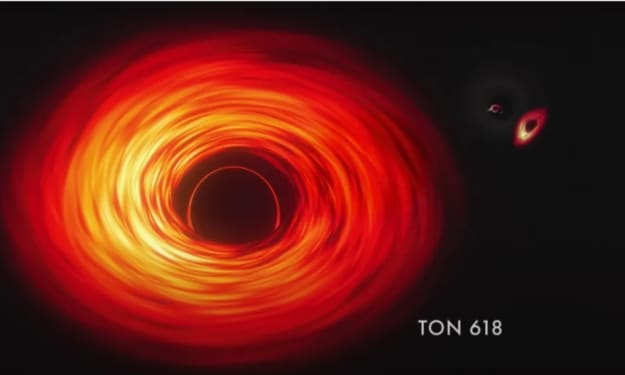
James Webb Space Telescope Reveals New Origin Story for the Universe’s First Supermassive Black Holes. AI-Generated.
Title Subtitle The James Webb Space Telescope (JWST) has once again transformed our understanding of the universe. In a new series of observations, Webb has provided compelling evidence that reshapes scientists’ ideas about how the universe’s first supermassive black holes came into existence. These cosmic giants, some containing the mass of millions or even billions of suns, were already in place surprisingly early in the universe’s history. Until now, their rapid appearance has been one of the greatest mysteries in modern astrophysics.
By Salaar Jamaliabout 5 hours ago in Beat
Albert Einstein: The Genius Who Redefined the Universe. AI-Generated.
Albert Einstein is widely regarded as one of the greatest minds in human history. His ideas reshaped modern physics and transformed our understanding of space, time, energy, and the universe itself. More than just a scientist, Einstein became a global symbol of intelligence, curiosity, and intellectual freedom.
By Ayesha Lashariabout 5 hours ago in Beat
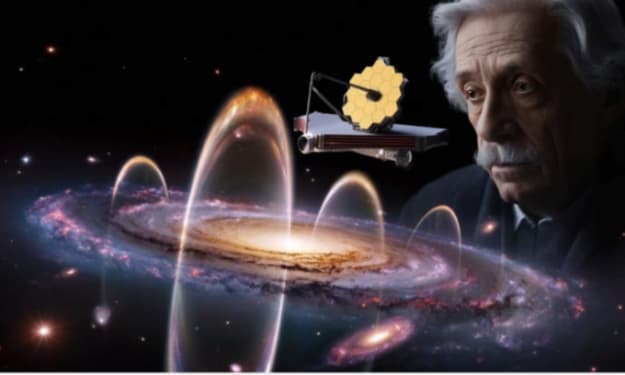
Albert Einstein Foresaw It — New Deep Space Observations Confirm Time Bends Around Distant Galaxies. AI-Generated.
More than one hundred years ago, Albert Einstein proposed an idea so radical that even many scientists doubted it: time is not fixed. Instead, it bends and stretches under the influence of gravity. His theory of general relativity suggested that massive objects such as stars and galaxies warp the fabric of space and time, creating a cosmic landscape where clocks tick at different speeds depending on their surroundings.
By Sajida Sikandarabout 10 hours ago in Beat
Tonight's Snow Moon is a Last Chance to See a High Moon of Winter: 6 Reasons You Should Catch It. AI-Generated.
As winter reaches its peak, the night sky is preparing to treat stargazers to a spectacular show. Tonight, the Snow Moon—the full moon of February—will rise in all its frosty glory. For skywatchers, this isn’t just any full moon. It’s one of the highest full moons of the winter season, making it a unique celestial event you won’t want to miss. Here are six compelling reasons why tonight’s Snow Moon deserves your attention.
By Salaar Jamaliabout 10 hours ago in Beat
Common Symptoms of Nipah Virus You Should Know. AI-Generated.
Nipah virus (NiV) is a highly infectious pathogen that has caused sporadic outbreaks in South and Southeast Asia over the past two decades. Classified as a zoonotic virus, Nipah can spread from animals to humans and, in certain cases, from person to person. With a high mortality rate and no specific antiviral treatment currently available, early detection of symptoms is crucial for containment and management. Health authorities emphasize that awareness of common symptoms can save lives and prevent further transmission.
By Salaar Jamaliabout 14 hours ago in Beat
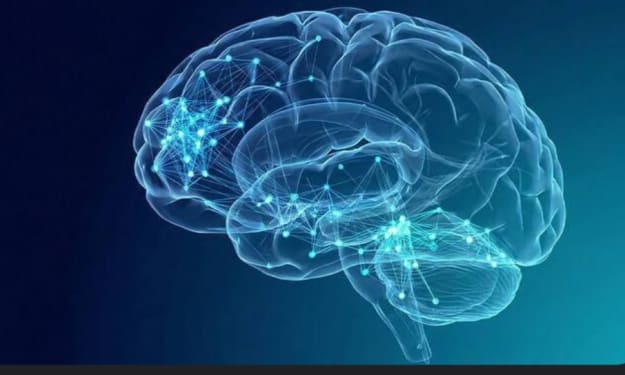
Alcohol Shifts the Brain into a Fragmented and Local State. AI-Generated.
Alcohol has long been known to impair judgment, slow reaction times, and cloud memory. But emerging neuroscience research is now offering a more detailed explanation of what actually happens inside the brain after alcohol consumption. According to recent findings, alcohol shifts the brain from a highly integrated, globally connected network into a more fragmented and localized state—fundamentally changing how different regions communicate with one another.
By Salaar Jamaliabout 14 hours ago in Beat
World’s Most Powerful Particle Collider Supplies Heat to Thousands of French Households. AI-Generated.
In an unprecedented fusion of science and sustainability, the world’s most powerful particle collider—the Large Hadron Collider (LHC) at CERN—has begun supplying district heating to thousands of households in France. Traditionally celebrated for its groundbreaking physics experiments, including the discovery of the Higgs boson, the LHC is now contributing directly to everyday life by converting surplus heat from its operations into warm water for residential heating. This innovative initiative exemplifies how high-energy research can have practical, ecological, and economic benefits beyond the laboratory.
By Salaar Jamali2 days ago in Beat