
Jupiter’s Moon Europa May Be Supplying Its Ocean With Life-Supporting Matter, Study Finds
New research strengthens the case for Europa as one of the most promising places to search for extraterrestrial life

Title
Subtitle
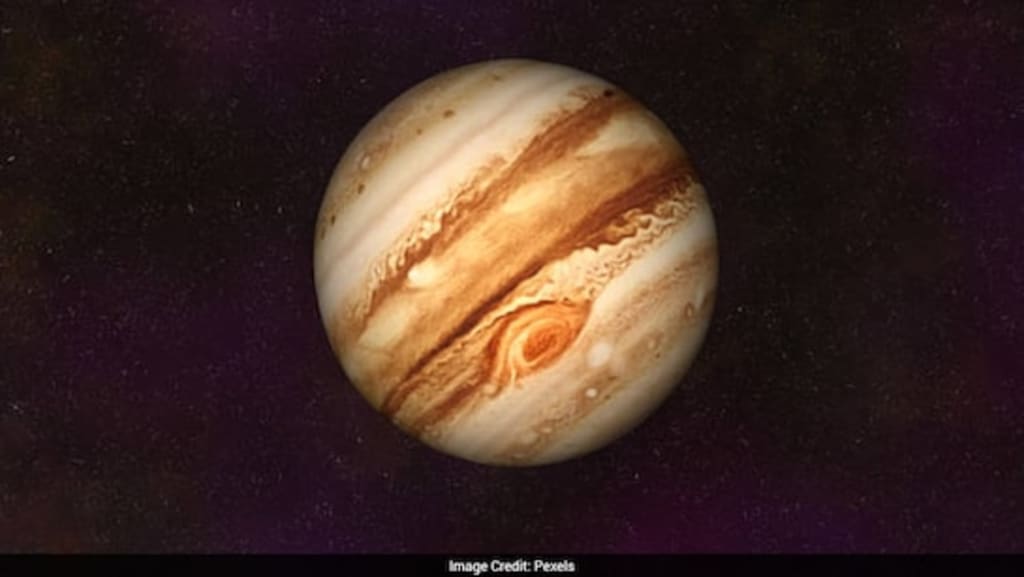
Jupiter’s icy moon Europa has long fascinated scientists as one of the most intriguing worlds in our solar system. Beneath its cracked, frozen surface lies a vast subsurface ocean that may contain more water than all of Earth’s oceans combined. Now, a new scientific study suggests that Europa may be actively supplying this hidden ocean with life-supporting chemical ingredients, further strengthening its status as a prime candidate in the search for life beyond Earth.
The findings provide fresh insight into how Europa’s surface and interior interact—and why this moon continues to be a top target for future space exploration missions.
---
Europa: An Ocean World Beneath Ice
Europa is slightly smaller than Earth’s Moon, yet it holds enormous scientific importance. Scientists believe its subsurface ocean is kept liquid by tidal heating caused by Jupiter’s intense gravitational pull. As Europa orbits the gas giant, its interior flexes, generating heat that prevents the ocean from freezing solid.
What makes Europa especially compelling is not just the presence of liquid water, but the possibility that this ocean contains the chemical building blocks necessary for life. Until recently, however, a major question remained unanswered: how do essential nutrients and energy sources reach the ocean beneath kilometers of ice?
---
New Study Reveals Surface-to-Ocean Transport
The latest study suggests that Europa’s icy surface may be actively delivering oxidants and other life-supporting compounds into its subsurface ocean. These materials are produced on the surface when intense radiation from Jupiter bombards Europa’s ice, breaking apart water molecules and creating oxygen-rich compounds.
According to the research, geological processes—such as ice cracking, subduction-like movement, and possible melting—could transport these surface materials downward into the ocean. If confirmed, this process would create a chemical energy gradient similar to what supports life in Earth’s deep oceans.
“This is exactly the kind of mechanism scientists hope to find,” the study notes. “It links surface chemistry with subsurface habitability.”
---
Why Oxidants Matter for Life
On Earth, life thrives not only where water exists, but where chemical reactions can release energy. In deep-sea hydrothermal vents, organisms survive by feeding on chemical energy rather than sunlight.
Europa’s surface-generated oxidants could serve a similar role. When mixed with reduced compounds in the ocean—possibly released from Europa’s rocky seafloor—these oxidants could fuel metabolic processes for microbial life.
In simple terms, Europa may have both:
Water (a vast subsurface ocean)
Energy (chemical reactions)
Chemistry (essential elements for life)
This combination is often described as the “holy trinity” of habitability.
---
Evidence From Cracks, Ridges, and Chaos Terrain
Europa’s surface is covered in fractures, ridges, and regions known as “chaos terrain,” where ice appears broken and refrozen in jumbled patterns. Scientists believe these areas are signs of active exchange between the surface and the interior.
The study analyzed these features and concluded that Europa’s ice shell may be dynamic rather than static. In some regions, surface ice could sink into warmer layers below, carrying oxidants and other materials with it.
This challenges earlier assumptions that Europa’s thick ice shell might isolate the ocean from the surface, making life less likely.
---
Implications for the Search for Life
The idea that Europa’s ocean is being chemically fed from above significantly improves its chances of being habitable. It suggests the ocean is not a stagnant body of water, but a chemically active environment with ongoing energy inputs.
Astrobiologists say this makes Europa one of the most promising locations in the solar system to search for life—perhaps even more so than Mars.
“If Europa’s ocean is chemically connected to the surface, it dramatically increases the odds that life could exist there today,” researchers involved in the study explain.
---
Europa Clipper and the Next Big Steps
These findings come at a crucial time, as NASA prepares for the Europa Clipper mission, designed to study the moon in unprecedented detail. The spacecraft will conduct dozens of close flybys, using radar, spectrometers, and cameras to analyze Europa’s ice shell, surface chemistry, and possible plume activity.
If plumes of water erupting from Europa’s interior are confirmed, future missions could even sample ocean material without drilling through the ice—an extraordinary opportunity for astrobiology.
The new study will help guide mission planning, identifying regions where surface-to-ocean exchange is most likely occurring.
---
A World That Keeps Surprising Scientists
Europa continues to challenge assumptions about where life might exist. Once thought to be a frozen, lifeless moon, it is now seen as a dynamic world with liquid water, geological activity, and potentially life-supporting chemistry.
While no direct evidence of life has yet been found, studies like this one narrow the gap between possibility and probability.
---
Conclusion
The latest research suggesting that Europa may be supplying its subsurface ocean with life-supporting matter marks a major step forward in our understanding of this icy moon. By revealing a plausible pathway for essential chemicals to reach the ocean, the study strengthens Europa’s reputation as one of the most habitable environments beyond Earth.
As future missions probe deeper into Europa’s mysteries, this moon may one day answer one of humanity’s most profound questions: Are we alone in the universe?
About the Creator
Keep reading
More stories from Salaar Jamali and writers in Beat and other communities.
Buried Beneath Antarctic Ice, Scientists Uncover a Lost World Frozen in Time for 34 Million Years
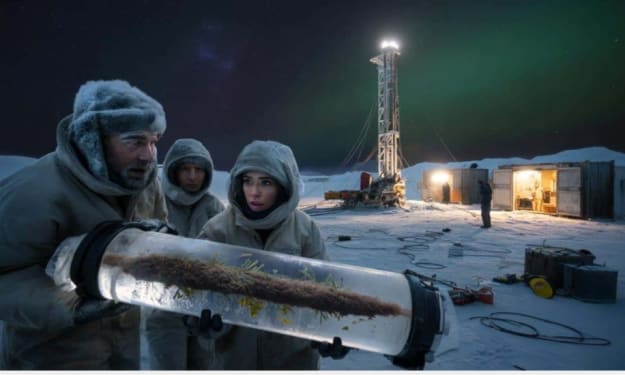
In a remarkable breakthrough, scientists have discovered an ancient ecosystem buried beneath two kilometers of Antarctic ice, frozen and preserved for an astonishing 34 million years. This “lost world” provides an extraordinary window into Earth’s climate, biodiversity, and geological history during the late Eocene, a period of significant global transformation.
By Salaar Jamaliabout 6 hours ago in Beat
Off the Book
It ended like every other stupid idea. Badly, and alone. I’m researching digital confession ethics, he said. A tech ethicist. He gestured at floating data I couldn’t see then pulled out a physical notebook. Actual paper, fountain pen. He held it up like he was showing me scripture.
By Nicky Frankly4 days ago in Fiction



Comments
There are no comments for this story
Be the first to respond and start the conversation.