Fiaz Ahmed Brohi
Bio
I am a passionate writer with a love for exploring and creating content on trending topics. Always curious, always sharing stories that engage and inspire.
Stories (606)
Filter by community
Too Expensive Even for China: The Country Halts Its Ambitious Race With Europe to Build the World’s Largest Particle Accelerator. AI-Generated.
For years, China appeared poised to overtake Europe in one of the most ambitious scientific races of the 21st century: the construction of the world’s largest and most powerful particle accelerator. Designed to surpass CERN’s Large Hadron Collider (LHC), the proposed Chinese machine promised to unlock new mysteries of the universe and redefine global leadership in fundamental physics. But now, in a surprising turn, China has effectively halted the project—citing a reason rarely associated with the world’s second-largest economy: cost.
By Fiaz Ahmed Brohi16 days ago in The Swamp
Europe Won’t Be Blackmailed,” Danish PM Says as NATO Allies Unite Over Trump’s Greenland Threat. AI-Generated.
Europe’s political leadership has delivered an unusually blunt message after renewed comments from former U.S. President Donald Trump reignited controversy over Greenland: the continent will not be pressured, coerced, or intimidated over its territory. Danish Prime Minister Mette Frederiksen declared that “Europe won’t be blackmailed,” as NATO allies rallied behind Denmark to reaffirm sovereignty, international law, and alliance unity.
By Fiaz Ahmed Brohi16 days ago in The Swamp
Shah Rukh Khan at Joy Awards 2026: Bollywood Icon Hails Saudi Arabia’s Warmth, Love, and Hospitality. AI-Generated.
Bollywood superstar Shah Rukh Khan, often hailed as the “King of Bollywood,” stole the spotlight once again at the 2026 Joy Awards, held this year in Riyadh, Saudi Arabia. The actor, whose global fan base spans continents, used the platform not only to celebrate cinematic excellence but also to express his admiration for the warmth and hospitality extended by Saudi Arabia to artists, fans, and visitors. The Joy Awards, which recognize achievements across film, music, and entertainment, have increasingly drawn attention from international stars, reflecting Saudi Arabia’s growing prominence as a hub for global cultural exchange. Shah Rukh Khan’s presence at the event was a testament to this trend, and his interactions with fans and local dignitaries highlighted the country’s evolving approach to entertainment and tourism. In his acceptance speech for a special honor recognizing his contribution to cinema, Khan spoke about the joy of connecting with audiences worldwide. “Saudi Arabia has welcomed me with incredible warmth,” he said. “The love I have received here is unlike anything I have experienced. From the fans to the organizers, every interaction has been filled with genuine hospitality. It is heartwarming to see the country embrace art and artists with such enthusiasm.” The actor’s remarks resonated deeply with the audience, which included prominent figures from the film industry, cultural institutions, and international media. Shah Rukh Khan also praised Saudi Arabia’s efforts to promote global entertainment, citing the rapid development of venues, cultural festivals, and media infrastructure in the kingdom. “The energy here is palpable,” he noted. “Saudi Arabia is not just hosting an awards show; it is building a platform where artists and audiences can come together to celebrate creativity, talent, and storytelling.” Khan’s visit coincided with a period of significant transformation in Saudi Arabia’s entertainment landscape. Over the past few years, the country has invested heavily in cultural projects, from theaters and concert halls to film festivals and live events. These initiatives aim to diversify the economy and provide global audiences with access to unique cultural experiences. Shah Rukh Khan’s attendance at the Joy Awards highlights the success of these efforts and underscores the kingdom’s growing influence in the global entertainment industry. Fans gathered outside the venue and online to celebrate the superstar’s presence. Social media platforms were flooded with photos, videos, and messages expressing admiration for Khan and excitement about his visit. Many applauded his acknowledgment of Saudi Arabia’s hospitality, while others noted that his words helped bridge cultural divides and foster mutual understanding. “Shah Rukh Khan is not just a phenomenal actor; he is a global ambassador for goodwill and cultural exchange,” tweeted one fan. In addition to his public appearances, Shah Rukh Khan took part in private events and discussions with local filmmakers, actors, and industry professionals. These sessions focused on the future of cinema in the Middle East, co-productions with Indian studios, and strategies for nurturing local talent. According to sources, Khan encouraged aspiring artists to pursue their dreams, emphasizing that storytelling transcends borders and languages. The Joy Awards 2026 itself was a showcase of international talent and cross-cultural collaboration. Saudi Arabia’s vision of opening its doors to global entertainment has attracted filmmakers, musicians, and actors from across the world. Shah Rukh Khan’s participation added star power to the event, drawing attention from audiences far beyond the region. His engagement reinforced the idea that cultural exchange and mutual respect can create meaningful connections between nations. Industry analysts suggest that such high-profile visits by global celebrities could accelerate Saudi Arabia’s emergence as a major entertainment destination. By hosting renowned actors and supporting international awards, the kingdom is sending a strong message that it values creativity, diversity, and global collaboration. Shah Rukh Khan’s glowing remarks about the country’s hospitality further enhance its reputation among international audiences. For Khan, the visit to Saudi Arabia was more than a promotional appearance; it was an opportunity to witness firsthand the nation’s evolving relationship with art and culture. His heartfelt praise highlighted the personal impact of the warm reception he received and reflected a genuine appreciation for the people and the country. “This is a place where dreams are celebrated,” he said. “And the people’s generosity and openness make the journey even more special.” In conclusion, Shah Rukh Khan’s presence at the 2026 Joy Awards underscored the growing cultural significance of Saudi Arabia on the global entertainment map. His acknowledgment of the country’s warmth, love, and hospitality resonated with fans and industry professionals alike, strengthening bonds between nations through art and cinema. The event highlighted how international collaborations, cultural exchange, and genuine human connections can enrich the global entertainment ecosystem while celebrating the universal language of storytelling.
By Fiaz Ahmed Brohi16 days ago in Geeks
The World’s Largest Factory Employs More Than 30,000 Workers and Builds Eight Jets Simultaneously. AI-Generated.
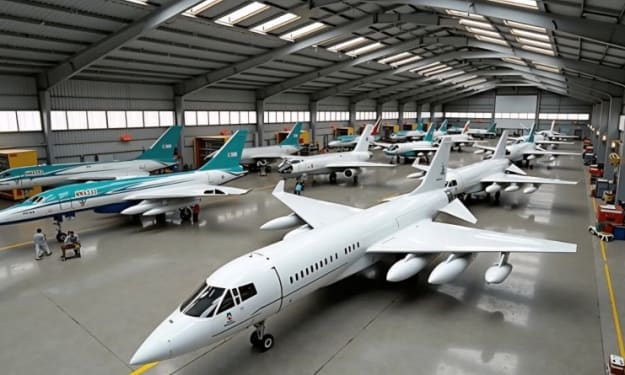
In the sprawling industrial heart of East Asia, a factory like no other hums with activity. It is the world’s largest aircraft manufacturing facility, capable of constructing eight jets simultaneously under a single roof. With more than 30,000 workers on staff, this colossal complex is not only a marvel of engineering and logistics but also a symbol of modern industrial might, demonstrating the scale at which aerospace production has evolved in the 21st century. The factory’s sheer size is staggering. Covering millions of square meters, the facility resembles a small city, complete with specialized zones for fuselage assembly, wing construction, avionics integration, and final testing. Every section of the plant is meticulously coordinated, allowing for multiple aircraft to be built in parallel. This simultaneous construction process dramatically reduces production time, ensuring that jets can move from blueprint to runway-ready in record speeds. A workforce of over 30,000 people contributes to every aspect of production, from engineers designing cutting-edge systems to assembly line technicians installing components with precision. Advanced robotics and automated guided vehicles supplement human labor, moving heavy parts and assembling delicate structures with unmatched accuracy. This hybrid model of human skill combined with automation enables the factory to maintain high efficiency without compromising quality. One of the most impressive achievements of the facility is its ability to handle eight aircraft at once. Each jet requires hundreds of thousands of individual components, from engines and avionics to interior fittings and safety systems. Coordinating such complexity across multiple planes simultaneously is a logistical feat that few factories anywhere in the world can match. The success of this model has positioned the facility as a global benchmark for large-scale aerospace manufacturing. Beyond its production capacity, the factory also serves as a hub for innovation. Research and development wings within the plant focus on improving jet efficiency, integrating new materials, and developing advanced avionics systems. Engineers and designers work closely with assembly teams, ensuring that innovations move seamlessly from concept to production. This synergy between R&D and manufacturing accelerates the adoption of new technologies in commercial aviation. The economic impact of the factory is equally significant. Employing tens of thousands of workers, it sustains numerous local communities and drives ancillary industries such as logistics, electronics, and specialized aerospace component manufacturing. Beyond employment, the facility has become a source of national pride, demonstrating the country’s ability to compete with long-established aerospace giants. Safety and quality control are paramount in a plant of this magnitude. Each jet undergoes rigorous testing at multiple stages, including structural integrity assessments, engine performance evaluations, and avionics calibration. With aircraft capable of carrying hundreds of passengers or performing critical defense roles, there is no room for error. The factory’s systematic approach ensures that every plane leaving its doors meets the highest international standards. The scale and efficiency of the factory also reflect broader trends in global aviation. As demand for air travel and defense capabilities grows, manufacturers are seeking ways to increase output while maintaining quality. Mega-factories like this one offer a solution, centralizing production, reducing costs, and accelerating delivery timelines. They also highlight the importance of supply chain integration, with thousands of suppliers worldwide contributing components that must arrive on time and in perfect condition. Critically, the factory represents more than just industrial might—it is a strategic asset. By producing large numbers of aircraft domestically, countries reduce reliance on foreign suppliers, strengthen national defense capabilities, and enhance their global aerospace competitiveness. For commercial aviation, it ensures airlines have access to the latest aircraft technologies and models without long delays. However, operating a facility of this size is not without challenges. Coordinating 30,000 employees, managing complex supply chains, and ensuring quality across multiple aircraft simultaneously requires constant oversight and adaptive management. Seasonal shifts, component shortages, and technological upgrades all demand agile solutions. Yet, the success of the factory demonstrates that with meticulous planning, investment in talent, and integration of modern technologies, even the most ambitious manufacturing projects are achievable. In the global aerospace landscape, this factory stands as a monument to human ingenuity, industrial ambition, and organizational excellence. Its ability to produce eight jets at once under one roof, powered by the combined efforts of tens of thousands of workers, is unmatched. For industry observers, it offers a glimpse into the future of aircraft manufacturing—a future defined by scale, precision, and innovation. Substitle:
By Fiaz Ahmed Brohi16 days ago in The Swamp
China Turns Fragile Reefs into Concrete Fortresses and the World Lets It Happen. AI-Generated.
In the South China Sea, a region fraught with geopolitical tensions and strategic importance, China has embarked on an unprecedented campaign of transformation. Over the past decade, the country has turned fragile coral reefs and low-lying atolls into massive, fortified islands, complete with runways, military facilities, and concrete structures that would seem more at home in a bustling metropolis than in an ecologically sensitive marine ecosystem. While this ambitious engineering feat has drawn widespread attention, the world has largely allowed it to unfold with minimal intervention. The transformation of these reefs into concrete fortresses is a testament to China’s capabilities in large-scale land reclamation. Using a combination of dredging, sand dumping, and heavy construction, China has expanded the surface area of natural formations, creating islands capable of supporting military installations, airstrips, and harbors. Satellite imagery over the years has revealed a stark contrast between the natural reefs and the artificial islands now dominating the waters, highlighting the scope and scale of the operation. One of the most remarkable aspects of this process is the sheer speed at which it has occurred. Some reefs that were mere specks above sea level a decade ago now host multi-story buildings, radar facilities, and missile sites. These developments have given China a strategic advantage, allowing it to extend its reach across the South China Sea and control vital shipping lanes, which carry a significant portion of the world’s trade. The artificial islands also serve as a deterrent, projecting power and influencing the behavior of neighboring countries. Yet, this strategic triumph comes at a severe environmental cost. Coral reefs, long considered the “rainforests of the sea,” are delicate ecosystems that support thousands of marine species. The dredging and construction processes have destroyed vast areas of reef, disrupted fish populations, and altered water currents. Marine biologists warn that the ecological damage is likely irreversible, with implications not just for biodiversity but also for the livelihoods of coastal communities that depend on fishing and tourism. The international response has been muted, despite widespread condemnation from environmental groups and concerned nations. Part of the challenge lies in the legal framework governing the South China Sea. While the United Nations Convention on the Law of the Sea (UNCLOS) sets out rules for territorial waters and exclusive economic zones, enforcement is weak, and China’s actions often exploit legal ambiguities. Attempts by other countries to challenge the reclamation and militarization of these islands have largely failed, leaving the status quo intact. Geopolitically, the world’s reluctance to intervene reflects a combination of caution and pragmatism. China is a global economic powerhouse, and many nations are hesitant to risk confrontation over a maritime dispute. Diplomatic efforts have mostly focused on negotiations and freedom-of-navigation patrols rather than direct interference. Meanwhile, the artificial islands have become symbols of China’s growing assertiveness, testing the resolve of neighboring countries like the Philippines, Vietnam, and Malaysia, who also claim parts of the contested waters. The militarization of these reclaimed islands adds another layer of concern. Some installations are equipped with radar systems capable of monitoring air and maritime traffic across the region. Others host missile batteries that can target ships and aircraft hundreds of kilometers away. These fortresses not only enhance China’s defensive posture but also complicate the strategic calculus for the United States and its allies, who conduct naval operations and patrols in the South China Sea. Despite the warnings, China shows no signs of slowing down. Plans are reportedly underway to expand existing islands and even construct new ones, solidifying its hold on the region. This situation presents a broader question for the international community: how should the world respond when engineering marvels clash with environmental preservation and global security norms? Environmentalists argue that immediate action is necessary to protect remaining reefs, enforce stricter regulations on land reclamation, and hold countries accountable for ecological destruction. Policymakers, on the other hand, are caught between the imperatives of maintaining peace, upholding international law, and addressing environmental crises. The South China Sea, therefore, has become a microcosm of global challenges—where ambition, national interest, and ecological responsibility collide. China’s creation of concrete fortresses from fragile reefs represents a bold combination of ingenuity and assertiveness. But the world’s muted response raises questions about the balance between strategic interests and environmental stewardship. Unless the international community develops new mechanisms to address such transformations, the South China Sea may serve as a warning of what happens when ambition overshadows accountability. The reefs that once teemed with life now stand as stark monuments to human determination, but also as cautionary tales. The consequences of these actions extend far beyond territorial control—they touch on global environmental health, regional stability, and the rules that govern shared spaces in an interconnected world.
By Fiaz Ahmed Brohi16 days ago in The Swamp
Ukraine War Briefing: Czechs Offer Drone-Hunting Jets as Zelenskyy Flags Air Defence Shortages. AI-Generated.
Ukraine’s war against Russia continues to highlight the urgent need for modern air defence systems, with President Volodymyr Zelenskyy warning that his country faces growing gaps in protecting its skies. In response to these concerns, the Czech Republic has stepped forward, offering specialized drone-hunting jets to assist Ukraine in countering the increasing threat of unmanned aerial vehicles (UAVs) deployed by Russian forces. This development underscores the evolving nature of warfare in Ukraine and the critical role of international support. Zelenskyy, speaking in a recent briefing, emphasized that Ukrainian air defence capabilities are stretched thin. Russian forces have increasingly relied on drones for reconnaissance, precision strikes, and artillery targeting, creating challenges for Ukraine’s existing radar and missile systems. “Our air defence is performing heroically, but the threats are growing, and we need support,” Zelenskyy said, highlighting the urgent need for modern equipment to counter small, fast-moving UAVs that are difficult to track and intercept. The Czech Republic’s offer comes amid rising European concern over the sustainability of Ukraine’s defence posture. Czech officials have proposed sending specialized fighter jets designed to intercept and neutralize drones, sometimes called “drone-hunting” aircraft. These jets are equipped with advanced radar, electronic warfare systems, and air-to-air missile capabilities tailored to target UAVs. Analysts believe that such systems could provide Ukraine with a crucial layer of defence, particularly around critical infrastructure, military bases, and supply hubs. The Ukrainian conflict has shown that drones have become a central component of modern warfare. Russia’s use of swarm drones, small surveillance UAVs, and weaponized drones has forced Kyiv to adapt rapidly. Traditional air defence systems, while effective against larger aircraft and missiles, often struggle to detect and destroy smaller drones at low altitudes. The introduction of specialized drone-hunting jets could help Ukraine close this technological gap, giving its forces greater confidence in defending vital positions. However, integrating new aircraft into Ukraine’s military is not without challenges. Training pilots, establishing logistics support, and maintaining high operational readiness are all critical. Experts warn that simply delivering advanced equipment is insufficient unless it is paired with effective operational planning and maintenance infrastructure. Ukraine’s military has faced similar hurdles in the past when receiving Western fighter jets, underscoring the importance of comprehensive support packages alongside hardware. International reactions to the Czech proposal have been broadly positive. European nations have increasingly recognized that supporting Ukraine requires not just ground weapons, but a multi-dimensional approach that addresses air, sea, and cyber threats. Countries such as Poland and Germany have indicated interest in bolstering Ukraine’s air defence, while the United States continues to supply missile systems and radar technology. The Czech initiative is seen as a timely step that complements these broader efforts. Experts also point out that the drone threat is not merely tactical—it has strategic implications. Drones allow Russian forces to bypass traditional defensive lines, gather intelligence, and strike high-value targets with relative impunity. By enhancing Ukraine’s ability to counter drones, the Czech Republic is helping level the playing field, giving Kyiv the ability to protect critical infrastructure, maintain supply chains, and conduct counteroffensive operations with reduced vulnerability from aerial surveillance and strikes. Beyond immediate military considerations, the offer also sends a symbolic message of solidarity. The Czech Republic, a NATO member, is signaling that European partners are willing to provide innovative solutions to emerging threats, even as the conflict enters its extended phase. For Ukraine, receiving such support reinforces the perception that its struggle has broader geopolitical significance and that allies remain committed to ensuring its territorial integrity. While the introduction of drone-hunting jets will not solve all of Ukraine’s air defence challenges, it represents a meaningful step in addressing one of the conflict’s most pressing vulnerabilities. Zelenskyy has made clear that his country requires continued international assistance, not only to survive the current offensive but to modernize its armed forces and prepare for the long-term implications of high-tech warfare. As the war continues, Ukraine’s evolving defence strategy highlights the importance of technological adaptation, international cooperation, and proactive planning. With Czech support and broader Western aid, Kyiv aims to close critical gaps in its air defence, protect its population, and maintain operational resilience against Russian aggression. The deployment of drone-hunting jets may well mark a turning point in Ukraine’s aerial defence capabilities, offering hope that emerging threats can be countered with innovation and collaboration.
By Fiaz Ahmed Brohi16 days ago in The Swamp
Basmati Boom Propels Pakistan Past Vietnam. AI-Generated.
Pakistan’s rice industry is witnessing an unprecedented surge as exports of Basmati rice propel the country ahead of Vietnam in global rankings. Once overshadowed by other major rice exporters, Pakistan has leveraged its premium Basmati varieties to capture higher-value markets and strengthen its position in international trade. Analysts say this boom is not only boosting foreign exchange reserves but also revitalizing rural economies dependent on rice cultivation. Basmati rice, known for its long grains, aromatic fragrance, and unique taste, has long been considered a premium product in global markets. While India and Pakistan have historically dominated the Basmati segment, Pakistan’s recent growth is attributed to a combination of favorable climatic conditions, government incentives, and increased demand from Middle Eastern and European countries. According to trade reports, Pakistan’s Basmati exports have surged by nearly 20% in the past year, overtaking Vietnam’s total rice exports in value terms. Vietnam, traditionally a powerhouse in non-Basmati rice varieties, has relied heavily on high-volume, low-cost exports. However, Pakistan’s strategy of focusing on premium Basmati has allowed it to generate higher revenue with comparatively lower shipment volumes. This approach demonstrates the effectiveness of targeting niche markets rather than competing solely on quantity. Industry experts say that the shift reflects Pakistan’s understanding of evolving global consumer preferences, where quality and branding increasingly dictate purchasing decisions. The Basmati boom has had significant economic implications. Rural communities in Punjab and Sindh, where Basmati cultivation is concentrated, are experiencing increased incomes and better employment opportunities. Farmers report higher profits per hectare due to the export premium associated with Basmati, which in turn stimulates local economies. The government has also introduced measures to support the industry, including export incentives, streamlined certification processes, and investments in modern milling and packaging technologies. International demand for Basmati rice has been fueled by changing dietary trends and the growing diaspora in the Middle East, North America, and Europe. Pakistani Basmati is increasingly being marketed as a premium brand, often fetching prices two to three times higher than regular rice. This branding strategy has helped Pakistan not only compete with other major rice exporters but also command greater influence over global pricing. According to trade analysts, Pakistan now accounts for nearly 40% of the world’s Basmati exports, a figure expected to rise as more countries recognize the quality and heritage of Pakistani rice. However, the rapid expansion of Basmati exports also presents challenges. Water-intensive cultivation practices, coupled with climate change, pose risks to sustainability. Experts warn that over-reliance on specific regions for production could make the industry vulnerable to environmental fluctuations. To mitigate these risks, research institutions in Pakistan are developing drought-resistant Basmati varieties and promoting more efficient irrigation methods. Investments in cold storage and logistics infrastructure are also essential to maintain the rice’s quality during transit to international markets. In addition, competition from India remains significant. India continues to export large quantities of Basmati rice, particularly to Europe and the Middle East. To maintain its advantage, Pakistan is emphasizing traceability, geographic indications, and quality certifications that assure buyers of authentic Pakistani Basmati. This approach helps differentiate the product and reinforces consumer confidence in its origin. Economists also note that the Basmati boom strengthens Pakistan’s overall export profile. With trade balances under pressure and foreign exchange reserves fluctuating, high-value agricultural exports such as Basmati provide a crucial boost. The government is exploring complementary measures, including value-added products like ready-to-cook Basmati meals, rice-based snacks, and packaged premium rice, which can further enhance earnings and expand market reach. The global Basmati market is poised for continued growth, and Pakistan’s proactive policies position it to capitalize on this opportunity. Strategic partnerships, investment in research, and robust marketing campaigns are key to sustaining momentum. By focusing on quality, authenticity, and niche markets, Pakistan is not only overtaking Vietnam in export value but also reinforcing its reputation as the home of some of the world’s finest rice. In conclusion, the Basmati boom is more than a temporary spike in exports—it represents a long-term strategic shift for Pakistan’s agriculture sector. By prioritizing premium products, investing in sustainability, and cultivating global markets, Pakistan is creating economic value for farmers, strengthening national trade, and redefining its position in the global rice industry. As the world continues to recognize the unmatched quality of Pakistani Basmati, the country’s rice sector is set to play an increasingly central role in its economic growth story.
By Fiaz Ahmed Brohi16 days ago in Trader
Protests in Greenland and Denmark Against Trump Plans. AI-Generated.
Greenland and Denmark are witnessing a wave of protests in response to former U.S. President Donald Trump’s controversial plans regarding the Arctic territory. The unrest highlights a growing concern among citizens about sovereignty, national security, and the broader implications of foreign involvement in the region. With Trump’s past interest in acquiring Greenland making headlines, the protests reflect both local frustrations and the international significance of Arctic geopolitics. The protests have been widespread, with thousands of Greenlanders taking to the streets in the capital Nuuk and other towns. Demonstrators carried placards reading slogans such as “Greenland is not for sale” and “Our land, our future”. Many citizens expressed deep unease over what they perceive as attempts by external powers to exert control over the island’s resources and strategic position. Greenland, while an autonomous territory under the Kingdom of Denmark, is rich in natural resources including rare earth elements, minerals, and potential oil and gas reserves. The Arctic region’s strategic importance for shipping routes and military positioning has also intensified interest from global powers. In Denmark, protests have echoed similar concerns. Copenhagen has seen demonstrations both in support of Greenland’s autonomy and in opposition to any U.S. intervention. Citizens worry that political negotiations involving Trump could compromise Denmark’s influence over its territories and destabilize the delicate balance of governance in the Arctic. Danish Prime Minister Mette Frederiksen has reiterated that Greenland’s people must decide their future, emphasizing self-determination and the right to manage their land without outside pressure. Trump’s reported interest in Greenland, first revealed during his presidency, reignited fears that the U.S. might attempt to exert control over the island in ways that bypass local governance. Though Trump later downplayed his intentions, the issue has persisted in public discourse, fueled by social media campaigns and news coverage. Greenlanders’ reaction is rooted in a long history of asserting their independence from external powers. While Denmark retains responsibility for foreign affairs and defense, Greenland exercises control over its domestic policies, cultural affairs, and natural resources. Experts note that the protests are also a statement on broader Arctic geopolitics. The Arctic has become a focal point for competition among global powers, including the U.S., Russia, and China. Strategic military bases, shipping lanes that could reduce trade times significantly, and untapped natural resources make the region increasingly valuable. Greenland’s location between North America and Europe adds to its importance. Protesters argue that any move by foreign governments to influence Greenland could set a precedent, risking the island’s autonomy and sovereignty. Environmental concerns have also fueled public anger. Greenland’s fragile ecosystem is under threat from climate change, rising sea levels, and potential industrial exploitation. Many activists fear that foreign intervention could accelerate environmental degradation, putting communities and wildlife at risk. Local leaders stress that decisions regarding mining, oil drilling, and infrastructure must be made with Greenlandic priorities in mind, not as part of geopolitical maneuvering by powerful nations. The protests have drawn international attention. Media outlets worldwide have reported on the demonstrations, highlighting how Greenlanders and Danes alike are mobilizing to defend their land and decision-making rights. Social media platforms have amplified the message, with hashtags calling for respect for Greenlandic autonomy trending in multiple countries. Some commentators suggest that these protests serve as a reminder that small populations can exert significant influence on global conversations, particularly when it comes to territorial sovereignty and environmental stewardship. Political analysts note that while Trump is no longer in office, his plans continue to have a symbolic impact. The protests represent a broader resistance to foreign interference and a call for local governance. Greenland’s government has responded diplomatically, urging calm while reaffirming that any discussions regarding the island’s future must involve Greenlandic representatives directly. The Danish government has also supported this stance, ensuring that any international engagement respects Greenland’s autonomy. In conclusion, the protests in Greenland and Denmark against Trump’s plans underscore the importance of sovereignty, self-determination, and environmental stewardship in the Arctic. They highlight the intersection of local concerns with global geopolitics and demonstrate how communities can mobilize to protect their interests. As international attention remains focused on the Arctic, Greenlanders continue to assert their voice, reminding the world that the island’s future rests in the hands of its own people, not external powers. The protests are more than just a reaction to past political statements; they reflect a deep, ongoing commitment to local decision-making, cultural preservation, and sustainable development. For Greenland and Denmark, the message is clear: the Arctic is not a bargaining chip—it is home to people who are determined to shape their destiny.
By Fiaz Ahmed Brohi16 days ago in The Swamp
India Has a River That Flows Backwards: Know Which River It Is. AI-Generated.
India, a land of rivers and spirituality, is home to more than 1,500 rivers that nourish its agriculture, sustain ecosystems, and form the backbone of its culture and economy. Most rivers follow the natural topography, flowing from higher altitudes to lower plains, eventually joining larger rivers or emptying into the sea. But among India’s vast river network, there exists a fascinating anomaly—a river that flows backward. Yes, you read that right. Contrary to the usual flow, this river reverses its course under certain conditions, capturing the imagination of locals, scientists, and travelers alike. The river in question is the Narmada River, which primarily flows westward through the states of Madhya Pradesh, Maharashtra, and Gujarat before emptying into the Arabian Sea. The Narmada is one of India’s most significant rivers, both historically and culturally. It is considered sacred, with numerous temples and ghats along its banks. Its backward flow phenomenon, however, is an extraordinary natural event tied to tidal influences, geography, and seasonal changes. Understanding the Phenomenon The Narmada River’s backward flow occurs near its estuary in Bharuch, Gujarat, where the river meets the Arabian Sea. During the monsoon season, or when the sea tide is exceptionally high, the force of the incoming tide can overpower the river’s natural current. As a result, the water begins to flow upstream, moving back into the river instead of towards the sea. Locals often refer to this as the river “swallowing” the sea, and the phenomenon has been documented by hydrologists and environmental experts. This is not unique to the Narmada; tidal rivers worldwide exhibit similar behavior, but it is rare in India. The combination of the river’s relatively flat gradient near its mouth, high tidal variations in the Arabian Sea, and heavy seasonal rainfall make the Narmada one of the few rivers in India where this backward flow is noticeable and significant. Cultural and Historical Significance The Narmada River has long been celebrated in Indian culture. Ancient texts, folklore, and religious scriptures frequently praise its waters. The backward flow phenomenon has inspired myths and local stories. Some communities consider it a divine occurrence, believing that the river reverses its course to honor the gods or cleanse the lands during specific lunar events. Pilgrimages along the river, known as the Narmada Parikrama, attract thousands of devotees every year. They often plan their visits to witness the backward flow, adding a spiritual dimension to a natural phenomenon. Beyond its religious significance, the river has historically served as a major trade and transportation route. Ancient settlements flourished along its banks, benefiting from fertile soils and reliable water. The Narmada’s estuary, where the backward flow occurs, became a hub for commerce, as the unusual river dynamics created navigable conditions that local traders skillfully exploited. Scientific Perspective Hydrologists and geologists have studied the Narmada’s backward flow to understand its dynamics better. Tidal action, riverbed gradient, and seasonal water volume play a crucial role. During the monsoon, the river swells with rainwater from its catchment areas, increasing its speed and volume. When the sea tide rises simultaneously, the river’s velocity can be temporarily reversed. Scientists monitor these events to study sediment transport, estuarine ecology, and flood risk management. The phenomenon also provides insights into how rivers respond to climate variations. Rising sea levels and changing rainfall patterns could alter the intensity and frequency of such backward flows in the future. Understanding these dynamics is essential for local infrastructure planning, agriculture, and disaster preparedness, particularly in flood-prone regions. Tourism and Exploration The backward flow of the Narmada River has recently become a point of interest for eco-tourism and adventure enthusiasts. Visitors flock to Bharuch and nearby areas to witness this rare occurrence. Guided tours offer explanations of the tidal dynamics, cultural stories, and ecological importance of the river. Kayaking and river cruises along the estuary allow tourists to experience the force of the water reversing, a sight that is both mesmerizing and humbling. Local authorities are also promoting awareness about the river’s unique behavior. Efforts include signage, educational programs, and environmental campaigns to protect the river from pollution and unsustainable development. By combining tourism with conservation, the Narmada backward flow has become a symbol of India’s natural wonders and the delicate balance between nature and human activity. Conclusion India’s Narmada River is not just a source of water and life; it is a living example of nature’s unpredictability and grandeur. Its rare backward flow phenomenon reminds us of the power of tides, the intricacies of geography, and the cultural narratives that rivers inspire. Whether you are a traveler seeking unusual natural events, a student of hydrology, or a devotee of India’s spiritual heritage, witnessing the Narmada’s backward flow is an unforgettable experience. In a country renowned for its diverse landscapes and river systems, the Narmada stands out as a river that defies expectations, flowing backward against the tide and leaving behind a story that is part science, part culture, and wholly awe-inspiring.
By Fiaz Ahmed Brohi16 days ago in The Swamp
Greenland's People Must Decide Its Future, Says Nandy. AI-Generated.
In a recent statement, UK minister Lisa Nandy emphasized that the people of Greenland must have the primary say in determining their future, underscoring the principle of self-determination in the face of growing international interest in the Arctic region. As geopolitical tensions intensify and the Arctic’s strategic and resource potential becomes increasingly valuable, the minister’s remarks highlight the delicate balance between foreign interests and local autonomy. Greenland’s Strategic Importance Greenland, the world’s largest island, has become a focal point in global geopolitics. Its location between the North Atlantic and Arctic Oceans offers strategic military and shipping advantages. Melting ice due to climate change is opening previously inaccessible sea routes and exposing natural resources, including rare earth minerals and potentially vast oil and gas reserves. These developments have drawn attention from countries like the United States, China, and European powers, each seeking to secure their interests in the Arctic. The island is an autonomous territory within the Kingdom of Denmark, with its own government handling most domestic matters, though defense and foreign policy remain under Danish control. Greenland’s growing autonomy has fueled discussions about whether the island should pursue greater independence or maintain its current relationship with Denmark. Nandy’s Statement and Its Significance In her address, Nandy stressed that any decision regarding Greenland’s future should be led by its people, not dictated by external powers. “Greenlanders must have the right to chart their own course,” she said, emphasizing the importance of respecting local voices amid international debates about the Arctic. Her comments came in the wake of increased international attention, particularly from the United States. Former President Donald Trump had previously proposed purchasing Greenland, a plan that was widely criticized and rejected by Danish and Greenlandic officials. However, the idea highlighted the geopolitical importance of the region and the potential for foreign powers to influence its future. Economic and Environmental Considerations Greenland’s future is not solely a political question. Economic development and environmental protection are deeply intertwined. The island’s economy relies heavily on fishing, tourism, and public sector employment. However, the melting ice and new accessibility to minerals and hydrocarbons present both opportunities and risks. While resource extraction could provide significant revenue and accelerate Greenland’s path toward economic self-sufficiency, it also carries environmental costs that could threaten the fragile Arctic ecosystem. Nandy’s emphasis on local decision-making implies that Greenlanders should weigh the trade-offs carefully, balancing economic ambitions with environmental stewardship. Global Implications The Arctic is increasingly becoming a theater of strategic competition. Russia has expanded its military presence along its Arctic coast, while China has labeled itself a “near-Arctic state” and is pursuing partnerships in the region. NATO has also shown interest in monitoring and securing Arctic sea routes. In this context, Greenland’s political choices carry broader international significance. By affirming the principle that Greenland’s people must decide their own path, Nandy signals that external actors should respect self-determination while engaging diplomatically. Her comments implicitly caution against attempts to pressure Greenland politically or economically, emphasizing that sustainable development and stability depend on local leadership and consent. Local Voices and Autonomy Greenlanders themselves have voiced a mix of opinions about the future. Some favor greater independence from Denmark, hoping to leverage natural resources to build an economically self-sufficient state. Others prioritize maintaining ties with Denmark, which provides financial support and international security guarantees. The debate is further complicated by the need to balance traditional livelihoods, such as fishing and hunting, with the economic promise of resource extraction. Experts note that ensuring meaningful participation of Greenland’s people in these discussions is essential. Policies imposed externally risk undermining social cohesion and could provoke resistance or unrest. Nandy’s comments highlight the importance of empowering local governance structures and supporting informed decision-making. Conclusion Greenland’s future is a complex tapestry of geopolitics, economics, and environmental stewardship. As international attention intensifies, the principle of self-determination remains crucial. The UK’s Lisa Nandy underscored that Greenlanders must be the ultimate decision-makers regarding their political and economic path. Whether Greenland moves toward full independence, strengthens its autonomy within Denmark, or negotiates partnerships with global powers, the key takeaway is clear: the island’s people must lead the conversation and shape their destiny. External interest, while inevitable, must be guided by respect for local governance, environmental sustainability, and the democratic will of Greenland’s residents. As the Arctic continues to transform due to climate change and strategic competition, Greenland stands at a crossroads. The decisions made in the coming years will not only define the island’s political and economic future but also serve as a benchmark for how global powers respect the sovereignty and agency of small, strategically important territories.
By Fiaz Ahmed Brohi16 days ago in Longevity
Why the Govt's Approval for 114 French Dassault Rafales Raises Questions. AI-Generated.
India’s recent approval for the purchase of 114 Dassault Rafale fighter jets from France has reignited discussions about defense planning, procurement processes, and the balance between national security and fiscal responsibility. While the government frames this as a step toward modernizing the Indian Air Force (IAF), critics are questioning whether this massive acquisition is entirely justified or if it masks deeper strategic and operational issues. The Rafale Deal in Context The Rafale deal is one of the largest defense procurements in India’s history, valued at over $15 billion. The aircraft, built by French aerospace giant Dassault Aviation, is considered one of the most advanced multi-role fighters in the world, equipped with state-of-the-art avionics, weapons systems, and stealth capabilities. India has already inducted a batch of these jets, and the government’s approval now paves the way for the remaining 114 to be produced and delivered. Proponents argue that Rafales will significantly enhance India’s air combat capabilities, particularly in high-altitude operations along the northern borders with China and in countering aerial threats from Pakistan. The jets’ ability to carry advanced missiles and precision-guided munitions makes them a formidable addition to the IAF’s fleet. Questions About Costs and Procurement Despite the strategic rationale, several questions remain. Critics highlight the high cost per aircraft, which far exceeds what India spends on domestic fighter programs such as the HAL Tejas. While Rafales offer advanced technology, the steep price tag raises concerns about whether such large-scale imports strain India’s defense budget and divert funds from domestic development programs. Moreover, the approval process itself has drawn scrutiny. Transparency advocates argue that the government’s decision-making lacks sufficient public disclosure and debate. Questions have been raised about how costs were negotiated, why offset agreements with French companies have not fully materialized, and whether India could have leveraged more local manufacturing to reduce expenses and foster the domestic defense industry. Domestic Defense Industry Implications India has invested heavily in indigenous defense production under initiatives like “Make in India”, aiming to reduce dependence on foreign suppliers and build local expertise. Critics of the Rafale deal argue that approving 114 foreign jets sends a mixed message to domestic manufacturers. HAL, India’s primary defense aerospace company, has been developing the Tejas fighter and has faced delays due to technical challenges and budget constraints. By purchasing a large number of foreign jets, some fear that local projects may be deprioritized, slowing India’s long-term goal of self-reliance in defense technology. Supporters counter that Rafales are needed immediately to address capability gaps while domestic programs catch up. They point out that indigenous jets like the Tejas cannot yet match the operational readiness, range, or payload of the Rafale, and that the imported jets complement rather than replace domestic efforts. Strategic Significance and Regional Dynamics Beyond cost and procurement concerns, the Rafale acquisition has geopolitical implications. France has been a key defense partner, and the deal strengthens Indo-French relations in the face of evolving security challenges in South Asia and the Indo-Pacific. The jets enhance India’s deterrence posture against potential adversaries and signal India’s commitment to modernizing its armed forces. However, critics caution that such acquisitions must be balanced with broader defense strategy. They argue that focusing on high-end fighters like Rafales may overlook other critical areas such as unmanned aerial vehicles, cyber defense, naval aviation, and ground-based air defense systems. A holistic approach, they contend, is essential to address the full spectrum of modern warfare threats. Public Debate and Accountability The approval of 114 Rafales also raises questions about democratic accountability in defense spending. Large-scale defense deals often involve classified details, but citizens and defense analysts stress the need for transparent justification, oversight by parliamentary committees, and adherence to ethical procurement practices. Public debate ensures that such multimillion-dollar acquisitions serve national interests rather than becoming politically motivated or financially opaque decisions. Conclusion India’s decision to approve 114 Rafale jets undoubtedly strengthens the IAF’s capabilities and bolsters strategic ties with France. Yet, it also highlights enduring debates over cost-effectiveness, domestic defense industry development, procurement transparency, and long-term strategic planning. As the Rafales gradually join the fleet, India will need to balance immediate defense needs with the broader goal of building a self-reliant, technologically advanced military. The Rafale deal is more than a transaction—it is a litmus test for India’s defense policy, industrial strategy, and governance. The government must ensure that while India soars with these cutting-edge jets, it does not lose sight of the bigger picture: developing indigenous capabilities, maintaining fiscal prudence, and preparing comprehensively for the complex security landscape of the 21st century.
By Fiaz Ahmed Brohi16 days ago in The Swamp
Yankee, Go Home’: Greenlanders Protest Trump’s Takeover Plans. AI-Generated.
In a wave of vocal opposition, thousands of Greenlanders have taken to the streets in protest, chanting “Yankee, go home” as news of former President Donald Trump’s reported interest in acquiring the Arctic island reverberates across the territory. The protests highlight the deep-seated concern among Greenlanders that foreign intervention could undermine their autonomy, culture, and control over strategic natural resources. The controversy began after reports surfaced that Trump had proposed purchasing Greenland, a vast autonomous territory of Denmark, rich in minerals, rare earth elements, and strategic Arctic real estate. Although the plan was officially dismissed by Danish officials, the mere suggestion ignited strong reactions across Greenland, where local residents and politicians see such a move as a threat to their self-governance and national identity. Protests and Public Sentiment In Nuuk, the capital of Greenland, demonstrators waved flags, carried banners, and voiced frustration at what they perceive as a historical pattern of foreign powers attempting to exert influence over their land. “We are not a commodity to be bought,” one protester told local media. Another held a sign reading, “Our home, our rules”, reflecting widespread sentiments that Greenlanders should have the final say in decisions affecting their territory. This public outcry is not just about land ownership—it is deeply tied to the preservation of Greenlandic culture and environmental stewardship. Many Greenlanders fear that foreign control could lead to exploitation of natural resources without consideration for local needs or environmental impact. Greenland, with its fragile Arctic ecosystem, is already facing the consequences of climate change, making sustainable governance a critical priority for its residents. Strategic Importance of Greenland Greenland’s geopolitical significance extends far beyond its ice-covered landscape. It sits atop rich deposits of rare earth minerals essential for modern electronics, renewable energy, and defense technology. Its location also gives strategic access to the Arctic Ocean, which is becoming increasingly navigable due to melting ice. These factors have drawn attention from major powers seeking a foothold in the Arctic, including the United States, China, and Russia. Trump’s interest, while unprecedented in modern times, underscores the island’s importance on the global stage. Analysts suggest that U.S. leaders view Greenland as critical for national security, satellite positioning, and Arctic military strategy. However, Greenlanders and Danish officials alike have made it clear that such considerations cannot override the rights and wishes of the people who call the island home. Danish Response and Autonomy Denmark, which governs Greenland under a framework of autonomous self-rule, swiftly rebuffed any talk of selling the territory. Danish Prime Minister stated that Greenland is “not for sale”, emphasizing that decisions about the island’s future must involve its residents and government. Greenlandic Premier echoed this sentiment, warning that foreign proposals, no matter how influential, would not bypass local authority. The protests, therefore, are not just directed at Trump personally, but at what is perceived as a disregard for Greenlandic sovereignty. Citizens demand that their voices be central in international discussions that impact their land, economy, and environment. Environmental Concerns Beyond political sovereignty, Greenlanders are acutely aware of the environmental implications of foreign intervention. Mining operations, military installations, and large-scale infrastructure projects could disrupt local ecosystems, wildlife habitats, and traditional ways of life, particularly for communities reliant on fishing and hunting. Many protesters argue that Greenland’s fragile Arctic environment must be prioritized over geopolitical and economic ambitions. Climate scientists have also weighed in, noting that Greenland’s ice sheet plays a critical role in regulating global sea levels. Any mismanaged exploitation of the island could have consequences that extend far beyond its borders, affecting coastal communities worldwide. Global Reactions The protests have drawn international attention, highlighting Greenland as a symbol of self-determination in a region increasingly contested for its resources. Observers from neighboring countries, as well as global media outlets, have noted that Greenlanders’ activism sends a clear message: foreign powers must respect local governance, culture, and environmental stewardship. Conclusion The slogan “Yankee, go home” captures the essence of the Greenlandic response—a firm assertion of autonomy in the face of external pressures. While Greenland remains under Danish governance, the island’s residents are clearly sending a message to the world: any discussion about their land, resources, or political future must include their voices. The protests serve as a reminder that even in the era of global geopolitics, the rights and perspectives of local communities cannot be ignored. As the Arctic continues to gain strategic and economic importance, Greenland’s stance may become a template for other regions seeking to protect sovereignty and environmental integrity in the face of international pressure. For now, Greenlanders remain united in their call: their home is their own, and no foreign power—no matter how influential—can override that right.
By Fiaz Ahmed Brohi16 days ago in The Swamp