Annie Kapur
Bio
I am:
🙋🏽♀️ Annie
📚 Avid Reader
📝 Reviewer and Commentator
🎓 Post-Grad Millennial (M.A)
***
I have:
📖 300K+ reads on Vocal
🫶🏼 Love for reading & research
🦋/X @AnnieWithBooks
***
🏡 UK


Stories (2938)
Filter by community
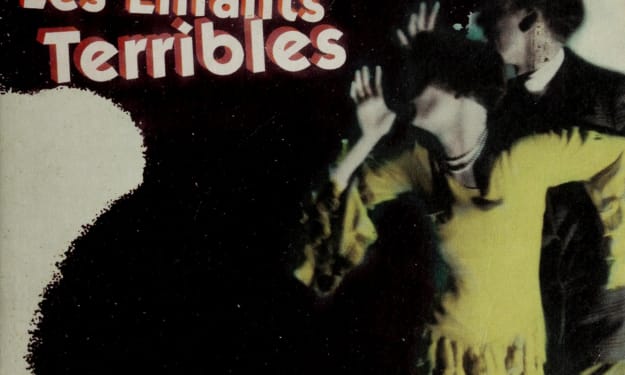
Book Review: "Les Enfants Terribles" by Jean Cocteau
“Les Enfants Terribles” by Jean Cocteau is a book that reminds me of the time I read “Ringolevio” and in that, I mean that it is where life is basically made into this metaphysical type of game. Sometimes this game can be amazing, filled with vigour and actually quite entertaining and other times, it can be dangerous as hell - and for the mind of children it can get a bit much. One thing I noticed in this book though is that no matter how dangerous or profane a situation may be for children or teenagers of their age, the writing style is almost fluently decadent and observational. It is always presented as beautifully tragic, as if we are supposed to believe that these children will be completely unharmed and thus we, are also participating in the strange imagination of this game. I don’t want to give too much away about the game itself but if you are going to believe that this is purely fictitious and in the children’s imaginations - then please reconsider. The game ends up being a degenerate and dangerous, a manipulative and ghastly thing, morphing from childhood to the teen years and all the way into pre-adulthood. It seems like there would be only one option to end the game itself and that would be if both children involved were to die. I will leave it up to you to find out whether that actually happens.
By Annie Kapur5 years ago in Geeks
Britain; in the Age of Brexit...
I have been wondering about this question ever since the referendum stated that Brexit was, of course, going to go ahead. What did these people think that Brexit was? Was it going to be exactly what people voted for or something entirely different altogether? And, at the age I was - I was old enough to vote but probably not smart enough to understand what people who voted 'leave' were actually voting for.
By Annie Kapur5 years ago in The Swamp
Book Review: "My First Wife" by Jakob Wassermann
“My First Wife” by Jakob Wassermann is a novel about a man who marries a woman after falling in love with the idea of her, her presentation etc. only to find out that she is entirely different in reality. This is something that I think people experience often and, in reality, it can lead to people just flat out hating each other. Jakob Wassermann expresses this as a very real problem for the protagonist and yet, there is nothing really wrong with the woman he is in love with - it is the idea of her which is simply very different to the reality of her. When you really think about it, both of them seem like they married for a reason that was not really loving each other but the protagonist marries for the fact that he likes the idea of the woman and the woman (Ganna) marries for the fact that she likes the idea of marriage. Both of them are completely dissatisfied since Ganna still wants her chaotic life to go ahead, but then again the idea of her that the protagonist had in mind was a mild-mannered wife-like woman who was both shy and intelligent. In reality, her life is in fact, very different. Besides this incredible storyline, the book is told in snippets and anecdotes that represent situations and times in the romantic relationship and during the marriage. The writing style, though sometimes tedious and a little repetitive, is actually pretty telling in some places about the difference between expectation and reality.
By Annie Kapur5 years ago in Geeks
A Filmmaker's Guide to: Historical Settings
In this chapter of ‘the filmmaker’s guide’ we’re actually going to be learning about literature and film together. I understand that many of you are sitting in university during difficult times and finding it increasingly hard to study and I understand that many of you who are not at university or not planning on it are possibly stuck of what to do, need a break or even need to catch up on learning film before you get to the next level. This guide will be brief but will also contain: new vocabulary, concepts and theories, films to watch and we will be exploring something taboo until now in the ‘filmmaker’s guide’ - academia (abyss opens). Each article will explore a different concept of film, philosophy, literature or bibliography/filmography etc. in order to give you something new to learn each time we see each other. You can use some of the words amongst family and friends to sound clever or you can get back to me (email in bio) and tell me how you’re doing. So, strap in and prepare for the filmmaker’s guide to film studies because it is going to be one wild ride.
By Annie Kapur5 years ago in Geeks
Book Review: "Quiet Days in Clichy" by Henry Miller
“Quiet Days in Clichy” I have to admit, is not one of Henry Miller’s best works but it is still something to be admired amongst the general realm of literature in which love letters are written to and about cities and places. In this text by Henry Miller, there is a general sense of awe pervading Paris and yet, something about it always seems a bit overly-romanticised. As if Henry Miller is really trying to make up for what the city lacks in substance, he builds up in stylistic writing and romantic images that require pastel-coloured backgrounds and berets sitting in a cafe somewhere in order to be full appreciated. I’m not saying that this is not a good idea, but what I am saying is to take this picture of Paris for what it is - a piece of art. It is not a representation of a city which is now basically in ruin and has been for a very long time. The contrast from New York to Paris is never really made definite upon the personalities within both with New York obviously having the more progressive types of people. Be that as it may, we cannot take away from the fact that the city of light has become of central importance to Henry Miller over the course of many texts of his and that it has served him well. One thing I have to say as well is that he makes this city, that is no longer in its prime, out to be something far greater than it is - and that is a skill, not a fault.
By Annie Kapur5 years ago in Geeks
A Filmmaker's Guide to: Trailers
In this chapter of ‘the filmmaker’s guide’ we’re actually going to be learning about literature and film together. I understand that many of you are sitting in university during difficult times and finding it increasingly hard to study and I understand that many of you who are not at university or not planning on it are possibly stuck of what to do, need a break or even need to catch up on learning film before you get to the next level. This guide will be brief but will also contain: new vocabulary, concepts and theories, films to watch and we will be exploring something taboo until now in the ‘filmmaker’s guide’ - academia (abyss opens). Each article will explore a different concept of film, philosophy, literature or bibliography/filmography etc. in order to give you something new to learn each time we see each other. You can use some of the words amongst family and friends to sound clever or you can get back to me (email in bio) and tell me how you’re doing. So, strap in and prepare for the filmmaker’s guide to film studies because it is going to be one wild ride.
By Annie Kapur5 years ago in Geeks
Review: "The Eyes of Orson Welles" (2018)
Created by Mark Cousins, this film is possibly the most intimate documentary I have seen on a filmmaker to date and I'm quite shocked that more people have not seen it. I have this film on DVD and honestly, each scene is a smooth-cut, well polished, watchable documentary that calms and eases the mind for late-night viewing and also shows you deep and personal things belonging to Orson Welles that have probably not been shown before on documentary television/film. From asking questions to making statements, from showing us items to showing us drawings, from deep personal information to family life and his mother, Mark Cousins structures the life of Orson Welles brilliantly from start to finish and leaves out no details that are appropriate to cover for his career and to understand who he really was.
By Annie Kapur5 years ago in Geeks
A Filmmaker's Guide to: The Weird
In this chapter of ‘the filmmaker’s guide’ we’re actually going to be learning about literature and film together. I understand that many of you are sitting in university during difficult times and finding it increasingly hard to study and I understand that many of you who are not at university or not planning on it are possibly stuck of what to do, need a break or even need to catch up on learning film before you get to the next level. This guide will be brief but will also contain: new vocabulary, concepts and theories, films to watch and we will be exploring something taboo until now in the ‘filmmaker’s guide’ - academia (abyss opens). Each article will explore a different concept of film, philosophy, literature or bibliography/filmography etc. in order to give you something new to learn each time we see each other. You can use some of the words amongst family and friends to sound clever or you can get back to me (email in bio) and tell me how you’re doing. So, strap in and prepare for the filmmaker’s guide to film studies because it is going to be one wild ride.
By Annie Kapur5 years ago in Geeks
Book Review: "Paris" by Julian Green
“Paris” by Julian Green is about how one man, who was born somewhere else, came to live most of his life in the then-picturesque French Capital and what he remembers of it. The images and quotations make for great reading, great philosophies and thoughts, and they make for a brilliant build of story for when we investigate the depths of each alleyway and piece of architecture that litters the city with stories of its own. There is something incredible about this book that when you read it, you actually feel like you are inhaling the Paris air at the same time as Julian Green is running around the city like a philosophical tour guide, on his race to show you everything he holds extremely dear to him. From the amazing palaces to the backstreet bohemian cafes, from the existential quotation to the collectivism of the city’s inhabitants, from the overwhelming sense of being alone in the world, to the implication that maybe, in reality, none of this really matters at all - Julian Green is showing us the most intricate parts of one of the most historical and mysterious cities of the modern world. He does this whilst telling his own stories and anecdotes, weaving them in with the descriptions, the statements and suggestions on what the city can teach us about ourselves and our appreciation of person and place.
By Annie Kapur5 years ago in Geeks
Book Review: "Brother Robert" by Annye C. Anderson
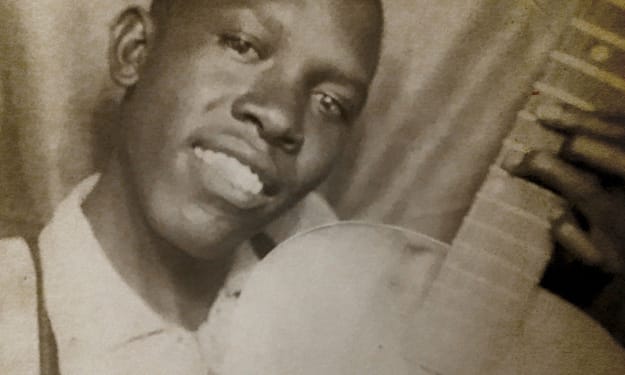
I never really believed in the theory/mythology of Robert Johnson selling his soul to the Devil at the crossroads for his talent at playing the guitar. Not only because this seemed like a myth created because he died young but it also seems like the myth itself [the ‘Devil at the Crossroads’] is actually much older than Robert Johnson and is more used as an excuse to explain things that cannot be explained. The truth is, whatever you believe, Robert Johnson was an immensely talented human being and in this book, his own sister tries to show us why these terrible lies about his life have been used to fill in the gaps to which most people cannot possibly know. We take a look into the life of someone who actually spent time with Johnson, was not only a sister to him but also a good friend of his. One thing I absolutely loved about this book is that she tears down all of these lies and myths in order to reveal something that Robert Johnson was - a human being. I think that she does a brilliant job of voicing why so many people were so very wrong about her brother and the music that he created. I also think she does an incredible job of changing our minds about Robert Johnson as a person. He was not this dark and enigmatic figure who sold his soul to the Devil. He was an intensely talented young man who liked to play the guitar and have a good time. That’s what was so important to me when reading this book.
By Annie Kapur5 years ago in Geeks
Book Review: "South Sea Tales" by R.L Stevenson
Robert Louis Stevenson is probably better known for his work on the shorter gothic novella entitled “The Strange Case of Dr. Jekyll and Mr. Hyde” which has been made into many a great movie from the Jazz age all the way to our own day, being transferred on to the stage and into television shows with the main character even making it big in other films not based on the book itself. When it comes to his lesser known works though, Robert Louis Stevenson does not disappoint. Think of “Dr. Jekyll and Mr. Hyde” as his magnum opus yes, but never think of him as a one-trick pony. “South Sea Tales” is written about the time where Robert Louis Stevenson moved to Samoa for his health in 1890 and was influenced by the culture he saw there and the ravaging that imperialism did to it. As a homage to the great and wonderful country of Samoa, Robert Louis Stevenson writes with aesthetic pleasure, appreciation and more than often, love - of a place he called his new home only some few years before his untimely death. He died at the age of 44, only a mere four years after moving to Samoa and was so loved by the community there that they carried his body up a mountain and inscribed his tomb with a cultural song of praise. He had written their country so beautifully into the work we now know as “South Sea Tales” which holds the picturesque island in high regard over its imperial enslavers in both morality and personality.
By Annie Kapur5 years ago in Geeks
A Filmmaker's Guide to: Political Metaphor
In this chapter of ‘the filmmaker’s guide’ we’re actually going to be learning about literature and film together. I understand that many of you are sitting in university during difficult times and finding it increasingly hard to study and I understand that many of you who are not at university or not planning on it are possibly stuck of what to do, need a break or even need to catch up on learning film before you get to the next level. This guide will be brief but will also contain: new vocabulary, concepts and theories, films to watch and we will be exploring something taboo until now in the ‘filmmaker’s guide’ - academia (abyss opens). Each article will explore a different concept of film, philosophy, literature or bibliography/filmography etc. in order to give you something new to learn each time we see each other. You can use some of the words amongst family and friends to sound clever or you can get back to me (email in bio) and tell me how you’re doing. So, strap in and prepare for the filmmaker’s guide to film studies because it is going to be one wild ride.
By Annie Kapur5 years ago in Geeks