Annie Kapur
Bio
I am:
🙋🏽♀️ Annie
📚 Avid Reader
📝 Reviewer and Commentator
🎓 Post-Grad Millennial (M.A)
***
I have:
📖 300K+ reads on Vocal
🫶🏼 Love for reading & research
🦋/X @AnnieWithBooks
***
🏡 UK


Stories (2939)
Filter by community
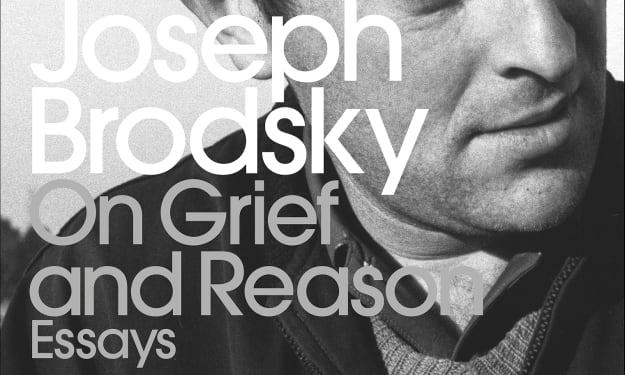
Book Review: "On Grief and Reason" by Joseph Brodsky
Joseph Brodsky has to be one of those writers that day by day, I am discovering more information about through his books. His writing style is often filled with descriptive anecdotes of times gone by, nostalgia in the form of an inability to let go and a beauty that only few writers of his time and age had. Through his text “On Grief and Reason” he writes essays about not only his life as a writer, but the political, social and historical meaning behind some of the views he holds very close. A quite, pensive but open-minded human being, famously Brodsky rejected his native Russia in favour of Venice, Italy and since then, it has been a constant uphill battle between what is good and what is legal. With neither country being the face of political utopia in the 20th century, Joseph Brodsky makes a point that in order to believe in something better, you have to distinguish yourself away from the current forms, finding what is structurally wrong with the system and working to solve the individual problems within your own soul - put there by your environment. This is a beautiful book of both hindsight and futurism, it covers a wide array of social topics and Brodsky’s own views are woven into the fabric of the essay, sewn across the various wants for idealism and the requirement for a government that values its people for more than their output.
By Annie Kapur5 years ago in Geeks
A Filmmaker's Guide to: Experimental Film
In this chapter of ‘the filmmaker’s guide’ we’re actually going to be learning about literature and film together. I understand that many of you are sitting in university during difficult times and finding it increasingly hard to study and I understand that many of you who are not at university or not planning on it are possibly stuck of what to do, need a break or even need to catch up on learning film before you get to the next level. This guide will be brief but will also contain: new vocabulary, concepts and theories, films to watch and we will be exploring something taboo until now in the ‘filmmaker’s guide’ - academia (abyss opens). Each article will explore a different concept of film, philosophy, literature or bibliography/filmography etc. in order to give you something new to learn each time we see each other. You can use some of the words amongst family and friends to sound clever or you can get back to me (email in bio) and tell me how you’re doing. So, strap in and prepare for the filmmaker’s guide to film studies because it is going to be one wild ride.
By Annie Kapur5 years ago in Geeks
The Loneliness of Our Society
Loneliness is when a person feels depressed, down and almost chronically stressed out of the situation of having no friends - whether that be in a close social group or a greater one. You may remember that I wrote an article that was about the difference between being alone and being lonely. I myself am alone, but I am not lonely. The fact is, there are some people who enjoy having other people close to them and then, even if they had a lot of people around them in their physical area, they can still feel lonely even though they are not alone in the literal sense. What I am going to investigate is the statistics of loneliness and the 'why' surrounding the assumed increase of loneliness. I want to get to the root of what is actually the main problem which causes people such as the 'incel' groups to exist as they are a simply products of the environment, the products of the social situations they had probably previously been in and some sort of social traumas they may have suffered.
By Annie Kapur5 years ago in Humans
A Filmmaker's Guide to: The Kuleshov Effect
In this chapter of ‘the filmmaker’s guide’ we’re actually going to be learning about literature and film together. I understand that many of you are sitting in university during difficult times and finding it increasingly hard to study and I understand that many of you who are not at university or not planning on it are possibly stuck of what to do, need a break or even need to catch up on learning film before you get to the next level. This guide will be brief but will also contain: new vocabulary, concepts and theories, films to watch and we will be exploring something taboo until now in the ‘filmmaker’s guide’ - academia (abyss opens). Each article will explore a different concept of film, philosophy, literature or bibliography/filmography etc. in order to give you something new to learn each time we see each other. You can use some of the words amongst family and friends to sound clever or you can get back to me (email in bio) and tell me how you’re doing. So, strap in and prepare for the filmmaker’s guide to film studies because it is going to be one wild ride.
By Annie Kapur5 years ago in Geeks
A Filmmaker's Review: "Dark Victory" (1939)
“Dark Victory” (1939) is a film you do not come across too often because the storyline is just so twisted. I remember sitting there thinking if this could potentially happen in real life and honestly, it could. In this film, Bette Davis stars as a beautiful young woman who falls from a horse, faints down the stairs and comes up very sick and, after falling in love with her doctor they decide to marry. When Bette Davis’s character is receiving treatment, the doctor tells her she is all better and by this time, they are engaged. Whilst a party ensues, the best friend of the bride-to-be notices something is uneasy and starts to question every single thing that the doctor is doing, she is rightfully concerned that her best friend is all of a sudden doing fine instead of having a sickness she was suffering so badly with. Once the gears start turning, the engaged woman discovers something absolutely horrifying and yet, cannot bring herself to tell anyone - just yet.
By Annie Kapur5 years ago in Geeks
Book Review: "Sunday's Children" by Ingmar Bergman
Ingmar Bergman directed one of my favourite films of the last decade. When I was fourteen, I watched “The Seventh Seal” for the first time and, not really understanding it I watched it again. Over the next decade, I watched it some ten to fifteen times and it still has the same impact as it did back then. It tells us that Ingmar Bergman is actually a very good storyteller, if not sometimes a little confusing and philosophically deep. This book also displays the similar aspects of his films in which it has these long moments of internalisation, long moments of introspection and long moments of just nothing physically happening in which the characters are shifted from the outside to the inside. It is something that Ingmar Bergman is very, very good at. But not only that, we get the existential concepts of human nature becoming something physical. Like death as a person in his movie, the book makes physical these strange existential and incomprehensible ideas. I love the way it is written because Ingmar Bergman has the most strange and almost celestial understanding of these concepts. “Sunday’s Children” is an incredible homage to his youth whilst displaying the knowledge he gained in his adulthood.
By Annie Kapur5 years ago in Geeks
The Cyberbullying Problem
Facebook, Twitter, Instagram and the newly founded Tik-Tok (of which I know very little about unfortunately) have become more and more of a part of our lives on a daily basis with the latter gaining popularity more rapid than most things I have ever seen. Before all of this though, there was MSN and chatrooms etc. these are the things that I spent an evening or two a week a part of - chatting with friends or even going on to chatrooms to talk about things I enjoyed such as: films, books and at that time I was also a massive Green Day fan. But, since way back then until now, I have noticed one, main thing: cyberbullying was around back then and it is still around (and far more rampant) now.
By Annie Kapur5 years ago in Psyche
Book Review: "The Man in the Red Coat" by Julian Barnes
“The Man in the Red Coat” is possibly to this day, one of Julian Barnes’ greatest works. About the doctor, Samuel Pozzi, this book does not just tell us the autobiography of this man but also the surroundings, the people within his circles, the culture and the downfall of the fin-de-siecle belle epoch of France and England during this time. As someone who loves British and French decadent cultures, I got into this book very quickly as it starts off by simply giving us the surroundings, the atmosphere and the background of the novel and its non-fiction set up. The decadence is a bubbling pot of debauchery, drugs and intrigue. The courts and upper classes are filled with people who [as Barnes put it in a line of the book] are ‘ladies above scandal’. And yet, Barnes also tells us about how this culture was so set on its own self-serving patriarchy that there was absolutely no way it could have survived. It comes crashing down with the outbreak of the First World War.
By Annie Kapur5 years ago in Geeks
A Filmmaker's Guide to: Subtext
In this chapter of ‘the filmmaker’s guide’ we’re actually going to be learning about literature and film together. I understand that many of you are sitting in university during difficult times and finding it increasingly hard to study and I understand that many of you who are not at university or not planning on it are possibly stuck of what to do, need a break or even need to catch up on learning film before you get to the next level. This guide will be brief but will also contain: new vocabulary, concepts and theories, films to watch and we will be exploring something taboo until now in the ‘filmmaker’s guide’ - academia (abyss opens). Each article will explore a different concept of film, philosophy, literature or bibliography/filmography etc. in order to give you something new to learn each time we see each other. You can use some of the words amongst family and friends to sound clever or you can get back to me (email in bio) and tell me how you’re doing. So, strap in and prepare for the filmmaker’s guide to film studies because it is going to be one wild ride.
By Annie Kapur5 years ago in Geeks
Britain and the 'Good Savage'
It is well documented that Britain does not have a good history with diversity. When I say 'history', I do not mean five or ten years' ago, I mean actual history. Imperialist Britain saw the rise of the Empire and then, the eventual fall. But the strength of the civil vs. savage argument is still there. The point of the Victorian stance was that if the British army went over to these particular countries (Asia, Africa etc.) they would be able to civilise the savages. Since then, there has been discussion of whether this is still going on without explicit movement. This rhetoric of what a 'good' immigrant is whether they be first, second or even third generation - some of the white-British make it clear that though you were born here you will never be one of them.
By Annie Kapur5 years ago in The Swamp
A Filmmaker's Guide to: Trickster Archetypes
In this chapter of ‘the filmmaker’s guide’ we’re actually going to be learning about literature and film together. I understand that many of you are sitting in university during difficult times and finding it increasingly hard to study and I understand that many of you who are not at university or not planning on it are possibly stuck of what to do, need a break or even need to catch up on learning film before you get to the next level. This guide will be brief but will also contain: new vocabulary, concepts and theories, films to watch and we will be exploring something taboo until now in the ‘filmmaker’s guide’ - academia (abyss opens). Each article will explore a different concept of film, philosophy, literature or bibliography/filmography etc. in order to give you something new to learn each time we see each other. You can use some of the words amongst family and friends to sound clever or you can get back to me (email in bio) and tell me how you’re doing. So, strap in and prepare for the filmmaker’s guide to film studies because it is going to be one wild ride.
By Annie Kapur5 years ago in Geeks
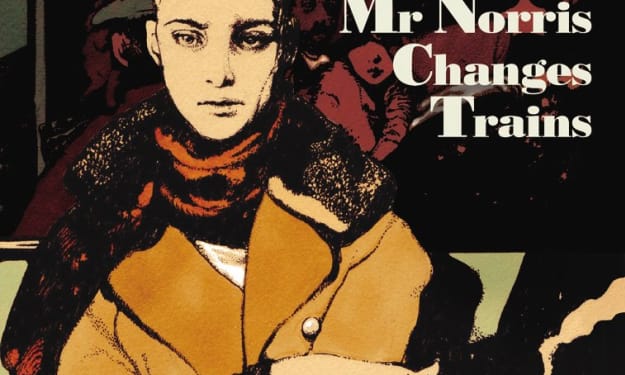
Book Review: "Mr. Norris Changes Trains" by Christopher Isherwood
“Mr. Norris Changes Trains” is one of the more interesting reads I have read this year. I always like novels in which one man is influenced by another to do something that is entirely out of character for them. The subject becomes almost obsessed with the other person’s being and ultimately isolates themselves in their own psyche to become something they are not. Like the traditions of “Edward II” by Christopher Marlowe in which Gaveston influences the King, or in “The Picture of Dorian Gray” in which Henry teaches Dorian about youth and beauty, in “Brideshead Revisited” where Charles Ryder is warned about the influence Sebastian Flyte will have upon him or, in the more volatile friendship of Sal Paradise and Dean Moriarty in Kerouac’s “On the Road” - one man influencing another to be ‘out of character’ has fascinated readers for generations - Isherwood’s novel of influence follows this tradition with an air of haunting oddity that, from the very beginning just feels oh so dark. This text contains that feeling of tension and impeding doom that I have never gotten from a Christopher Isherwood novel before - the great narcissism makes the book’s effect seem all the more likely because of its title character’s intentions to persuade. The question is whether it is persuasion or simply unrequited obsession - and that question may leave your being like an out-of-body experience by the end of the text.
By Annie Kapur5 years ago in Geeks