
The Dark History of White Beauty Standards: Built on Slavery, Racism, and Paedophilic Obsession
How Racism and Pedophilia Shaped the Beauty Ideals We Still See Today


Introduction: Why dig into beauty standards at all?
If you scroll through TikTok, flick through a glossy magazine, or sit down to watch a blockbuster movie, the women presented as “beautiful” tend to look eerily similar. They are often white or light-skinned, slim, smooth-skinned, and symmetrical. Their eyes appear large, their noses small, their lips carefully shaped. Most importantly, they look young — sometimes so young that they verge on childlike.
We often treat beauty as if it were natural, a universal standard. But beauty ideals are not timeless truths. They are shaped by history, culture, and power. And when we trace today’s dominant beauty standards back to their origins, the story that emerges is deeply unsettling. They were not created in a vacuum but were engineered through slavery, colonialism, racism, and capitalism. At the same time, these ideals were infused with a fixation on innocence and youth that blurs uncomfortably into paedophilic desire.
This is not just about aesthetics. Beauty standards decide who is celebrated and who is excluded, who benefits and who suffers. And the ideals that still dominate the world today carry with them centuries of violence, exploitation, and dangerous sexualisation.
The invention of whiteness as beauty
One of the clearest places to see the roots of white beauty standards is in the transatlantic slave trade. In the Americas, lighter-skinned enslaved people, often the mixed-race children of white enslavers and Black women, were sometimes given less gruelling roles indoors rather than in the fields. This created a hierarchy in which proximity to whiteness translated into privilege, however limited.
When European powers colonised countries across Africa, Asia, and the Americas, they exported this same logic on a global scale. Colonisers didn’t just conquer land and resources; they imposed cultural values that elevated European features as the pinnacle of civilisation and morality. Darker skin and non-European traits were denigrated as signs of primitiveness or inferiority.
Advertising, missionary schools, and imported products reinforced the message. Soap and cosmetics were marketed as tools to “civilise” and “improve” colonised populations. The equation of whiteness with both superiority and beauty seeped deep into colonised societies. This is why skin-lightening remains a booming industry across the Global South today — its existence is not about aesthetics alone but about the enduring weight of colonial hierarchies.
Innocence as beauty: the Victorian obsession
While slavery and colonialism shaped the racial dimensions of beauty, another cultural force was shaping its sexual undertones. In Europe and America during the eighteenth and nineteenth centuries, women were increasingly idealised for their innocence. The perfect woman was pale, delicate, submissive, and pure. She was celebrated not for her maturity but for her fragility — qualities closer to girlhood than adulthood.
Art, literature, and early advertising all reinforced this ideal. Female characters who embodied modesty, fragility, and naivety were praised, while women who were independent or sexually confident were stigmatised. This cultural script did not just infantilise women; it eroticised their innocence. The result was a dangerous blurring of boundaries where women were most admired when they appeared childlike, even as they were sexualised.
This history is what allows us to see why modern beauty standards feel so uncomfortably close to paedophilia. The cultural celebration of women as “eternal girls” fed into the way beauty came to be defined — not just pale and delicate, but also youthful to the point of infantilisation.
Neoteny and the science of childlike attraction
Psychologists often use the term “neoteny” to describe youthful facial features: large eyes, smooth skin, small noses, and round cheeks. Research has shown that across cultures, people often perceive these traits as attractive. Evolutionary theorists argue that this may be because such features signal fertility, vitality, or even trigger caretaking instincts.
But biology alone cannot explain modern beauty standards. What societies choose to celebrate — and how they exaggerate certain traits — depends on who holds power. In Western societies, cultural elites fused these youthful features with whiteness, creating an ideal where the most beautiful women were not only white but also looked as if they were perpetually young.
This is where the overlap with paedophilic desire becomes hard to ignore. When grown women are expected to look like girls — smooth-skinned, wide-eyed, and innocent — the standard of beauty itself veers into dangerous territory.
Capitalism and the global spread of harmful ideals

If racism and infantilisation created the foundation, capitalism built the tower. From the twentieth century onwards, film, advertising, and later social media took these ideals and spread them globally. Pale, slim, youthful white women became the faces of Hollywood. Magazines taught women how to contour their noses smaller, enlarge their eyes with eyeliner, and keep their skin wrinkle-free. The cosmetics industry made billions from anti-ageing creams, Botox, fillers, and surgical procedures designed to preserve a childlike appearance.
This wasn’t confined to the West. Through advertising campaigns and beauty exports, Eurocentric standards reached every corner of the globe. In Asia, eyelid surgeries became common. In the Middle East, nose jobs surged. In Africa and South Asia, skin-lightening creams flooded the market. Everywhere, the message was the same: whiteness and youth were the ticket to beauty, success, and desirability.
The harms of white beauty standards

The impact of these standards is not abstract. They cause daily harm. Colorism continues to affect everything from dating preferences to employment opportunities, with lighter skin still associated with higher status. Women and girls are pressured to erase signs of ageing, leaving many trapped in cycles of shame and anxiety as they inevitably fail to meet impossible ideals. Eating disorders, body dysmorphia, and depression are fuelled by the constant bombardment of these narrow images.
Most disturbingly, the sexualisation of youth filters down into how society views teenage girls. Fashion, advertising, and entertainment routinely present adolescents in hyper-sexualised ways, reinforcing the idea that the most desirable women are the ones who look barely grown. This is not just unhealthy; it normalises a worldview disturbingly close to paedophilic logic.
Pedophilia or power?
So, are white beauty standards simply based on paedophilia? The truth is more complicated. On the one hand, Western culture has clearly sexualised youth and demanded that women embody childlike traits. On the other, historians and psychologists do not suggest that paedophiles invented these ideals outright.
Instead, what we see is a toxic combination. Racism and colonialism elevated whiteness. Cultural fetishisation of innocence elevated youth and girlishness. Capitalism amplified both, selling them worldwide. Together, they created an ideal of beauty that is not only racist but disturbingly close to paedophilic fantasy.
Recognising this complexity is important. It helps us avoid sensationalism while still naming the real harms. The truth is not that white beauty standards came directly from paedophilia, but that they grew out of systems of power which sexualised youth and turned women into eternal girls.
Reclaiming beauty on our own terms
Understanding the history is the first step toward dismantling it. We can challenge colorism by refusing to accept lighter skin as a marker of superiority. We can celebrate ageing as natural and beautiful, rather than something to hide. We can uplift media and creators who represent beauty in all its diversity, across skin tones, body types, and ages. And we can resist industries that profit from fear and insecurity, especially those that tell women they must stay forever young to be worthy.
Most importantly, we must keep reminding ourselves and others that beauty has never been neutral. It has always been political.
Conclusion: Beauty is power — and it can be reclaimed

White beauty standards were never universal truths. They were constructed out of slavery, colonialism, and racism, then infused with a paedophilic obsession with youth and innocence. They have left us with a global system that harms people of colour, pressures women to erase age, and sexualises young girls.
But once we see these standards for what they are — tools of control rather than reflections of real beauty — we can begin to dismantle them. True beauty lies not in pale skin or eternal girlhood but in the full spectrum of human diversity. Reclaiming that truth is not only liberating; it is revolutionary.
About the Creator
No One’s Daughter
Writer. Survivor. Chronic illness overachiever. I write soft things with sharp edges—trauma, tech, recovery, and resilience with a side of dark humour.
Reader insights
Good effort
You have potential. Keep practicing and don’t give up!
Top insights
Compelling and original writing
Creative use of language & vocab
Easy to read and follow
Well-structured & engaging content
Excellent storytelling
Original narrative & well developed characters
Eye opening
Niche topic & fresh perspectives
On-point and relevant
Writing reflected the title & theme
Keep reading
More stories from No One’s Daughter and writers in Viva and other communities.
5 Things You Should Know About Dating a Sex Worker
Dating is complicated enough as it is. Add sex work into the mix, and it comes with an extra set of challenges, assumptions, and misunderstandings. While people are becoming more open-minded about sex work, there’s still a lot of stigma—and dating a sex worker isn’t for everyone.
By No One’s Daughter6 months ago in Viva
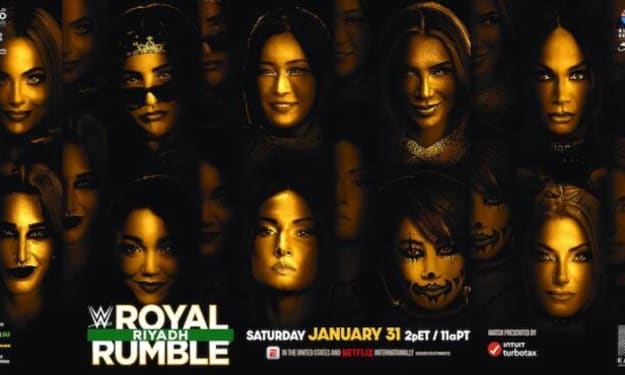
Reviewing the Ninth Annual Women's Royal Rumble
Before I went to bed last night, I decided to go to Netflix and relive the 2018 Women's Royal Rumble Match, the very first Women's Rumble. Amazing. A Women's Royal Rumble Match seemed like just a pipe dream. Now, not only did it come true in 2018, but we are now in Year Nine of the Women's Rumble. On Saturday, January 31, 2026, the 39th annual Royal Rumble event took place, and for the first time since the very first one in 1988, they left the country, as the Saudi capital of Riyadh hosted the event.
By Clyde E. Dawkins2 days ago in Viva
Storm Chandra Set to Batter UK With Heavy Snow and 80mph Winds as Met Office Issues Warnings
The United Kingdom is preparing for one of the most severe winter storms of the season as Storm Chandra approaches, bringing the potential for heavy snowfall, gusty winds reaching 80mph, and hazardous conditions across much of the country. The Met Office has issued multiple weather warnings, urging residents, commuters, and businesses to take precautions as the storm moves in over the coming days.
By Salaar Jamali7 days ago in Viva
A Love Forboding
The chipped stone slope caused unbearable footing. I slid, skirting on my heels. I cast my shield, relinquishing my guard to stay upright. Left with my double-edge and a prayer to the maker, I skated toward my objective. The earthly stubble gave way to solid ground. I found myself restored, a trail of dust in my wake.
By James U. Rizzi3 days ago in Fiction



Comments
There are no comments for this story
Be the first to respond and start the conversation.