baseball
Sabermetric analysis of all things baseball - on-and-off the field. Barry Bonds fan club.
Distracting and Sad’: Olympics Chief Laments ICE Protests and Epstein Fallout. AI-Generated.
The president of the International Olympic Committee (IOC) has voiced concern over what he described as “distracting and sad” controversies surrounding global sport, pointing to protests linked to U.S. immigration enforcement and the renewed fallout from the Jeffrey Epstein case as issues that risk overshadowing preparations for upcoming Olympic Games. In remarks delivered at an international sports forum this week, the IOC chief said the Olympic movement is facing challenges not only from logistical and financial pressures but also from political and social tensions that increasingly intersect with sport. “The Olympic Games should be about unity, respect, and excellence,” he said. “But we are living in a time when outside conflicts and scandals easily intrude into that space. It is distracting and, frankly, sad.” Protests and Immigration Politics One of the flashpoints highlighted by the IOC president involves demonstrations targeting U.S. Immigration and Customs Enforcement (ICE), which have expanded in several cities and occasionally spilled into sporting events and Olympic-related activities. Activists have used major sports venues and sponsorship events as platforms to protest immigration policies, arguing that sport should not remain neutral in the face of human rights concerns. Some athletes have also expressed solidarity with protest movements, posting messages on social media and calling for greater accountability from governments and international institutions. The IOC chief acknowledged that athletes have the right to personal opinions but warned that protests during Olympic competitions could undermine the spirit of the Games. “We respect freedom of expression, but the Olympic stage must remain a place where nations come together peacefully,” he said. “Turning competition into a battleground for political conflict risks dividing people rather than bringing them together.” Critics argue that the IOC’s stance reflects an outdated belief that sport can be separated from politics. Human rights organizations say international sporting bodies should take stronger positions on issues such as migration, labor rights, and civil liberties, particularly when host countries or sponsors are involved in controversial policies. Epstein Fallout Reaches Sports Institutions The second issue weighing on Olympic leadership is the renewed attention surrounding Jeffrey Epstein’s connections to powerful individuals and institutions. Recent document releases and media investigations have revived scrutiny of figures in business, politics, and philanthropy—some of whom have ties to sports organizations through sponsorships or charitable foundations. While no senior IOC officials have been accused of wrongdoing, the Epstein revelations have heightened sensitivity around governance, ethics, and transparency across global sport. “Every time another name surfaces, it damages trust,” the IOC president said. “Sport depends on credibility. Any association with scandal, even indirect, weakens that trust.” Several national Olympic committees have already begun reviewing sponsorship agreements and donor relationships to ensure they meet stricter ethical standards. Some have called for an independent review mechanism to examine financial ties between sports bodies and wealthy benefactors. A Delicate Balancing Act The IOC has long insisted on political neutrality, a principle embedded in the Olympic Charter. However, that position is becoming harder to maintain as athletes, fans, and sponsors demand that sport reflect broader social values. In recent years, the Olympics have faced controversies related to human rights in host nations, allegations of corruption within sporting federations, and protests tied to climate change and racial justice. The addition of immigration-related activism and renewed scandal over elite misconduct further complicates an already fragile environment. Sports governance experts say the IOC is walking a tightrope. “On one hand, they want to protect the Games from becoming politicized,” said a professor of sports law at a European university. “On the other hand, ignoring social issues can make them look disconnected from reality.” Athlete Voices Grow Louder Athletes themselves are increasingly unwilling to stay silent. Several high-profile competitors have spoken publicly about immigration issues and have criticized powerful institutions for failing to take moral positions. One Olympic hopeful from the United States said the protests reflect a generation that expects sport to engage with society rather than stand apart from it. “We’re not robots,” the athlete said. “We live in the same world as everyone else. If something feels unjust, it’s hard to pretend it doesn’t exist just because we’re wearing a uniform.” At the same time, other athletes worry that political activism could overshadow their years of preparation and distract from competition. “I trained my whole life for this,” said a European swimmer. “I want the focus to be on sport, not scandals and protests.” Preparing for the Next Games With the next Olympic Games approaching, organizers are under pressure to ensure security, manage demonstrations, and protect the event’s image. Host city officials have already begun coordinating with law enforcement and civil society groups to prevent disruptions while respecting legal protest rights. The IOC president emphasized that dialogue is essential. “We must listen to concerns without allowing the Olympic Games to become a stage for every conflict in the world,” he said. “Our responsibility is to protect the athletes and the meaning of the Games.” Conclusion The Olympics chief’s remarks highlight a growing tension between sport’s traditional claim to neutrality and the realities of a politically charged world. Protests linked to immigration enforcement and the ongoing Epstein fallout have become symbols of a broader struggle over ethics, accountability, and expression in global sport. While he described the situation as “distracting and sad,” the controversy also reflects deeper questions about what the Olympics represent in the modern era. As athletes and fans demand greater transparency and social engagement, the IOC faces a defining challenge: preserving unity while confronting the pressures of a divided world. Whether the Olympic movement can strike that balance may shape not only the next Games, but the future identity of international sport itself.
By Fiaz Ahmed about 14 hours ago in Unbalanced
A Whole Lot of BS: Part One
Greetings, Vocal readers. I'm starting a new series on Vocal called A Whole Lot of BS. The intention for coming up with this series is to share the things that either irritate me, have a hard time understanding, annoy me, or all three. From sports to politics, I'm willing to share my personal gripes. If you have any topics you want to suggest to me, please leave them in the comments section down below and I will take them into consideration. For the debut story of this series, I have a bone to pick regarding Major League Baseball's End of the Year Awards, in particular, last year's winners.
By Mark Wesley Pritchard a day ago in Unbalanced
Stop the Cap!
As we head deeper into the 2026 MLB offseason, the spotlight is once again on the L.A. Dodgers as they snatch up multiple top free agents and further stack an already stacked team. In response, fans and pundits alike seemingly reached a consensus: these signings just canceled the 2027 season. To the casual fan, this may seem like a tad dramatic but we need to see where this is coming from.
By J.S. Vargas4 days ago in Unbalanced
Best and Worst MLB City Connect Hats
As someone who has a small handful of Texas Rangers hats and an avid hathead, I'm eager for Opening Day to begin. In my previous stories, I've critiqued and rated the best and worst City Connect jerseys. I'll have links to both stories at the end of this story. In this story, however, I'll be critiquing one City Connect hat that I love and one that I'm not feeling at all. Please note that teams will have more than one hat design and not all hats will be featured on here.
By Mark Wesley Pritchard 16 days ago in Unbalanced
Christian Kirk: From Rising Prospect to Proven NFL Playmaker. AI-Generated.
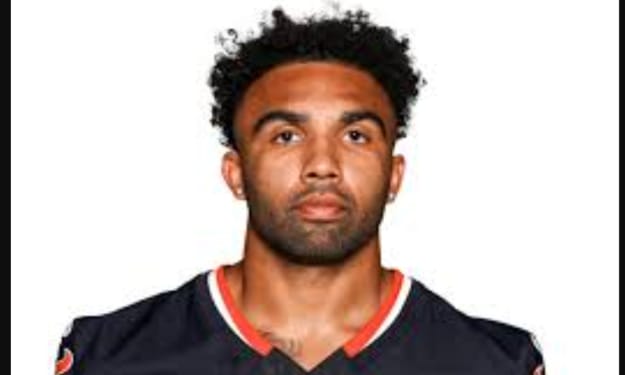
Christian Kirk has steadily carved out a reputation as one of the NFL’s most reliable wide receivers, blending speed, versatility, and consistency to become a key offensive weapon. While he may not always dominate national headlines, Kirk’s journey reflects the value of development, adaptability, and quiet professionalism in modern American football.
By Asad Ali20 days ago in Unbalanced
Alex Eala. AI-Generated.
Tennis has always been a sport where stories of discipline, sacrifice, and quiet resilience shape champions long before trophies do. In recent years, one name has steadily gained international attention for embodying those qualities with grace and ambition: Alex Eala. Still early in her professional journey, Eala represents more than individual success. She symbolizes a shift in global tennis, where talent now rises from regions once considered outside the sport’s traditional power centers. From junior Grand Slam glory to appearances on the professional tour, Eala’s path reflects patience, planning, and belief. Her performances, including moments connected to tournaments like the Auckland Open and the ASB Classic, show a player learning to translate promise into lasting impact. Early Foundations of a Rising Star Alex Eala’s story begins with a strong foundation built on family support and access to elite training. Unlike many players who rise through local circuits alone, Eala’s development was guided by a long-term vision. That vision led her to the Rafa Nadal Academy, an environment known for shaping technically sound and mentally strong athletes. At the academy, Eala refined her baseline game, improved her court movement, and learned how to compete with intention rather than emotion. These lessons were evident in her junior career, where she achieved milestones that placed her among the most promising young players of her generation. What stood out was not only her results but her composure. Eala played with a maturity that suggested she understood tennis as a marathon, not a sprint. Junior Success and Global Recognition Eala’s junior achievements opened doors to the international tennis spotlight. Winning major junior titles placed her name alongside players who would later become tour regulars. For many fans, this was the first time they encountered Alex Eala, and it quickly became clear she was not just another short-term prospect. Her left-handed style added variety to her game, creating angles that disrupted opponents. Combined with strong court awareness, this made her matches engaging to watch and difficult to predict. Junior success, however, is only a stepping stone, and Eala approached the professional transition with measured expectations. Rather than rushing into high-pressure events, she balanced growth with experience, a strategy that often separates sustainable careers from fleeting hype. Stepping Into the Professional Arena The move from juniors to the professional circuit can be unforgiving. Higher intensity, physical demands, and mental pressure test even the most gifted athletes. For Alex Eala, this transition has been deliberate rather than dramatic. She has taken part in ITF and WTA-level events, gaining experience against seasoned players. Each match has contributed to her understanding of pace, consistency, and endurance at the professional level. Losses have been treated as lessons, and victories as confirmation of progress. Events connected to the Auckland Open and the ASB Classic are particularly meaningful in this phase. These tournaments attract a competitive field while still offering young players exposure to high-quality opposition. For Eala, participation in such events represents an opportunity to measure herself against established professionals. Auckland Open and ASB Classic: Learning on a Bigger Stage The ASB Classic, held in Auckland, is more than just a warm-up event for the tennis season. It has a reputation for blending experienced tour players with emerging talent. Competing in or around the Auckland Open environment allows players like Eala to experience elite tournament structures, media attention, and crowd energy. For a young athlete, these elements matter. They teach how to manage nerves, expectations, and recovery over consecutive matches. Even brief appearances in such tournaments contribute significantly to development. Alex Eala’s connection with events like the ASB Classic highlights her gradual integration into the professional ecosystem. Each appearance adds confidence and clarity about what needs improvement, whether it is serve consistency, shot selection, or physical conditioning. Style of Play and Competitive Identity Eala’s game is built around controlled aggression. She prefers constructing points rather than rushing winners, relying on precision and movement. Her left-handed forehand remains one of her most effective weapons, creating angles that pull opponents off the court. Equally important is her defensive awareness. Eala often turns defense into offense, a trait that reflects her disciplined training background. While power tennis dominates many modern matches, her style emphasizes balance and adaptability. As she continues to evolve, adding strength and depth to her serve and net play will likely be key areas of focus. These improvements often come with time, experience, and physical maturity. Representation and Inspiration Beyond the Court Alex Eala’s rise carries significance beyond rankings and results. She represents hope for aspiring players from underrepresented regions, proving that access to global stages is possible with commitment and support. Her journey inspires younger athletes to believe that tennis is not limited by geography. Every appearance she makes, whether in major tournaments or developmental events, reinforces the idea that talent can emerge from anywhere. This broader impact gives Eala a unique position in the sport. She is not only building her own career but also helping expand tennis’s global narrative. The Road Ahead The future for Alex Eala remains open and full of possibility. Tennis careers are shaped over years, not seasons, and her measured approach suggests a focus on longevity rather than quick success. Continued participation in international tournaments, including those linked to the Auckland Open and ASB Classic, will provide valuable benchmarks for growth. As rankings fluctuate and competition intensifies, the true test will be consistency and resilience. Based on her journey so far, Eala appears well-equipped for both. Final Thoughts Alex Eala’s story is still being written, but its early chapters reveal a player grounded in discipline, learning, and quiet confidence. From junior triumphs to professional challenges, she has approached each step with intention. In a sport where pressure can derail even the brightest prospects, Eala’s calm progression stands out. Whether competing in global events like the ASB Classic or continuing her steady rise through the tour, Alex Eala represents a future built on patience, skill, and belief. For tennis fans watching the next generation take shape, her journey is one worth following closely.
By Saboor Brohi 23 days ago in Unbalanced
The Worst MLB City Connect Jerseys
Greetings, baseball nerds! Spring Training will be here before you know it. In my previous story, I've selected some of my favorite City Connect jerseys that stood out to me. I'll have a link to that story down below. With the good comes the bad, so I'll be highlighting six of the worst City Connect jerseys that didn't vibe well with me. We can all agree to disagree with the following selections, but if you didn't see a jersey that made the list, please comment down below. Just like my previous story, I'm only going to focus on the jerseys themselves, not the hats. A list of the best and worst City Connect hats will be featured on here in a later story.
By Mark Wesley Pritchard 24 days ago in Unbalanced
Tipping My Hat, or Rather, Hats to You
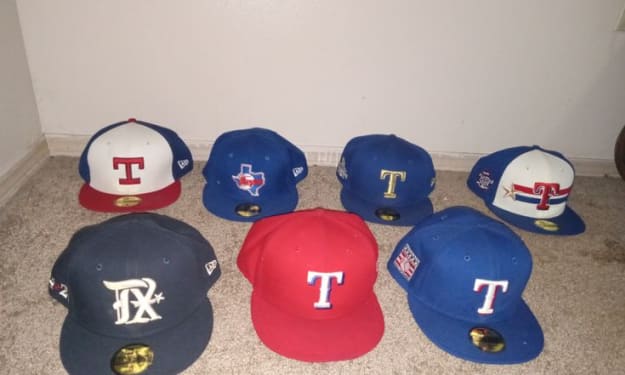
Baseball hats---let's talk about them. You probably have at least one in your home and wear it. I have seven Texas Rangers hats in total, and the last one is the most recent one from August 2025. Technically, I have eight, but I'll explain that one near the end of this story. New Era has been the official baseball cap supplier since 1993. The company was founded in 1920 by Ehrhardt Koch. 59Fifty Day is celebrated annually on May 9 to honor the iconic fitted baseball cap. Many people collect baseball caps as a hobby and as a devoted hathead myself, this has been a new hobby of mine after retiring from cosplay in 2024. I do plan on buying more and have no plans on stopping anytime soon. I'll be highlighting some of my favorite Rangers caps and they're not in any particular order.
By Mark Wesley Pritchard 26 days ago in Unbalanced
Jalen Williams. AI-Generated.
Not every NBA story begins with hype. Some begin with patience, late nights in empty gyms, and a player who slowly learns who he is. Jalen Williams’ journey belongs to that second kind of story—the kind that feels more real because it wasn’t rushed. Today, Jalen Williams is recognized as one of the most promising young players in the NBA, a key piece of the Oklahoma City Thunder’s future. But his rise wasn’t built on viral highlights or instant fame. It was built on steady improvement, adaptability, and an understanding of the game that goes deeper than the box score. From Overlooked Prospect to Reliable Performer Jalen Williams did not enter basketball as a guaranteed star. Coming out of high school, he wasn’t heavily recruited. He chose Santa Clara University, a smaller program that rarely produced NBA lottery picks. For many players, that path can feel like a limitation. For Williams, it became an advantage. At Santa Clara, he was given time—time to grow physically, time to understand spacing, time to learn how to read defenders rather than simply outrun them. Over three seasons, his game matured quietly. His scoring became more efficient. His defense became more disciplined. His confidence grew, but never crossed into ego. By the time he declared for the NBA Draft, scouts noticed something different. Jalen Williams wasn’t flashy, but he was reliable. He didn’t force shots. He didn’t disappear on defense. He made winning plays. A Perfect Fit in Oklahoma City When the Oklahoma City Thunder selected Jalen Williams, it felt like a natural match. The Thunder are known for valuing basketball intelligence, versatility, and long-term development. Williams fit that philosophy perfectly. From his rookie season, he showed an unusual level of comfort for a first-year player. He moved well without the ball, defended multiple positions, and made smart decisions under pressure. While other rookies struggled with the speed of the NBA, Williams looked composed. What stood out most wasn’t just his scoring—it was how he scored. He attacked closeouts, finished through contact, and picked his moments. He didn’t need the offense built around him to be effective. That kind of flexibility is rare. Growth Beyond the Box Score Jalen Williams’ impact isn’t always loud. His numbers are strong, but his true value shows up in smaller details. He knows when to slow the game down. He knows when to cut, when to rotate, when to pass instead of forcing a shot. Defensively, he brings energy without gambling. He stays disciplined, uses his length intelligently, and communicates well with teammates. Coaches trust him because he rarely makes the same mistake twice. That trust has earned him more responsibility each season. Whether playing alongside established stars or leading bench units, Williams adapts. He doesn’t demand attention—he earns it. A Player Built for Modern Basketball In today’s NBA, versatility matters more than ever. Jalen Williams fits seamlessly into the modern game. He can handle the ball, shoot from range, attack mismatches, and guard multiple positions. He’s not defined by one skill, and that’s what makes him dangerous. Defenders can’t predict his next move. Coaches can place him in different lineups without sacrificing balance. More importantly, he understands spacing and timing—two things that don’t always show up on highlight reels but win games consistently. Staying Grounded Amid Rising Expectations As attention grows, many young players struggle with expectations. Jalen Williams has handled that pressure with maturity. He speaks calmly, credits teammates, and focuses on improvement rather than headlines. That mindset reflects in his game. Even as his role expands, he continues to play within the flow of the offense. He doesn’t chase statistics. He chases progress. This approach has made him a favorite among fans who appreciate effort and consistency. It has also made him invaluable to a Thunder team building something sustainable. What the Future Holds Jalen Williams’ ceiling remains high—not because he’s chasing superstardom, but because his foundation is strong. Players who understand the game tend to age well. They adapt as their roles change. They stay relevant. As Oklahoma City continues to develop, Williams is positioned to be a core piece for years to come. Whether he becomes an All-Star or simply one of the league’s most respected two-way players, his impact is already clear. He represents a reminder that success doesn’t always arrive loudly. Sometimes it arrives quietly, earned through patience and purpose. Final Thoughts Jalen Williams’ story isn’t about instant fame or dramatic breakthroughs. It’s about steady growth, humility, and understanding the value of doing the little things right. In a league often dominated by noise, his calm presence stands out. And as his career continues to unfold, one thing feels certain: Jalen Williams didn’t rush his journey—and that’s exactly why it’s working.
By Saboor Brohi about a month ago in Unbalanced
The Boy in the Stands
I didn’t go for the game. I went for my nephew. He’s thirteen, wears a faded jersey two sizes too big, and talks about football like it’s scripture. “It’s not about winning, Uncle,” he’d said, eyes bright. “It’s about who shows up when it matters.”
By KAMRAN AHMADabout a month ago in Unbalanced
The Night Basketball Felt Like Home
I didn’t go for the basketball. I went because my son asked me to. He’s eleven, wears his hair in messy curls, and talks about the game like it’s poetry written in motion. “You have to see how they move together, Dad,” he’d said, eyes wide. “It’s like they’re speaking a language only they understand.”
By KAMRAN AHMADabout a month ago in Unbalanced
The Night the World Held Its Breath
I don’t remember most New Year’s Eves. But I remember the one in 2020. The world was silent. Streets were empty. And yet, at 11:59 p.m., I sat alone on my couch, eyes fixed on a glowing sphere in a city I’d never visited, tears streaming as strangers on screen counted down to a year none of us were sure we’d survive.
By KAMRAN AHMADabout a month ago in Unbalanced