
Jill Zarin
Entertainment Culture, and the Changing Conversation Around Pop Media

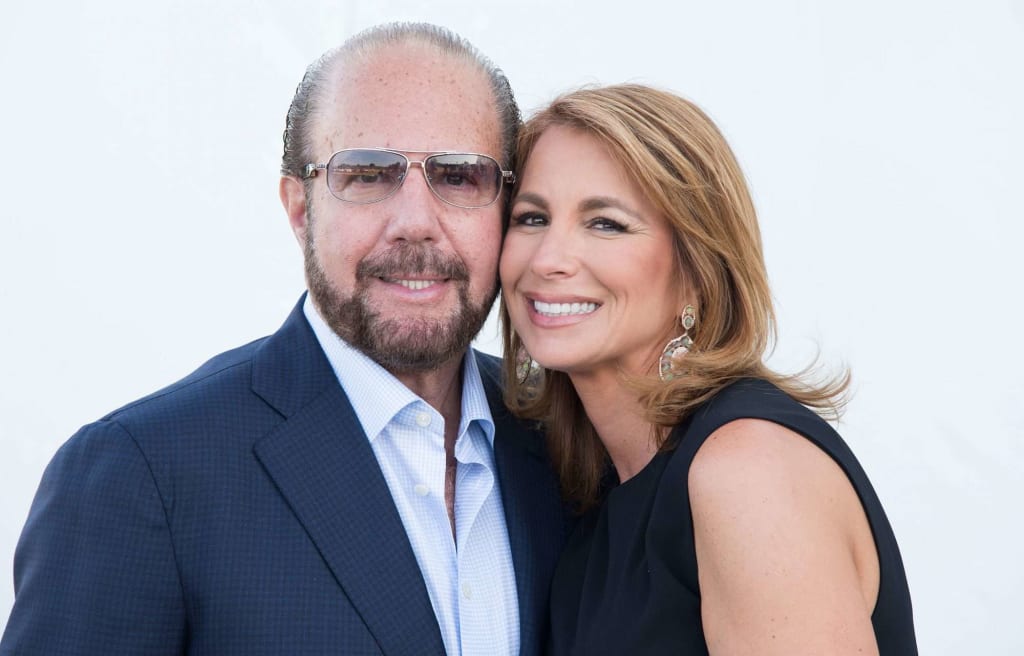
Reality television personalities rarely stay confined to the shows that made them famous. Over time, many become commentators, cultural touchpoints, or even symbols of broader entertainment conversations. Jill Zarin, best known from The Real Housewives of New York City, fits squarely into that category. Years after her most prominent on-screen moments, Zarin continues to surface in discussions about media, celebrity commentary, and how audiences interpret modern entertainment.
In a landscape now shaped by streaming platforms, viral music moments, and massive televised events like the Super Bowl, figures such as Jill Zarin represent a bridge between traditional reality TV fame and today’s fast-moving pop culture ecosystem.
Jill Zarin’s Place in Reality TV History
Jill Zarin rose to prominence during the early years of Real Housewives, a time when reality television was becoming a dominant force in entertainment rather than a niche curiosity. Her outspoken personality, business-minded approach, and emotional transparency made her one of the franchise’s most recognizable figures.
What set Zarin apart was not just drama, but relatability. She often positioned herself as a straight-talker, someone who said what others might avoid. That persona helped cement her relevance long after her regular appearances on the show ended.
As entertainment culture has evolved, so has the way audiences revisit personalities like Zarin—not just through reruns, but through interviews, podcasts, and social media commentary.
Celebrity Commentary and the Megyn Kelly Effect
The rise of opinion-driven media has blurred the lines between journalism, commentary, and entertainment. Public figures such as Megyn Kelly exemplify this shift, frequently offering strong takes on cultural moments that spark debate across platforms.
When reality stars like Jill Zarin are discussed alongside commentators like Kelly, it highlights how entertainment discourse now thrives on perspective rather than access alone. Viewers are less interested in polished narratives and more drawn to authentic—or at least unfiltered—opinions. This environment rewards personalities who are willing to engage with controversy, emotion, and cultural tension.
Streaming, Spotify, and the Global Audience
Modern entertainment no longer lives in one place. Platforms like Spotify have transformed how people consume music, podcasts, and commentary, creating a global audience that interacts with content in real time. Reality stars, journalists, and entertainers all compete in the same digital space, where relevance depends on adaptability.
Music moments now spread instantly across borders. Fans don’t just listen—they search, share, and even translate lyrics to understand cultural context. This was especially visible with artists like Bad Bunny, whose performances routinely spark worldwide curiosity.
Search trends around Bad Bunny lyrics in English Super Bowl reflect how international music intersects with American mega-events, turning halftime shows into global cultural exchanges rather than purely domestic spectacles.
Super Bowl Culture Beyond the Game
The Super Bowl has become more than a sporting event—it’s an entertainment showcase. Viewers tune in as much for commercials and halftime performances as for football. Each year, discussions around bad Super Bowl commercials trend almost as strongly as praise for the best ones.
Looking ahead, speculation about 2026 Super Bowl commercials already reflects shifting audience expectations. Viewers are increasingly critical of messaging that feels forced, outdated, or disconnected from real-world sentiment. The bar for creativity is higher, and social media ensures instant feedback.
In this environment, entertainment figures like Jill Zarin often find renewed relevance, commenting on pop culture moments with the perspective of someone who understands both traditional television and modern audience behavior.
Music, Meaning, and Messaging
Entertainment today is deeply intertwined with messaging. Music performances, commercials, and celebrity statements are often evaluated not just for quality, but for meaning. Phrases like “the only thing more powerful than hate” resonate because they echo a broader desire for unity and emotional authenticity in a fragmented media world.
Super Bowl halftime shows, in particular, have become platforms for cultural expression. Viewers don’t just watch—they analyze themes, representation, and impact. Ratings data, such as Super Bowl halftime ratings 2026, will not only measure viewership but also reflect how successfully entertainment connects across generations and cultures.
Jill Zarin in a New Entertainment Era
While Jill Zarin may not headline halftime shows or star in commercials, her continued presence in entertainment discussions speaks to the longevity of reality TV personalities who adapt. Her career illustrates how fame today is less about constant visibility and more about cultural relevance.
Whether appearing on podcasts, being referenced in celebrity commentary, or resurfacing in conversations about media evolution, Zarin represents a familiar voice in an unfamiliar entertainment era. She comes from a time when reality TV felt raw and unscripted, a contrast to today’s hyper-produced content.
The Bigger Picture
Entertainment culture is no longer siloed. Reality TV stars, journalists, musicians, and athletes all occupy the same digital stage. Events like the Super Bowl amplify this convergence, blending sports, music, advertising, and celebrity commentary into a single global moment.
Jill Zarin’s enduring relevance—alongside figures like Megyn Kelly and global artists like Bad Bunny—demonstrates how entertainment now thrives on connection rather than category. Audiences don’t just consume content; they interpret it, debate it, and share it across platforms.
Final Thoughts
Jill Zarin’s journey through entertainment reflects a broader truth about modern media: staying relevant means evolving with the conversation. From reality television roots to participation in a culture shaped by streaming, social commentary, and global events, her presence underscores how entertainment continues to expand beyond traditional boundaries.
As the industry moves toward events like the 2026 Super Bowl and beyond, the voices that endure will be those that understand not just what audiences watch—but why they care.
About the Creator
Saboor Brohi
I am a Web Contant writter, and Guest Posting providing in different sites like techbullion.com, londondaily.news, and Aijourn.com. I have Personal Author Sites did you need any site feel free to contact me on whatsapp:
+923463986212
Keep reading
More stories from Saboor Brohi and writers in Unbalanced and other communities.
Jose Alvarado
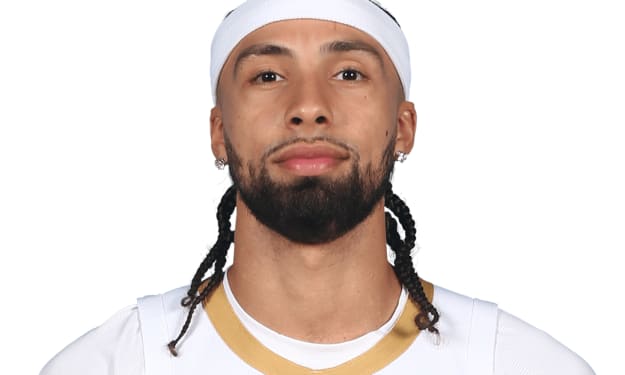
The NBA trade deadline on February 5, 2026 brought one of the most talked-about moves of the season: the New York Knicks agreed to acquire Jose Alvarado from the New Orleans Pelicans in a deadline-day deal that immediately made headlines across the league. Alvarado, a gritty and energetic guard known for his defense and hustle, was sent to the Knicks in exchange for Dalen Terry, two future second-round draft picks, and cash considerations. A Homecoming for Alvarado For Alvarado, the trade represents a significant homecoming. The Brooklyn native attended high school in Queens and now gets the rare opportunity to play for his hometown team — the New York Knicks. That narrative alone has sparked excitement among fans who appreciate not just his on-court tenacity but also the hometown connection. Before the trade, Alvarado spent his entire NBA career with the New Orleans Pelicans. Originally undrafted in 2021, he earned a spot with the Pelicans through hard work and defensive intensity, quickly becoming a fan favorite in New Orleans. Over five seasons with the Pelicans, he carved out a reputation as a defender who could disrupt opposing offenses and make plays beyond his size and draft status. Why the Knicks Pulled the Trigger The Knicks’ decision to bring in Alvarado wasn’t just sentimental; it was strategic. New York’s backcourt depth was impacted by injuries, including trading for Alvarado shortly after guard Miles McBride underwent significant surgery and was expected to miss notable time. Alvarado’s bump-and-grind style — especially his ability to pressure ball-handlers and make plays in transition — fits the Knicks’ current identity and need for defensive toughness. Alvarado’s skill set — particularly on the defensive end — should help shore up the bench behind starters and give head coach Mike Brown more versatility in late-game situations. While he isn’t a star scorer, his willingness to compete and play with energy makes him an ideal role player for a team looking to solidify its playoff position. Dalen Terry: The Other Side of the Swap On the other side of the deal, Dalen Terry moves from the Knicks to the Pelicans. Terry had been acquired by New York just days before the Alvarado swap, after being traded by the Chicago Bulls in exchange for Guerschon Yabusele. The Pelicans are banking on Terry’s potential — he was a first-round pick out of the University of Arizona and offers length, versatility, and young upside. For New Orleans, trading Alvarado gives the franchise some future assets in the form of draft picks and the opportunity to retool around a young core. What Alvarado Brings to the Knicks Statistically, Jose Alvarado’s numbers aren’t flashy — he’s averaging around 7.9 points and 3.1 assists this season — but his impact goes beyond the box score. He’s known for his sticky on-ball defense, quick hands, and ability to create turnovers, often sparking fast break opportunities. Knicks fans are particularly excited about his defensive intensity and the spark he brings off the bench, traits that align with what New York has built under its current coaching staff. With his arrival, the Knicks now have more options to maintain defensive pressure even when their starters are resting or dealing with injuries. Knicks Standings and Playoff Prospects Entering the trade deadline, the Knicks were in strong position in the Eastern Conference standings, locked in a competitive battle at the top of the division with teams like the Boston Celtics. Alvarado’s addition is seen as a move that could bolster New York’s push toward a deep playoff run, particularly as teams look to fine-tune their lineups ahead of the postseason grind. Knicks fans and analysts alike are watching closely how head coach Brown integrates Alvarado into the rotation, especially with backcourt minutes up for grabs and the need for strategic deployment late in games. Reaction Around the League News of the trade took social media by storm, with fans of both teams weighing in. Pelicans supporters expressed mixed emotions, thanking Alvarado for his years of effort while bracing for the next phase of their rebuild. Meanwhile, Knicks Nation embraced the move as a savvy deadline pickup, especially given the relatively light cost in assets. Looking Ahead Now that Jose Alvarado is officially a New York Knick, all eyes will be on how quickly he adapts to his new environment and what role he ultimately plays for a team with playoff aspirations. His journey from undrafted free agent to key rotation piece — and now back to his home city — is a compelling chapter in this NBA season’s narrative. Whether Alvarado’s presence will be a defining factor in the Knicks’ postseason run remains to be seen, but for now, his return to New York is one of the most talked-about stories of the 2026 NBA trade deadline.
By Saboor Brohi 5 days ago in Unbalanced
Super Bowl LX Recap: A Team Called Hawks
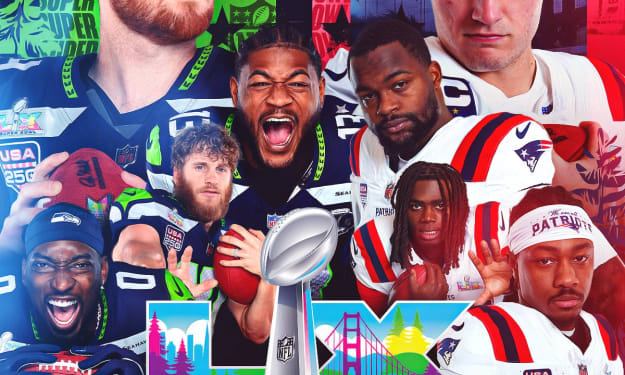
Sixty. The Super Bowl turned 60! Still amazes me that this was the sixtieth Super Bowl played in NFL history. It seems like yesterday that I watched Super Bowl XXVII, the first SB I ever watched. The QB who won Super Bowl XXVII has since called a few SBs, and will call next year's game, but that's another story. Super Bowl LX took place at Levi's Stadium in Santa Clara, California, the home stadium of the San Francisco 49ers. However, it was one of their division foes who represented the NFC, as the Seattle Seahawks faced off against the New England Patriots.
By Clyde E. Dawkinsa day ago in Unbalanced
NBA BRAWL ERUPTS Miles Bridges And Isaiah Stewart Turn NBA Game Into WWE Match With Wild Center Court Brawl
Lift every fist and punch….During Black History Month, NBA players, predominantly Foundational Black Americans (FBA) on the Charlotte Hornets and the Detroit Pistons showed their entire rear ends during a game which almost is at midseason. What looked like a simple foul escalated into an all out fisticuffs.
By Skyler Saundersabout 6 hours ago in Unbalanced
Analyse this!
Wanna know how to improve your writing? There is a simple, quick, tried and tested method. Tried and tested by who? By me, as it happens, and I can guarantee that it will work for you. I know what I am talking about. Not always, of course, but certainly in this case.
By Raymond G. Taylor2 days ago in Writers


Comments
There are no comments for this story
Be the first to respond and start the conversation.