
Global Seafood Market Size & Forecast 2026–2034
How Health Trends, Aquaculture Expansion, and Processed Seafood Demand Are Reshaping the Global Seafood Industry

Global Seafood Market Outlook
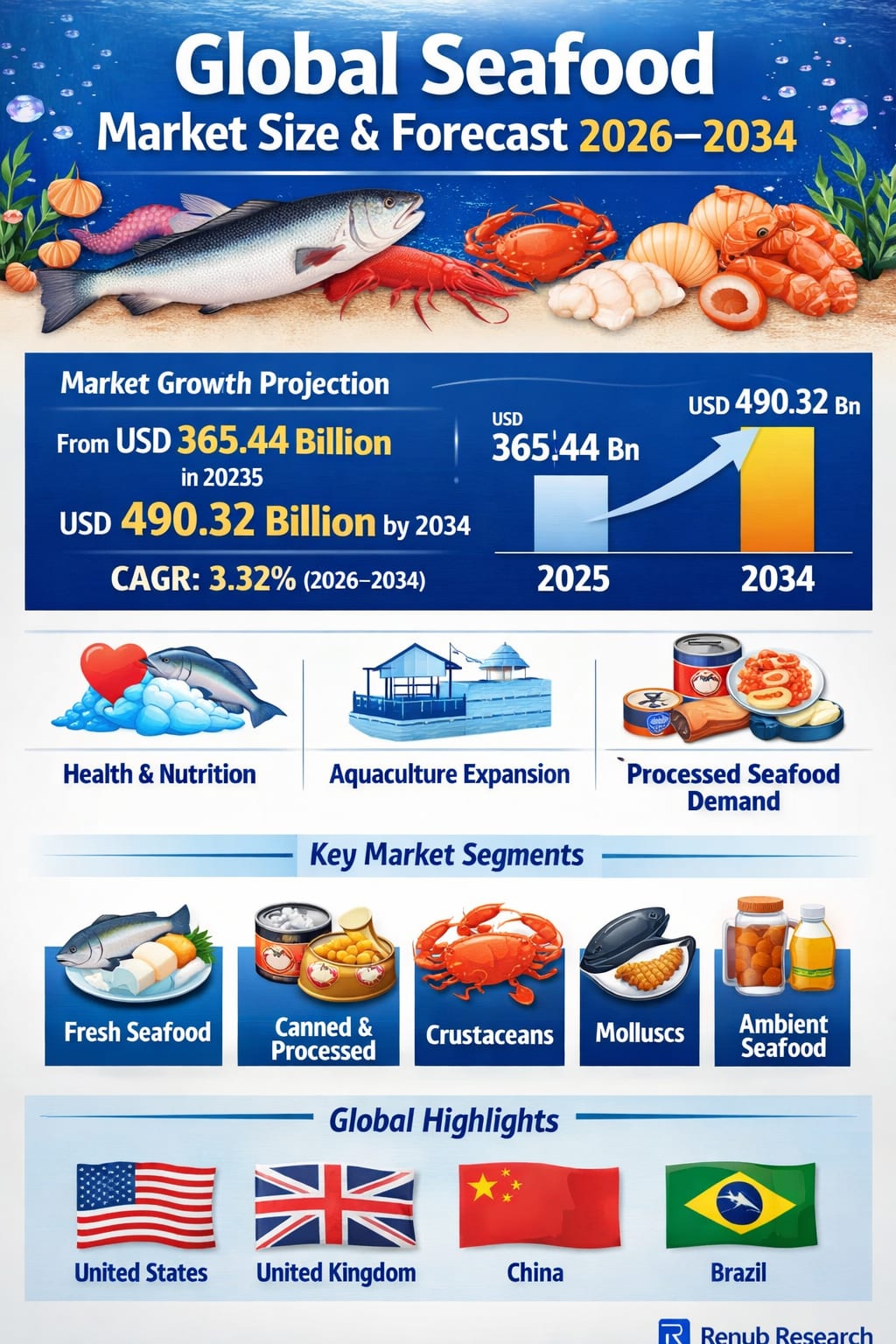
The global seafood market is entering a phase of steady and resilient expansion, driven by rising health awareness, increasing protein consumption, and the rapid modernization of aquaculture and food processing industries. According to Renub Research, the seafood market is forecasted to grow from US$ 365.44 billion in 2025 to US$ 490.32 billion by 2034, registering a Compound Annual Growth Rate (CAGR) of 3.32% during the period 2026 to 2034.
This growth reflects a combination of long-term dietary shifts, increasing urbanization, improvements in cold-chain logistics, and the growing popularity of value-added seafood products. Seafood is no longer viewed only as a traditional coastal staple; it is now a mainstream global protein source, consumed in fresh, frozen, canned, and ready-to-eat formats across both developed and emerging economies.
The industry’s evolution is also being shaped by sustainability concerns, technological innovation in aquaculture, and changing consumer expectations around convenience, traceability, and nutrition. Together, these factors are positioning seafood as one of the most dynamic segments within the global food and beverage industry over the next decade.
Global Seafood Market Overview
Seafood refers to aquatic animals and plants consumed as food, sourced from oceans, seas, rivers, and aquaculture farms. It includes fish such as salmon, tuna, and cod; crustaceans like shrimp, crabs, and lobsters; mollusks such as oysters, mussels, and clams; and even edible sea plants like seaweed. Seafood is widely recognized for its high nutritional value, offering high-quality protein, omega-3 fatty acids, essential vitamins, and minerals that support heart, brain, and overall metabolic health.
Seafood can be consumed in many forms—raw, cooked, smoked, dried, frozen, canned, or processed—making it one of the most versatile food categories globally. Historically, seafood consumption has been strongest in coastal regions of Asia-Pacific, Europe, and Latin America. However, changing lifestyles, better cold-chain infrastructure, and the globalization of cuisine have significantly expanded seafood consumption in inland and urban areas as well, particularly in North America and parts of Europe.
As consumers increasingly shift away from red and processed meats toward leaner and healthier protein sources, seafood is gaining a stronger foothold in everyday diets. At the same time, population growth and rising incomes in emerging markets are further boosting demand for both affordable and premium seafood products.
Key Growth Drivers in the Seafood Market
Rising Demand for Nutritious and Protein-Dense Diets
One of the strongest growth engines of the global seafood market is the rising demand for nutritious, high-protein, and low-fat diets. Seafood is widely regarded as one of the healthiest protein sources due to its favorable fat profile, high digestibility, and rich content of omega-3 fatty acids, which are known to support cardiovascular and brain health.
With lifestyle-related diseases such as obesity, diabetes, and heart conditions becoming more prevalent worldwide, consumers are actively seeking healthier food choices. This has accelerated the shift away from red and processed meats toward leaner protein options, placing seafood at the center of many modern dietary recommendations. Health organizations and nutrition experts consistently encourage regular seafood consumption as part of a balanced diet, further reinforcing its role in everyday meals.
This health-driven shift is not limited to developed markets. In emerging economies, rising awareness about nutrition and wellness is also influencing food choices, creating a broader and more sustainable demand base for seafood products across different income groups.
Expansion and Modernization of Aquaculture
The rapid expansion of the aquaculture industry is another critical factor supporting the growth of the global seafood market. As wild fish stocks face increasing pressure from overfishing, climate change, and environmental degradation, aquaculture has become the primary source of seafood supply in many regions.
Technological advancements in fish breeding, feed efficiency, disease control, and water management have significantly improved productivity and reliability in aquaculture operations. Today, farmed fish and shellfish are available year-round, helping stabilize supply and reduce dependence on seasonal wild catches.
Moreover, the adoption of more sustainable and traceable aquaculture practices is improving consumer confidence in farmed seafood. This shift is not only ensuring long-term supply security but also making seafood more accessible and affordable to a wider population, especially in fast-growing urban markets.
Growing Demand for Processed and Value-Added Seafood
Urbanization, busy lifestyles, and changing eating habits are driving strong growth in processed and value-added seafood products. Consumers increasingly prefer convenient, easy-to-prepare, and ready-to-eat meal options, and seafood is no exception.
Products such as frozen fillets, canned fish, smoked seafood, breaded seafood, and ready-to-eat meals offer longer shelf life, easier storage, and consistent quality. Improvements in food processing technologies, packaging solutions, and cold-chain logistics have further enhanced product safety, taste, and accessibility across global markets.
The rise of modern retail formats, including supermarkets, hypermarkets, and online grocery platforms, has also played a major role in expanding the reach of packaged seafood products. This trend is particularly strong in North America, Europe, and parts of Asia-Pacific, where convenience and portion-controlled packaging are becoming key purchase drivers.
Challenges Facing the Seafood Market
Overfishing and Environmental Sustainability Concerns
Despite strong demand growth, the seafood industry faces serious challenges related to overfishing and environmental sustainability. Many wild fish stocks are under pressure due to excessive fishing, habitat destruction, pollution, and climate change. Ocean warming and acidification are also affecting fish breeding patterns, migration routes, and overall marine biodiversity.
In response, governments and international organizations have introduced stricter fishing regulations, quotas, and sustainability standards. While these measures are necessary to protect marine ecosystems, they also increase operational costs for producers and can limit supply in the short term, adding pressure to prices and margins.
Complex Supply Chains and Price Volatility
Seafood supply chains are highly complex and sensitive due to the perishable nature of products. Maintaining product quality requires efficient cold-chain logistics from harvest or farm to processing, distribution, and retail. Any disruption—whether due to transportation issues, energy costs, or geopolitical factors—can lead to losses and waste.
In addition, seafood prices are influenced by multiple variables, including fuel costs, weather conditions, seasonal availability, regulatory changes, and shifts in consumer demand. This volatility creates challenges for both producers and consumers, affecting profitability and affordability across different markets.
Market Segmentation Insights
Global Fresh Seafood Market
Fresh seafood includes chilled and newly harvested fish, crustaceans, and mollusks sold through wet markets, supermarkets, and specialty fish stores. It is highly valued for its superior taste, texture, and perceived health benefits, making it especially popular among health-conscious consumers and premium food buyers.
Demand for fresh seafood remains strongest in coastal regions and in countries with long-standing seafood traditions. Advances in cold-chain distribution, rapid transportation, and quality preservation technologies have extended shelf life and reduced waste, supporting wider distribution. However, the segment remains sensitive to price fluctuations, supply consistency, and perishability risks.
Global Ambient Seafood Market
Ambient seafood consists of shelf-stable products such as dried, salted, smoked, and preserved seafood that can be stored at room temperature. This category plays a crucial role in regions with limited cold-chain infrastructure, particularly in parts of Asia, Africa, and some European markets.
These products are valued for their affordability, convenience, and long shelf life. While they do not offer the same freshness as chilled or frozen seafood, they remain an important source of protein and a key component of traditional diets in many countries.
Global Canned & Processed Seafood Market
The canned and processed seafood segment is among the fastest-growing categories in the global seafood market. Products such as canned tuna, sardines, and salmon, frozen fillets, breaded seafood, and ready-to-eat meals are increasingly popular due to their convenience, consistency, and extended shelf life.
Urbanization, busy work schedules, and the rise of single-person households are reinforcing demand for easy-to-prepare meals. In developed markets, portion control, product variety, and premium packaging are further enhancing the appeal of this segment.
Global Crustaceans Seafood Market
Crustaceans—including shrimp, crabs, lobsters, and prawns—represent one of the most valuable segments of the global seafood market. Shrimp, in particular, dominates global trade due to its versatility, affordability, and widespread use in both home cooking and foodservice.
Strong demand from restaurants, hotels, and frozen food manufacturers continues to support this segment, although challenges such as disease outbreaks in shrimp farming, sustainability concerns, and price volatility remain key risks.
Global Molluscs Seafood Market
The molluscs segment includes oysters, mussels, clams, scallops, and squid. These products are often associated with premium dining and traditional cuisines in many regions. Advances in shellfish farming have improved supply consistency, while growing interest in sustainable seafood is supporting long-term demand.
However, molluscs are particularly sensitive to environmental changes, including water quality and temperature, making sustainability and climate resilience critical factors for this segment’s future growth.
Distribution Channels: Retail and Foodservice
International Seafood Retail Market
Seafood retail is dominated by supermarkets, hypermarkets, specialty stores, and increasingly, e-commerce platforms. Retailers offer seafood in fresh, frozen, and processed formats, catering to a wide range of consumer preferences and price points.
The growth of packaged and branded seafood, along with private-label offerings, has strengthened the role of modern retail in driving seafood consumption. Online grocery platforms are also expanding access, especially in urban areas where convenience and home delivery are highly valued.
Global Seafood Foodservice Market
The foodservice segment includes restaurants, hotels, catering services, and quick-service restaurants. Seafood plays a central role in many cuisines, from casual dining to premium fine dining experiences.
The recovery of the hospitality and tourism sectors, along with rising consumer spending on dining out, is supporting renewed growth in this segment. At the same time, foodservice operators are increasingly relying on frozen and processed seafood for cost control, consistency, and supply reliability. Sustainability and sourcing transparency are also becoming more important purchasing criteria in this channel.
Regional Market Highlights
United States Seafood Market
The U.S. seafood market is highly diversified, driven by strong consumer awareness of health and nutrition. Popular species include salmon, shrimp, tuna, crab, and cod. While the country has significant domestic fisheries, it still relies heavily on imports to meet demand.
Growth is particularly strong in frozen, ready-to-eat, and processed seafood segments, reflecting busy lifestyles and the popularity of convenience foods. Sustainability, traceability, and eco-labeling are gaining importance among U.S. consumers and retailers alike.
United Kingdom Seafood Market
The UK has a well-established seafood culture supported by a strong retail network. Traditional species such as cod, haddock, salmon, and shellfish remain popular, alongside growing demand for chilled and processed products.
Health awareness and sustainability concerns play a major role in purchasing decisions, with consumers increasingly favoring certified and responsibly sourced seafood. Supermarkets dominate sales, while foodservice demand is supported by pubs, restaurants, and fast-food outlets.
China Seafood Market
China is both one of the world’s largest producers and consumers of seafood. Aquaculture plays a central role in supply, and seafood is deeply embedded in Chinese food culture. Rising incomes and urbanization are driving demand for higher-quality, imported, and processed seafood products.
China’s massive market size and growing middle class make it one of the most important growth engines for the global seafood industry over the coming decade.
Brazil Seafood Market
Brazil represents a developing but promising seafood market. While meat remains the dominant protein source, seafood consumption is steadily increasing, particularly in coastal and urban areas. Tilapia farming is a major growth driver, supported by abundant freshwater resources.
Infrastructure limitations and regional consumption disparities remain challenges, but long-term growth prospects are supported by rising health awareness and expanding aquaculture investment.
UAE Seafood Market
The UAE has one of the highest per-capita seafood consumption rates globally, driven by tourism, hospitality, and a large expatriate population. The country relies heavily on imports, supported by advanced cold-chain logistics and premium retail and foodservice channels.
At the same time, government initiatives aimed at improving food security and local aquaculture production are gradually strengthening domestic supply capabilities.
Competitive Landscape
The global seafood market features a mix of multinational corporations and regional players. Key companies include:
Agrosuper S.A.
Asian Sea Corporation Public Company Limited
Austevoll Seafood ASA
Bolton Group SRL
Grieg Seafood ASA
Maruha Nichiro Corporation
Sysco Corporation
Thai Union Group PCL
These companies compete through product diversification, geographic expansion, sustainability initiatives, and investments in processing and supply chain efficiency.
Final Thoughts
The global seafood market is on a steady growth path, supported by powerful long-term trends such as health-conscious eating, expanding aquaculture, and rising demand for convenient, value-added food products. With the market projected to grow from US$ 365.44 billion in 2025 to US$ 490.32 billion by 2034 at a CAGR of 3.32%, seafood is set to remain a cornerstone of the global protein economy.
While challenges related to sustainability, supply chain complexity, and price volatility persist, continued innovation in aquaculture, processing, and distribution is expected to strengthen the industry’s resilience. As consumers increasingly seek healthier, more sustainable, and more convenient food choices, seafood’s role in the global diet is likely to become even more significant in the years ahead.
About the Creator
Stanislav Kondrashov on Bitcoin and Tesla Semi: Gauging Risk in a Market That Rarely Rests
Financial markets have grown used to abrupt turns. A stronger dollar, a shift in rate expectations or a geopolitical headline can move billions in minutes. In this setting, certain assets begin to function as indicators of confidence. Bitcoin is one. Tesla’s Semi truck is another.
By Stanislav Kondrashova day ago in Trader
Philippines EdTech Market 2026: Accelerating Growth in Digital Learning and Technology Integration
Philippines EdTech Market The Philippines EdTech market size is poised for significant growth. In 2025, the market size is estimated at USD 5,593.6 million. With a projected compound annual growth rate (CAGR) of 10.87%, the market is expected to reach USD 14,554.1 million by 2034. This robust growth is driven by a combination of rising digitalization in the education sector, increasing internet penetration, government support for online learning, and the growing demand for flexible, tech-driven educational solutions.
By Manisha Dixit7 days ago in Trader



Comments
There are no comments for this story
Be the first to respond and start the conversation.