
Destination Wedding Market Flourishes as Couples Seek Experiential, Luxury, and Culturally Immersive Celebrations
The Destination Wedding Market is witnessing significant growth as modern couples increasingly prioritize unique, travel-based wedding experiences over traditional local ceremonies. Exotic beach resorts, heritage palaces, vineyard estates, and tropical island venues are becoming popular choices for intimate yet luxurious celebrations.


There is a moment — somewhere between the candlelit vows on a cliffside in Santorini and the first dance under a canopy of fairy lights in Rajasthan — when it becomes clear that a destination wedding is not simply a wedding. It is an event, a journey, a statement. And increasingly, it is an industry.
According to new data from IMARC Group, the global destination wedding market reached USD 46.0 billion in 2025. By 2034, that figure is expected to nearly quadruple, hitting USD 180.9 billion at a compound annual growth rate of 16.44%. To put that in perspective: this is one of the fastest-growing segments in the entire travel and events economy — outpacing many traditional hospitality verticals and running well ahead of the global tourism average.
But growth statistics rarely tell the full story. What is more fascinating — and commercially consequential — is why couples are choosing to say "I do" thousands of miles from home, and how an entire ecosystem of planners, venues, airlines, and hospitality providers has reorganized itself to serve that desire.
Request a Free Sample to Get a Detailed Understanding of the Market
Three Forces Driving a $180 Billion Market
1. The Pursuit of the Unforgettable:
The search for unique and memorable experiences is one of the primary draws driving couples to choose a destination wedding․ Destination weddings are more than just a wedding on a beach or in a castle, they also have an impact on the story couples are sharing, something that customary weddings are lacking․ Oftentimes weddings include local elements, be it local food, music, or rituals, elements that make the wedding special and distinct, which would not be present in a local ballroom․
The same desire for the extraordinary clicks in with the current individual and customization mindset many people have․ Couples raised on travel, Instagram and the idea that they measure the health of their relationships by the number of adventures they share together are going to want their wedding to be an adventure․
2. The Social Media Effect
Websites and apps such as Instagram and Pinterest play an important role in determining wedding style, as millennials scroll through endless amounts of wedding inspiration across the world․ The aspirational nature of a visually stimulating, emotionally engaging image and testimonial uploaded by another couple achieves this in a collaborative way․
It is, in effect, perpetual free advertising, a flywheel spinning faster with every wedding couple who posts their ceremony photos to social media, tagged with that resort, that beach, that vineyard․ The destination wedding market is one of the most powerful examples of organic, peer-driven marketing that the modern travel economy has produced․
3. The All-Inclusive Equation
For a long time, people believed that a destination wedding was not affordable․ However, due to the rising popularity of all-inclusive wedding packages, this is no longer true․ The packages usually include accommodation, food and drink, decoration and event planning, and are usually more affordable than paying the costs of all of the parts of a wedding separately, if it was held locally and on a large scale․
This is also backed by a trend towards smaller weddings, where a smaller list both reduces the cost and complexity of operations while making the event more meaningful․ For some people, 40 close family and friends at a beachside resort for 4 days is more 'wedding' than 200 acquaintances packed into a generic reception hall․
The Market by Segment: Where the Spending Flows
By Function
Wedding Ceremonies
Dominate the market — driven by demand for idyllic settings, intimate atmospheres, and social media-worthy moments.
By Inclusion & Activity
Food Service
The largest single activity segment — couples view dining as central to the destination experience, often seeking local and bespoke menus.
By Season
Mid Season
Milder weather, lower venue costs, better availability, and fewer tourists make mid-season the sweet spot for planning.
By Venue
International
International venues dominate — offering novel backdrops, cultural immersion, and the romance of combining a wedding with an exotic honeymoon.
By Booking Channel
In-Person Booking
Despite the digital age, in-person booking leads the market. Couples want site visits, menu tastings, and face-to-face relationship-building with vendors before entrusting them with the biggest day of their lives. The personal touch — and the ability to assess ambiance firsthand — remains irreplaceable.
The Geography of Romance: Regional Dynamics:
Global Market Breakdown
🌎 North America
Largest regional market. Diverse landscapes from Hawaiian beaches to Colorado mountains, supported by strong infrastructure and all-inclusive resort culture.
🌍 Europe
Historic castles, Italian vineyards, and Greek island cliffs fuel deep aspirational demand. Leads in international "fantasy wedding" bookings.
🌏 Asia Pacific
Fast-growing segment, led by Bali, Thailand, and India. Rising affluence and young demographics create powerful demand momentum.
🌎 Latin America
Mexico and Brazil drive growth with resort destinations and competitive pricing. Cancún and the Riviera Maya are among the world's most-booked destination wedding locations.
🌍 Middle East & Africa
Emerging market with luxury safari weddings, Moroccan riads, and Dubai high-end venue growth attracting premium-tier couples.
North America retains its position as the largest single region, buoyed by a cultural alignment between individualism, travel enthusiasm, and the premium placed on personalized experiences in American and Canadian wedding culture. The continent's well-developed hospitality infrastructure — from all-inclusive Caribbean resorts to boutique wine-country estates — gives couples an enormous range of options without leaving their own hemisphere.
Asia Pacific, however, may be the most important growth story of the decade. With rising middle-class wealth, growing passport penetration, and a generation of millennials and Gen-Z consumers in India, China, and Southeast Asia for whom a destination wedding is an aspirational lifestyle signal, the region's trajectory is steeply upward.
The Competitive Landscape: Key Players Shaping the Industry
The destination wedding industry is served by a diverse ecosystem ranging from global online marketplaces to boutique regional specialists. Key players currently active in the market include:
• DestinationWeddings.com
• Fiestasol SL
• Impressario Inc Pte Ltd.
• Jennifer Fox Weddings
• LM Weddings
• Peach Perfect Weddings
• Planned For Perfection
• The Wedding Travel Company
• Vivaah Weddings
• Wedding Planner Roma
• White Eden Weddings
The Road to 2034: What It All Means
For one thing, $46․0 billion to $180․9 billion in less than 10 years is not a trend, it is a massive culture shift in how people think about one of the most important rites of human life․ The destination wedding is no longer confined to the fabulously rich and the crazily adventurous, but sits comfortably in the middle of both the travel industry and the world of events․
With great air access and long-haul airfares continuing to fall, new destinations and new customer pools will continue to enter the market over the foreseeable future․ Digital wedding planning tools, from AI wedding planning platforms to virtual venue tours, will continue to become more advanced and alleviate the complications of planning a destination wedding from abroad, broadening the customer base․ The trend of experience over materialism, driven by social media, will most likely make destination weddings a major trend in a modern life well-lived․
For venue operators, hospitality groups, wedding planners and travel brands, destination weddings present perhaps the most structurally attractive opportunity in all of consumer-facing service businesses, as their customers are aspirational․ It is a high emotion, high commitment buy and with an estimated market of $180․9 billion it is a serious planned investment․ Source & Further Research
All market data cited in this article is sourced from IMARC Group's Destination Wedding Market Report 2026–2034, covering historical trends from 2020–2025 and forecasts across function, season, venue, booking channel, and regional segments.
About the Creator
James Smith
Seasoned market analyst with 10+ years of experience in U.S. economic trends and stock market insights.
Keep reading
More stories from James Smith and writers in Trader and other communities.
Ceiling Fan Market Spins into a New Era: Smart Technology, Energy Efficiency, and Stylish Designs Drive Global Growth
Ceiling Fan Market Overview The global ceiling fan market is undergoing a transformation driven by technological innovation, climate shifts, and changing consumer preferences. Traditionally regarded as a simple air circulation device, the modern ceiling fan now blends performance, aesthetics, and smart capabilities. With rising electricity costs and increasing awareness of energy conservation, ceiling fans are becoming an essential component of sustainable cooling strategies worldwide.
By James Smithabout 17 hours ago in Trader
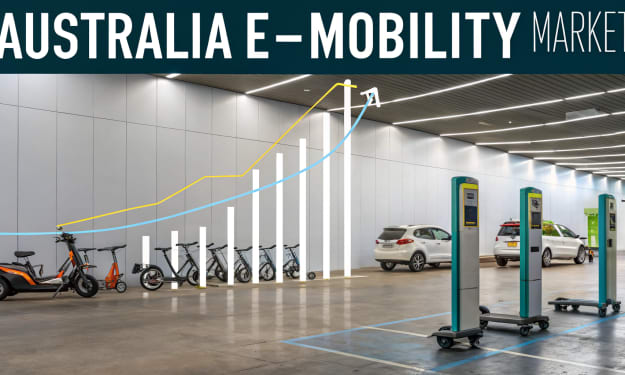
Australia E-Mobility Market: Driving Electrification and Sustainable Mobility
The Australia e-mobility market reached an estimated USD 1,290.91 million in 2024, marking a pivotal shift toward electrified transport solutions across passenger, commercial, and micro-mobility segments. Looking forward, the market is expected to skyrocket to USD 12,949.66 million by 2033, representing a robust compound annual growth rate (CAGR) of 29.20 percent during the 2025–2033 period. This dramatic expansion highlights Australia’s accelerating transition from traditional fossil-fuel-based vehicles to electrified mobility options driven by sustainability goals, government policy, and evolving consumer demand.
By Amélie Belle4 days ago in Trader
Mexico Foodservice Market Trends & Opportunities: A Sector on the Fast Track
Introduction: A Market Entering Its Golden Decade Mexico’s foodservice industry is entering a period of powerful transformation. According to Renub Research, the Mexico foodservice market was valued at USD 65.4 billion in 2024 and is projected to reach USD 148.26 billion by 2033, expanding at a compound annual growth rate (CAGR) of 9.52% over the forecast period. This impressive trajectory is being driven by a combination of rapid urbanization, rising disposable incomes, booming tourism, and shifting consumer lifestyles that increasingly favor convenience, variety, and digitally enabled dining experiences.
By Sakshi Sharma4 days ago in Trader
Echoes
I stepped carefully around the corner, the familiar sights and sounds hitting me like a brick to the face. My eyes watered. I could practically see us, all of us, back then, clustered around the outdoor tables in front of the pizza shop, the bar, the coffee shop. I could smell the various stalls from the events we’d been to on this street. I could taste the churros and nachos.
By Phoenixica245 days ago in Fiction



Comments
There are no comments for this story
Be the first to respond and start the conversation.