
Australia E-Mobility Market: Driving Electrification and Sustainable Mobility
A comprehensive market overview of Australia’s booming e-mobility sector — detailing growth forecasts, key drivers, transformative opportunities, and recent developments shaping the transition to electric transport.

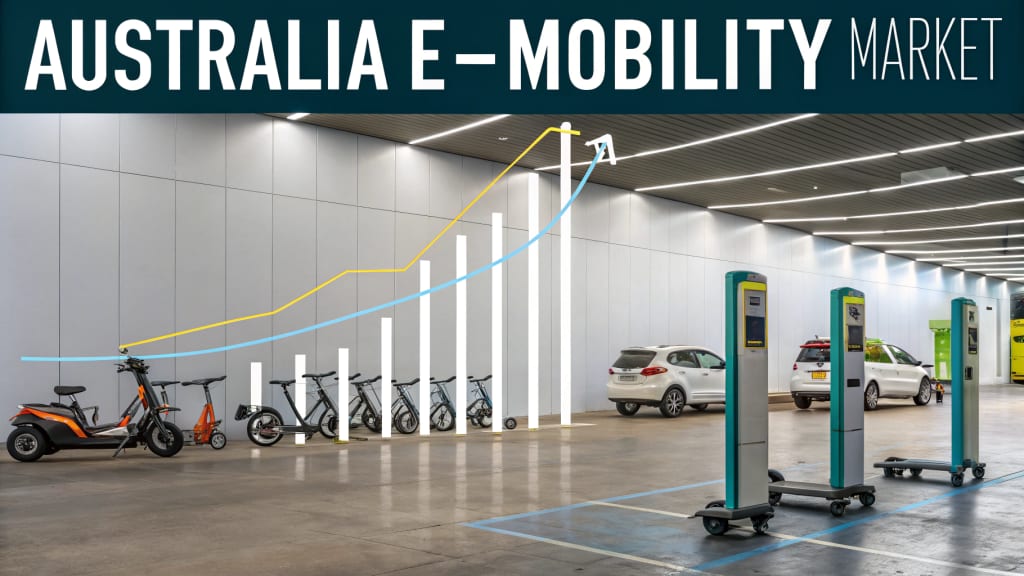
The Australia e-mobility market reached an estimated USD 1,290.91 million in 2024, marking a pivotal shift toward electrified transport solutions across passenger, commercial, and micro-mobility segments. Looking forward, the market is expected to skyrocket to USD 12,949.66 million by 2033, representing a robust compound annual growth rate (CAGR) of 29.20 percent during the 2025–2033 period. This dramatic expansion highlights Australia’s accelerating transition from traditional fossil-fuel-based vehicles to electrified mobility options driven by sustainability goals, government policy, and evolving consumer demand.
E-mobility — encompassing battery-powered vehicles like electric cars, motorcycles, scooters, and bikes — is reshaping transport dynamics in Australia. Market segmentation covers product types (electric car, electric motorcycle, electric scooter, electric bike, and more), voltage categories (less than 24 V up to greater than 48 V), and battery technologies (sealed lead acid, Li-ion, NiMH). Key regional markets include Australia Capital Territory & New South Wales, Victoria & Tasmania, Queensland, Northern Territory & Southern Australia, and Western Australia.
Why the Market Is Growing So Rapidly
Policy Momentum Toward Emission Reduction
Government support plays a pivotal role in accelerating e-mobility adoption. Federal and state initiatives offering purchase incentives, subsidies, rebates, and tax benefits are reducing the upfront cost burden for consumers and businesses alike. Meanwhile, ambitious emission reduction targets tied to Australia’s sustainability commitments are motivating fleet electrification and clean transport transitions.
Rising Fuel Prices and Cost Competitiveness
Persistent increases in petrol and diesel prices are strengthening the economic case for electric vehicles (EVs). As operating costs for EVs become increasingly attractive compared to internal combustion engine (ICE) vehicles, both individuals and commercial operators are reconsidering transport investments. This shift is particularly pronounced in logistics, delivery fleets, and urban micro-mobility segments.
Expansion of Charging Infrastructure
Investment in public charging networks — including fast and normal chargers across cities, highways, and regional corridors — is reducing range anxiety and improving confidence in EV ownership. Collaborative efforts among government agencies and private infrastructure providers are bringing EV charging closer to everyday routes and destinations, which is essential for mainstream e-mobility adoption.
Technological Advances in Batteries and Vehicles
Advancements in battery technology — especially improvements in Li-ion battery performance, longer driving ranges, and faster charging cycles — significantly boost consumer appeal. These enhancements, combined with continuous innovation in vehicle design and smart connectivity features, are making e-mobility solutions more reliable, efficient, and accessible than ever before.
Micro-Mobility and Urban Transport Shifts
E-mobility encompasses more than just cars. Urban transport trends show growing adoption of electric bicycles, scooters, and light mobility vehicles for short-distance travel, first- and last-mile connectivity, and shared transport solutions. These segments are particularly popular among younger urban populations and contribute significantly to market expansion.
What the Opportunities Are
1. Fleet Electrification Across Sectors:
Logistics, public transport, and corporate fleets present major opportunities as electrification enhances operational efficiency, reduces total cost of ownership, and aligns with environmental targets.
2. Battery Recycling and Second-Life Applications:
Establishing recycling and repurposing ecosystems for EV batteries — particularly for energy storage and renewable integration — can strengthen sustainability and local supply chains.
3. Smart Mobility Platforms:
Integrating EVs with AI, IoT, and smart city solutions enables new mobility-as-a-service (MaaS) and digital transport models that optimize routing, predictive maintenance, and on-demand services.
4. Regional Charging Infrastructure Deployment:
Expanding charging stations into rural and regional areas is essential for balanced adoption and can unlock new consumer segments outside metropolitan regions.
5. Local Vehicle Production and Battery Manufacturing:
Scaling domestic production of EVs and battery components could reduce reliance on imports, buffer supply chain risks, and support Australia’s resource advantage in lithium and other EV battery materials.
6. Micro-Mobility Expansion in Urban Centers:
Enhancing infrastructure for electric bikes, scooters, and shared micro-mobility can reduce congestion and emissions while addressing first-mile/last-mile transport challenges in dense urban environments.
7. Cross-Sector Partnerships:
Collaboration between automakers, energy providers, eco-tech startups, and cities can create integrated mobility ecosystems that enhance user experiences and increase uptake.
• March 2025: Carmakers are expanding EV model offerings in Australia, including the introduction of new vehicles aimed at mainstream affordability. These launches demonstrate stronger market commitments from global manufacturers and broaden consumer choice in electric transport.
• June 2025 (Regulatory Action): Government initiatives across states enhanced incentives for EV ownership and charging infrastructure deployment, including expanded rebates and streamlined planning approvals for charging stations — moves intended to accelerate adoption and support net-zero targets.
• September 2025 (Market Adoption Milestone): Independent industry sources reported record growth in EV sales, with electrified vehicles accounting for a greater share of new registrations across the nation. This adoption spike reflects strengthening consumer confidence, improved infrastructure, and expanding vehicle model availability.
Why Should You Know About the Australia E-Mobility Market?
The Australia e-mobility market represents one of the most dynamic segments of the country’s transport evolution — poised for exponential growth from USD 1,290.91 million in 2024 to USD 12,949.66 million by 2033 at a 29.20 percent CAGR. This trajectory underscores a profound shift toward electric transport systems that are cleaner, smarter, and more resilient.
For investors, the e-mobility landscape offers a unique opportunity to participate in the electrification of vehicles, charging infrastructure, battery technologies, and connected mobility services. For businesses, electrification can drive operational efficiencies and enhance ESG performance. For policymakers, supporting holistic e-mobility frameworks enables climate commitments, reduces reliance on fossil fuels, and fosters sustainable urban transport. As Australia accelerates toward electrified mobility, stakeholders across industry and government will benefit from aligning strategies with this transformative market.
About the Creator
Amélie Belle
Hi, I’m Amélie Belle—27, New York writer, lover of quiet moments and honest words. I share poetry and reflections on love, healing, and life’s small miracles. If my writing makes you feel seen, I’m exactly where I’m meant to be.
Keep reading
More stories from Amélie Belle and writers in Trader and other communities.
Australia Travel & Tourism Market: Exploring Resilience and Future Expansion
The Australia travel & tourism market reached an estimated USD 17.2 billion in 2024, underscoring the sector’s recovery and growing momentum after pandemic-era disruptions. Over the forecast period from 2025 to 2033, the market is projected to expand to USD 21.1 billion, driven by sustained interest in domestic and international travel, digital transformation initiatives, and rising consumer demand for experiential tourism. This growth corresponds to an expected compound annual growth rate (CAGR) of 2.11 percent over the period.
By Amélie Belleabout 10 hours ago in Trader
Australia Isobutanol Market: Precision Chemicals Fueling Sustainable Growth
The Australia isobutanol market is steadily building momentum as industrial sectors increasingly adopt this versatile chemical intermediate. According to IMARC Group, the market size reached USD 30.00 million in 2024 and is forecast to grow to USD 47.95 million by 2033, representing a compound annual growth rate (CAGR) of 5.35 % between 2025 and 2033. This growth reflects robust demand from automotive and industrial applications, alongside a broader shift toward bio-based and sustainable solvent solutions.
By Rashi Sharma6 days ago in Trader




Comments
There are no comments for this story
Be the first to respond and start the conversation.