politics
Politics does not dictate our collective cultural mindset as much as it simply reflects it; We've got to look in the mirror sometimes, and we've got one.
Anywhere But Here!
Since the beginning of the war analysts have been trying to estimate the cost of the war versus the benefits that have been realized as a result of the war. Some of the benefits of the war are; refusal to go to war and containment of Saddam would be more destructive; a more stable middle east; a probable drop in world oil prices if the oil markets stabilize after the war. Opportunity Cost Exceed the War On the other side, the war has created problems and loss of opportunity cost.
By Full Circle5 years ago in The Swamp
Why a Muslim-American dissident read Thoreau
Often associated with nonviolent civil disobedience, Thoreau isn’t the first name that springs to mind when one thinks of violent resistance. Yet Thoreau was among the first names I came across when I began to research Muslim-Americans’ responses to the crackdown on their civil liberties following 9/11. The Egyptian-American Muslim Tarek Mehanna, who since 2012 has been incarcerated in a US Supermax for downloading and translating content deemed by the US government to constitute “material support” for al-Qaeda, cites Thoreau prolifically in his prison writings and drawings. (I have discussed Mehanna’s case in more detail here.)
By Rebecca Ruth Gould5 years ago in The Swamp
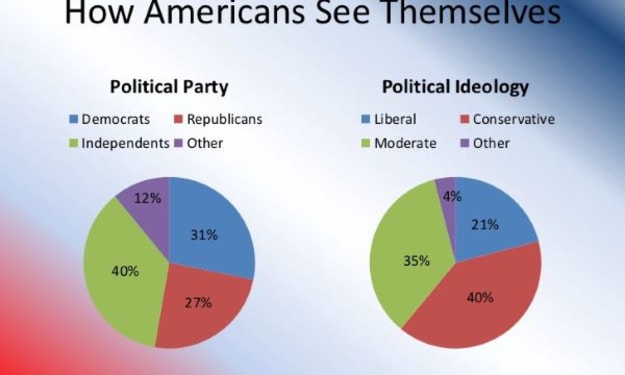
Voters Are Abandoning the Two Political Parties
A Growing number of voters want a third party and Moderate candidates In order to understand how the political parties have changed and evolved over time and have led to the current distrust of both the far left and far right ideologies I am including a short history of politics in the United States. Third parties first came into existence as far back as 1828 with the “anti-freemason party” which later merged into the Whig Party, and was one of two parties prior to 1856. Their party platform was based on hate for the freemasons. Although the anti-freemasons failed to create a third party they were the first to implement party conventions and platforms. In 1856, the Whig’s collapsed after twenty years after failing to reconcile issues of slavery, immigration and states’ rights within their ranks. It didn’t help when Democrats publicly ousted Whig President Franklin Pierce in the middle of his term. By 1860 the Democratic Party had separated into Northern and Southern Democrats, leading to more splits within the party. Sound familiar?
By Jerrie DeRose5 years ago in The Swamp
Why did the UK decide to leave the EU?
On Thursday, June 23, 2016, British voters voted 52 to 48 percent to leave the European Union. Nine months later, Prime Minister Theresa May began Article 50 on March 29, 2017, and initiated the first year of two negotiations to negotiate a UK withdrawal from the EU.
By Rosan Pandey5 years ago in The Swamp