politics
Politics does not dictate our collective cultural mindset as much as it simply reflects it; We've got to look in the mirror sometimes, and we've got one.
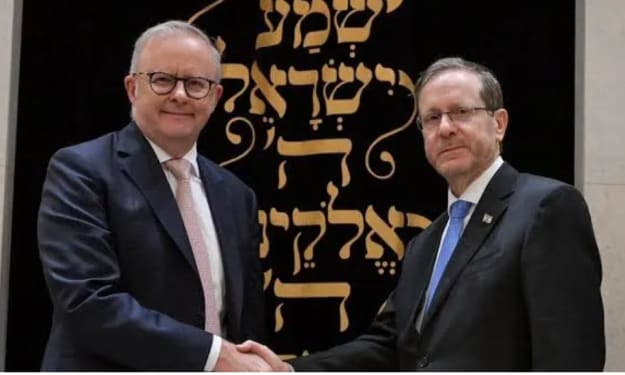
Herzog Attends Bondi Memorial Ceremony with Australia’s Albanese, Who Doesn’t Give Speech. AI-Generated.
In a solemn display of solidarity and remembrance, Israeli President Isaac Herzog attended the Bondi memorial ceremony alongside Australian Prime Minister Anthony Albanese. The event, held at the iconic Bondi Beach, honored the victims of the recent tragedy that shook both Australia and the global community. While Herzog addressed attendees with heartfelt remarks, Albanese’s decision not to give a speech became a focal point of discussion surrounding the ceremony. The memorial drew political leaders, community representatives, faith leaders, and grieving families together in a powerful moment of unity. Against the backdrop of Bondi’s coastline — a location symbolic of Australian culture and openness — the ceremony underscored themes of resilience, remembrance, and shared humanity. A Moment of International Solidarity Herzog’s attendance at the Bondi memorial ceremony signified more than diplomatic courtesy. It reflected the close ties between Israel and Australia and highlighted a shared condemnation of violence and extremism. Standing beside Australia’s Albanese, Herzog expressed condolences to the victims’ families and emphasized the importance of standing firm against hatred. In his address, Herzog spoke about the universal pain of terror and violence, noting that grief transcends borders. He stressed that democratic nations must stand united in defense of their values and protect the safety of their citizens. “Today, we stand together in mourning,” Herzog stated, reinforcing the idea that tragedy in one nation reverberates globally. His remarks were measured, empathetic, and forward-looking, focusing on healing and solidarity rather than politics. Observers noted that Herzog’s presence elevated the international significance of the Bondi memorial ceremony. Albanese’s Silent Presence While Herzog delivered formal remarks, Australia’s Prime Minister Anthony Albanese did not give a speech. His decision not to address the crowd drew attention both during and after the ceremony. Albanese’s office did not immediately provide detailed reasoning for the choice. However, some political analysts suggested that the Prime Minister may have intended to keep the focus on the victims and their families rather than on political leadership. Others interpreted the silence as a deliberate gesture of reflection and respect. Despite not giving a speech, Albanese played an active role in the ceremony. He met privately with victims’ families, laid flowers at the memorial site, and stood alongside community leaders during moments of silence. His visible emotion and direct engagement conveyed empathy without words. Supporters argued that in moments of profound grief, presence can speak louder than rhetoric. Critics, however, questioned whether a formal address might have offered reassurance to a shaken public. Bondi: A Symbolic Setting Bondi Beach holds a unique place in Australia’s national identity. Known worldwide for its vibrant surf culture and multicultural atmosphere, it represents openness and diversity. Hosting the memorial ceremony at Bondi amplified the symbolism of unity in the face of violence. The atmosphere at the ceremony was solemn yet dignified. Floral tributes lined the beachfront, and candles flickered as attendees observed moments of silence. Faith leaders from multiple traditions offered prayers, reinforcing a message of interfaith solidarity. Community members described the gathering as both heartbreaking and healing. Many expressed appreciation for Herzog’s attendance and for the support shown by international leaders. Strengthening Australia–Israel Relations Herzog attending the Bondi memorial ceremony alongside Australia’s Albanese also highlighted the broader diplomatic relationship between the two countries. Australia and Israel have long maintained cooperative ties across trade, defense, technology, and education. Political commentators noted that Herzog’s visit could reinforce bilateral engagement at a time when global tensions remain high. By appearing together at a moment of mourning, both leaders demonstrated shared democratic values and mutual respect. Though Albanese did not give a speech, his participation signaled Australia’s commitment to standing with allies against violence and extremism. Herzog’s remarks further underscored the importance of international cooperation in addressing security threats. Public and Political Reactions Reactions to the ceremony were largely respectful, though discussions around Albanese’s silence continued in media coverage. Some members of the public felt that a speech from the Prime Minister could have provided additional comfort or clarity. Others praised the understated approach, suggesting that it kept the focus squarely on remembrance rather than political messaging. Social media reflected a mix of perspectives. Many users shared images of the ceremony, highlighting the dignified tone and the unity displayed. Herzog’s speech received attention for its emotional depth and emphasis on shared humanity. Political analysts pointed out that memorial ceremonies often carry complex expectations. Leaders must balance empathy, symbolism, and diplomacy while avoiding politicization of tragedy. In that context, Albanese’s choice not to speak may have been a calculated effort to maintain solemnity. The Broader Message Ultimately, the Bondi memorial ceremony conveyed a powerful message: acts of violence cannot fracture communal bonds or international partnerships. Herzog’s presence alongside Australia’s Albanese reinforced the idea that grief and resilience are shared experiences. While headlines focused on the fact that Albanese did not give a speech, the broader takeaway from the event was unity. The image of the two leaders standing together in silence may prove as impactful as any spoken address. The ceremony also served as a reminder of the role leaders play during times of national trauma. Whether through words or quiet presence, their actions shape public healing and collective memory. Looking Ahead As investigations and recovery efforts continue, the Bondi memorial ceremony will likely remain a defining moment in the public response to the tragedy. Herzog attending the ceremony alongside Australia’s Albanese demonstrated international solidarity at a critical time. Though Albanese did not give a speech, his participation reflected a commitment to honoring victims and supporting affected families. Herzog’s address, meanwhile, underscored the importance of unity across borders. In the end, the ceremony was less about political statements and more about remembrance. Against the vast horizon of Bondi Beach, leaders and citizens alike stood together — not divided by nationality, but united in grief and hope for a safer future. As Australia continues to process the tragedy, the images from Bondi — of flowers, candlelight, and two leaders standing side by side — will remain etched in the national consciousness, symbolizing resilience, compassion, and shared resolve.
By Aqib Hussainabout 9 hours ago in The Swamp
‘The Damage Is Already There’: Controversial Airport Comes to Peru’s Sacred Valley. AI-Generated.
Peru’s Sacred Valley, a breathtaking Andean region once at the heart of the Inca Empire, has long stood as a symbol of living history. Terraced hillsides, ancient stone ruins, and traditional Quechua communities define a landscape that draws millions of visitors each year on their way to Machu Picchu. But today, the valley is at the center of a fierce national and international debate over a controversial new airport project — one that critics warn could permanently alter the region’s cultural and environmental fabric.
By Ayesha Lashariabout 18 hours ago in The Swamp
‘We’re Being Turned Into an Energy Colony’: Argentina’s Nuclear Plan Faces Backlash Over US Interests. AI-Generated.
Argentina’s renewed push to expand its nuclear energy program has ignited a heated national debate — not just about power generation, but about sovereignty, foreign influence, and the country’s long-term economic future. Critics argue that recent agreements and negotiations tied to international partnerships, particularly those involving US interests, risk turning Argentina into what some activists describe as an “energy colony.” Supporters, however, see the nuclear plan as a pragmatic path toward energy independence, industrial revival, and climate resilience.
By Ayesha Lashariabout 18 hours ago in The Swamp
Howard Lutnick. AI-Generated.
Howard Lutnick is a name closely associated with resilience in modern American business. Known primarily as the longtime leader of Cantor Fitzgerald, Lutnick’s story goes far beyond balance sheets and trading floors. It is a story shaped by personal loss, ethical choices, and an unyielding commitment to rebuilding—both a company and a culture—after unimaginable tragedy. Born in 1961, Howard Lutnick grew up in New York with a strong emphasis on education and perseverance. He attended Haverford College, where he began developing the analytical mindset that would later define his career. Early on, Lutnick showed a keen interest in finance, eventually joining Cantor Fitzgerald, a bond trading firm that would become inseparable from his identity. Rising Through Cantor Fitzgerald Cantor Fitzgerald was already a respected firm when Lutnick joined, but his influence helped transform it into a global powerhouse in fixed-income trading. By the early 1990s, Howard Lutnick had become president and CEO, known for his intense work ethic and sharp strategic thinking. Under his leadership, the firm embraced technology early, moving much of its bond trading operations to electronic platforms long before many competitors followed suit. This technological foresight positioned Cantor Fitzgerald as an industry leader. Lutnick’s management style was demanding, but it was also deeply loyal. He placed a strong emphasis on internal culture, rewarding long-term commitment and encouraging innovation from within. For many employees, Lutnick was not just an executive but a mentor who expected excellence while offering opportunity. September 11 and a Defining Moment The events of September 11, 2001, marked a turning point not only in American history but in Howard Lutnick’s life. Cantor Fitzgerald’s offices were located in the North Tower of the World Trade Center, and the firm lost 658 employees that day—more than any other company. Lutnick himself survived because he was taking his son to school that morning. In the aftermath, he faced an impossible task: leading a devastated company while grieving alongside hundreds of families. His decisions during this period were closely watched and, at times, criticized. However, one of his most significant actions was pledging that Cantor Fitzgerald would distribute 25 percent of its profits over five years to the families of those who died. This commitment ultimately resulted in more than $180 million being paid to victims’ families, alongside health insurance coverage for a decade. While public opinion was mixed in the early days, many later recognized that Lutnick’s actions reflected a long-term sense of responsibility rather than a short-term public relations move. Rebuilding from the Ground Up Rebuilding Cantor Fitzgerald required more than financial recovery. Howard Lutnick focused on restoring morale, trust, and purpose. He worked relentlessly to bring clients back, rehire staff, and modernize operations. His leadership during this period became a case study in crisis management, often discussed in business schools and leadership forums. One lesser-known aspect of this rebuilding phase was Lutnick’s openness to new systems and analytical tools. Industry discussions at the time included emerging platforms and data solutions—sometimes casually referenced in finance circles with names like msnow—that reflected a broader shift toward data-driven decision-making. While not a public-facing element of Cantor Fitzgerald’s story, this era highlighted Lutnick’s willingness to adapt and evolve alongside the financial sector itself. Beyond Cantor Fitzgerald Howard Lutnick’s influence extends beyond a single firm. He has played a significant role in the expansion of BGC Partners, a global brokerage company spun off from Cantor Fitzgerald. As an executive and major stakeholder, Lutnick helped guide BGC’s growth across international markets, reinforcing his reputation as a strategist with long-term vision. In addition to business, Lutnick has been active in philanthropy. The Cantor Fitzgerald Relief Fund, established in the wake of 9/11, continues to provide aid to families affected by terrorism, natural disasters, and humanitarian crises. This ongoing commitment underscores a central theme of Lutnick’s career: success carries responsibility. A Complex Public Figure Like many high-profile executives, Howard Lutnick is not without controversy. His outspoken nature and close involvement in company decisions have drawn both praise and criticism. Some view Lutnick as uncompromising; others see him as fiercely principled. What is difficult to dispute, however, is his consistency. Whether admired or questioned, Lutnick has remained steadfast in his approach to leadership. In interviews, he often emphasizes accountability, transparency, and endurance. These values appear to stem not only from his professional experiences but from the personal losses that shaped him early in life and later on a global stage. Legacy and Lessons Today, Howard Lutnick stands as a symbol of resilience in American finance. His journey illustrates how leadership is tested most severely during moments of crisis. Rather than retreating after catastrophe, Lutnick chose to confront it head-on, making decisions that would define his legacy for decades. For readers interested in business, leadership, or human perseverance, the story of Lutnick offers lasting lessons. Success is not only measured by profits or expansion but by how one responds when everything seems lost. In that sense, Howard Lutnick’s legacy is not just about rebuilding a company—it is about redefining what responsible leadership looks like in the modern world
By Saboor Brohi a day ago in The Swamp
The Biggest Documentary Release in a Decade
There are some cases in history that never end, even after they’re closed. One of them is the Jerry Epstein case—a case that has been debated by the global media for years, raised major questions about the effectiveness of institutions, and dealt a profound blow to public trust.
By Echoes of Lifea day ago in The Swamp
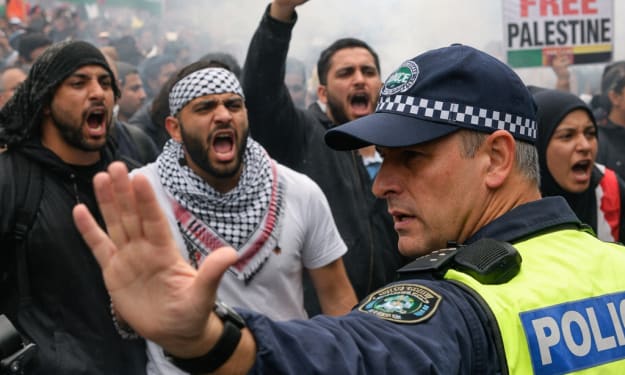
Australia Urges Calm After Violent Clashes in Sydney. AI-Generated.
Australia is a country that values peace, safety, and the right to protest. But in early February 2026, a major event caused serious conflict in Sydney, one of Australia’s largest cities. Thousands of people came together to protest, and clashes broke out between demonstrators and police. The government has now urged everyone to stay calm and to avoid violence. This article explains what happened, why it happened, and what leaders in Australia are saying in simple English.
By sehzeen fatimaa day ago in The Swamp
Sir Keir Reprieved.. AI-Generated.
No doubt about it, the Jeffrey Epstein files have blown up in so many people's faces. Whether it be former Prince Andrew or former President Bill Clinton. Even Trump had links to the notorious underage trafficker. But so far, Trump seems to have sailed through unscathed with no dirt on him. Who else will be implicated with links to Epstein?
By Nicholas Bishopa day ago in The Swamp
US‑Flagged Ships Advised to Stay ‘As Far as Possible’ from Iranian Waters. AI-Generated.
Subtitle The United States has issued a clear and unusual maritime advisory telling American‑flagged commercial vessels to stay as far away as safely possible from Iranian territorial waters, particularly in the Strait of Hormuz, one of the world’s most strategically vital shipping lanes. The guidance reflects mounting tensions between Washington and Tehran and comes as incidents at sea raise concerns about safety, freedom of navigation, and the stability of global energy supply routes.
By Sadaqat Alia day ago in The Swamp