history
Past politicians, legislation and political movements have changed the course of history in ways both big and small. Welcome to our blast to the past.
How Apartheid Almost Didn’t Happen
Someone once said that hindsight is a privilege. Nowhere is this more poignant than when looking into the past, and reflecting on the historical events that have shaped the world we live in today. From our present position we get to analyse and judge these events while at the same time theorizing on alternative worlds in the wake of even the slightest change in circumstances. The ‘what ifs’ abound with varying implications, but it can be safely said that in many instances, even the slightest change in events at any point in time, could have put us all on a different course to the one we currently navigate.
By Darren Ryan6 years ago in The Swamp
Coronavirus, the "prophecy" of Dean Koontz
The Chinese Coronavirus? Already conceived and written in a novel of forty years ago. We haven't talked about anything else on the web for hours, and even with some inaccuracies. The thriller book in question is The eyes of darkness and was published in 1981 by Dean Koontz, the American author of numerous bestsellers. The original pages of several hard copies are circulating online in photos with the underlines on page 333. "Wuhan-400 is a lethal weapon (...) around 2020 a serious pneumonia will spread all over the world (...) able to resist to all known treatments, ”it says. A few paragraphs above and here is the origin of the Wuhan-400 which frighteningly recalls what seems to have happened recently in China: "A Chinese scientist named Li Chen fled to the United States, carrying a diskette copy of the most important Chinese biological weapon. and dangerous of the decade. They call it 'Wuhan-400' because it was developed in their RDNA laboratories near the city of Wuhan and was the 400th viable strain of microorganisms created at that research center. "
By Buyer Fatin6 years ago in The Swamp
How to See a Soul
Frederick II, Holy Roman Emperor, was a strange chap who was given to doing strange things. Born in 1194, he became Holy Roman Emperor (a very odd institution that was neither holy nor Roman, and hardly an empire either) in 1220. He was already the King of Sicily (since 1198) and King of Germany (since 1212). He would also gain the title of King of Jerusalem in 1225, as part of a deal to get him to go on a crusade to the Holy Land – he eventually set sail on the Sixth Crusade in 1228 but soon turned back on claiming to be unwell.
By John Welford6 years ago in The Swamp
Edward Grim: The Man who Stood by Thomas Beckett
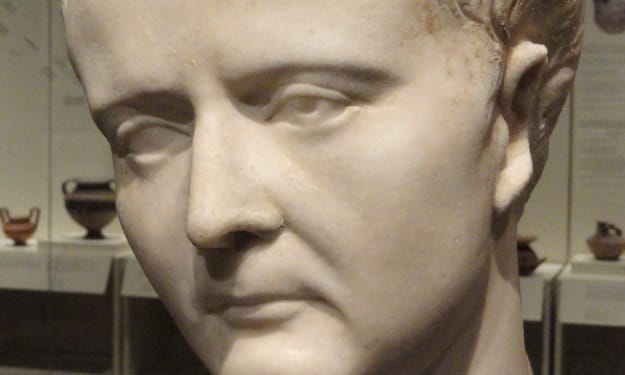
Very little is known about Edward Grim, either before or after the event that is the reason why he is known about at all, but the document he left behind offered a perspective on that event that is well worth remembering.
By John Welford6 years ago in The Swamp
Emperor Augustus of Rome
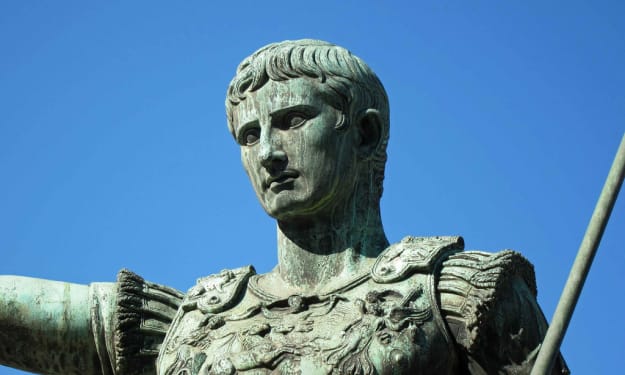
Although Julius Caesar acted in many ways like a monarch, the change from Roman Republic to Roman Empire dates from the accession to the role of head of state of Gaius Octavius (later Gaius Julius Caesar, but generally known as Octavian), with the title Caesar Augustus. This took place in 27 BC, but the process of turning Octavian into Augustus had been a long and painful one.
By John Welford6 years ago in The Swamp
The Myth of the Black Hole of Calcutta
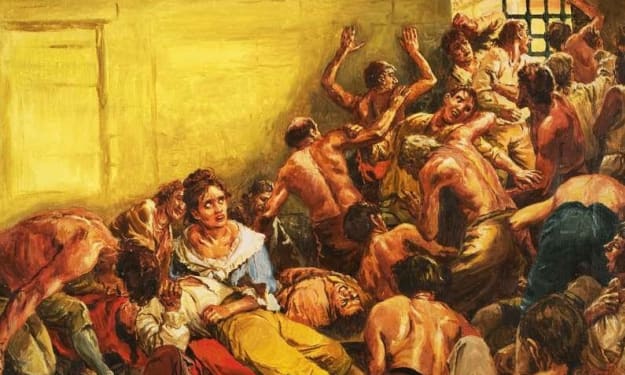
The story of the Black Hole of Calcutta was one that was believed for decades to be the truth, the whole truth and nothing but the truth, but what really happened would appear to be very different from what the history books used to tell.
By John Welford6 years ago in The Swamp
Peter Minuit and Dismal Jimmy
On 24th May 1626, a director of the Dutch West India Company named Peter Minuit, a Dutch-speaking German, bartered a consignment of pots, pans, fish hooks, tools and cloth, together worth around 60 guilders, for an island at the mouth of the Hudson River. The value of that island, named Manhattan (“island of hills”) in the local Algonquin language, has risen considerably between then and now!
By John Welford6 years ago in The Swamp
The Marriage and Divorce of Napoleon and Josephine
On 9th March 1796 Napoleon Bonaparte, rapidly rising through the ranks of the French military, married Josephine Tascher de la Pagerie in a civil ceremony. She was six years older than him and had been married before to a victim of the guillotine, but had retained his name of de Beauharnais. She had also been imprisoned for a time so was perhaps fortunate to have survived.
By John Welford6 years ago in The Swamp