finance
Money talks; reviewing the global economy, government spending, taxes, and economic policy that affect our social and political future.
Australia Moves to Pass Tougher Gun and Hate Crime Laws After Bondi Shooting. AI-Generated.
Australia is at a pivotal moment in its approach to public safety, guns, and hate crimes. Following a shocking mass shooting at Bondi Beach in Sydney, lawmakers are rushing to pass sweeping reforms that could reshape the nation’s legal landscape for decades.
By Muhammad Hassan24 days ago in The Swamp
Markets Fall and Gold and Silver Hit New Highs After Trump’s Latest Tariff Threat. AI-Generated.
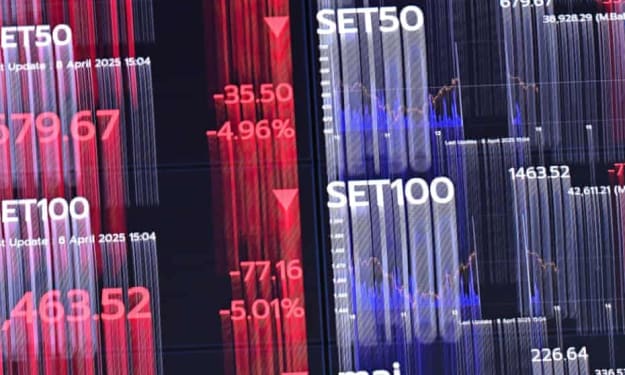
Global markets were rocked after U.S. President Donald Trump’s latest tariff threats against European nations tied to Greenland. Stocks tumbled, while investors rushed into safe-haven assets like gold and silver, pushing their prices to record highs. The developments highlight the delicate balance between geopolitics and financial markets, showing how political decisions can quickly ripple through the global economy.
By Aarif Lashari25 days ago in The Swamp
Markets Fall and Gold and Silver Hit New Highs After Trump’s Latest Tariff Threat. AI-Generated.
The financial world experienced another turbulent day as markets around the globe reacted sharply to former President Donald Trump’s latest tariff threat. Stock indices fell, with tech and industrial sectors taking the brunt of the decline, while gold and silver surged to new highs as investors sought safe-haven assets. The move underscores how geopolitical tensions and policy announcements can ripple through markets, affecting everything from investor sentiment to commodity prices. Trump’s announcement, made via a public statement on his social media platforms, suggested that tariffs could soon be imposed on a wide range of goods from several key trading partners. Though specific countries and products were not immediately clarified, investors interpreted the comments as a signal that trade tensions could escalate, reminiscent of the trade wars seen during his presidency. Financial markets reacted almost immediately. The S&P 500 dropped nearly 1.5%, while the Nasdaq Composite fell over 2%. European markets also mirrored the decline, with Germany’s DAX and the UK’s FTSE 100 losing value by close to 1% each. Analysts noted that the uncertainty surrounding trade policy often leads to heightened market volatility, as investors reassess corporate earnings forecasts, supply chain risks, and overall economic growth projections. Meanwhile, safe-haven assets experienced a significant rally. Gold prices surged above $2,100 per ounce, marking a new high for the year, while silver climbed past $27 per ounce. Traditionally, gold and silver are viewed as hedges against economic and political uncertainty. When traders anticipate instability or potential disruptions to trade and growth, they often flock to these precious metals, pushing prices upward. Economists warn that the market response reflects broader concerns about the global economy. “Trade tensions can have a tangible impact on business investment and consumer confidence,” said Julia Hansen, a senior analyst at Global Markets Advisory. “Even the suggestion of tariffs can create ripple effects, especially in industries that rely heavily on international supply chains. Investors respond by reducing exposure to riskier assets and moving toward commodities like gold and silver.” The tariff threat also reignites questions about inflation and central bank policy. Trade barriers often increase the cost of imported goods, which can lead to higher prices for consumers. In turn, central banks may need to adjust monetary policies to counteract inflationary pressures, affecting interest rates and bond yields. This complex interplay adds another layer of uncertainty for investors, as financial markets try to anticipate policy responses and their implications for different asset classes. Notably, technology companies are often among the most affected by tariff news. Firms that rely on global supply chains for components—like semiconductors, electronics, and machinery—face potential cost increases, which can reduce profit margins and affect stock valuations. Industrial companies, too, may be impacted, particularly those that export goods to countries that could be subject to new tariffs. While the initial market reaction was negative, some investors are adopting a longer-term perspective. Historically, markets have rebounded after initial tariff scares, especially if negotiations between trading partners resume or if specific exemptions are granted. “Volatility is part of the landscape when it comes to trade policy,” said Michael Lee, a portfolio manager at Horizon Investments. “The key is to assess which companies and sectors are truly at risk and which can weather short-term shocks.” The surge in gold and silver is also attracting attention from retail investors and traders. Precious metals have historically served as a hedge against not only economic uncertainty but also currency fluctuations. With the U.S. dollar experiencing mild weakness against other major currencies, the combination of dollar trends and geopolitical risk is contributing to elevated metal prices. For everyday investors, the situation underscores the importance of diversification. While equities may react sharply to policy announcements, having exposure to commodities, bonds, or alternative investments can help cushion portfolios against sudden market swings. Financial advisors often recommend maintaining a balanced approach, especially in periods of heightened volatility. Looking ahead, much will depend on the trajectory of trade talks and policy announcements. Analysts caution that while the headlines are attention-grabbing, the underlying impact on the economy may take time to materialize. Corporate earnings reports, consumer spending trends, and government trade negotiations will provide clearer indicators of how lasting the effects may be. In summary, the latest tariff threat from Trump has triggered a classic market response: falling stock prices and rising safe-haven assets. Gold and silver are hitting new highs as investors seek protection against uncertainty, while equities struggle under the weight of potential economic disruptions. For market watchers and investors, the situation serves as a reminder that geopolitical developments remain a key driver of financial markets, capable of influencing asset prices in both the short and long term. The current environment reinforces the value of strategic planning, careful risk assessment, and the recognition that volatility, while challenging, also presents opportunities for those who remain informed and adaptable. Whether the tariffs materialize or not, the market’s reaction illustrates the interconnectedness of policy, investor sentiment, and global economic trends—a dynamic that is unlikely to change anytime soon.
By Muhammad Hassan25 days ago in The Swamp
Trump Tariff Threats Over Greenland Prompt Calls for Unprecedented EU Counter‑Measures. AI-Generated.
Imagine a single statement triggering a transatlantic trade and political crisis. That’s exactly what happened when U.S. President Donald Trump threatened tariffs over Greenland, sparking calls within the European Union for unprecedented counter-measures. What started as a geopolitical dispute over a remote Arctic island has escalated into a potential trade confrontation with serious implications for NATO, global markets, and U.S.-EU relations.
By Aarif Lashari25 days ago in The Swamp
Trump Tariff Threats Over Greenland Prompt Calls for Unprecedented EU Counter-Measures. AI-Generated.
In a move that has sent ripples through international trade circles, former U.S. President Donald Trump’s tariff threats over Greenland have prompted urgent discussions within the European Union about possible counter-measures. The escalating tension highlights the fragile state of transatlantic trade relations and raises questions about the EU’s ability to respond decisively to economic pressure from Washington.
By Muhammad Hassan25 days ago in The Swamp
How Much Do You Need in an ISA for a Passive Income That Beats the State Pension. AI-Generated.
For many Britons, the State Pension provides a modest, steady income in retirement. As of 2026, the full State Pension is around £203.85 per week, or roughly £10,600 per year. While it offers a financial foundation, for most retirees it’s not enough to maintain the lifestyle they want. This has led many people to explore Individual Savings Accounts (ISAs) as a vehicle for generating passive income that exceeds the State Pension.
By Muhammad Hassan25 days ago in The Swamp
Nationwide Confirms Who Will Get £175 Bonus in 2026. AI-Generated.
Nationwide, one of the UK’s largest building societies, has confirmed the details of its £175 bonus for 2026, a financial perk that has attracted considerable attention from savers across the country. With personal finances under scrutiny due to rising living costs, inflation, and interest rate fluctuations, a bonus of this size is significant for many households. Nationwide’s announcement clarifies exactly who is eligible, what the bonus entails, and how members can make the most of it. What the Nationwide Bonus Is The £175 bonus is a reward for members who meet specific criteria set by Nationwide. While bonuses are not unusual in the financial sector, this particular reward stands out due to its substantial amount and accessibility for ordinary account holders. The bonus is not an automatic payment to everyone; instead, it is designed to encourage savings, loyalty, and certain account behaviors that Nationwide considers valuable. According to the building society, the bonus will be credited directly to qualifying accounts in 2026, offering a tangible boost to those who meet the criteria. For savers navigating an era of economic uncertainty, this kind of incentive can make a real difference in household budgets. Who Is Eligible Nationwide has confirmed that the £175 bonus will be available to current account holders who meet the following conditions: Membership Duration: The account must have been open for a minimum period, typically at least six months before the bonus is awarded. Regular Payments: Many bonuses require a minimum monthly payment, such as salary or pension credits, to be deposited into the account. Account Type: Certain account types are eligible while others are excluded. For example, some business or joint accounts may not qualify. Compliance With Terms: Account holders must not have breached the terms and conditions of their account, such as overdraft violations or suspicious activity flags. These criteria ensure that the bonus reaches genuine, active members rather than casual or inactive account holders. Nationwide emphasizes that the bonus is designed as a reward for loyalty and responsible account use. How to Claim the Bonus For most eligible members, claiming the bonus is straightforward. Nationwide has confirmed that qualifying accounts will receive the £175 automatically, without requiring additional applications. However, members are advised to: Check account eligibility: Confirm that your account type and activity meet the bonus requirements. Maintain regular transactions: Continue making standard deposits as required by the bonus scheme. Monitor communications: Nationwide may send notifications about the bonus via email, online banking, or post. Members should note that while the bonus is intended to be automatic, keeping accounts in good standing ensures smooth processing and prevents delays. Why This Bonus Matters The £175 bonus is more than a simple cash reward. In the current economic climate, it serves multiple purposes: Encouraging Savings: By tying the bonus to account activity, Nationwide incentivizes members to maintain regular deposits, promoting healthy financial habits. Rewarding Loyalty: Long-term members are recognized for their continued relationship with the building society. Supporting Household Budgets: For many, a £175 boost can help cover utility bills, groceries, or other essential expenses. With inflation still impacting household finances, small bonuses like this carry more weight than in years past, reinforcing Nationwide’s position as a member-focused institution. How It Compares to Previous Years Nationwide has a history of offering similar bonuses, though amounts and eligibility criteria have varied. Previous bonuses tended to be smaller, often ranging between £50 and £150, depending on account type and activity. The £175 bonus for 2026 represents one of the more generous payouts in recent years, demonstrating the society’s commitment to rewarding members despite economic pressures. Financial commentators have noted that building societies and banks increasingly use bonuses as retention tools. By offering tangible rewards, institutions encourage members to maintain their accounts, increase deposits, and engage more actively with financial products. In the case of Nationwide, this bonus strategy also strengthens the society’s reputation as a customer-centric organization. Tips for Maximizing the Bonus To ensure that you receive the full £175, Nationwide members may consider the following tips: Keep accounts active: Regular deposits and withdrawals help maintain account activity and meet eligibility requirements. Avoid overdrafts or penalties: Negative account behavior can disqualify members from the bonus. Stay informed: Follow Nationwide’s updates via email, mobile app, and online banking to avoid missing any deadlines or notifications. By following these simple steps, members can maximize their chances of receiving the bonus without additional effort. What This Means for UK Savers The announcement of the £175 bonus comes at a critical time. Many households are dealing with rising energy costs, food prices, and inflationary pressures. For savers, bonuses like this provide a welcome boost, and they may also influence how people choose their banking partners. In a competitive banking environment, perks such as bonuses, cashback schemes, and interest rate incentives are increasingly important for retaining members. Nationwide’s £175 bonus could encourage new sign-ups, increase deposits, and even sway account holders from rival banks. Final Thoughts Nationwide’s confirmation of the £175 bonus for 2026 highlights the importance of member rewards in today’s financial landscape. By clearly defining eligibility, automating the process, and promoting financial loyalty, the society is offering a meaningful incentive that benefits both members and the organization. For account holders, the bonus represents not just cash, but recognition of responsible financial behavior and loyalty. With the bonus set to be credited in 2026, now is the time for members to ensure their accounts meet the criteria and remain in good standing. In an era of economic uncertainty, Nationwide’s £175 bonus is more than a reward—it’s a practical gesture that helps members navigate the year ahead while reinforcing the society’s commitment to its community.
By Muhammad Hassan26 days ago in The Swamp
As Trump’s Deadline for a Cap on Credit Card Rates Looms, Banks Have Only Questions and No Answers. AI-Generated.
With former President Donald Trump putting a spotlight on credit card rates, banks across the United States are left navigating uncharted waters. As the deadline for implementing a proposed cap on credit card interest rates draws near, financial institutions are facing more questions than answers. Consumers, investors, and policymakers are watching closely, wondering what the future holds for borrowing costs in a country already grappling with high personal debt levels. The Trump Proposal: What It Means Trump’s proposal, which gained momentum after he highlighted the rising levels of American household debt, calls for a legal cap on interest rates charged by credit card companies. The idea is simple: limit how much banks can charge on unpaid credit card balances, potentially easing the financial burden for millions of Americans. But the simplicity of the proposal masks a far more complicated reality. For banks, the challenge lies in the mechanics. Credit card interest rates vary widely, influenced by factors such as a consumer’s credit score, overall risk, and the type of card offered. A blanket cap could disrupt revenue models and affect how financial institutions evaluate risk. “We need clarity,” said a senior executive at a major national bank, speaking on condition of anonymity. “Without details on how this would be implemented, we’re left guessing at potential consequences for both consumers and lenders.” Banks’ Concerns: Revenue, Risk, and Compliance Financial institutions argue that a strict interest rate cap could reduce revenue significantly. Credit cards are a key profit center for banks, particularly high-interest products aimed at higher-risk borrowers. A sudden limit could force banks to rethink their lending strategies, tighten credit availability, or raise fees elsewhere to compensate. Risk management also comes into play. Banks price credit card interest rates to offset the likelihood of non-payment. Lowering rates through legislation could make high-risk lending unprofitable, potentially leaving some consumers without access to credit. “The unintended consequence could be that those who need credit the most may find it hardest to get,” warned one financial analyst. Finally, compliance challenges loom large. Implementing a rate cap would require banks to overhaul internal systems, update contracts, and educate staff and customers about the changes. For institutions juggling thousands of credit card products, this is no small feat. Consumer Implications: Relief or Risk? From a consumer perspective, the proposal is a double-edged sword. On one hand, it could reduce the cost of borrowing for Americans struggling with high-interest credit card debt. According to the Federal Reserve, the average credit card interest rate in the U.S. hovers around 17%, with some cards charging over 25%. A legal cap could save consumers hundreds, if not thousands, of dollars annually in interest payments. On the other hand, experts warn that the benefits might not be evenly distributed. Banks may respond by introducing stricter eligibility requirements, raising annual fees, or reducing rewards programs. Essentially, while some borrowers could enjoy lower rates, others might face limited access to credit or higher upfront costs. Political Dimensions: Timing and Strategy Trump’s push comes at a politically strategic moment. With midterm elections approaching and household debt continuing to climb, highlighting credit card costs taps into widespread frustration. Politically, it positions Trump as an advocate for everyday Americans struggling with debt. Economically, it introduces uncertainty for a sector that already faces market volatility. Lawmakers and regulators have yet to clarify whether such a cap could be implemented quickly or would require a lengthy legislative process. Banks, meanwhile, are caught in a holding pattern, unable to plan without specific guidance. “The market hates uncertainty,” noted a finance reporter. “Right now, banks are essentially flying blind.” How Banks Might Respond If the proposed cap is enacted, several changes could ripple through the credit card industry: Shift in Credit Availability: Banks might limit lending to higher-risk borrowers, focusing instead on consumers with excellent credit scores. Fee Adjustments: To compensate for lost interest revenue, annual fees, late fees, or balance transfer charges may rise. Product Redesign: Reward programs or promotional offers could be reduced or eliminated to maintain profitability. Innovation Pressure: Banks could accelerate the development of alternative financial products to replace traditional high-interest credit cards. Each of these responses has trade-offs, affecting both consumers and the financial sector. The delicate balance between protecting borrowers and maintaining a viable credit system is at the heart of the debate. Historical Context: Lessons from the Past The idea of capping interest rates is not new. In the 1970s and 1980s, the U.S. implemented various usury laws and federal caps on lending rates. While these measures were intended to protect consumers, they often led to unintended consequences, such as restricted access to credit or the proliferation of alternative, higher-risk lending channels. Economists caution that a modern cap must be carefully designed to avoid similar pitfalls. A blunt instrument risks creating more problems than it solves, particularly in a market as complex and competitive as the credit card industry. What’s Next: The Countdown Begins As Trump’s proposed deadline approaches, banks are bracing for potential disruption. Industry groups have already voiced concerns, urging regulators to provide clarity and a phased approach to implementation. Analysts expect that lobbying efforts will intensify in the coming weeks as the financial sector tries to influence how the proposal is enacted. For consumers, the situation is equally uncertain. Many are hopeful that a rate cap could ease the burden of rising credit card debt, but the specifics remain murky. Until regulators clarify the rules, the question remains: will the proposal deliver meaningful relief, or will it create new challenges for both banks and borrowers? Final Thoughts Trump’s push for a credit card interest rate cap has thrown the financial sector into uncertainty. While the proposal resonates with everyday Americans facing high debt, banks are left with more questions than answers. The coming weeks will reveal how policymakers navigate this complex issue and whether the intended consumer protections can be achieved without unintended consequences. In the meantime, the clock is ticking, and banks, consumers, and lawmakers alike are holding their breath. The stakes are high, and the outcome could reshape the way Americans borrow and manage debt for years to come.
By Muhammad Hassan26 days ago in The Swamp