
Starmer Defends Iran Response as Badenoch Calls for More Action
UK prime minister insists on restraint and legality amid Middle East escalation, while opposition demands a stronger military stance
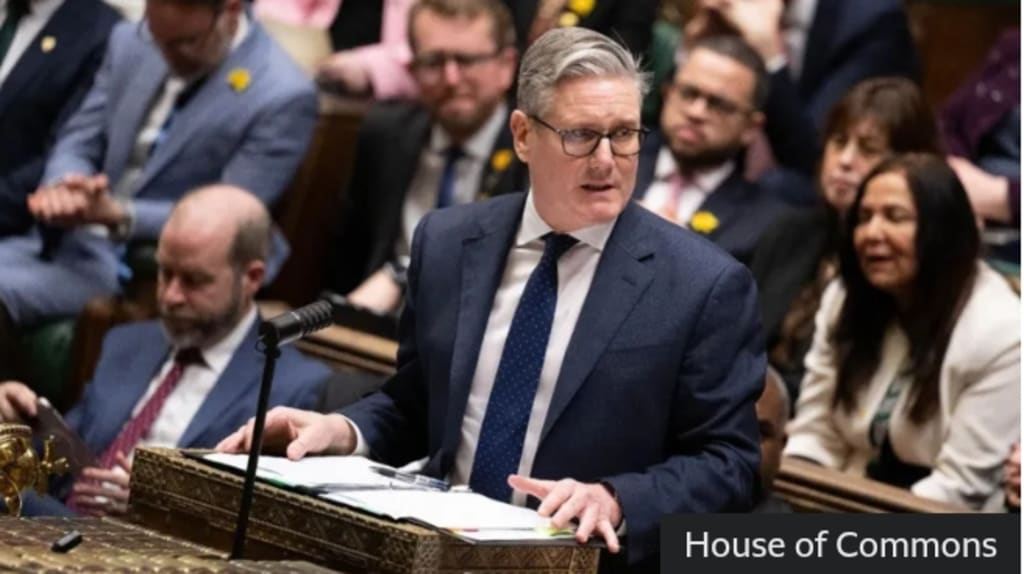
As tensions in the Middle East intensify, the political temperature in Westminster is rising just as quickly. Prime Minister Keir Starmer has mounted a firm defense of his government’s response to the Iran crisis, rejecting calls for immediate offensive military action. Meanwhile, Conservative leader Kemi Badenoch has accused the government of weakness, urging a more assertive role for Britain.
The clash has exposed a deep divide over how the UK should respond to escalating hostilities involving Iran and its regional adversaries — and what Britain’s global role should look like in an increasingly unstable world.
Starmer’s Case for Restraint
Speaking during a tense session in the House of Commons, Starmer argued that Britain’s response must be guided by three principles: legality, proportionality, and protection of British nationals.
The prime minister emphasized that while the UK has deployed additional military assets to the region — including fighter aircraft, naval support, and defensive systems — it has not authorized direct offensive strikes against Iranian targets.
According to Starmer, that distinction matters.
He told MPs that Britain must not be “drawn into escalation without a clear legal basis and a defined strategic objective.” His government, he said, is focused on defensive operations, intelligence sharing, and ensuring the safety of UK citizens in affected areas.
Starmer framed his position as one of steady leadership in a volatile moment. “These are serious decisions,” he stated, stressing the importance of acting with a “cool head” rather than reacting to political pressure.
Badenoch Pushes for Stronger Action
Badenoch, however, painted a starkly different picture.
The Conservative leader criticized what she described as hesitation at a time when decisive action is required. She argued that if British military bases or allies are under threat, the UK should be prepared to respond more robustly — including through offensive operations if necessary.
In parliamentary exchanges, Badenoch accused the government of allowing Britain to appear reactive rather than proactive. She questioned whether delays in deploying naval assets, including the destroyer HMS Dragon, signaled a lack of urgency.
Her message was clear: Britain must demonstrate strength, not caution.
Badenoch’s argument resonates with those who believe deterrence requires visible and forceful engagement. For them, limited defensive measures may not be enough to prevent further escalation.
The “Special Relationship” Under Strain
The debate has also taken on an international dimension.
Former US president Donald Trump publicly criticized the UK’s initial reluctance to allow offensive operations to be launched from British bases. His remarks added pressure on Downing Street and raised questions about the state of the transatlantic alliance.
Starmer responded by defending the strength of the UK-US partnership, arguing that cooperation on defensive missions and intelligence sharing demonstrates the alliance in action. He dismissed suggestions that Britain’s position signals retreat or disengagement.
Still, Trump’s comments fueled domestic criticism from opposition figures who argue that Britain risks marginalizing itself by not aligning more closely with Washington’s posture.
Public Anxiety and Political Risk
Beyond Westminster, public concern is growing.
Energy prices have become volatile amid regional instability, and British nationals in affected areas have sought government assistance. Starmer has highlighted evacuation planning and consular support as central priorities.
For many voters, the prospect of Britain being drawn into another prolonged conflict raises uncomfortable memories of past interventions. That caution shapes Starmer’s messaging — emphasizing legality, consultation, and limited engagement.
Yet the political calculus is delicate.
If the conflict worsens and Britain appears sidelined, critics may claim that caution has cost the country influence. Conversely, a deeper military commitment could expose the government to backlash if operations expand or casualties occur.
A Broader Debate About Britain’s Role
At its core, this confrontation reflects a larger question: what kind of global actor should the UK be?
Starmer’s approach suggests a preference for:
Multilateral coordination
Clear legal frameworks
Defensive commitments
Measured escalation
Badenoch’s stance signals a belief in:
Stronger deterrence
Offensive readiness
Rapid deployment
Clear alignment with key allies
Neither position is without risk.
Measured restraint may prevent escalation — or it may invite further testing. Assertive action may reinforce credibility — or accelerate involvement in a widening conflict.
Strategic and Legal Considerations
International law remains central to Starmer’s argument. The government has emphasized that any offensive military action must meet legal thresholds and be supported by evidence and defined objectives.
This reflects lessons drawn from previous conflicts where ambiguous legal justification led to long-term political fallout.
By drawing a clear boundary around defensive operations, Starmer appears intent on avoiding open-ended commitments.
However, critics argue that waiting for perfect clarity in a fast-moving crisis may leave Britain reacting rather than shaping events.
What Comes Next?
The coming weeks will likely test both leadership and strategy.
If tensions de-escalate, Starmer’s caution may be viewed as prudent and stabilizing. If hostilities expand, calls for stronger British action will intensify.
Parliament may face votes on further military authorization. Diplomatic channels will continue to operate behind the scenes. And public opinion will shift with each new development.
For now, the UK stands at a crossroads between restraint and escalation.
Final Thoughts
The political clash between Keir Starmer and Kemi Badenoch over Iran policy is more than partisan sparring — it is a reflection of deeper strategic tensions about Britain’s global identity.
Should the UK lead with caution and legality, carefully managing escalation?
Or should it assert military strength more visibly to reinforce deterrence?
As the Middle East crisis unfolds, the answer will shape not only Britain’s foreign policy but also the country’s standing on the world stage.
For now, Starmer is holding the line on restraint — while Badenoch continues to press for action
About the Creator
A Gathering of Evil Bosses
“I’m the queen of chin jutting while I smooth my hair, attacking, insulting, and deflecting to protect my appointer.” “Oh, please, Blondi, my hair is curled, highlighted, and longer than yours. I feature television commercials telling immigrants that we will give them a free plane ride home, and if they voluntarily turn themselves in, they will be allowed to legally apply for re-entry. It runs everywhere, and I look good in it! You can’t compete because of your blond hair. Mine is nicer, and my lips are prettier than yours.”
By Andrea Corwin 15 days ago in The Swamp
Marsh, Aon in Talks With US on Insuring Tankers in Hormuz
Major global insurance brokers Marsh & McLennan Companies and Aon plc are in discussions with the United States government and industry stakeholders about plans to provide insurance coverage for commercial tankers transiting the Strait of Hormuz, a critical chokepoint in global energy supply that has become increasingly volatile amid regional tensions. The talks underscore the unprecedented risks faced by shipping companies and insurers as geopolitical instability disrupts one of the world’s most important maritime routes. The Strait of Hormuz, which links the Persian Gulf to the Arabian Sea and beyond, is vital to global energy markets. A significant portion of the world’s crude oil and liquefied natural gas (LNG) — estimates vary but often exceed 20% of total seaborne oil shipments — is exported through this narrow waterway. In recent months, hostilities involving Iran’s Revolutionary Guard Corps, U.S. and allied forces, and proxy groups have heightened concerns about potential attacks on vessels, prompting carriers and insurers to reassess risk exposures. A Surge in Risk and Insurance Challenges Historically, tanker insurance for routes through the Gulf has been priced to reflect relatively stable conditions, though always with a premium for geopolitical risk. Insurers typically rely on a combination of war risk cover, hull and machinery insurance, and protection & indemnity (P&I) liability coverage to manage potential losses. However, the recent uptick in near‑miss incidents, drone and missile threats, and contested airspace advisories has elevated the perceived threat level, leading some insurers to impose higher premiums or exclude certain risks altogether. As a result, shipowners have encountered difficulty securing affordable, comprehensive coverage — particularly war risk insurance, which covers damage from conflict‑related events such as missile strikes or attacks by military forces. Without such coverage, vessels face prohibitive financial exposure. Some shipping lines have already rerouted vessels to avoid the Gulf, increasing voyage times and fuel costs, while others have continued transits unwilling or unable to accept limited insurance terms. In this environment, Marsh and Aon have held preliminary talks with the U.S. government and private sector partners about potential mechanisms to ensure that commercial traffic can continue to flow with adequate protection for shipowners and crew. Officials have stressed that these discussions are exploratory and have not been formalised into any specific programme. Government Involvement and Strategic Considerations U.S. officials acknowledge the critical importance of maintaining open shipping lanes through the Strait of Hormuz, not only for energy markets but also for broader economic stability. A senior U.S. official involved in the talks noted that “ensuring that insurers and shipowners have confidence in transiting these waters is a strategic priority.” However, the official emphasised that any government‑backed measures would need to balance risk exposure, fiscal responsibility, and regulatory frameworks. One proposal under consideration involves a public‑private partnership (PPP) in which the U.S. government could act as a backstop or reinsurer for specific risk layers, similar in concept to existing terrorism risk insurance programmes that provide limited government guarantees when private markets withdraw from high‑risk segments. Such arrangements aim to leverage private capital while providing an additional layer of security to mobilise market participation. Market Response and Expert Opinion Reactions from the insurance and shipping sectors have been mixed. Some industry analysts view government involvement as essential to preventing a de‑facto closure of the Gulf to commercial tankers, especially if war risk premiums continue to spike. “Without reasonable insurance solutions, carriers will be forced to avoid the route, driving up global energy prices and disrupting supply chains,” said a maritime risk consultant. Others caution that government backstops carry their own challenges, including moral hazard — where firms take on greater risk because losses are partially borne by the public sector — and the complexities of valuation and claims settlement in conflict zones. They also note that the increasingly globalised nature of insurance capital means that unilateral programmes may have limited effect unless coordinated internationally. Impact on Oil and Gas Markets The broader energy market is already reacting to the uncertainty. Oil prices have experienced heightened volatility as traders factor in increased shipping risk, while consumers and refiners monitor freight cost fluctuations. For nations reliant on Gulf oil and LNG imports, particularly in Europe and Asia, extended disruption or sharply higher shipping costs could reverberate through domestic energy markets. Some analysts suggest that the talks between Marsh, Aon, and the U.S. could signal a tipping point in how insurers and governments approach geopolitical risk in key maritime corridors. The potential for official involvement reflects the recognition that private markets alone may be insufficient to underwrite extreme tail risks in a sustained period of instability. Looking Ahead As negotiations continue, stakeholders are weighing a range of options — from temporary relief measures to longer‑term risk financing facilities. The urgency of the situation has accelerated discussions, but officials and industry representatives caution that any programme would require careful design, legal clarity, and international cooperation. For now, shipowners, insurers, and governments will watch developments closely, aware that the outcome could shape maritime insurance norms and energy trade patterns for years to come. Ensuring the continued flow of tankers through the Strait of Hormuz remains a priority, but achieving stable, affordable insurance cover in a volatile geopolitical environment poses one of the most complex challenges facing the global maritime community today.
By Fiaz Ahmed about 15 hours ago in The Swamp


Comments
There are no comments for this story
Be the first to respond and start the conversation.