
Marsh, Aon in Talks With US on Insuring Tankers in Hormuz
Marsh and Aon engage with the U.S. government to secure insurance for tankers transiting the volatile Strait of Hormuz, aiming to maintain energy flows amid rising geopolitical risks.

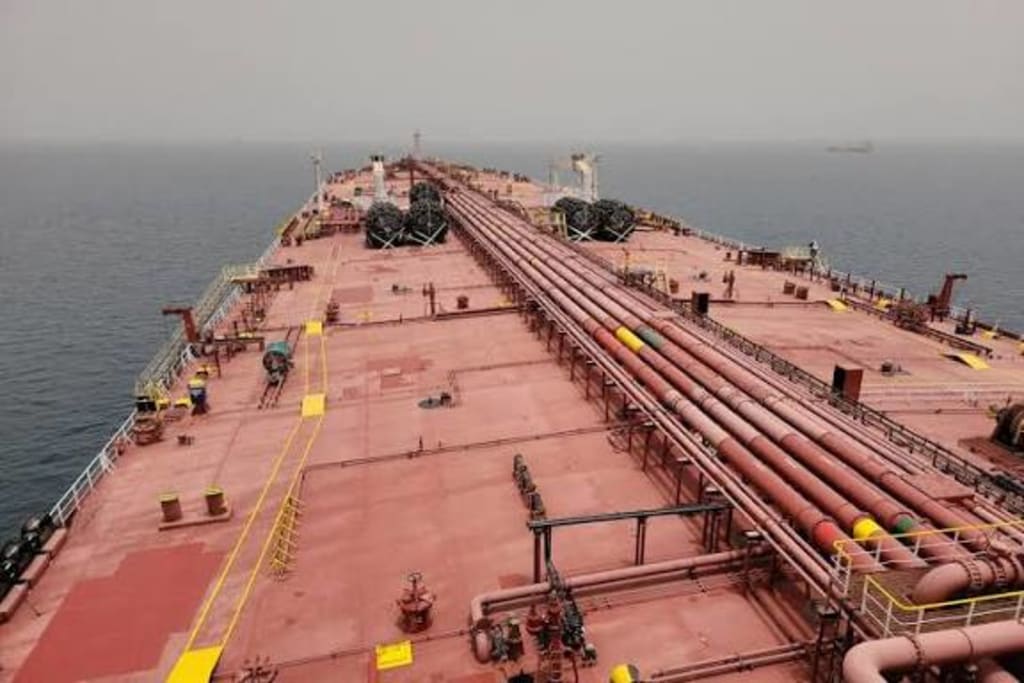
Major global insurance brokers Marsh & McLennan Companies and Aon plc are in discussions with the United States government and industry stakeholders about plans to provide insurance coverage for commercial tankers transiting the Strait of Hormuz, a critical chokepoint in global energy supply that has become increasingly volatile amid regional tensions. The talks underscore the unprecedented risks faced by shipping companies and insurers as geopolitical instability disrupts one of the world’s most important maritime routes.
The Strait of Hormuz, which links the Persian Gulf to the Arabian Sea and beyond, is vital to global energy markets. A significant portion of the world’s crude oil and liquefied natural gas (LNG) — estimates vary but often exceed 20% of total seaborne oil shipments — is exported through this narrow waterway. In recent months, hostilities involving Iran’s Revolutionary Guard Corps, U.S. and allied forces, and proxy groups have heightened concerns about potential attacks on vessels, prompting carriers and insurers to reassess risk exposures.
A Surge in Risk and Insurance Challenges
Historically, tanker insurance for routes through the Gulf has been priced to reflect relatively stable conditions, though always with a premium for geopolitical risk. Insurers typically rely on a combination of war risk cover, hull and machinery insurance, and protection & indemnity (P&I) liability coverage to manage potential losses. However, the recent uptick in near‑miss incidents, drone and missile threats, and contested airspace advisories has elevated the perceived threat level, leading some insurers to impose higher premiums or exclude certain risks altogether.
As a result, shipowners have encountered difficulty securing affordable, comprehensive coverage — particularly war risk insurance, which covers damage from conflict‑related events such as missile strikes or attacks by military forces. Without such coverage, vessels face prohibitive financial exposure. Some shipping lines have already rerouted vessels to avoid the Gulf, increasing voyage times and fuel costs, while others have continued transits unwilling or unable to accept limited insurance terms.
In this environment, Marsh and Aon have held preliminary talks with the U.S. government and private sector partners about potential mechanisms to ensure that commercial traffic can continue to flow with adequate protection for shipowners and crew. Officials have stressed that these discussions are exploratory and have not been formalised into any specific programme.
Government Involvement and Strategic Considerations
U.S. officials acknowledge the critical importance of maintaining open shipping lanes through the Strait of Hormuz, not only for energy markets but also for broader economic stability. A senior U.S. official involved in the talks noted that “ensuring that insurers and shipowners have confidence in transiting these waters is a strategic priority.” However, the official emphasised that any government‑backed measures would need to balance risk exposure, fiscal responsibility, and regulatory frameworks.
One proposal under consideration involves a public‑private partnership (PPP) in which the U.S. government could act as a backstop or reinsurer for specific risk layers, similar in concept to existing terrorism risk insurance programmes that provide limited government guarantees when private markets withdraw from high‑risk segments. Such arrangements aim to leverage private capital while providing an additional layer of security to mobilise market participation.
Market Response and Expert Opinion
Reactions from the insurance and shipping sectors have been mixed. Some industry analysts view government involvement as essential to preventing a de‑facto closure of the Gulf to commercial tankers, especially if war risk premiums continue to spike. “Without reasonable insurance solutions, carriers will be forced to avoid the route, driving up global energy prices and disrupting supply chains,” said a maritime risk consultant.
Others caution that government backstops carry their own challenges, including moral hazard — where firms take on greater risk because losses are partially borne by the public sector — and the complexities of valuation and claims settlement in conflict zones. They also note that the increasingly globalised nature of insurance capital means that unilateral programmes may have limited effect unless coordinated internationally.
Impact on Oil and Gas Markets
The broader energy market is already reacting to the uncertainty. Oil prices have experienced heightened volatility as traders factor in increased shipping risk, while consumers and refiners monitor freight cost fluctuations. For nations reliant on Gulf oil and LNG imports, particularly in Europe and Asia, extended disruption or sharply higher shipping costs could reverberate through domestic energy markets.
Some analysts suggest that the talks between Marsh, Aon, and the U.S. could signal a tipping point in how insurers and governments approach geopolitical risk in key maritime corridors. The potential for official involvement reflects the recognition that private markets alone may be insufficient to underwrite extreme tail risks in a sustained period of instability.
Looking Ahead
As negotiations continue, stakeholders are weighing a range of options — from temporary relief measures to longer‑term risk financing facilities. The urgency of the situation has accelerated discussions, but officials and industry representatives caution that any programme would require careful design, legal clarity, and international cooperation.
For now, shipowners, insurers, and governments will watch developments closely, aware that the outcome could shape maritime insurance norms and energy trade patterns for years to come. Ensuring the continued flow of tankers through the Strait of Hormuz remains a priority, but achieving stable, affordable insurance cover in a volatile geopolitical environment poses one of the most complex challenges facing the global maritime community today.
About the Creator
Fiaz Ahmed
I am Fiaz Ahmed. I am a passionate writer. I love covering trending topics and breaking news. With a sharp eye for what’s happening around the world, and crafts timely and engaging stories that keep readers informed and updated.
Keep reading
More stories from Fiaz Ahmed and writers in The Swamp and other communities.
Why Ecuador Invited the U.S. Military to Help With Its Drug Gangs
In an extraordinary move that underlines the severity of criminal violence in Ecuador, the government has formally invited the United States military to assist in confronting powerful drug trafficking organisations that have turned large parts of the South American nation into de facto battlegrounds. This decision reflects years of escalating narco‑violence, institutional weakness in law enforcement, and a regional security environment that authorities say has outpaced Ecuador’s capacity to respond alone. The announcement came in early March 2026, shortly before Ecuador and the U.S. launched a joint anti‑drug operation supported by United States Southern Command. Quito’s decision has triggered debate both domestically and internationally, raising questions about sovereignty, regional cooperation, and the shifting nature of the global drug trade. A Growing Crisis Ecuador sits at a strategic nexus of the global cocaine supply chain. Bordered by Colombia, one of the world’s top cocaine producers, and Peru, another major source of illicit coca, Ecuador has seen an influx of criminal groups seeking control of trafficking routes to the Caribbean, Galápagos Islands, and Pacific outlets. By 2025, violent crime in Ecuador had soared. Homicide rates, once among the lowest in the region, began rivaling those of much larger countries. Cartel violence — driven by factions such as Los Lobos and Los Choneros — spilled into urban centres like Guayaquil, where turf wars, extortion, and public shoot‑outs have become disturbingly common. Law enforcement in many provinces struggled to contain the flow of weapons and coordinated attacks on police. Officials in Quito have described the spiralling violence as “narco‑terrorism,” reflecting how drug networks have evolved into powerful quasi‑military organisations that challenge state authority. According to Ecuadorian authorities, conventional policing strategies were inadequate to counter these heavily armed networks, prompting consideration of military assistance. Why Washington and Quito Partnered Ecuador’s invitation to the U.S. military did not happen overnight. It is the result of sustained diplomatic engagement, regional pressure, and shared security concerns. For the United States, the rationale blends foreign policy, national security, and domestic political pressures stemming from drug use and trafficking within its own borders. U.S. officials have cited three main reasons for supporting Ecuador: Disrupting the Supply Chain: Ecuador has become a crucial transit point for cocaine moving from South America toward the U.S., Europe, and beyond. By assisting Quito, Washington aims to reduce supply flows before they reach open seas or cross into Central America. Intelligence Sharing: U.S. military and intelligence assets can provide advanced surveillance, aerial reconnaissance, and tracking technologies that Ecuadorian forces lack. This complements local operations and enhances interdiction effectiveness. Regional Stability: U.S. strategy emphasises preventing narco‑violence from spilling into neighbouring countries, destabilising governments, and creating humanitarian crises akin to those seen in other parts of Latin America. For President Daniel Noboa, the decision was framed as a sober response to a public safety emergency. In televised remarks, he said Ecuador had “exhausted all domestic options” and required coordinated international support to dismantle criminal networks that threatened the rule of law, economic growth, and citizen security. The Scope of the Operation Officially cited as a joint counter‑drug initiative, the U.S. military’s role in Ecuador includes advisory support, intelligence cooperation, and logistical assistance. While Ecuador’s constitution bars permanent foreign bases, temporary arrangements — including U.S. Special Forces operating alongside Ecuadorian units — have been agreed upon under a bilateral security package. The operation includes: Enhanced intelligence collection and sharing Joint raids on cartel infrastructure Training for local army and police units Support for air and maritime interdiction Some U.S. personnel are reported to be embedded with Ecuadorian forces, assisting with mission planning and technical capacities without a large visible combat footprint. Public Reaction and Controversy The decision has been polarising. Supporters argue that extraordinary threats require extraordinary responses. Merchants, civic leaders, and citizens affected by rampant crime have voiced support for international help, saying Ecuadorian institutions alone are unable to guarantee safety. Critics, however, warn of potential overreach and dependency on foreign military power. Civil liberties advocates have raised concerns about the militarisation of public safety and the need for judicial safeguards to prevent abuses. There are also concerns about how such partnerships might impact Ecuador’s sovereignty and domestic political dynamics. Regional Implications Ecuador’s move could set a precedent in a region grappling with narco‑violence. Neighbouring countries might look toward similar collaborations if the strategy yields measurable reductions in trafficking and violence. Conversely, missteps could stoke anti‑U.S. sentiment and deepen scepticism about foreign military involvement. Looking Ahead The joint operation represents a stark acknowledgement that drug crime in the 21st century is not merely a law enforcement issue but a complex security challenge involving armed groups, transnational networks, and porous borders. Ecuador’s invitation reflects not only its own urgent circumstances but also broader questions about cooperation, sovereignty, and how nations confront the evolving threats posed by globalised criminal networks. As the operation unfolds, outcomes will be closely watched by policymakers, security analysts, and regional partners — not only for what they reveal about Ecuador’s future, but for what they may signal about the international community’s role in combating narco‑violence in the years to come.
By Fiaz Ahmed about 16 hours ago in The Swamp
A Gathering of Evil Bosses
“I’m the queen of chin jutting while I smooth my hair, attacking, insulting, and deflecting to protect my appointer.” “Oh, please, Blondi, my hair is curled, highlighted, and longer than yours. I feature television commercials telling immigrants that we will give them a free plane ride home, and if they voluntarily turn themselves in, they will be allowed to legally apply for re-entry. It runs everywhere, and I look good in it! You can’t compete because of your blond hair. Mine is nicer, and my lips are prettier than yours.”
By Andrea Corwin 15 days ago in The Swamp



Comments
There are no comments for this story
Be the first to respond and start the conversation.