Latest Stories
Most recently published stories in The Swamp.
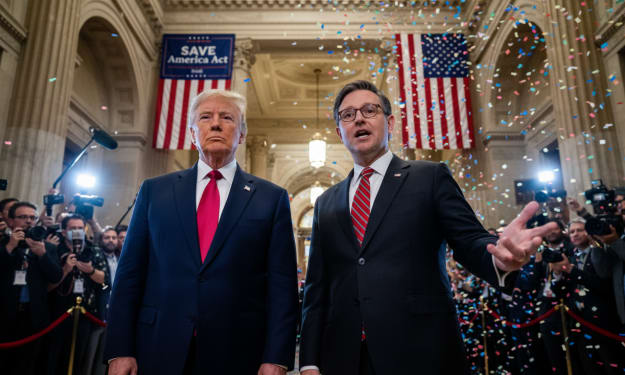
House Passes SAVE America Act, Sending Trump-Backed Election Reform Bill to the Senate. AI-Generated.
In a closely divided vote, the U.S. House of Representatives has passed the SAVE America Act — a Trump-backed election reform bill that would impose new nationwide standards for federal elections. The legislation now heads to the Senate, where it faces an uncertain future amid intense partisan disagreement.
By Adil Ali Khan3 days ago in The Swamp
Sir Jim Ratcliffe: "The UK Has Been Colonised".
For the richest British man who resides in Monaco its very easy to sit there and criticise the UK. What was it that the businessman was moaning about? Speaking to Ed Conway of Sky News, Sir Jim said the UK faces very profound problems. Those are political, social, and economic challenges.
By Nicholas Bishop3 days ago in The Swamp
Trump Named in Epstein Files? Raskin’s “Million Mentions” Claim Sparks Political and Media Firestorm. AI-Generated.
A new political controversy has erupted after Representative Jamie Raskin alleged that former President Donald Trump appears “more than a million times” in unredacted files connected to Jeffrey Epstein. The striking claim has quickly gained traction across major media platforms, social media feeds, and late-night television shows — raising questions about transparency, political rhetoric, and the ongoing public fascination with the Epstein case.
By Adil Ali Khan3 days ago in The Swamp
The Future of Naval Autonomy: Boats and Drone Swarms. AI-Generated.
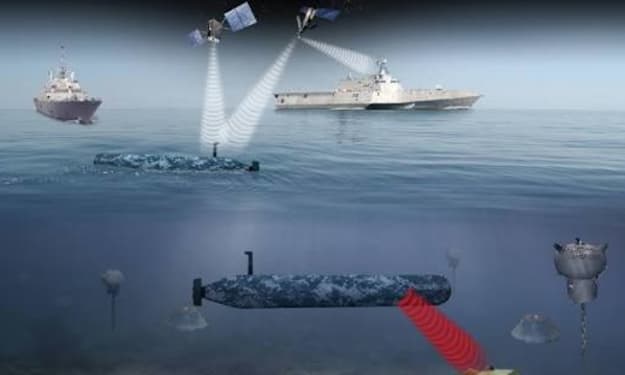
Naval warfare is entering a transformative era as autonomous boats and coordinated drone swarms begin to reshape how maritime operations are conducted. Advances in artificial intelligence, robotics and sensor technology are enabling navies to deploy unmanned surface vessels (USVs) and aerial drones capable of operating independently or in tightly coordinated groups. Defense analysts say this shift toward autonomy represents one of the most significant changes in naval strategy since the introduction of aircraft carriers. Autonomous naval systems are designed to perform missions that traditionally required crewed ships, including surveillance, mine detection, reconnaissance and even combat support. These platforms reduce risk to human sailors while expanding the reach and persistence of naval forces. With global tensions rising in contested maritime regions, particularly in the Indo-Pacific and the Black Sea, many countries are accelerating investment in autonomous fleets. Rise of Unmanned Surface Vessels Unmanned surface vessels are at the center of this evolution. These robotic boats range from small, fast patrol craft to large, ship-sized platforms capable of operating for weeks without human intervention. Equipped with radar, sonar and electro-optical sensors, USVs can monitor shipping lanes, track submarines and gather intelligence in dangerous waters. The United States Navy has already tested large autonomous vessels such as Sea Hunter and Sea Hawk, designed for anti-submarine warfare and long-duration patrol missions. Similarly, the United Kingdom, Israel and several European nations have deployed experimental or operational unmanned boats for coastal defense and mine countermeasures. Ukraine’s use of explosive-laden sea drones during the conflict with Russia has further demonstrated the tactical impact of autonomous naval platforms. These systems have successfully damaged or disabled large warships at a fraction of the cost of traditional weapons, proving that smaller autonomous craft can challenge conventional naval power. Drone Swarms at Sea Beyond individual unmanned vessels, the concept of drone swarms is gaining attention. Swarms consist of dozens or even hundreds of drones that communicate with one another and coordinate their actions using artificial intelligence. Unlike traditional systems controlled by a single operator, swarms can adapt to threats, share data and continue missions even if some units are destroyed. In naval operations, drone swarms could be used to overwhelm enemy defenses, conduct wide-area surveillance or escort larger ships through hostile waters. A swarm of small surface drones might screen a fleet against incoming threats, while aerial drones could provide real-time intelligence across vast ocean areas. China has invested heavily in swarm technology, testing coordinated drone launches from ships and submarines. The U.S. Defense Department is also pursuing swarm programs under initiatives such as the Replicator project, which aims to field large numbers of autonomous systems quickly and at low cost. Strategic and Economic Advantages Autonomous naval systems offer several strategic benefits. First, they significantly reduce operational costs. Unmanned boats are cheaper to build and maintain than crewed warships and can be produced in large numbers. This allows navies to adopt a “distributed force” model, spreading capability across many small platforms instead of relying on a few expensive ships. Second, autonomy improves endurance. Without the need for crew accommodations, food or rest, unmanned vessels can remain at sea for extended periods. This is particularly valuable for surveillance missions in remote or contested areas. Third, autonomous systems change the risk equation. Commanders can deploy robotic platforms into dangerous zones without endangering human lives, enabling more aggressive or persistent operations. Challenges and Risks Despite their promise, naval autonomous systems face serious challenges. One major concern is cybersecurity. Because these platforms rely heavily on software and communications networks, they are vulnerable to hacking, jamming and spoofing. An enemy that takes control of an autonomous vessel could turn it into a weapon against its own fleet. Ethical and legal questions also remain unresolved. International law governing the use of force at sea was developed for human decision-makers, not algorithms. Determining accountability for actions taken by autonomous weapons systems is a complex issue that policymakers have yet to fully address. There are also technical hurdles. Operating in harsh maritime environments requires reliable navigation, collision avoidance and decision-making under unpredictable conditions. While artificial intelligence has made significant progress, fully autonomous combat decision-making remains controversial and limited. The Road Ahead Experts agree that the future navy will be a hybrid force combining crewed ships with autonomous boats and drone swarms. Rather than replacing sailors entirely, autonomous systems will act as force multipliers, extending the reach and effectiveness of traditional fleets. Over the next decade, naval warfare is likely to become more networked and data-driven, with swarms of drones feeding information to command centers in real time. As countries race to develop these technologies, maritime security will increasingly depend on algorithms as much as armor. The rise of naval autonomy marks a fundamental shift in how power is projected at sea. Boats and drone swarms are no longer experimental concepts but emerging tools of modern warfare, redefining strategy, deterrence and the balance of power on the world’s oceans.
By Fiaz Ahmed 3 days ago in The Swamp
U.K. Police Consult Criminal Prosecutors About Andrew–Epstein Allegations. AI-Generated.
British police have confirmed they are consulting with criminal prosecutors regarding allegations linking Prince Andrew to the late convicted sex offender Jeffrey Epstein, renewing public scrutiny over the royal’s past association with the disgraced financier and raising fresh questions about whether criminal charges could be pursued in the United Kingdom. The Metropolitan Police Service said it is reviewing material and liaising with the Crown Prosecution Service (CPS) to determine whether any new evidence meets the legal threshold for further investigation. The move follows renewed attention to Epstein-related court documents and testimony that have emerged in the United States, prompting British authorities to reassess whether domestic legal action is warranted. Prince Andrew, the younger brother of King Charles III, has long denied any wrongdoing and has consistently said he has no recollection of meeting Virginia Giuffre, one of Epstein’s most prominent accusers. Giuffre has alleged that Epstein trafficked her to Prince Andrew when she was 17, claims that Andrew has rejected as false. Renewed Review of Evidence The Metropolitan Police previously closed its inquiry into Prince Andrew in 2022, stating at the time that no further action would be taken after reviewing available evidence. However, officials now say that developments in U.S. civil litigation and the unsealing of additional court documents have led them to reassess whether any material could be relevant under U.K. criminal law. A spokesperson for the Metropolitan Police said the force was “aware of reports and is considering information that has been made available,” adding that it is working with prosecutors to determine if the legal criteria for a criminal investigation are met. Under British law, prosecutors must establish that there is sufficient evidence to provide a realistic prospect of conviction before charges can be considered. The Crown Prosecution Service declined to comment on the specifics of the consultation but confirmed it routinely provides legal advice to police on complex and high-profile cases. Background of the Allegations Prince Andrew’s association with Epstein became a major public controversy after Epstein was arrested in the United States in 2019 on federal sex trafficking charges. Epstein later died in prison while awaiting trial. His case exposed a network of wealthy and powerful individuals who had social ties to him, triggering global investigations and civil lawsuits. In 2022, Prince Andrew reached an out-of-court settlement with Giuffre in a U.S. civil case, agreeing to pay an undisclosed sum while maintaining his innocence. The settlement did not include an admission of liability, but it effectively ended the civil proceedings against him. Following that case, Andrew was stripped of his military titles and royal patronages and withdrew from public duties, becoming a largely private figure within the royal family. Legal and Political Implications Legal experts say the renewed consultation with prosecutors does not automatically mean charges will follow. Instead, it reflects a procedural step to evaluate whether any newly surfaced information changes the legal position. “In cases of this sensitivity and public interest, police are obligated to examine whether new material could justify reopening an inquiry,” said one former senior prosecutor. “But the evidentiary bar remains very high, particularly when alleged conduct took place years ago and across international jurisdictions.” The situation also presents challenges due to jurisdictional issues. Many of the alleged incidents occurred outside the United Kingdom, primarily in the United States and on Epstein’s private properties. Any potential prosecution in Britain would require clear evidence that offenses took place within U.K. legal jurisdiction. Public Reaction and Royal Impact The renewed scrutiny has reignited debate in Britain about accountability and transparency within powerful institutions. Advocacy groups for survivors of sexual abuse have welcomed the police review, arguing that all allegations must be examined thoroughly regardless of the status of those involved. Buckingham Palace has not issued a new statement regarding the latest development, but previously said that Prince Andrew has denied the allegations and is cooperating with legal authorities where appropriate. The issue remains sensitive for the monarchy, which has sought to distance itself from the scandal. King Charles III has made efforts to modernize the institution and restore public trust following years of controversy involving multiple members of the royal family. Next Steps The Metropolitan Police said no timeline has been set for a decision on whether a new investigation will be launched. Any determination will depend on the assessment of evidence and advice from prosecutors. For now, the consultation process signals that British authorities are taking renewed allegations seriously, even as the legal hurdles remain substantial. The outcome could have significant implications not only for Prince Andrew but also for broader questions of how high-profile individuals are treated under the law. As international attention continues to focus on Epstein-related revelations, the case underscores the enduring impact of one of the most notorious scandals in recent history and the continuing search for accountability.
By Fiaz Ahmed 3 days ago in The Swamp
Republicans Push Trump to Reject Democrats’ DHS Demands as Government Shutdown Deadline Nears. AI-Generated.
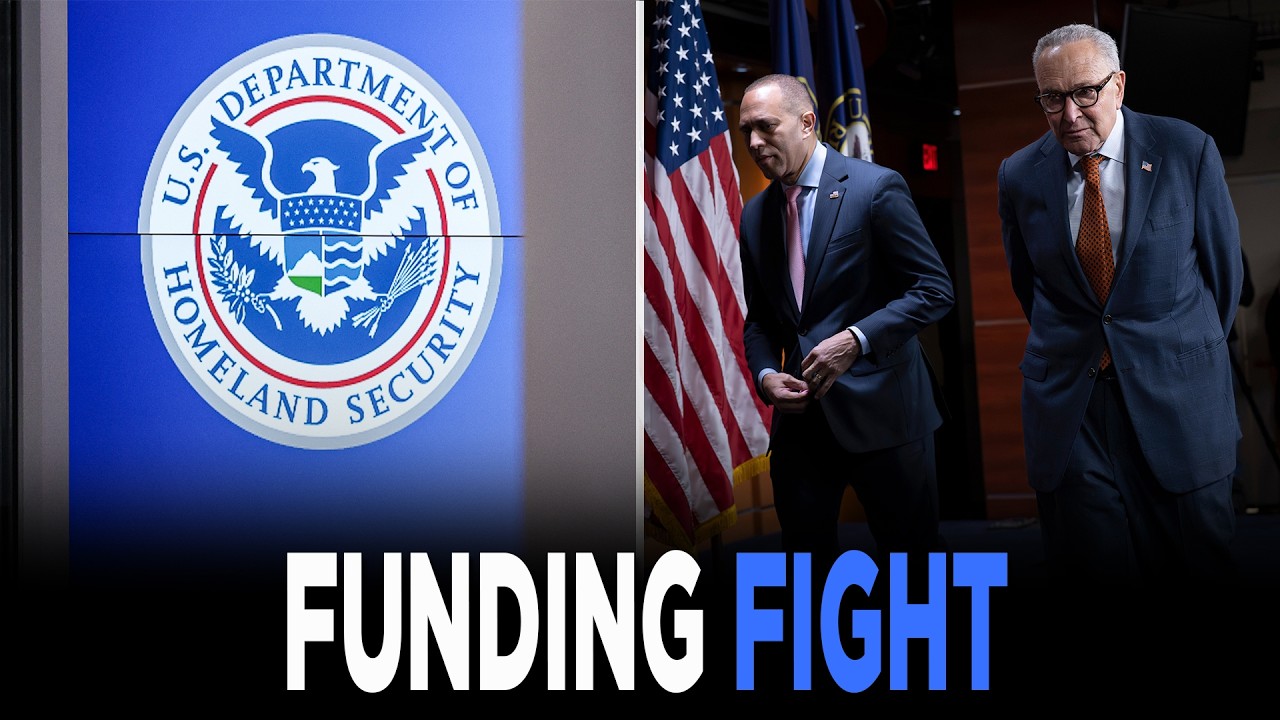
As the clock ticks toward a critical funding deadline, Washington is bracing for another potential government shutdown — this time centered on the Department of Homeland Security (DHS). Republican lawmakers are urging President Donald Trump to stand firm against Democratic demands tied to DHS funding, arguing that conceding could weaken immigration enforcement and compromise national security priorities.
By Adil Ali Khan3 days ago in The Swamp
Hochul’s No-Tax-Hike Stance Gains Momentum as Mamdani Pushes for Higher Taxes in New York Budget Debate. AI-Generated.
New York’s state budget debate has intensified — and at the center of it is a sharp contrast in tax policy philosophy between Governor Kathy Hochul and New York City Mayor Zohran Mamdani.
By Adil Ali Khan3 days ago in The Swamp
Trump Reverses Course on Governors Meeting, Invites Democrats After Initial White House Snub. AI-Generated.
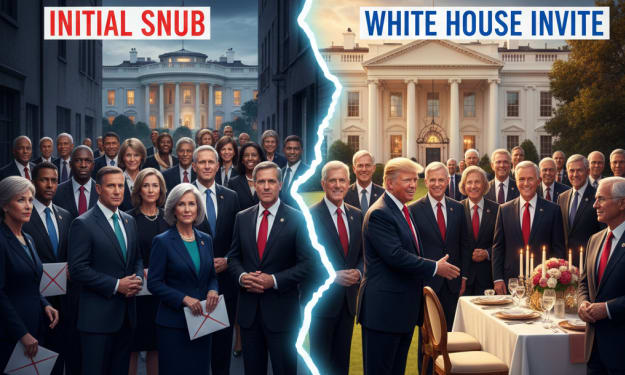
In a political climate already defined by sharp division, a long-standing bipartisan tradition nearly fractured this week when President Donald Trump initially excluded Democratic governors from a White House meeting tied to the National Governors Association (NGA) annual gathering.
By Adil Ali Khan3 days ago in The Swamp
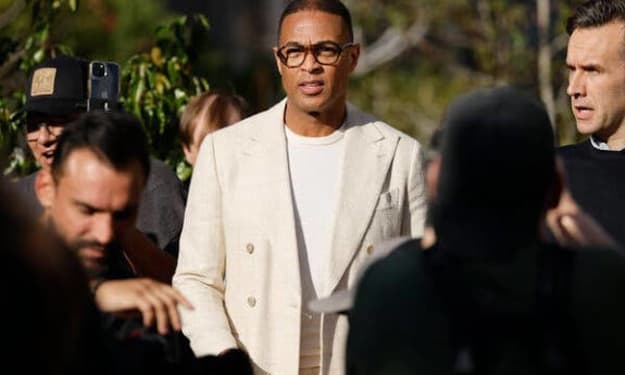
Don Lemon Hires Federal Prosecutor Who Quit Over Immigration Crackdown. AI-Generated.
Former CNN anchor and longtime journalist Don Lemon has taken a striking new step in his legal defense by enlisting a veteran federal prosecutor who resigned from the U.S. Attorney’s Office in Minnesota amid mounting tensions over the Trump administration’s immigration enforcement policies and handling of high-profile investigations. The move underscores the high stakes of Lemon’s federal case, which has drawn national attention and raised questions about press freedom, prosecutorial discretion and political influence within the Justice Department. Lemon, who now works as an independent journalist, was indicted earlier this year along with eight others for his alleged role in a January 18 protest that disrupted a Sunday service at Cities Church in St. Paul, Minnesota. Federal prosecutors allege the group conspired to interfere with worship and intimidate congregants, invoking a 1994 civil rights statute typically used to protect access to reproductive health clinics but also applicable to places of worship. Lemon asserts he was present only in his journalistic capacity, livestreaming the event as part of his reporting work. Unexpected Legal Reinforcement In a notable twist, Lemon has added Joseph H. Thompson, a former interim U.S. Attorney for Minnesota, to his defense team. Thompson had served nearly 17 years in the Minnesota U.S. Attorney’s Office and held senior leadership positions, including acting U.S. Attorney, before resigning in January amid internal disagreements over how federal authorities were handling immigration-related cases and certain investigations. A court filing earlier this week confirmed that Thompson will appear as counsel of record for Lemon, joining powerhouse defense attorney Abbe Lowell in representing the journalist in federal court. Lowell is known for representing high-profile clients in politically charged cases and is expected to lead the defense strategy. Thompson’s decision to switch sides — from federal prosecutor to defense counsel — against the very office he once helped lead adds an unusual dynamic to the case. It pits Lemon’s defense team directly against seasoned federal attorneys with whom Thompson once worked, potentially reshaping legal tactics and courtroom dynamics. The Washington Post Why Thompson Resigned Thompson’s departure from the U.S. Attorney’s Office last month came amid a broader wave of resignations by senior prosecutors reportedly frustrated by directives from Justice Department leadership under the Trump administration. Several prosecutors, including Thompson and at least five colleagues, stepped down after disputes over the department’s immigration enforcement strategy and its approach to investigating the fatal shooting of Renee Nicole Good by an Immigration and Customs Enforcement (ICE) officer in Minneapolis. The Guardian Moody ideological differences reportedly emerged after Justice Department leaders overruled more experienced prosecutors who sought to pursue a legal inquiry into the killing of Good. Instead, the department directed focus toward other aspects of related matters, prompting Thompson and others to resign in protest, according to reporting from multiple outlets. The Guardian After leaving the U.S. Attorney’s Office, Thompson partnered with another former federal prosecutor, Harry Jacobs, to establish a private law firm — Thompson Jacobs PLLC — that focuses on complex litigation, white-collar defense and crisis management. His move into private practice and immediate involvement in Lemon’s defense marks a swift pivot from public service to high-stakes criminal defense. wfmd.com Charges Against Lemon Lemon faces federal civil rights charges, including conspiracy and violating the Freedom of Access to Clinic Entrances (FACE) Act, for his activities at the protest. Prosecutors allege that Lemon’s presence and actions during the event contributed to the disruption of religious services and intimidation of worshippers. The FACE Act has not commonly been applied in the context of religious gatherings, making its use in this case particularly noteworthy. FOX 9 Minneapolis-St. Paul Lemon has denied any wrongdoing, maintaining that he was acting as a journalist documenting events, not participating in them. “I went there to be a journalist,” Lemon said in previous statements, emphasizing his First Amendment rights and arguing that the charges represent an unprecedented attack on press freedom. The Guardian The defendant is scheduled to be arraigned on February 13 in federal court in St. Paul. Legal experts have suggested that the case could set significant precedent regarding the boundaries of journalistic activity and legal accountability when reporters cover volatile protests. The Washington Post Broader Implications The hiring of Thompson highlights broader concerns within elements of the legal community about the Justice Department’s prosecutorial priorities, particularly around immigration enforcement and civil liberties. Several former prosecutors have expressed unease about the department’s strategy, suggesting that Lemon’s case could be part of a larger pattern of federal attention on politically sensitive protests. As the case unfolds, Thompson’s insider perspective on the federal system — including knowledge of prosecutorial strategies and internal decision-making — is expected to be a valuable asset to Lemon’s defense. Observers note that Thompson’s participation could enhance Lemon’s ability to challenge the government’s legal approach and bolster arguments about constitutional protections for journalists. wfmd.com For Lemon, already a polarizing figure in media and politics, the move to bring in a former senior prosecutor underscores the seriousness of the legal battle ahead. With constitutional freedom of the press and civil liberties at the center of the dispute, the courtroom clash is likely to attract national scrutiny as one of the more closely watched legal fights of 2026.
By Fiaz Ahmed 3 days ago in The Swamp